Log Cabin Exterior Maintenance
Log cabin exterior maintenance starts with a twice-yearly inspection, then fixes any water-entry point within about 24 to 48 hours and re-stains only when water no longer beads on the wood. Missed checks let moisture reach checks, joints, and end grain, and that turns small wear into rot, insect entry, and costly strip-and-restain work. This guide shows what to inspect first, what can wait, and how to decide when a small blemish is a maintenance job or a repair.
Log cabin maintenance matrix




This matrix puts the highest-risk tasks first: water management, then wood condition, then finish work. Weather shifts the schedule. Freeze-thaw cycles, strong sun, and long humid seasons all push timing sooner, but the order stays the same.
| Task | Best season | Warning signs | DIY difficulty | Estimated frequency | Stop-and-call-a-pro triggers |
|---|---|---|---|---|---|
| Roof, gutters, and downspouts | Spring and fall | Overflow, cracked gutters, loose metal, curling shingles, moss, water streaks on walls | Low to moderate | Twice yearly, plus after major storms | Roof damage, repeated leaks, sagging gutters, water entering the cabin |
| Drainage and foundation | Spring, before freeze season | Pooling near walls, settled soil, snowmelt pushing against the base | Low | Twice yearly | Foundation movement, standing water that returns, soil washout |
| Log walls and log siding inspection | Spring and fall | Checks, gaps, discoloration, soft spots, frass, holes, peeling finish | Low | Every 6 months | Soft wood, daylight through joints, active insect signs, repeated stain failure |
| Exterior washing | Warm, dry weather | Dirt film, mildew, algae, cobwebs | Low | Yearly, more often in shaded or damp exposure | Heavy staining that needs aggressive scrubbing, suspected lead or unknown coatings, areas above safe reach |
| Sealant, caulk, and chinking touch-up | Late summer or early fall | Open checks, separated butt joints, cracked caulk, gaps that admit light | Moderate | Inspect yearly; touch up as needed | Large movement, repeated cracking, gaps that keep opening after repairs |
| Stain and finish recoat | Dry, mild weather | Water no longer beads, faded color, dull or chalky surface | Moderate to high | Typically every 3–5 years | Widespread bare wood, peeling film finish, prep beyond spot cleaning |
| Windows, doors, and hardware | Fall | Sticking, drafts, failed seals, condensation between panes, loose latches | Low | Yearly | Water intrusion at frames, rot, or structural shifting around openings |
| Pest and insect check | Spring and summer | Holes, frass, sawdust, ant trails, bee activity | Low | Yearly and after warm spells | Active termites, carpenter ant galleries, repeated carpenter bee holes |
Why exterior upkeep needs a plan
Log walls move with humidity and temperature, so upkeep is about stopping moisture before it stays long enough to stain, soften, or rot wood. UV exposure breaks down finish and darkens exposed fibers. End grain and checks soak up water first, so those spots deserve top priority.
What fails first on most cabins
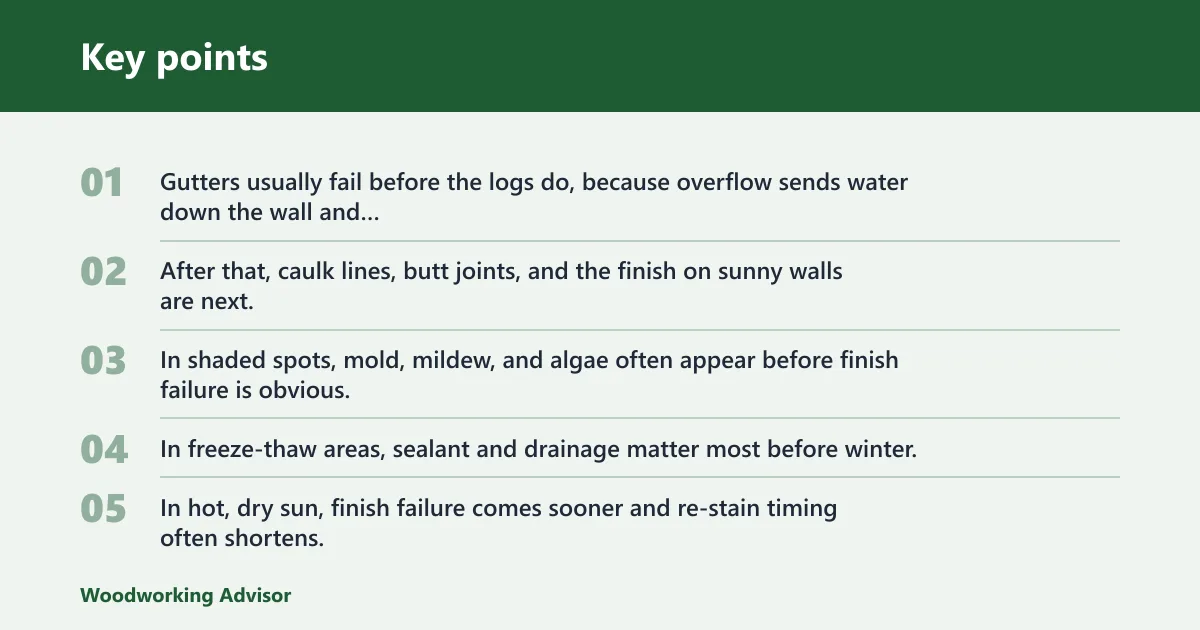
Gutters usually fail before the logs do, because overflow sends water down the wall and onto the base. After that, caulk lines, butt joints, and the finish on sunny walls are next. In shaded spots, mold, mildew, and algae often appear before finish failure is obvious.
Weather shifts the schedule. In freeze-thaw areas, sealant and drainage matter most before winter. In hot, dry sun, finish failure comes sooner and re-stain timing often shortens. In humid shade, cleaning and mildew control matter more often because the surface stays wet longer.
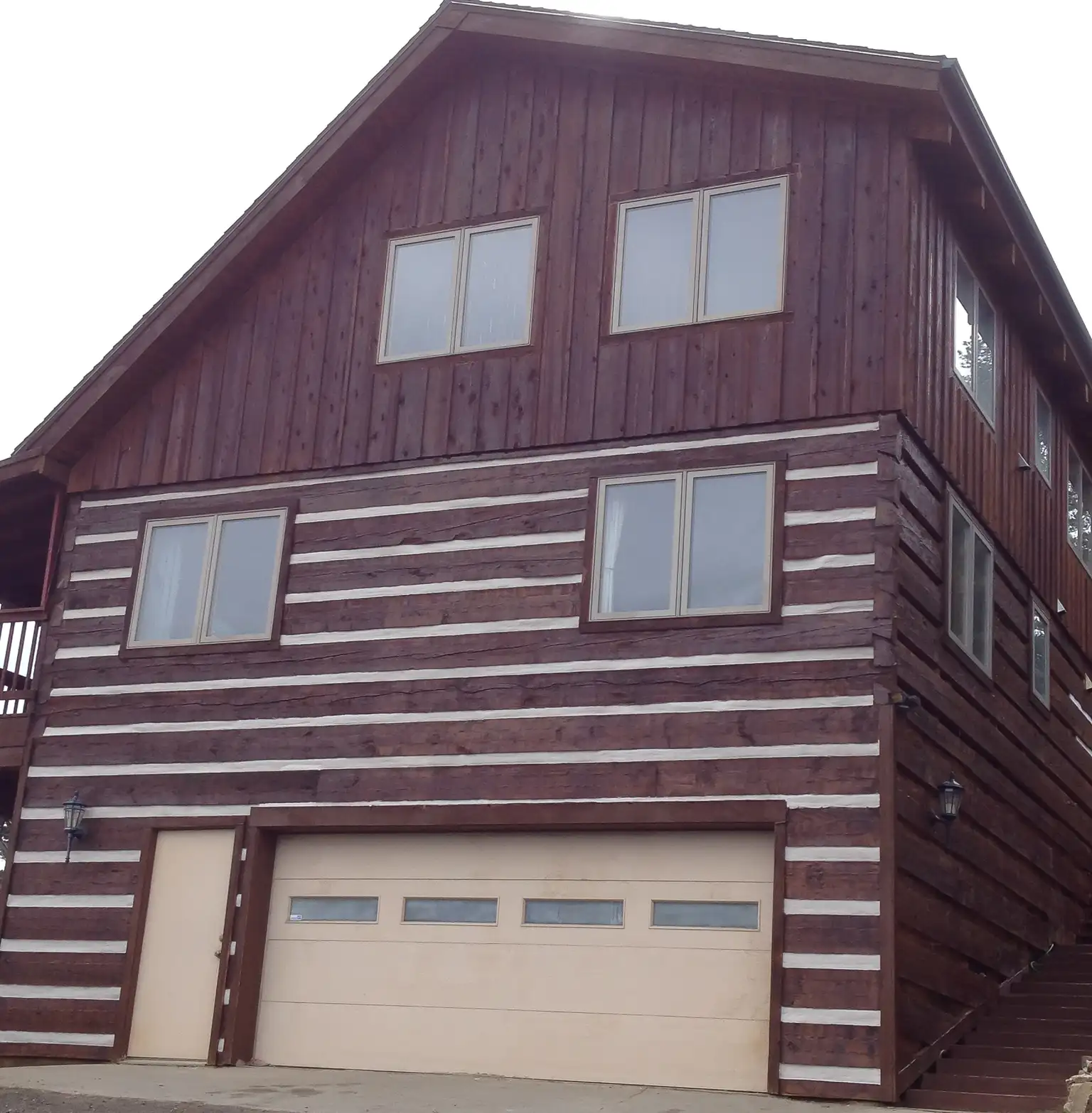
How do you clean a log cabin exterior?
Clean with a hose, soft brush, and a non-toxic exterior cleaning product designed to be applied and then washed off. Let the cleaner work for about 5-10 minutes, then rinse gently. Never use a pressure washer on log cabin walls, because it can cut fibers and drive water into the wood.
Soft wash basics
Start at the top and work down. Use low pressure from a safe distance of 12–18 inches if you are soft washing, and let the cleaner do the work. Rinse only after loosened dirt, mildew, or algae has released. If the wall still looks dull after rinsing, repeat the cleaning step instead of pushing harder.
For light dust, pollen, and cobwebs, a hose and soft brush are usually enough. For mildew or algae, use an oxygen-based cleaner or a mild solution made for exterior wood. Scrub only as much as needed to lift the film without roughing up the grain.
When pressure washing does more harm than good
Pressure can open checks, lift fibers, and push moisture deeper than the surface can dry. A common mistake is scrubbing a weathered log wall harder when mildew spots keep reappearing. That often leaves furred wood, which then holds more water and takes finish unevenly.
Say your north wall has green algae and a black streak below a gutter corner. A soft wash with a cleaner, a 5-10 minute dwell time, and a gentle rinse is the right first move. If the stain remains after that, the problem is usually drainage or finish failure, not just dirt.
What should you inspect on the logs?
Inspect for checks, gaps, discoloration, soft spots, rot, and insect activity. The key question is whether the problem is only on the surface or whether wood structure has been lost. Surface discoloration can wait a bit. Soft wood, spreading cracks, or daylight through joints should move up the list fast.
Checks, gaps, and discoloration
Checks are normal in logs, but they become a risk when they stay open to water or connect with joints. Look for widened checks on sunny sides, gaps at butt joints, and dark staining that follows a leak path. If you can see light through a joint, treat it as urgent.
Soft wood, rot, and insect damage
Probe questionable areas gently with a screwdriver or awl. Soft wood that gives way, dark crumbly edges, or a damp smell often means rot, not cosmetic wear. Look for carpenter ants, termites, and carpenter bee holes, along with frass or fresh sawdust.
Suppose a 3-foot section below a window sill feels spongy and shows repeated stain darkening after rain. That is no longer a cleaning problem. It needs diagnosis, because finish work will not stop active decay if water is reaching compromised wood.
How should you handle stains, sealants, and chinking?
Stain and sealant protect against UV and moisture, but they fail at different speeds. Most log homes need professional staining every three to five years, and sealer and stain are recommended every 3–5 years. A quick water-beading test helps decide whether a recoat is due.
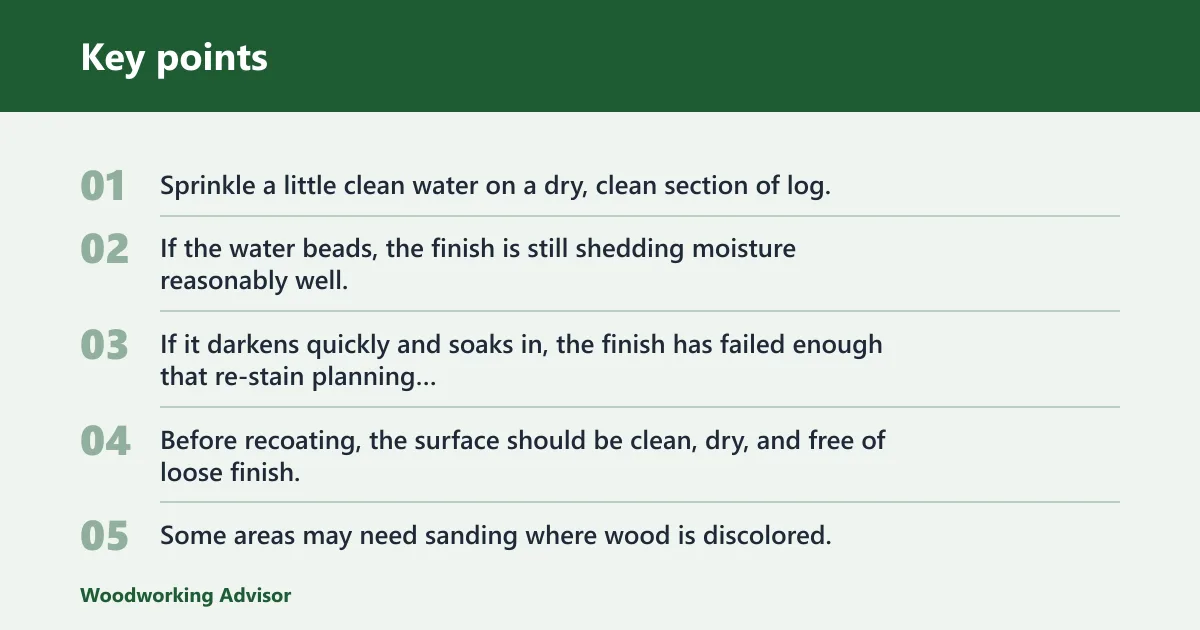
Finish failure signs and the water-beading test
Sprinkle a little clean water on a dry, clean section of log. If the water beads, the finish is still shedding moisture reasonably well. If it darkens quickly and soaks in, the finish has failed enough that re-stain planning should begin.
Before recoating, the surface should be clean, dry, and free of loose finish. Some areas may need sanding where wood is discolored. A six-inch random orbit sander with an 80-grit disk works well for removing discolored wood, but sanding should stay limited to the damaged area so you do not create more prep than needed.
Crack sealing with backer rod and caulk
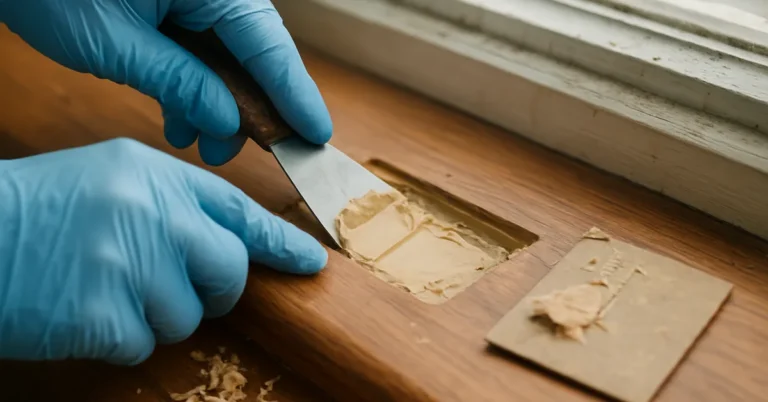
Sealant and chinking fill checks and butt joints so moisture cannot move into the wall. Filling checks uses backer rod, Frog Tape, color-matched caulk, and a caulk gun. Use backer rod where a gap is deep enough to need support, then tool the caulk neatly.
Touch up before freeze. Cold weather can open small gaps wider and trap moisture where it expands. If a check keeps reopening, or if gaps appear where logs meet after each season, the problem may be movement rather than just a missing bead of sealant.
When a finish problem becomes a repair problem
A finish problem is cosmetic when the wood beneath is sound. It becomes a repair problem when you see repeated peeling, soft wood, or water entry around joints. At that point, spot recoating will not hold long enough to justify the labor.
What else should you check before winter?
Before winter, focus on water control: gutters, downspouts, roof runoff, window and door seals, and drainage at the base. Snowmelt and ice can push water into weak spots fast. Remove snow buildup near the base of your cabin to avoid moisture damage.
Gutters and downspouts
Remove leaves and twigs, then check for cracks and leaks. Downspouts should move water away from walls and the foundation, not dump it beside the cabin. If one corner stays wet after storms, look upstream at the gutter slope and outlet.
Roof runoff, windows, and doors
Inspect shingles or metal from the ground for curling, loose metal, moss, or obvious lifting. Roof runoff directly affects wall durability because splashback and overflow keep the logs wet. Check that windows and doors open and close normally, seals are not failed, and sliding hardware moves smoothly.
Drainage and foundation
Soil should slope away from the cabin. Keep water from pooling near walls and manage snowmelt so it does not linger by the base. Keep vegetation trimmed at least 2 feet from the cabin walls so air can move and wet debris does not stay packed against the wood.
When does maintenance become a repair project?
Maintenance typically becomes a repair project when water has already entered the wall, wood has softened, or insect activity is active. At that point, the goal shifts from upkeep to stopping loss. Cosmetic changes can wait if the structure is sound, but active decay cannot.
Signs the exterior needs pro help
Call a pro if you find daylight between logs, repeated failed seals, soft spots, active termites, carpenter ants, or carpenter bee damage that keeps returning. Large areas of bare wood, peeling finish over wide sections, or rot near openings also point beyond normal upkeep.
Cosmetic change versus damage repair
Can you change the exterior of a log cabin? Yes, but the order matters. If the goal is a new look, handle drainage, cleaning, and repairs first. A color change, new stain tone, or finish system is reasonable when the wood is sound. If the wall is failing, changing the appearance only hides the problem.
How much does it cost to maintain a log cabin? The answer depends on task size. Washing is usually the lowest-cost exterior job, while stain prep, crack sealing, and gutter work sit in the middle. Professional stain work and structural repairs cost more because prep, drying time, and access drive labor. When soft wood, repeated sealing failure, or roof runoff damage appear, the decision shifts from maintenance spending to repair spending.
Frequently asked questions
Can you change the exterior of a log cabin?
Yes, but only after you control water and confirm the wood is sound. A stain color change, new finish, or selective sanding can alter the look. If logs are soft, rotted, or repeatedly wet, the exterior needs repair first, not a cosmetic change.
Do log cabins require a lot of maintenance?
They require more exterior attention than many wall systems because wood moves, weathers, and absorbs moisture. The work is manageable if you keep to a schedule: inspect twice yearly, clean annually, touch up caulk, and re-stain on the 3–5 year cycle when the finish stops beading water.
How much does it cost to maintain a log cabin?
Costs vary by task. Cleaning, gutter clearing, and minor caulk touch-ups are usually modest. Stain prep, recoat work, and insect or rot repairs cost more because of labor and drying time. If the wall needs stripping, extensive sanding, or wood replacement, the job is no longer basic maintenance.
How often should a log cabin be washed and sealed?
Wash the exterior yearly, and inspect every log wall, touch up caulk, and seal any carpenter bee holes at the same time. Re-stain and reseal on a 3–5 year cycle, sooner in harsh sun, damp shade, or freeze-thaw exposure. The water-beading test helps confirm timing.
Should you pressure wash log cabin walls?
No. Pressure washing can damage the wood surface and drive water into the wall. Soft washing from a safe distance of 12–18 inches is the safer method, with the cleaner doing the work. Use a hose, soft brush, and appropriate cleaner instead of high force.
How do you seal cracks in log cabin logs?
Clean and dry the area first, then use backer rod where the crack is deep enough to need support. Mask edges with Frog Tape, apply color-matched caulk with a caulk gun, and tool it smooth. Touch up before freeze so moving wood does not open the gap wider.
What should I check on a log cabin before winter?
Check gutters, downspouts, roof runoff, windows, doors, drainage, and foundation slope. Remove snow buildup near the base, clear leaves and twigs, and inspect caulk lines for gaps. Winter makes small water paths worse, so anything that admits moisture should be fixed before freeze.
How do I stop mold and mildew on a log cabin exterior?
Reduce moisture first. Clean shaded or damp areas with an oxygen-based cleaner or mild solution, then improve drainage, trim vegetation at least 2 feet away, and keep gutters clear. If mildew returns quickly, the wall may be staying wet too long or the finish may be failing.
Sponsored / affiliate links. As an Amazon Associate I earn from qualifying purchases. I may earn additional commission from eligible campaigns.