How Much Does Mahogany Cost? $3-$22 Per Board Foot (2026)
Genuine mahogany runs $10-$18 per board foot in 2026, African mahogany $8-$20, and Philippine mahogany (a different genus entirely) just $3-$7 — but a CITES export permit requirement on true Swietenia species keeps supply tight and prices climbing. This guide covers real 2026 pricing by species and grade, what actually drives the cost up or down, and how to get the best price when you buy.
Insert your Affiliate Disclosure reusable block here
Quick Answer
Expect $10-$18/board foot for genuine (Honduran/Cuban-line) mahogany, $8-$20 for African mahogany, and $3-$7 for Philippine mahogany — which isn’t true mahogany at all. Furniture-grade, quartersawn, and figured boards sit at the top of each range; utility-grade and bulk-quantity purchases sit at the bottom.
Mahogany Prices by Species in 2026
“Mahogany” on a price tag can mean three very different woods, and the species is the single biggest price driver. Genuine mahogany (Swietenia macrophylla, often sold as Honduran or “genuine” mahogany) costs the most because it’s the real, CITES-regulated species; African mahogany (Khaya spp.) is a related but unregulated substitute; Philippine mahogany is usually Shorea or Meranti — a different family entirely, sold under the mahogany name mostly for its similar color.
| Species | 2026 Price/Board Foot | Best For |
|---|---|---|
| Genuine (Honduran) Mahogany | $10-$18 | Fine furniture, musical instruments, heirloom pieces |
| African Mahogany (Khaya) | $8-$20 | Cabinetry, boat trim, architectural millwork |
| Philippine Mahogany (Shorea/Meranti) | $3-$7 | Budget trim, plywood cores, exterior doors |
| Premium figured/quartersawn (any species) | $22-$30+ | Show-grade veneer, high-end cabinetry fronts |
📊 Real bulk pricing example: Bell Forest Products prices 4/4 African mahogany at $10.20/bf for under 10 board feet, dropping to $9.20/bf at 10-99 bf and $7.65/bf at 100-499 bf — buying in larger quantity tiers is one of the few price levers you actually control. Source: Bell Forest Products, 2026
Prices by Grade: Furniture, Cabinet & Utility
Within any one species, grade moves the price almost as much as species does. Furniture-grade mahogany — clear, straight-grained, free of sapwood and knots — runs $10-$15/board foot. Cabinet-grade, with minor character marks acceptable on hidden faces, runs $6-$10/board foot. Utility-grade, which may include sapwood streaks or small knots, drops to $3-$6/board foot and is the right call for jigs, drawer boxes, or anything that gets painted.
If you’re ready to buy a manageable quantity to test a species or start a small project, shopping a dedicated mahogany-for-sale supplier or a pre-cut project pack is the lowest-friction way to get real boards in hand without committing to a full bulk order.
Best Mahogany Lumber Pick
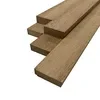 |
Exotic Wood Zone African Mahogany Boards (Pack of 5) – $48.90 Kiln-dried 3/4″ x 2″ x 36″ African mahogany boards — a real, ready-to-cut way to see current per-board pricing (about $9.78/board) match the ranges in the table above before committing to a full lumberyard order.
|
As an Amazon Associate we earn from qualifying purchases.
What Drives Mahogany’s Price Up or Down?
Four factors move the price of any mahogany board: legal status, grain figure, thickness/quantity, and where you buy it. Genuine mahogany (Swietenia macrophylla) has been listed under CITES Appendix II since 2003, meaning every international shipment needs an export permit — a real bottleneck that keeps genuine mahogany 30-50% more expensive than African mahogany even though the woods look almost identical.
Grain figure is the second-biggest lever. Plain, straight-grained boards cost the least; ribbon-stripe, quartersawn, or “pommele” figured boards can add $5-$15 per board foot over plain stock of the same species and grade, because figured logs are rarer and yield less usable lumber per tree.
“When we’ve priced out mahogany for shop projects, quartersawn boards with ribbon-stripe figure have routinely run 30-40% more than plain-sawn stock of the same grade — the figure itself, not just the species, is what pushes a board past $20 a board foot.”
Genuine Mahogany vs. Look-Alikes: Why “Mahogany” Prices Vary So Much
Genuine mahogany is Swietenia macrophylla, native to Central and South America. African mahogany (Khaya spp.) is a related but botanically distinct genus with similar working properties — wood-database.com lists its Janka hardness at 850 lbf, close enough to genuine mahogany’s 800-900 lbf range that most woodworkers can’t tell them apart by feel. Philippine mahogany is the biggest mismatch: it’s actually Shorea or Parashorea (lauan), a completely different family, sold under the mahogany name for its reddish-brown color alone.
| Wood | Botanical Family | Janka Hardness | Typical Price/Bd Ft |
|---|---|---|---|
| Genuine Mahogany | Meliaceae (Swietenia) | 800-900 lbf | $10-$18 |
| African Mahogany | Meliaceae (Khaya) | 850 lbf | $8-$20 |
| Philippine Mahogany | Dipterocarpaceae (Shorea) | 460-500 lbf | $3-$7 |
The hardness gap matters as much as the price gap: Philippine mahogany’s Janka rating is roughly half that of genuine or African mahogany, so it dents and wears faster — part of why it’s priced as a budget substitute rather than a true alternative. For a deeper look at how to tell the species apart before you buy, see our guide on what kind of wood mahogany actually is.
Mahogany vs. Other Hardwoods: How the Price Compares
Mahogany sits in the upper-middle of the hardwood price range — pricier than domestic oak and cherry, but cheaper than imported teak.
| Wood | Typical 2026 Price/Bd Ft | How It Compares to Mahogany |
|---|---|---|
| Red Oak | $4-$7 | Roughly half the price; harder, more open grain |
| Cherry | $7-$11 | Close to African mahogany; ages darker over time |
| Genuine Mahogany | $10-$18 | — |
| Black Walnut | $10-$16 | Comparable price; darker color, similar workability |
| Teak | $18-$35 | Notably more expensive; higher natural oil/weather resistance |
How to Get the Best Price When Buying Mahogany
- Buy in the vendor’s next quantity tier: most hardwood suppliers price in wholesale board-foot brackets (under 10 bf, 10-99 bf, 100+ bf) — ordering just past a threshold with a shop partner can cut your per-board-foot cost 10-25%.
- Choose cabinet-grade when the piece will be painted or hidden: you’ll save $3-$8/board foot over furniture-grade for identical structural performance.
- Buy rough-sawn, not surfaced: S2S (surfaced two sides) lumber typically costs 15-20% more for material you’ll re-flatten anyway on most shop projects.
- Verify the species before paying a genuine-mahogany price: ask for the botanical name (Swietenia vs. Khaya vs. Shorea) in writing — a supplier unwilling to confirm it is a red flag.
- Check import documentation on genuine mahogany: legitimate sellers of Swietenia macrophylla should be able to show CITES export paperwork; its absence usually means you’re actually buying African or Philippine stock at a genuine-mahogany price.
Frequently Asked Questions
How much does mahogany wood cost per board foot?
Genuine mahogany costs $10-$18 per board foot, African mahogany $8-$20, and Philippine mahogany (a different, softer species) $3-$7. Premium figured or quartersawn boards of any species can exceed $22-$30 per board foot. Grade, quantity purchased, and the supplier’s location all shift these ranges.
Is mahogany more expensive than other woods?
Yes, compared to domestic hardwoods like red oak ($4-$7/bf) or cherry ($7-$11/bf), but no compared to teak ($18-$35/bf). Genuine mahogany’s $10-$18/bf typical range sits close to black walnut, making it a mid-to-premium tier hardwood rather than the most expensive option available.
What affects the price of mahogany?
Species (genuine vs. African vs. Philippine), grade (furniture vs. cabinet vs. utility), grain figure (plain vs. quartersawn/ribbon-stripe), and purchase quantity all move the price. Genuine mahogany’s CITES Appendix II export-permit requirement since 2003 also keeps it scarcer, and therefore pricier, than unregulated substitutes.
Where can I buy mahogany wood?
Specialty hardwood suppliers (online and local lumberyards) carry the widest grade and thickness selection, and most sell in the quantity brackets that make bulk pricing worthwhile. Small pre-cut project packs, like kiln-dried African mahogany boards sold on Amazon, are a lower-commitment way to confirm species and grain before a full lumberyard order.
Is Philippine mahogany real mahogany?
No. Philippine mahogany is usually Shorea or Parashorea (lauan), from a completely different botanical family than genuine mahogany’s Swietenia genus. It shares a similar reddish-brown color but has roughly half the Janka hardness, which is why it’s priced at $3-$7/bf instead of $10-$18/bf.
Mahogany’s price ultimately comes down to which species you’re actually buying and what grade the project needs — genuine mahogany’s CITES-regulated scarcity keeps it at the top of the range, African mahogany offers nearly identical performance for less, and Philippine mahogany is a budget substitute rather than a true alternative. Match the grade to the job, buy in the next quantity bracket when you can, and confirm the botanical species before paying a premium price. For the reasons behind these numbers, see why mahogany is so expensive.
Sponsored / affiliate links. As an Amazon Associate I earn from qualifying purchases. I may earn additional commission from eligible campaigns.