Is Mahogany Food Safe? Toxicity, Dust and Finish Facts
Mahogany is not poisonous to eat from, but it is not an ideal food-contact wood either. The Wood Database lists genuine Honduran mahogany as a sensitizer, a risk that comes mostly from dust while you build, and its large open pores hold moisture. This guide covers toxicity, what US food rules say about wood, which “mahogany” you actually have, and which finishes are safe.
Is Mahogany Food Safe? The Short Answer
Yes for occasional, dry or lightly wet use once it is sealed with a food-grade finish. No for heavy daily use such as chopping raw meat or stirring hot pots. Three separate issues decide it: the wood’s sensitizer dust, its open-pored grain, and whatever finish is on it. Most sites blur these together, which is how the old claim that mahogany’s oils leach into food keeps circulating.
Best Food-Safe Finish Pick | |
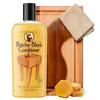 |
Howard Products Butcher Block Conditioner and Food Grade Mineral Oil, 12 Fl Oz A food-grade mineral oil and wax conditioner for sealing open-pored wood like mahogany before it touches food.
|
As an Amazon Associate we earn from qualifying purchases.
Is Mahogany Toxic? What the Wood Database Actually Says
The Wood Database entry for Honduran mahogany (Swietenia macrophylla) says: “Although severe reactions are quite uncommon, Honduran mahogany has been reported as a sensitizer.” The listed effects are eye, skin and respiratory irritation, with less common reports of asthma-like symptoms, nausea and hypersensitivity pneumonitis. Its wood allergies and toxicity chart lists African mahogany as an irritant and sensitizer too.
That is a very different claim from “mahogany is toxic to eat from.” The same source notes that very few woods are toxic in themselves; the real issue is allergic reaction in sensitive people. We found no source showing that a finished mahogany board or bowl releases a harmful substance into food, so any article stating that as fact, including this page’s earlier version, should be treated as unsupported.
Mahogany Dust vs. a Finished Kitchen Item
The person with the most exposure is the maker, not the eater. Sanding, sawing and routing put fine dust in the air and on your skin, and a sensitizer can make later exposures worse rather than easier. The Wood Database is blunt that all inhaled wood dust is hazardous to long-term health.
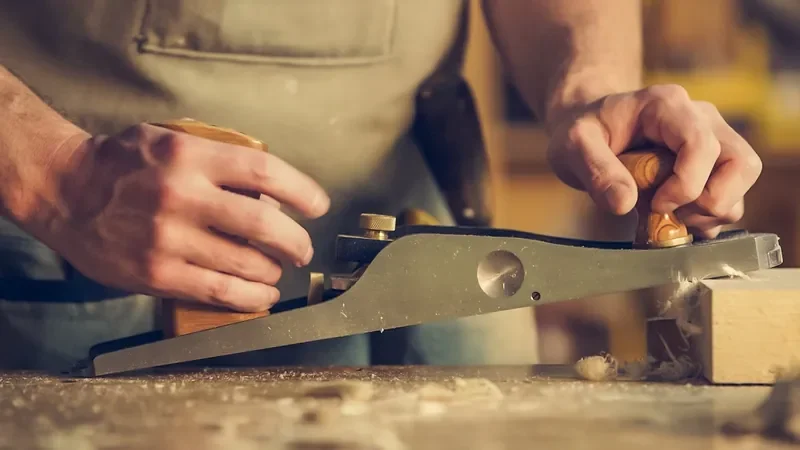
- Wear a fitted respirator when machining or sanding, and run dust collection.
- Wipe the piece with a damp cloth after the last sanding grit so no dust is left in the pores.
- Keep sanding and food preparation in separate spaces.
- If you have reacted to mahogany, teak or similar woods before, choose another species for anything that touches your hands and mouth.
Finishing helps the finished item too, but does not remove the risk entirely. The Wood Database says a food-safe finish greatly lessens the allergy risk for finished projects but does not eliminate it, and it frames the choice as a personal risk decision.
What Do US Food Rules Say About Mahogany and Wood?
Mahogany is not banned, and no rule singles it out. The FDA Food Code (section 4-101.17, adopted in state versions for restaurants and food businesses, not home kitchens) says wood may not be used as a food-contact surface except hard maple or an equivalently hard, close-grained wood, which may be used for cutting boards, cutting blocks, bakers’ tables and utensils such as rolling pins, salad bowls and chopsticks.
Read that against the numbers below and mahogany is a hard sell for a commercial kitchen: it is much softer than maple and its pores are large. At home the rule is guidance, not law, but it explains why professionals reach for maple. State and local health departments can differ, so check yours if you sell wooden kitchenware.
| Property | Honduran mahogany | Hard maple |
|---|---|---|
| Janka hardness | 900 lbf | 1,450 lbf |
| Texture (Wood Database) | Medium, uniform; large open vessels | Fine, even; diffuse porous |
| Sensitizer reports | Yes (eye, skin, respiratory) | Yes (skin, nose, asthma-like) |
| Fits Food Code wording | Unlikely (softer, larger pores) | Named directly |
Note the sensitizer row: maple can also irritate, so a wood being a reported sensitizer does not disqualify it. Hardness and pore size are what separate them for food use.
Which Mahogany Items Are Reasonable for Food?
This table is our judgment from the hardness, pore and contact-time facts above, not a test result. For a full cutting-board breakdown, see our guide to using mahogany for a cutting board.
| Item | Contact type | Verdict with sealed mahogany |
|---|---|---|
| Charcuterie or serving board | Dry food, short contact, no knife | Reasonable; add parchment under wet foods |
| Salad bowl | Wet, acidic dressing | Acceptable if oiled and hand-washed |
| Rolling pin | Dry dough | Reasonable |
| Cutting board | Knife cuts, raw meat, heavy washing | Not recommended for daily use |
| Spoons and spatulas | Hot, wet, in the mouth | Poor first choice; use maple or another tight-textured wood |
Three Mahogany Food-Safety Myths, Corrected
- Myth: mahogany oils leach into food and poison it. No source we checked supports this; the documented concern is sensitization, mostly from dust.
- Myth: a sealed board carries zero risk. A food-safe finish lowers the allergy risk but does not eliminate it, according to the Wood Database.
- Myth: a food-safe finish makes any wood suitable for a cutting board. Finish changes the surface, not the wood’s hardness or pore size, so a soft, open-pored board still scars and holds moisture.
Which “Mahogany” Are You Holding?
Genuine Honduran mahogany is CITES Appendix II listed, so much of what is sold as “mahogany” is another species. African mahogany is also a reported sensitizer, and mahogany-look plywood, such as the okoume sold as marine ply, is bonded with adhesives and is not made for food contact; see our okoume vs mahogany comparison for how they differ. A product labeled with a mahogany color is often just stained, and stain is not a food-safe finish. For the wood itself, see our mahogany wood properties guide or how it stacks up in teak vs mahogany.
How to Finish Mahogany for Food Contact
- Sand to a smooth finish and remove all dust with a damp cloth.
- Flood the surface with food-grade mineral oil, let it soak in, and wipe off the excess.
- Repeat until the wood stops absorbing, then re-oil whenever it looks dry or pale.
- Hand-wash with mild soap, dry upright, and never soak or use a dishwasher.
Avoid mahogany-tinted stains, and read the label before using any drying-oil or varnish product; our Danish oil food safety guide explains why. Compare oils in tung oil vs mineral oil, and see how to make wood food safe for the wider process. If anyone in your home has a nut allergy, skip nut-based oils such as walnut oil.
Better Wood Choices for Daily Food Use
If the item will be used every day, pick a tight-textured hardwood and keep mahogany for display and light-duty pieces. Hard maple is the benchmark; you can weigh it against another popular option in maple vs walnut. Already own a mahogany board? Oil it, keep it for serving, and there is no reason to throw it out.
Frequently Asked Questions
Is mahogany toxic to humans?
Genuine mahogany is not poisonous in the way some woods are, but the Wood Database lists Honduran mahogany as a sensitizer. Most reactions involve eye, skin or breathing irritation from dust while working the wood, and severe reactions are described as quite uncommon. A sealed, finished item carries much less exposure.
Can you use mahogany for a cutting board?
You can, but it is not the best choice for daily chopping. Genuine mahogany is about 900 lbf on the Janka scale and has large open pores, so knife grooves and moisture linger. Hard maple, at 1,450 lbf, is the wood the FDA Food Code names for commercial cutting boards.
Is mahogany dust dangerous?
It can irritate. The Wood Database notes that all inhaled wood dust is hazardous to long-term health, and mahogany is a reported sensitizer. Wear a well-fitted respirator, use dust collection, and keep the dust out of any space where food is prepared.
Is mahogany food safe once sealed with mineral oil?
For occasional-use items such as a serving tray or salad bowl, yes, a food-grade mineral oil finish is the usual approach. The Wood Database says a food-safe finish greatly lessens, but does not eliminate, the allergy risk for finished wood projects.
Are mahogany spoons and utensils safe to cook with?
They are a poor first choice. Utensils spend long periods wet, hot and in your mouth, which is hard on open-pored wood. Tight-textured woods such as hard maple hold up better, so save mahogany for decorative or dry-use pieces.
Bottom line: finished mahogany is a reasonable choice for serving pieces, a poor one for daily chopping and utensils, and the bigger health question is the dust you breathe while making it.
Sponsored / affiliate links. As an Amazon Associate I earn from qualifying purchases. I may earn additional commission from eligible campaigns.