Mahogany Desk Sizes & Styles: Which One Fits Your Office?
A mahogany desk comes in three common widths — 48, 60, and 72 inches — and the wrong pick either cramps your room or leaves an oversized desk with 24 inches of clearance you don’t have space for. Ergonomic guides recommend at least 24–30 inches behind your chair to push back and stand comfortably. This guide covers sizing your desk to your room, matching a style to your work, and real mahogany-look desks at different price points.
Sizing a Mahogany Desk to Your Room
Best Mahogany-Finish Desk Pick
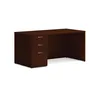
HON MOD Executive Desk, 60″ W, Mahogany – $586.89
A 60-inch desk fits the mid-size category from the sizing table above — note this is a mahogany-toned laminate finish, not solid wood, which is exactly the budget-friendly trade-off worth knowing before you buy.
- Best for: a standard home office needing the mahogany look without solid-wood pricing
- Why we picked it: two storage pedestals and desktop cable grommets, sized to the 60-inch “standard home office” tier above
- Main drawback: laminate over engineered wood, not solid mahogany — won’t refinish or sand out scratches like real wood
As an Amazon Associate we earn from qualifying purchases.
Desk width is the first decision, and it should be driven by your room’s dimensions, not just how much desk looks impressive in a showroom photo.
| Width | Shape | Good for |
|---|---|---|
| 48″ | Rectangular | Small home offices, laptop-only setups |
| 60″ | Rectangular or L-shaped | Dual monitors, standard home office |
| 72″+ | L-shaped or U-shaped | Multiple monitors, paperwork-heavy or executive use |
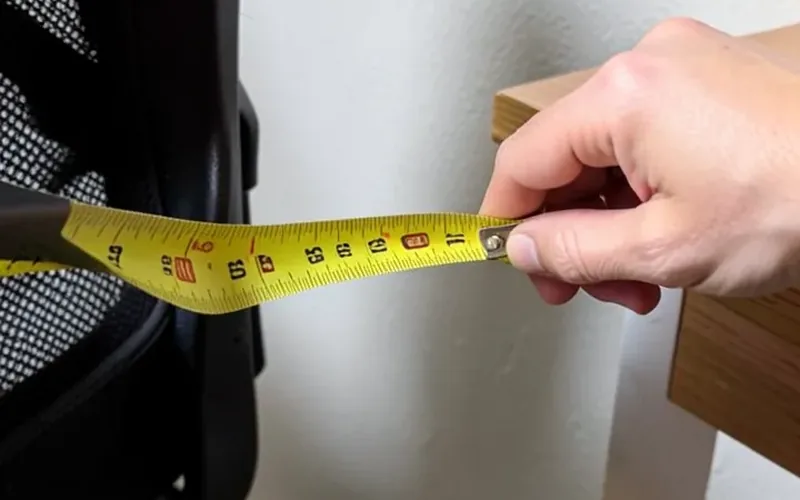
📊 Leave at least 24–30 inches of clearance behind your chair to push back and stand without hitting a wall or bookshelf — 36–48 inches if anyone needs to walk behind you while you’re seated. Measure this before ordering a desk, not after. Source: Dimensions.com office workstation clearance guidelines.
Matching a Style to How You Actually Work
Mahogany desks generally fall into three style families, and each suits a different kind of work more than the others.
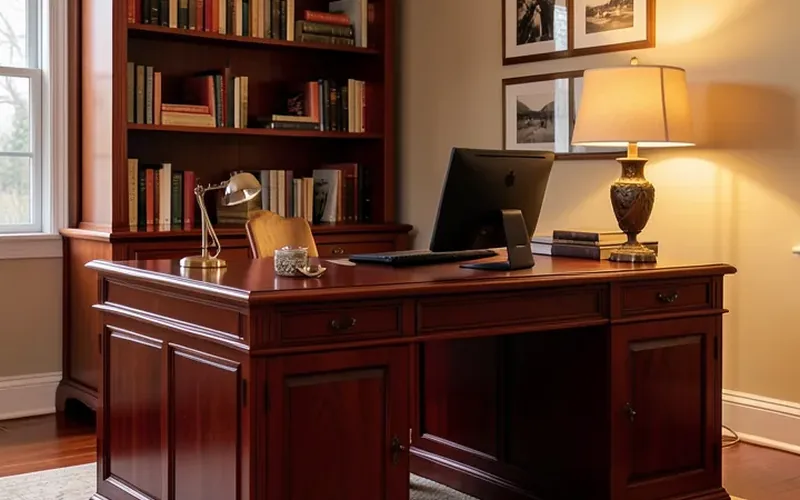
- Traditional/executive: raised panel fronts, brass hardware, a large single work surface — best for a dedicated home office or a role where clients see the desk.
- Writing desk: smaller footprint, often no drawers or just one or two — best for a laptop-first setup in a bedroom or living space.
- L-shaped/executive with return: two work surfaces at 90° — best when you need separate zones for a computer and paperwork, or two monitors plus reference material.
Solid Wood vs. Mahogany-Finish: Know Which You’re Buying
Many desks marketed with “mahogany” in the name use a mahogany-toned laminate or veneer over engineered wood, not solid mahogany lumber — that’s not dishonest, but it changes what you can expect from the desk long-term. For a full breakdown of how to tell solid mahogany from veneer before you buy, and which one is worth the price difference, see our solid mahogany vs. veneer buying guide.
Placement and Lighting
Position the desk perpendicular to a window rather than facing it directly — direct backlight from a window behind a monitor causes eye strain, and facing straight into a window causes glare on the screen. A desk lamp with a warm (2700–3000K) bulb complements mahogany’s reddish tone better than a cool-white LED, which can wash out the wood’s color.
Where to Buy and What Drives Price
| Price range | What you typically get |
|---|---|
| Under $400 | Mahogany-finish laminate over engineered wood, smaller sizes |
| $400–$900 | Better hardware and construction, still usually a finish/veneer rather than solid mahogany |
| $900+ | Solid mahogany or high-grade veneer construction, larger executive sizes |
Furniture retailers, Amazon, and Wayfair carry the widest size/style selection; local and estate-sale furniture often has genuine solid mahogany pieces from decades ago at a fraction of new solid-wood prices, though you’ll want to check for veneer damage and structural soundness before buying used.
Browse more mahogany furniture guides on our mahogany hub, or see our ash wood desk guide for a lighter, more affordable alternative.
Frequently Asked Questions
What size mahogany desk do I need?
48 inches fits small offices or laptop-only setups, 60 inches suits a standard home office with dual monitors, and 72 inches or an L-shape suits heavier paperwork or multi-monitor setups. Match the size to your room, leaving at least 24-30 inches of clearance behind the chair.
Is a mahogany desk worth the price?
It depends whether you’re buying solid mahogany or a mahogany-finish laminate. Solid mahogany (usually $900+) lasts generations and can be refinished; laminate finishes cost far less but can’t be sanded and refinished the same way.
How do I maintain a mahogany desk?
Dust weekly with a soft cloth, avoid harsh chemicals, use coasters and pads under hot or wet items, and keep it out of direct sunlight to prevent fading. Solid mahogany can be polished periodically; laminate finishes should just be wiped clean.
What’s the best desk lighting for a mahogany desk?
A warm-toned bulb (2700-3000K) complements mahogany’s reddish-brown color better than cool-white LED lighting, which can wash out the wood tone. Position the desk perpendicular to windows to avoid glare or backlighting.
Conclusion
Start with your room’s dimensions and clearance space, then pick a style that matches how you actually work — not the other way around. Know whether you’re buying solid mahogany or a mahogany-finish laminate before you check out, since that decision affects both price and how long the desk lasts.
Sponsored / affiliate links. As an Amazon Associate I earn from qualifying purchases. I may earn additional commission from eligible campaigns.