Walnut Wood Review: Pros and Cons for Woodworking
Walnut is a strong buy for visible furniture parts, tabletops, and turnings when you want dark color and clean machining. Mahogany is often the better value for painted, stained, or large-panel work. Pick the wrong species, and you can spend more on lumber than the project can justify, then fight color mismatch, blotching, or movement that weakens the result. This review weighs walnut’s appearance, workability, stability, and cost against mahogany and other options, with project-by-project guidance for cabinets, drawers, veneer, and shop fixtures.
Verdict

Black walnut earns its premium when the heartwood stays visible and the joinery is tight. It loses value fast when wide panels need perfect color matching, when the design depends on stain color rather than natural tone, or when the surface will take heavy wear. For those jobs, mahogany often gives a more predictable result at a lower risk of expensive waste.
Specs at a glance
| Property | Black walnut | Practical reading |
|---|---|---|
| Typical color | Dark brown heartwood with lighter sapwood | Heartwood is the draw; sapwood often needs selection or exclusion in visible work |
| Grain and figure | Usually straight grain, with curl, crotch, or pommele in figured boards | Figure adds value, but also raises panel-matching risk |
| Janka hardness | About 1,010 lbf | Harder than mahogany, softer than many oaks; good, not dent-proof |
| Durability | Moderate for indoor use | Fine for furniture and casework; not a reason to use it outdoors |
| Workability | Machines, planes, and carves well | One of walnut’s biggest selling points |
| Movement after milling | Moderate; still needs proper acclimation | Mill near final moisture content and allow time before final machining |
| Best finish look | Oil, lacquer, and clear film finishes | Clear finishes usually beat stain when the color is already attractive |
Who it
Walnut suits woodworkers who want a dark, natural finish and are willing to pay for it. It makes sense for furniture, cabinet doors, drawer fronts, turned parts, and veneer panels where appearance matters more than maximum hardness or lowest cost.
It is a poor fit when the project needs uniform color across many wide boards, when the surface will get constant abuse, or when the design will be painted. In those cases, you are often paying for beauty you will hide or for a premium that does not return enough value.
What works
Heartwood appearance and figure
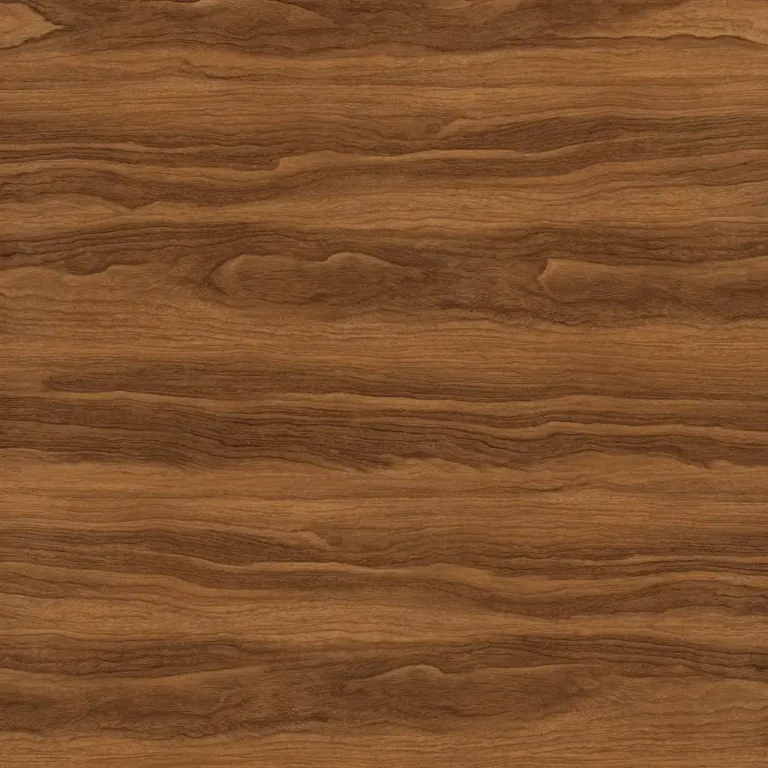
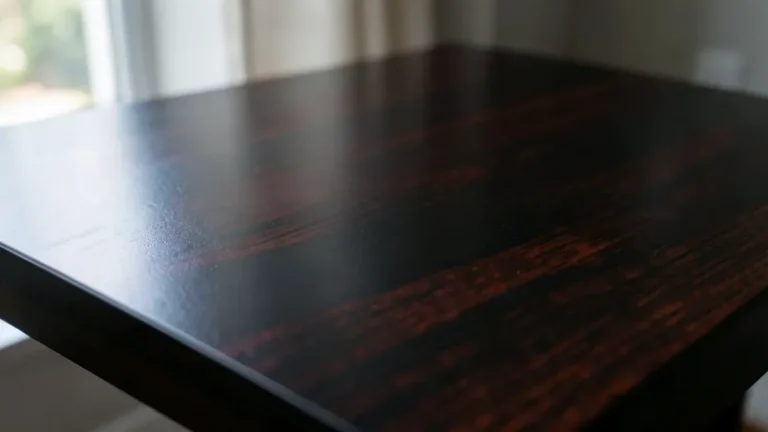
Black walnut heartwood is the reason most buyers choose walnut at all. The color usually ranges from pale chocolate to deep brown, sometimes with gray or purplish undertones, and the grain often machines cleanly enough to leave crisp edges and smooth surfaces.
Figure can be a major advantage. Crotch, curl, and feathered grain can turn a plain panel into a focal point, especially on a tabletop, cabinet door, or drawer front.
Finish results with oil and lacquer
Oil finish usually gives walnut the most natural, low-glare look. Lacquer and other clear film finishes also work well because they preserve depth without forcing the wood into a tinted appearance.
Pore filling is optional for many pieces, but it can matter on high-finish furniture where you want a flatter surface. Walnut’s open pores can leave a lightly textured look if you skip filler and use a high-gloss schedule.
Furniture-grade walnut for visible parts
Furniture-grade walnut is often sorted as clear stock or rustic stock. Clear boards command more money because they reduce knots, checks, mineral streaks, and sapwood patches that interrupt the design.
Panel matching changes the equation. A set of wide, bookmatched doors or a long tabletop can waste a lot of material if you must remove sapwood or chase a consistent dark tone across every board.
Cabinetry and casework
Walnut works well for face frames, doors, and drawer fronts when the color is meant to be seen. Veneer over stable core panels is often the smarter route for wide cabinet sides, large doors, or any run where seasonal movement could telegraph through the surface.
Solid walnut is still useful for trim, rails, stiles, and smaller visible parts. For broad cabinet panels, veneer often solves the cost and movement problem at the same time.
What does not?
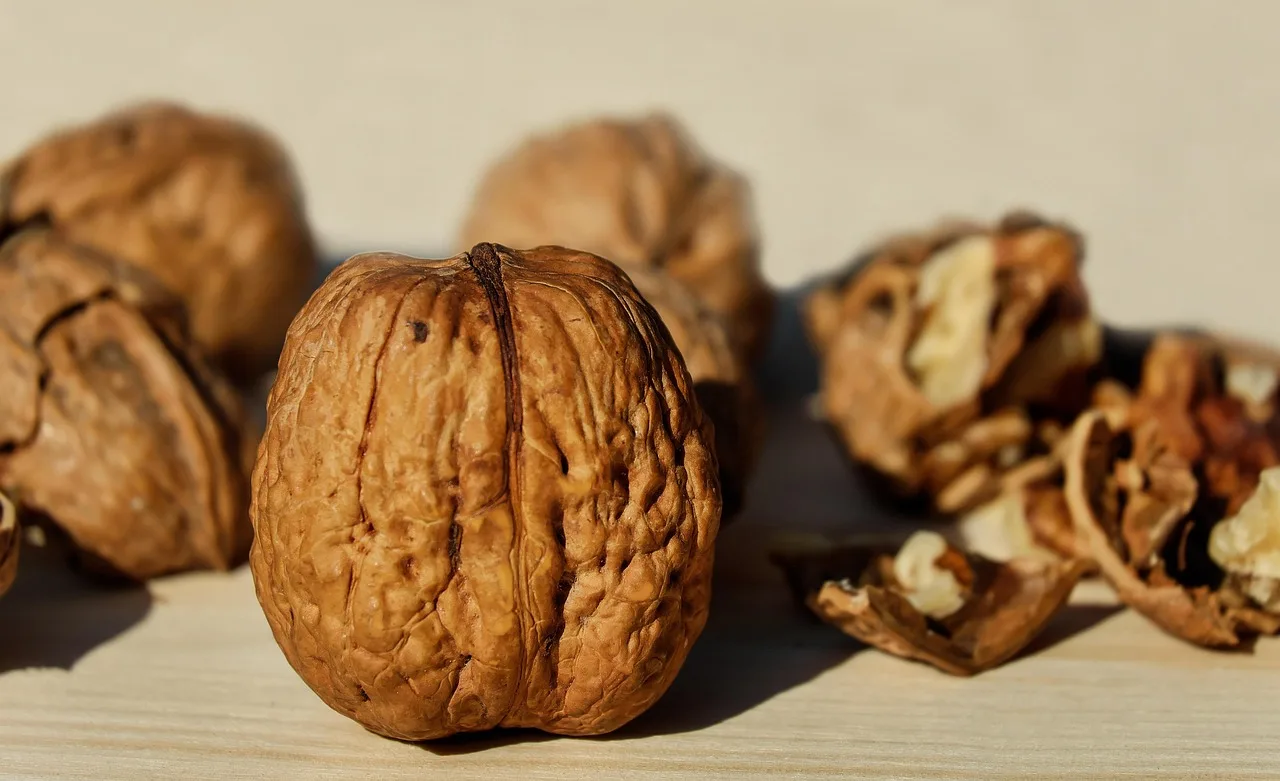
Blotching and uneven stain absorption
Walnut does not always stain evenly, especially when you try to push the color much darker than the natural heartwood already is. The risk is not only patchiness; stain can also blur the grain and make the board look flat instead of deep.
Pre-stain conditioner can help in some cases, but it is not a cure-all. If the goal is a dark walnut look, clear finish is usually safer than trying to force a darker stain on top of walnut.
Sapwood contrast in wide panels
Walnut sapwood is much lighter than the heartwood, so a board with both can look striking in one project and distracting in another. That contrast may work in rustic furniture, but it often looks like a mistake in clean, formal panel work.
Matching panels with mixed sapwood takes sorting, cutting, and sometimes waste. If the project needs a uniform field of color, clear heartwood stock or veneer is usually the better choice.
Cost, color limits, and high-abuse use cases
Walnut is expensive enough that every hidden flaw matters. If the wood will be painted, heavily stained, or covered by hardware and trim, the price premium often buys little.
It is also not the smartest pick for high-abuse surfaces that need maximum dent resistance. A walnut desktop can look excellent, but it will still show wear sooner than harder species in the same role.
Say your 60-inch dining tabletop needs eight boards. If two of them carry bright sapwood on one edge, you may lose both in the cut list or end up with a panel that looks mismatched from across the room. That is a design problem, not just a lumber problem.
Walnut project-fit matrix
| Use | Beauty | Machinability | Stability | Stain risk | Value | Recommendation |
|---|---|---|---|---|---|---|
| Furniture | 5 | 5 | 4 | 3 | 4 | Excellent for visible casegoods, tables, and accent parts. |
| Cabinets | 4 | 5 | 4 | 3 | 3 | Best for doors, face frames, and veneer panels, not every carcass part. |
| Tabletops | 5 | 4 | 3 | 3 | 3 | Good when appearance matters; use careful panel matching and finish choice. |
| Drawers | 4 | 5 | 4 | 3 | 4 | Strong choice for drawer fronts and premium interiors, especially with clear finish. |
| Turnings | 5 | 5 | 4 | 4 | 4 | Very good for bowls, legs, and knobs where figure can stand out. |
| Carving | 4 | 4 | 4 | 3 | 4 | Good for decorative work; watch grain direction around fine details. |
| Veneer work | 5 | 5 | 5 | 4 | 5 | One of walnut’s best uses when you want a premium look with less movement. |
| High-abuse surfaces | 3 | 4 | 3 | 2 | 2 | Use only when design value outweighs dent risk and maintenance concerns. |
Is walnut wood good for woodworking?
Yes. Walnut is one of the better all-around woods for fine woodworking because it cuts cleanly, sands predictably, and takes a clear finish well. It is especially appealing when you want the wood itself to carry the design rather than hide under stain or paint.
It is less attractive when the project depends on perfect color uniformity across many boards. In that case, the beauty that makes walnut desirable can also make it expensive to sort and waste.
Cutting, planing, and sanding behavior
Walnut usually behaves well under sharp cutters. It planes cleanly, routs well, and generally sands to a smooth surface without much fuss if the grain is not too wild.
Sharp tools still matter. A dull bit can leave burn marks or a fuzzy surface, and figured walnut can tear out more easily than straight-grained stock if the cut is aggressive.
Gluing and fastener performance
Walnut glues well with standard woodworking adhesives if the surfaces are clean and properly fitted. Fasteners also hold well for typical furniture and casework, though predrilling is still smart near edges.
Glue-line visibility can be an issue in dark finishes and close-grained assemblies. If a joint is sloppy, the contrast can show even when the glue itself is sound.
How it compares with mahogany on ease of work
Walnut and mahogany both earn their reputation for workability, but walnut usually wins on machining feel and finish depth. Mahogany often wins on cost stability and panel use, especially when you need a large, quieter-looking surface.
If the question is pure ease of work, walnut is excellent. If the question is ease of buying enough good-looking lumber without overpaying, mahogany often has the advantage.
Is walnut hard enough for furniture?
For most furniture, yes. Walnut’s hardness is enough for tables, chairs, cabinets, and drawers, but it is not hard enough to treat as a dent-proof surface. It is best thought of as a good furniture wood, not a heavy-duty wear surface.
That distinction matters. A walnut chair apron or cabinet door is fine. A walnut workbench top or frequently abused utility surface is a different decision.
Dent resistance in tabletops and chair parts
With a Janka hardness around 1,010 lbf, walnut sits below many oaks and above mahogany. That means it resists denting reasonably well, but chair arms, table edges, and corners can still show wear from repeated impact.
On a dining table, the surface will hold up for normal use, but dropped tools, heavy dishes, and shifting décor can still leave marks. If the surface must stay nearly flawless, harder species or a different construction strategy may be safer.
Where oak or mahogany can be smarter choices
Oak makes more sense when dent resistance and abrasion resistance matter more than a deep dark color. Mahogany often makes more sense when you need a premium look with easier panel matching and a more predictable price for larger jobs.
Walnut sits between them. It gives you better visual drama than many species, but it does not solve every durability problem.
Solid wood versus veneer for cabinets
For cabinet doors and drawer fronts, solid walnut works well when the widths are modest and the design can tolerate seasonal movement. For large doors, broad panel fields, or long runs of cabinetry, veneer on a stable core often gives a better result.
Veneer also reduces the risk of color mismatch across a set. That matters when you want one clean visual plane instead of a patchwork of boards.
What projects is walnut wood best for?
Walnut is best for furniture, drawer fronts, cabinet doors, veneer panels, and decorative turnings. It is also a strong choice for accent trim and visible structural parts where the grain can be seen and the finish can stay clear.
It is weakest where the surface takes abuse, where color must stay perfectly uniform, or where the wood will be hidden under paint. That is where the premium disappears fastest.
- Use walnut heartwood for visible parts where color and grain matter most.
- Use veneer or narrower components for large panels that must stay visually consistent.
- Sort sapwood out early if the project needs a uniform dark appearance.
- Choose clear oil or lacquer when the natural tone is the goal.
- Move to mahogany or oak when the project needs better value, higher wear resistance, or less color risk.
Alternatives

Exotic Wood Zone black walnut boards are a better fit than rough lumber when you need smaller stock for cutting boards or compact shop projects. Based on the listed size, they are easier to fit into narrow parts, but the pair format limits layout freedom, and the shorter length can leave you short on matching options for larger furniture panels.
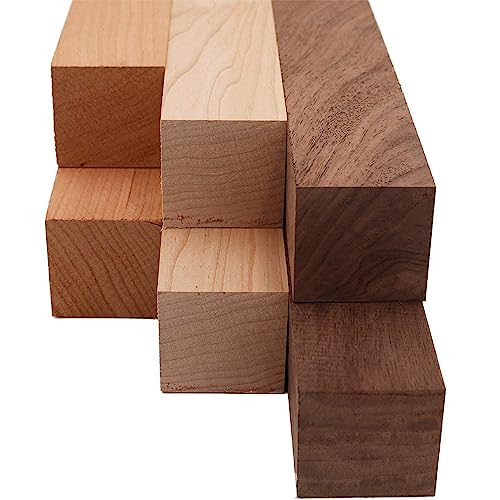
Exotic Wood Zone maple, walnut, and cherry turning blanks make sense when you need prepared square stock for lathe work rather than full-size boards. The pack gives you variety and convenience, but mixed species reduce color consistency, and the 2" x 2" x 24" format is not a substitute for project lumber when you need broad panels or matched casework parts.
Should you buy it?
Buy walnut when the project is visible, the joinery is worth showing, and the design benefits from dark natural color. It is a strong material for premium furniture, cabinet fronts, and veneer work, especially when you can sort boards carefully and avoid sapwood in the wrong place.
Skip it when the job is all about wear resistance, low cost, or color uniformity across large surfaces. In those cases, mahogany is often the safer buy, and oak can be the better choice where dent resistance matters more than a soft visual tone.
Frequently asked questions
What are the pros and cons of walnut wood?
The main pros are strong appearance, good workability, and good finish quality. The main cons are cost, sapwood contrast, and only moderate dent resistance. It is also easy to overpay for walnut in projects that do not actually benefit from its visual appeal.
Is walnut wood hard enough for furniture?
Yes, for most furniture. Walnut is hard enough for tables, chairs, cabinets, and drawer fronts, but it is not the best choice when the surface will take constant impact or heavy abrasion. For those jobs, oak or another harder species may be smarter.
Does walnut wood stain well?
Walnut can be stained, but clear finish is usually the safer route because the natural heartwood already has desirable color. Stain may sit unevenly in some areas, especially if the board has mixed grain or sapwood. A test piece is wise before committing.
Why does walnut wood blotch when stained?
Walnut can blotch because the wood absorbs color unevenly across grain direction, density changes, and earlywood versus latewood. Figure and sapwood can make that effect more obvious. Pre-stain conditioner may help, but it cannot guarantee a perfectly even result.
How stable is walnut wood after milling?
Walnut is reasonably stable after milling if you let it acclimate and machine it near final moisture content. It can still cup or warp if you rush the process or trap board stress in a wide panel. Give the stock time to settle before final joinery.
Sponsored / affiliate links. As an Amazon Associate I earn from qualifying purchases. I may earn additional commission from eligible campaigns.