Mahogany Wood Keyboards: What’s Actually on the Market (Mostly Walnut)
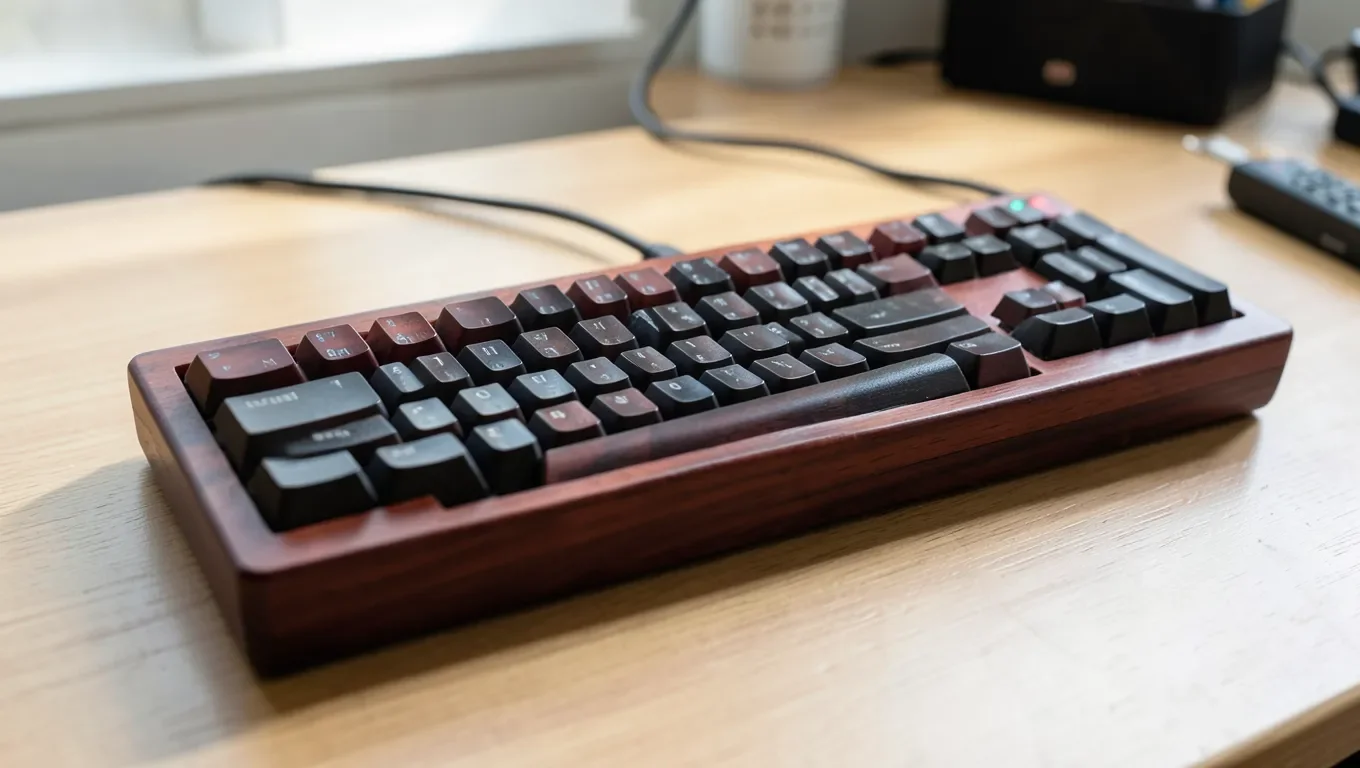
True solid-mahogany keyboard cases are rare, mostly custom or small-batch boutique builds — the wood keyboards you’ll actually find for sale (Keychron, Womier, and most Etsy builders) use walnut or bamboo instead. That’s not a bait-and-switch: walnut and bamboo are simply more available and less regulated than mahogany, which has been listed under CITES Appendix II since 2003. If you search “mahogany keyboard” expecting to buy one today, here’s what’s realistically on the market and why.
Why Walnut, Not Mahogany, Dominates This Market
What’s Actually Available: A Wood-Shell Mechanical
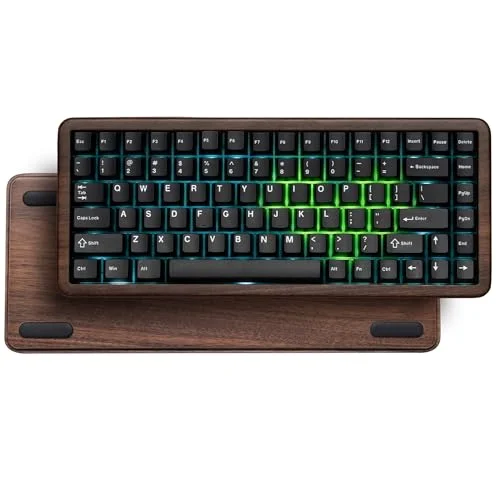 |
Womier WD75 V2 Wireless Mechanical Keyboard, Walnut Shell – $93.99 Honest note: this is walnut, not mahogany — the real, buyable version of what most “wood keyboard” searches are actually looking for.
|
Wood-cased keyboard makers choose their wood the same way any small manufacturer does: availability and cost. Walnut and bamboo are both widely farmed and easy to source in the thin, stable-cut pieces a keyboard shell needs, while genuine mahogany’s CITES export controls make sourcing lumber slower and more expensive for a manufacturer building thousands of units. The handful of true mahogany keyboard cases that do exist tend to come from individual builders on Etsy or custom-keyboard forums, made to order rather than stocked and shipped.
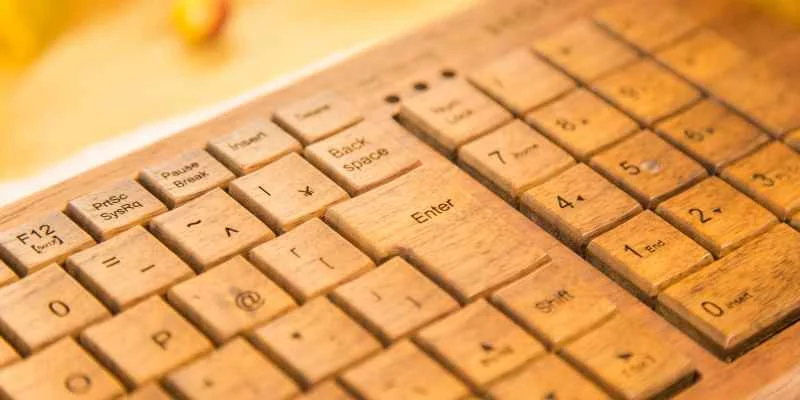
What A Wood Case Actually Changes
A wood shell is mostly an aesthetic and tactile upgrade, not a functional overhaul — the switches, circuit board, and typing mechanism underneath are the same components used in any mechanical keyboard. Some users do report a deeper, more resonant sound from a solid wood case compared to plastic, since wood’s mass and density change how the keyboard resonates, but this is a subtle, subjective difference rather than a guaranteed acoustic upgrade, and it varies by wood density and how the case is built.
One claim worth correcting: a wood case isn’t automatically “warp-resistant.” Wood responds to humidity changes regardless of species, and a keyboard case with tight tolerances around the keys is actually more sensitive to swelling and shrinking than a larger, thicker piece of furniture. Quality wood-keyboard makers address this with kiln-dried wood and a sealed finish specifically to minimize movement — it’s the drying and finishing process doing that work, not an inherent property of the wood species.
Wood Case Vs. Wood Keycaps — Two Different Products
It’s worth separating two products that both get marketed under “wood keyboard”: a wood case (the outer shell/frame around a standard keyboard), and wood keycaps (just the individual key tops, which snap onto any compatible mechanical keyboard’s existing switches). Wood keycaps are the more affordable way into the look — a set typically runs $15-$40 and can be added to a keyboard you already own, without replacing the whole board. A wood case is the bigger commitment, since it means buying (or building) an entirely new keyboard rather than upgrading one part of an existing one.
Real Price Ranges
What you’ll actually pay depends heavily on which category you’re buying into:
- Budget wood-finish keyboards ($20-$40): a plastic or membrane keyboard with a wood-look laminate or veneer accent, not solid wood
- Mainstream wood-shell mechanical keyboards ($80-$150): a real wood case (usually walnut or bamboo) around standard hot-swappable mechanical switches — the Womier and Keychron wood lines fall here
- Custom/boutique solid-wood builds ($200-$500+): individually built cases, sometimes in genuine mahogany, ordered directly from a maker rather than bought off a retail shelf
Where To Actually Find Each Category
Each price tier above tends to come from different sellers, which is worth knowing before you start searching. Mainstream wood-shell mechanicals (Womier, Keychron’s Wood Collection) are sold directly through Amazon and the brands’ own sites, with standard listings, reviews, and return policies like any other electronics purchase. Budget wood-finish keyboards show up across general marketplaces and are usually easy to identify once you know to check the material spec rather than the photo. Custom and boutique solid-wood builds, including any genuine mahogany options, live almost entirely on Etsy and dedicated mechanical-keyboard communities (forums and group-buy sites), where you’re ordering from an individual maker rather than buying a stocked product — expect a longer wait time and no standard return window, since each one is built to order.
Who A Wood-Shell Keyboard Actually Makes Sense For
A wood-cased keyboard is a good fit if you want a visually distinct desk setup and don’t mind paying a premium mostly for aesthetics — the typing performance itself comes from the switches, not the wood. It’s a poor fit if you’re chasing a specific claimed benefit like superior sound dampening or warp resistance, since neither is guaranteed by the wood alone. Custom-keyboard hobbyists who want genuine mahogany specifically (matching furniture, a personal preference for the wood, or wanting a CITES-compliant sourced piece for its own sake) are really the only buyers for whom seeking out a boutique mahogany build over a stock walnut one makes practical sense.
Common Shopping Mistakes
A few mistakes account for most of the disappointment buyers report after searching “mahogany keyboard”:
- Assuming “wood keyboard” means solid wood: plenty of budget keyboards use a printed wood-grain laminate over plastic — check for “solid wood” or a named species in the actual listing, not just the product photo.
- Expecting the wood species named in the title to be mahogany: search results for “mahogany keyboard” are dominated by walnut and bamboo products that simply rank for the broader “wood keyboard” query — read the material spec, not just the search result title.
- Expecting a dramatically different typing feel: switch type (linear, tactile, clicky) affects typing feel far more than the case material — choose switches first, wood case second.
- Not checking hot-swap support: if you might want to change switches later, confirm the board is hot-swappable before buying — not all wood-cased keyboards are.
Maintenance And Care
Dust a wood keyboard case with a soft, dry cloth, and keep it out of direct sunlight, which fades any wood finish over time. Avoid soaking it — a lightly damp cloth is fine for the case, but liquid near the switches and circuit board underneath is a real functional risk that has nothing to do with the wood. If the finish looks dull after months of use, a small amount of furniture wax applied sparingly and buffed off restores the shine without leaving residue in the seams around the keys.
Frequently Asked Questions
Can I actually buy a solid mahogany keyboard?
Rarely off-the-shelf. Most retail “wood keyboards” use walnut or bamboo because they’re more available and not CITES-restricted the way mahogany is. A true mahogany case is usually a custom build from an individual maker on Etsy or a custom-keyboard forum, made to order.
Does a wood keyboard case sound or feel different?
Some users report a deeper, more resonant sound from a solid wood case due to its mass and density, but this is a subtle, subjective difference, not a guaranteed acoustic upgrade. The typing feel itself comes from the switches underneath, which are the same components used in any mechanical keyboard.
Is a wood keyboard case warp-resistant?
Not inherently. Wood responds to humidity regardless of species, and a keyboard case’s tight tolerances make it more sensitive to movement than larger furniture. Quality makers use kiln-dried wood and a sealed finish to minimize this — that’s the manufacturing process doing the work, not a property of the wood itself.
Where should I look for a genuine mahogany keyboard case?
Etsy and dedicated mechanical-keyboard forums or group-buy sites are the realistic sources, since it’s almost always a made-to-order custom build rather than a stocked retail product. Expect a longer wait and no standard return window compared to buying a mainstream walnut-cased board on Amazon.
Conclusion
If you’re searching for a mahogany keyboard expecting a common retail product, the honest answer is that walnut and bamboo dominate the market for real reasons — availability and regulation, not quality. A genuine mahogany case is achievable, just through a custom builder rather than a standard listing. For more on what makes mahogany itself distinct from other woods, see our mahogany wood properties guide.
Sponsored / affiliate links. As an Amazon Associate I earn from qualifying purchases. I may earn additional commission from eligible campaigns.