Is Mahogany Wood Water Resistant? Swelling Data and Sealing
Mahogany is water resistant, not waterproof: Honduran mahogany heartwood is rated against rot, yet it still moves about 7.5 percent by volume between green and oven-dry, and its unsealed end grain soaks up water fastest. The finish decides the rest. This guide covers swelling data against teak, oak and cedar, which finishes measurably slow moisture, and how to seal mahogany for damp or outdoor use.
Is Mahogany Wood Water Resistant? What the Data Says
Best Spar Varnish Pick
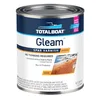 |
TotalBoat Gleam Marine Spar Varnish, Gloss Quart: $49.99 A tung-oil and phenolic-resin urethane varnish with UV blockers, which is the kind of built-up film the moisture-excluding data in this guide favors over a thin oil.
|
As an Amazon Associate we earn from qualifying purchases.
Three different properties get lumped together as “water resistance,” and mahogany scores differently on each. Decay resistance is about fungi, and the Wood Database rates Honduran mahogany heartwood from moderately durable to very durable, depending on the density and growing conditions of the tree. Dimensional stability is about swelling and warping, and the US Forest Products Laboratory’s Wood Handbook credits American mahogany with excellent dimensional stability. Water absorption is about how fast liquid water enters the surface, and neither source says mahogany repels it.
That last point corrects a common claim. Many pages say mahogany’s “natural oils” make it water repellent. The Wood Database does note an oily, greasy feel for teak, and even warns that teak may need a solvent wipe before gluing or finishing. Its Honduran mahogany entry makes no oil claim at all. The published case for mahogany rests on decay rating and stability, not on a water-shedding oil, so treat bare mahogany as an absorbent hardwood that happens to resist rot and movement well. For the species-by-species rot picture, see our guide to how durable mahogany really is.
Swelling and Shrinkage: Mahogany vs Teak, Oak and Cedar
Wood swells as its cell walls take on water and shrinks as they dry, and the Wood Handbook puts the fiber saturation point, where the cell walls are full, at about 30 percent moisture content. Published shrinkage figures describe the full trip from green to oven-dry, so real boards move less, but the ratios between species hold. The table below uses Wood Database figures, plus a rough estimate of what that means for a 12 inch wide flatsawn board if its moisture content climbed from 8 to 16 percent.
| Wood | Radial | Tangential | Volumetric | T/R ratio | Est. width change, 12 in flatsawn board | Decay rating |
|---|---|---|---|---|---|---|
| Honduran mahogany | 2.9% | 4.3% | 7.5% | 1.5 | about 0.14 in | Moderately to very durable |
| Teak | 2.6% | 5.3% | 7.2% | 2.0 | about 0.17 in | Very durable |
| White oak | 5.6% | 10.5% | 16.3% | 1.9 | about 0.34 in | Very durable |
| Western red cedar | 2.4% | 5.0% | 6.8% | 2.1 | about 0.16 in | Durable to very durable |
Two things stand out. First, mahogany is not the lowest-shrinking wood here: teak (7.2 percent) and western red cedar (6.8 percent) have slightly lower volumetric shrinkage. What mahogany has is the lowest T/R ratio at 1.5, meaning it shrinks more evenly across and along the growth rings, which is why it cups and twists less than the others. Second, white oak moves more than twice as much as the rest, so an oak panel and a mahogany panel exposed to the same weather are not in the same league. The Forest Products Laboratory lists true mahogany at 3.0, 4.1 and 7.8 percent and African mahogany at 2.5, 4.5 and 8.8 percent, close to the Wood Database figures, so the picture does not depend on one source. If you are choosing between mahogany and sapele for a wide panel, sapele moves more than Honduran mahogany. For grain, density and workability, see our mahogany characteristics guide.
Why Rot Resistance Is Not the Same as Staying Dry
A wood can be rated durable against decay and still absorb a lot of water. The Wood Handbook explains why end grain is the weak point: water absorption is fastest in the longitudinal direction, which is what you expose when you cut a board to length. It adds that reducing water absorption is what prevents decay, warping and checking in the first place. Every cut end on a mahogany door, rail or table leg is a straw standing in the weather.
There is a second catch. The Handbook describes American mahogany as durable against decay fungi, but also notes that both its heartwood and sapwood resist treatment with preservatives. You cannot rescue a poorly detailed mahogany part by pressure-treating it the way you can with many softwoods, so the surface finish and the joint design carry more of the load.
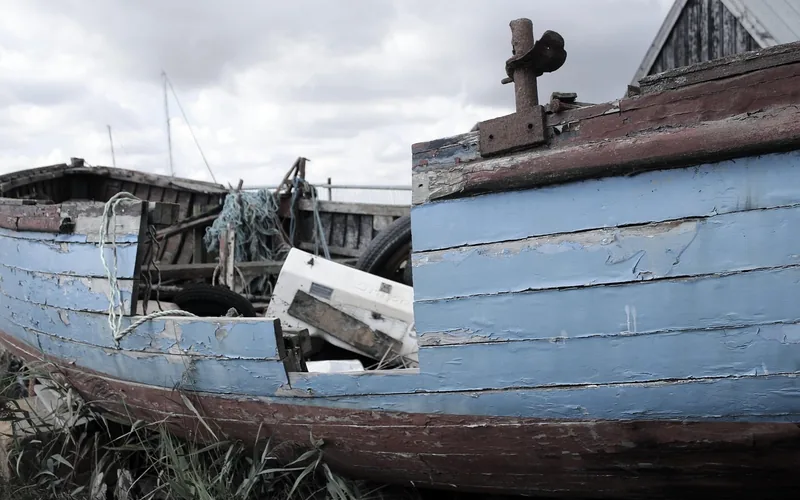
Finishes can also fail in a way that hurts. For painted fences and porch railings, the Handbook says the coating usually cracks at the joint between two pieces, water enters through the crack, and the coating then slows drying, which keeps the wood wet long enough for decay. The same logic should apply to any brittle film on a joint (our inference, not a tested mahogany result), which is why a flexible finish and maintenance matter as much as the first application.
Which Finishes Actually Slow Water? Moisture-Excluding Data
Not all finishes are equal, and the best public numbers come from the Wood Handbook’s moisture-excluding effectiveness (MEE) table. MEE measures how well a coating blocks water vapor, where 100 percent would block all of it and the Handbook notes that no coating is impermeable. It also says coatings that retard vapor diffusion tend to repel liquid water too. The test used ponderosa pine sapwood moved to 90 percent humidity, not mahogany, so read it as a ranking of finish types, not a prediction for your table.
| Finish | Coats | After 1 day | After 7 days | After 14 days |
|---|---|---|---|---|
| Linseed oil | 3 | 33% | 2% | 0% |
| Semitransparent oil-based stain | 3 | 21% | 1% | 0% |
| Water repellent | 3 | 78% | 27% | 11% |
| Oil-modified urethane varnish | 1 | 55% | 10% | 2% |
| Oil-modified urethane varnish | 3 | 90% | 64% | 44% |
| Oil-modified urethane varnish | 6 | 93% | 76% | 62% |
| Aluminum flake pigmented varnish | 4 | 98% | 93% | 87% |
The pattern is the useful part. Three coats of linseed oil excluded 33 percent of the vapor after one day and essentially nothing after two weeks, while three coats of urethane varnish still excluded 44 percent after fourteen days, and six coats reached 62 percent. Each added coat of a film finish helped, and a single coat did far less than a full schedule. A wipe-on oil looks like protection and feels like protection, but the data say it barely slows moisture. Oil also adds a safety wrinkle, covered below.
Boat Planking vs Real-World Use
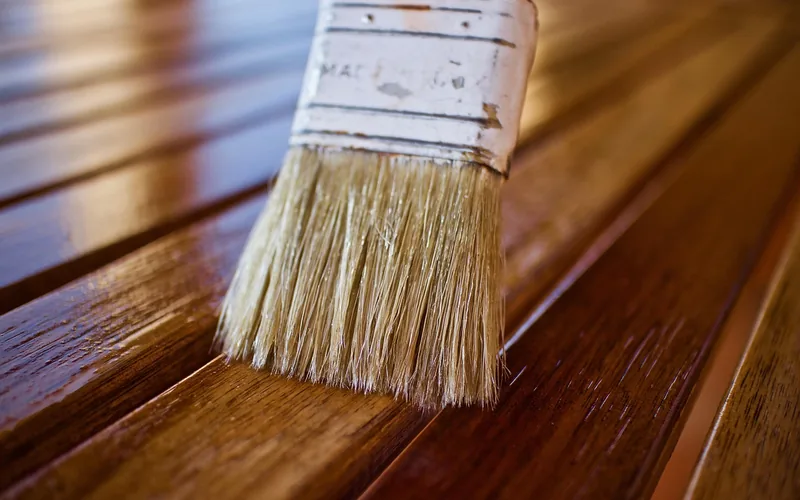
The Wood Handbook lists boat construction among the principal uses of both American and African mahogany, which is the root of the water-resistant reputation. It is worth reading that fairly. Boat builders do not leave the wood bare. Epoxy maker WEST SYSTEM describes the practice as a system: its finish coating guidance says the finish coating extends the life of the epoxy moisture barrier, which in turn provides a stable base that extends the life of the finish, and that together they form a protective system far more durable than either alone. It also says long-term UV protection of the barrier coat depends on how well the finish coating resists UV.
That is the gap between marine use and a patio table. A hull is sealed, finished and maintained as a system, with the wood below a film that is checked and renewed. A mahogany door, deck chair or porch rail usually gets one weekend of finishing and then years of weather. The wood is the same, the maintenance is not, and that is why mahogany outdoors can look excellent or fail early. For furniture indoors, water exposure is mostly spills and humidity swings, and our mahogany furniture guide and pros and cons breakdown cover the other trade-offs.
How to Seal Mahogany for Water Resistance, by Exposure
Match the effort to how wet the wood will actually get. The table pairs each exposure level with an approach grounded in the sources above. No option makes mahogany waterproof, and every one needs inspection and touch-up over time.
| Exposure | Approach | Why |
|---|---|---|
| Indoor, occasional spills or humidity (cabinet, vanity, table) | Film finish, at least 3 coats | Three coats of urethane varnish excluded 90% of vapor at one day in the Handbook table |
| Covered outdoor (door under an overhang, porch trim) | Spar varnish film plus sealed end grain | A built-up film beats oil; end grain absorbs fastest, so it gets sealed first |
| Fully exposed (rail, tabletop, boat brightwork) | Epoxy barrier under a UV-resistant varnish, 4 to 6 gloss coats of the varnish per the Gleam listing | WEST SYSTEM says the barrier and finish together last far longer than either alone |
| Occasional re-treatment of bare or weathered surfaces | Water repellent preservative | The Handbook says it lasts about a year on exposed side surfaces but can last for years on end grain |
For the end grain and the first coats, work in this order:
- Sand and clean: sand to the grit the finish label specifies and remove all dust, so the first coat bonds to bare wood.
- Seal every cut end first: flood end grain with a penetrating sealer or water repellent preservative until it stops absorbing, because the Handbook notes water repellents absorb readily into end grain and can last for years there.
- Seal the joints and hidden faces too: undersides, tenons and the bottoms of legs take water from pooling and splashing even when the top looks perfect.
- Build the film in thin coats: follow the product label for the coat count and recoat window, and sand lightly between coats if the label calls for it.
- Inspect on a schedule: recoat when the sheen dulls, before the film cracks, since a cracked film at a joint is how water gets in.
If you plan to bleach or strip an older finish before resealing, read our guide to lightening mahogany first. For wider material choices beyond mahogany, see the best water-resistant woods for outdoor use and our outdoor furniture finish guide.
Safety: Oily Rags Can Catch Fire
Drying-oil finishes, including linseed oil and oil-based varnishes (the listing for our pick mentions tung oil), release heat as they cure. A Mississippi State University extension safety newsletter explains that a pile of oil-soaked rags insulates that heat, letting the rags smoke and eventually ignite, and that the bigger the pile, the greater the risk. For a small number of rags it advises spreading them in a single layer outdoors on concrete or a metal rack, out of direct sunlight, until they are hard and brittle, and for large quantities an approved enclosed metal container. Never bunch used rags in a bin or a pocket, and follow the disposal instructions on your product’s label and safety data sheet.
Frequently Asked Questions
Is mahogany wood waterproof?
No. Mahogany is water resistant in the sense that its heartwood resists decay and it is dimensionally stable, but bare mahogany still absorbs water, especially through end grain. No wood is waterproof. Sealing with a built-up film finish slows moisture but does not stop it completely.
Does mahogany swell when it gets wet?
Yes, like all wood, though less than many hardwoods. Honduran mahogany shrinks 7.5 percent by volume from green to oven-dry per the Wood Database, versus 16.3 percent for white oak. Its low T/R ratio of 1.5 means it changes shape more evenly, so it tends to warp less than teak or cedar.
Can mahogany be used outdoors without a finish?
It can survive, but not look or perform its best. The heartwood is rated against decay, though the rating varies with the density of the tree, and unfinished surfaces take on water at the end grain and weather. A film finish, sealed end grain and regular inspection are what keep outdoor mahogany stable.
Is mahogany or teak more water resistant?
Teak has the stronger decay rating: the Wood Database calls it very durable and notes many consider it the gold standard for decay resistance. Mahogany is rated moderately durable to very durable. Mahogany has the lower T/R ratio (1.5 versus 2.0), so it holds its shape better. For fully exposed use with little maintenance, teak is the safer bet.
How often should sealed mahogany be refinished?
There is no universal interval. Inspect the surface and recoat when the sheen dulls, before the film cracks or peels. The Wood Handbook says a water repellent lasts about a year on exposed side surfaces, so oil-style treatments need the most frequent renewal, while the label of a film finish gives its own recoat guidance.
Conclusion
Mahogany earns its reputation through rot resistance and stability, not through any ability to repel water, and the published data back that reading. Seal the end grain first, build a film finish rather than relying on oil, and treat the finish as something you inspect and renew. Pair that with sensible joint design and mahogany handles damp rooms and covered outdoor use well; fully exposed use works only if you maintain the system.
Sponsored / affiliate links. As an Amazon Associate I earn from qualifying purchases. I may earn additional commission from eligible campaigns.