Mahogany Wood Floors: Genuine Vs. Santos Mahogany Hardness
Genuine mahogany flooring has a Janka hardness of about 800 — softer than red oak (1290) — but most flooring sold as “mahogany” today is actually Santos Mahogany, an unrelated species rated around 2200. Confusing the two is the biggest mistake buyers make when comparing durability.
Picking the wrong one for a high-traffic room means dents and scratches within a year. This guide covers the hardness difference that actually matters, real installed costs, and the maintenance routine that keeps either version looking new.
Genuine Mahogany Vs. Santos Mahogany: Which Is Actually Harder?
Best Mahogany Floor Polish Pick
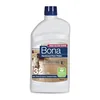 |
Bona Hardwood Floor Polish – $15.30 Genuine mahogany’s softer Janka rating means the finish takes more visible wear — a quality polish rebuilds shine and adds a thin protective layer between refinishing jobs.
|
As an Amazon Associate we earn from qualifying purchases.
“Mahogany flooring” is sold under one name but comes from at least three different trees with very different hardness. Genuine (Honduran) mahogany, Swietenia macrophylla, is the wood historically used in furniture — and it’s on the soft side for a flooring hardwood. Santos Mahogany, Myroxylon balsamum, isn’t botanically related to true mahogany at all, but it’s marketed under that name and is what most big-box “mahogany” flooring actually is.
| Wood | Janka Hardness | Vs. Red Oak (1290) |
|---|---|---|
| Genuine/Honduran Mahogany | 800 | 38% softer |
| Royal Mahogany | 1220 | Slightly softer |
| Santos Mahogany | 2200 | 70% harder |
📊 Genuine mahogany (Janka 800) is nearly three times softer than Santos Mahogany (Janka 2200) despite both being sold as “mahogany flooring.” — Source: Bell Forest Products, Janka Hardness Chart
If a floor is genuine or Royal mahogany, it will show dents and scratches sooner than an oak or Santos Mahogany floor in the same high-traffic room. That softer finish also means the topcoat itself takes more visible wear over time — which is where routine polishing matters more than it would on a harder species.
The Allure Of Mahogany Wood Floors
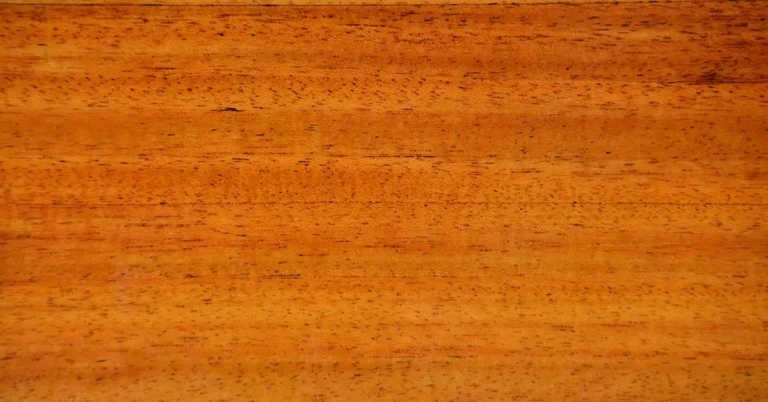
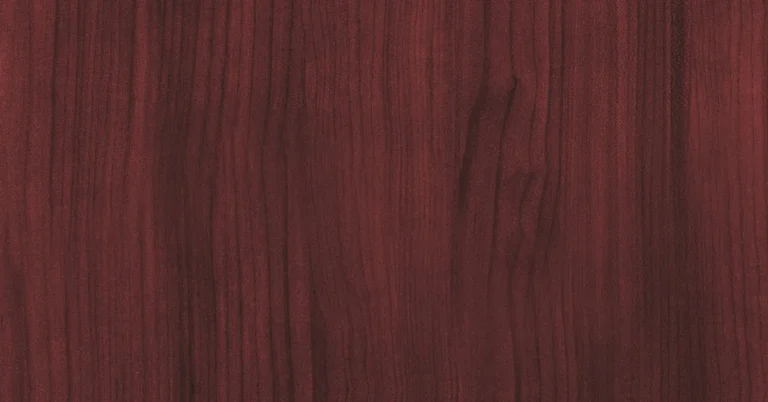
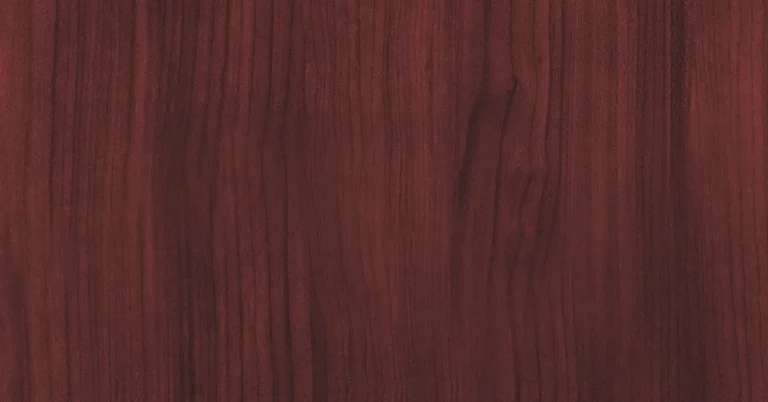
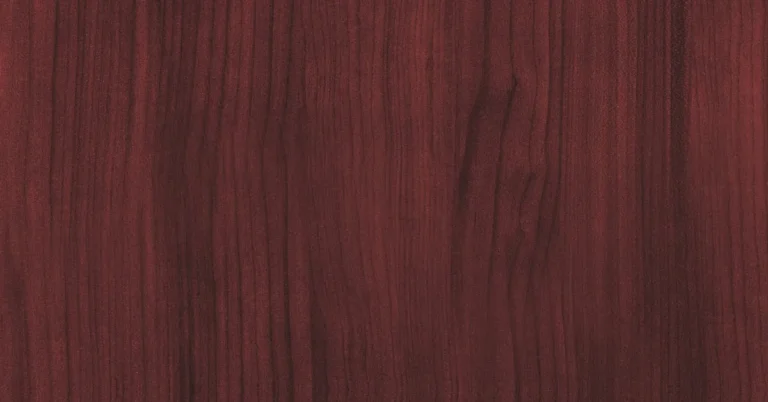
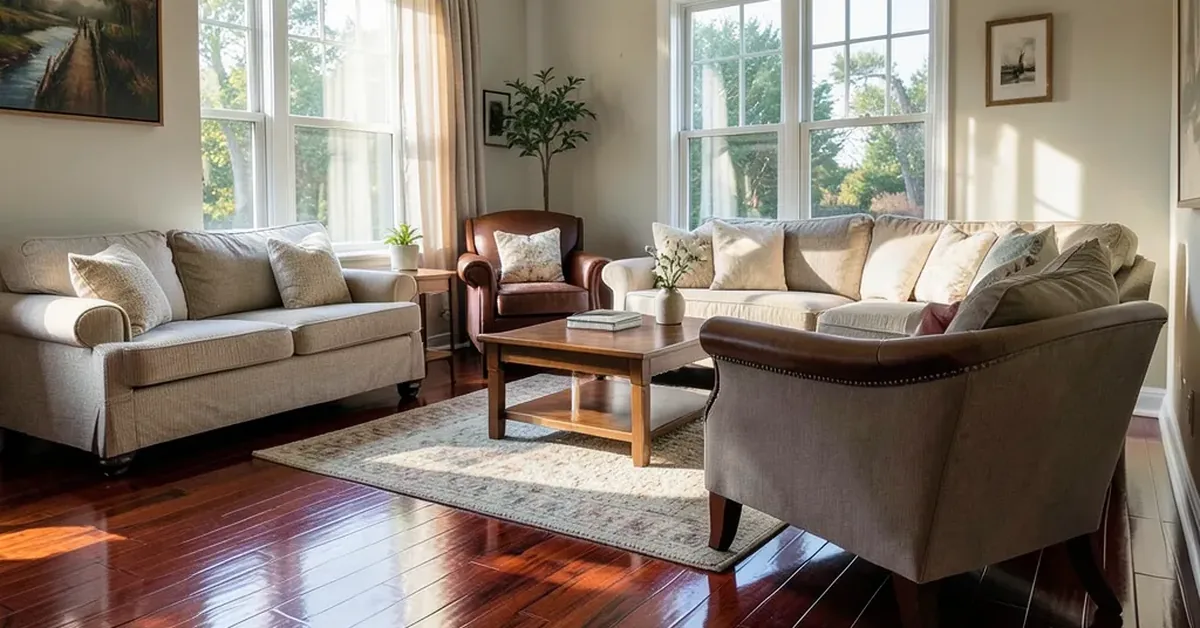
Beyond the hardness question, mahogany’s deep reddish-brown tones and fine, straight grain are what draw homeowners to it in the first place. The color deepens with age and UV exposure, and every plank shows slightly different grain, so no two mahogany floors look identical.
History And Origins Of Mahogany Wood
Mahogany’s use dates to the 16th century, when European explorers encountered it in Central America. By the 18th century it was widely exported and prized for furniture, making it a symbol of wealth long before it became common as flooring.
Genuine mahogany trees grow mainly in Central America, the Caribbean, and parts of South America — Honduras, Cuba, and Brazil are traditionally associated with high-quality stock. Overharvesting made genuine mahogany scarcer over the 20th century, which is part of why Santos Mahogany and other substitute species now dominate the flooring market under the same name.
Cost And Installation
| Factor | Typical Cost | Notes |
|---|---|---|
| Material (genuine/Royal mahogany) | $8 – $15/sq ft | Softer, needs more careful handling during install |
| Material (Santos Mahogany) | $6 – $9/sq ft | More widely available, harder finish |
| Installation labor | $3 – $8/sq ft | Higher for glue-down on concrete subfloors |
- Acclimate the wood: Let planks sit in the room for 48 hours before installing.
- Check the subfloor: Must be clean, dry, and level; test for moisture first.
- Choose a method: Nail-down for wood subfloors, glue-down for concrete, floating for either.
Professional installation costs more upfront but comes with a workmanship warranty — worth considering on genuine or Royal mahogany specifically, since the softer wood is less forgiving of installation mistakes like uneven nailing pressure.
Care And Maintenance
- Sweep or vacuum daily with a soft-bristle attachment — grit is what causes most scratches on softer mahogany.
- Avoid wet mopping; use a barely-damp microfiber mop instead.
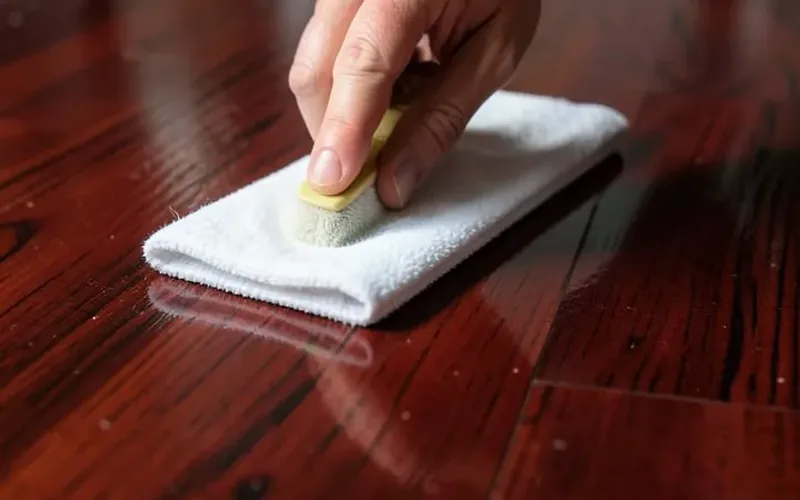
- Polish every few months on genuine/Royal mahogany to maintain the protective topcoat sheen.
- Use rugs in high-traffic areas and keep pet nails trimmed.
- Maintain 30–50% humidity to prevent warping and gapping.
| Task | Frequency |
|---|---|
| Deep clean with wood-safe cleaner | Every 1–3 months |
| Apply floor polish | Every 3–6 months |
| Full refinish | Every 5–7 years |
Environmental Impact And Sourcing
Genuine mahogany’s popularity led to significant overharvesting in the 20th century, which is part of why it’s now regulated under international trade agreements in several source countries. Look for FSC (Forest Stewardship Council) certification to confirm sustainable sourcing, or consider Santos Mahogany or reclaimed genuine mahogany as lower-impact alternatives.
Common Myths About Mahogany Floors
| Myth | Fact |
|---|---|
| All mahogany flooring has the same durability. | Genuine mahogany (Janka 800) is notably softer than Santos Mahogany (Janka 2200) — check which species before comparing durability. |
| Mahogany floors are always expensive. | Santos Mahogany often runs $6–9/sq ft, cheaper than genuine or Royal mahogany. |
| Mahogany floors need constant maintenance. | Routine sweeping and periodic polishing is enough — no different from most hardwood. |
Frequently Asked Questions
What Are The Benefits Of Mahogany Wood Floors?
Mahogany wood floors offer a rich, deep color and fine grain that darkens attractively with age. Santos Mahogany specifically is highly scratch-resistant with a Janka hardness of 2200, well above red oak, making it suitable for high-traffic rooms.
How Do I Maintain Mahogany Wood Floors?
Sweep or vacuum daily to remove grit, mop with a barely-damp microfiber mop rather than a wet one, and apply a wood floor polish every 3 to 6 months to maintain the protective sheen, especially on softer genuine mahogany.
Are Mahogany Floors Eco-friendly?
It depends on sourcing. Genuine mahogany has faced overharvesting historically, so look for FSC certification or consider reclaimed genuine mahogany or Santos Mahogany, which faces less sourcing pressure.
How Much Do Mahogany Wood Floors Cost?
Santos Mahogany typically runs $6 to $9 per square foot in material, while genuine or Royal mahogany runs $8 to $15 per square foot. Installation adds another $3 to $8 per square foot depending on the method and subfloor.
Is Genuine Mahogany Flooring Soft?
Yes. Genuine (Honduran) mahogany has a Janka hardness of about 800, roughly 38% softer than red oak, so it dents and scratches more easily than harder flooring species. It’s a better fit for lower-traffic rooms than entryways or hallways.
What Is Santos Mahogany?
Santos Mahogany (Myroxylon balsamum) is a South American hardwood sold under the “mahogany” name for flooring, though it isn’t botanically related to genuine mahogany. With a Janka hardness around 2200, it’s nearly three times harder and is what most “mahogany flooring” sold today actually is.
Conclusion
The biggest decision with mahogany flooring isn’t color or finish — it’s confirming whether you’re buying genuine mahogany (softer, Janka 800) or Santos Mahogany (much harder, Janka 2200) before comparing price or durability claims. Either version holds up well with routine sweeping, periodic polishing, and stable indoor humidity.
Sponsored / affiliate links. As an Amazon Associate I earn from qualifying purchases. I may earn additional commission from eligible campaigns.