Mahogany Kitchen Countertops: Real Care Around Water and Heat
Mahogany makes a genuinely beautiful kitchen countertop, but it isn’t naturally water-resistant or heat-proof — both properties come from consistent sealing and sensible use, not the wood itself. Marketing copy that calls wood countertops “resistant to water and scratches” skips the maintenance that claim actually depends on.
Water Resistance Comes From The Finish, Not The Wood
The Real Maintenance A Wood Counter Needs
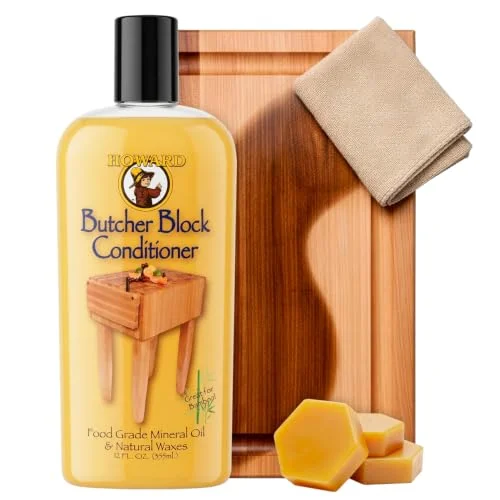 |
Howard Products Butcher Block Conditioner, Food Grade – $9.18 A wood countertop needs regular re-oiling to stay water-resistant — this is what actually does that job, not a one-time factory finish.
|
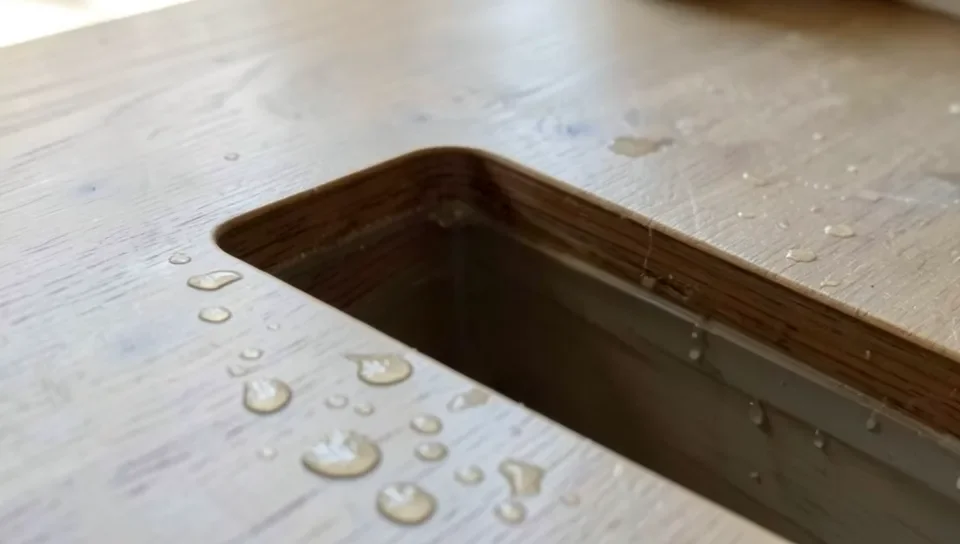
Genuine mahogany has moderate natural rot resistance from its own oils, a real property useful in exterior applications — but a kitchen countertop faces standing water, splashes, and constant humidity that untreated wood can’t handle long-term regardless of species. The real protection comes from regular oiling with a food-grade conditioner (or a proper film finish for non-food-contact areas), applied consistently, especially around the sink cutout where water exposure is heaviest. Skipping this because “mahogany resists moisture” is exactly how a sink-area edge ends up swelling, graying, or developing mold over time — the wood needs the maintenance, not instead of it.
Hardness: Moderate, Not Top-Tier
Mahogany’s Janka hardness runs roughly 800-900 lbf — genuinely workable and pleasant to live with, but softer than red oak (~1,290) or hard maple (~1,450), two woods commonly used for butcher-block-style countertops specifically for their dent resistance. This means a mahogany countertop will show dents and knife marks somewhat more readily than an oak or maple one under the same daily use, not the other way around. That’s a fair tradeoff for mahogany’s color and grain, but it’s worth knowing before assuming “hardwood” automatically means “the hardest option.”
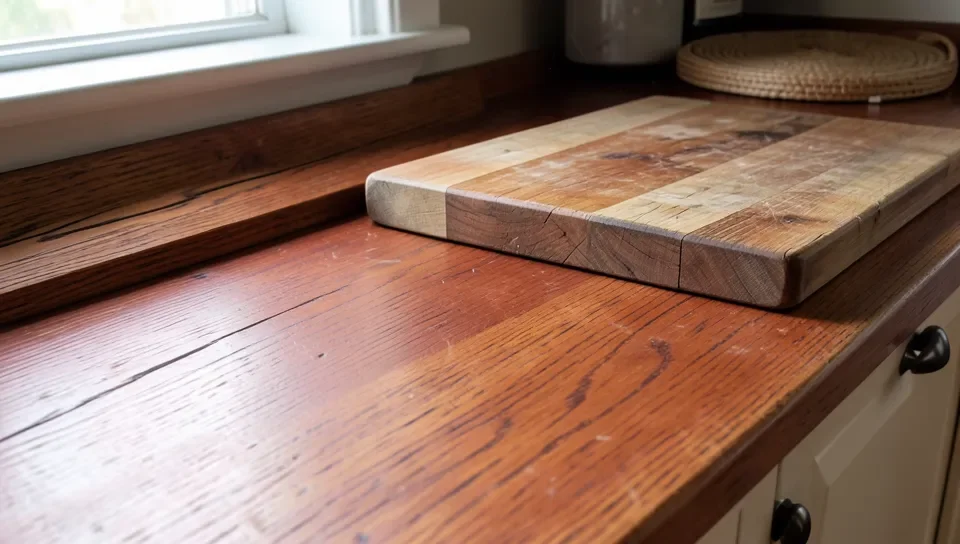
Heat: Use Trivets, Don’t Trust The Wood
No wood countertop, mahogany included, is genuinely heat-resistant in the way stone or quartz surfaces are — a hot pan or pot placed directly on any wood surface can scorch the finish or the wood itself, and repeated heat exposure in the same spot causes real, visible damage over time. Using trivets and hot pads for anything straight off the stove or oven is a real requirement for a wood countertop’s longevity, not an optional precaution. This is true regardless of what species-specific durability claims a countertop supplier makes.
Mahogany Vs. Common Countertop Wood Alternatives
| Wood | Janka Hardness | Real Tradeoff |
|---|---|---|
| Mahogany | ~800-900 lbf | Rich color and grain, but softer and more dent-prone than oak/maple |
| Red Oak | ~1,290 lbf | Better dent resistance, more common/affordable, more open grain traps debris if not sealed well |
| Hard Maple | ~1,450 lbf | The standard for butcher-block durability, lighter color than mahogany |
| Walnut | ~1,010 lbf | Dark color similar mood to mahogany, moderate hardness between mahogany and oak |
Common Buying Mistakes
- Skipping regular oiling because “mahogany resists moisture”: the finish, reapplied consistently, is what actually protects the surface, especially near the sink.
- Placing hot cookware directly on the counter: no wood species is immune to heat scorching — use trivets every time.
- Expecting oak-level dent resistance: mahogany is softer than oak or maple — a reasonable tradeoff for its color, but not “harder than other woods.”
Real Cost And Species Notes
Most mahogany countertops sold today use African mahogany (Khaya species) rather than genuine Honduran mahogany, which has been CITES Appendix II-restricted since 2003 — a real, reasonable substitution rather than a downgrade in practical terms. Expect a genuine premium over oak or maple butcher block, reflecting both material cost and mahogany’s more limited commercial supply; get a specific quote for your actual countertop dimensions rather than assuming a flat per-square-foot number, since thickness and edge treatment affect price meaningfully.
Frequently Asked Questions
Are mahogany countertops water-resistant?
Only with consistent sealing and oiling. The wood itself has moderate natural rot resistance, but a kitchen countertop’s constant water exposure requires ongoing maintenance, especially around the sink, to actually stay water-resistant.
Can I put a hot pan directly on a mahogany countertop?
No. No wood countertop is genuinely heat-resistant. Direct contact with hot cookware can scorch the finish or the wood. Always use a trivet or hot pad.
Is mahogany harder than oak for countertop use?
No, it’s softer. Mahogany runs roughly 800-900 lbf on the Janka scale compared to red oak’s roughly 1,290. Mahogany countertops dent and scratch somewhat more easily than oak or maple as a result.
Conclusion
Mahogany makes a genuinely beautiful kitchen countertop, but its water resistance comes from maintenance, not the wood alone, its heat tolerance requires trivets like any wood surface, and its hardness is moderate rather than exceptional. Going in with those honest expectations is what keeps a mahogany countertop looking good for years.
Sponsored / affiliate links. As an Amazon Associate I earn from qualifying purchases. I may earn additional commission from eligible campaigns.