Mahogany Wood Knobs: Sometimes a Finish Name, Not Real Wood
Searching for “mahogany wood knobs” turns up a mix of two genuinely different things: actual wood knobs (usually not real mahogany, more often walnut or generic hardwood stained to a mahogany-like tone), and metal cabinet hardware sold in a finish literally named “Mahogany” or “Mahogany Bronze” — a color description, not a material. Confusing the two is an easy, common mistake, and it’s worth checking the material spec directly rather than trusting the word “mahogany” in a product title — the same mismatch shows up on mahogany-labeled vent covers, which are very often stained oak or poplar.
“Mahogany” as a Finish Name, Not a Material
This “Mahogany” Knob Isn’t Wood
 |
Top Knobs Aspen Oval Knob, Mahogany Bronze – $28.04 Solid metal with a dark bronze finish that Top Knobs names “Mahogany Bronze” — a color name, not a wood species. This is exactly the kind of listing that confuses buyers searching for real wood knobs.
|
Hardware brands frequently name metal finishes after wood tones — “mahogany,” “walnut,” “espresso” — because the color association helps buyers picture how it’ll look against wood cabinetry, even though the knob itself is cast metal, not wood at all. This naming convention isn’t deceptive exactly, but it does mean a search for “mahogany knobs” will always surface some purely metal results alongside genuine wood ones, and the only reliable way to tell them apart is checking the listed material, not the color name in the title.
If You Want Real Wood: What’s Actually Sold
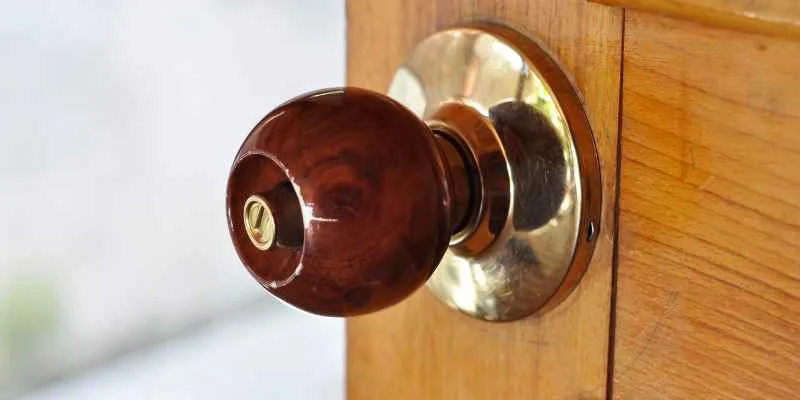
Genuine solid wood cabinet knobs are real and widely available, but they’re overwhelmingly sold in walnut, oak, or generic unlabeled “hardwood” rather than true mahogany specifically — the same sourcing reality covered in our guide to buying real mahogany lumber, where genuine Honduran mahogany is CITES-restricted and African mahogany is the more common substitute. For knobs specifically, walnut is the closest common substitute in tone and grain character to what most people picture as “mahogany,” and it’s genuinely more available as finished cabinet hardware than actual mahogany knobs are.
Wood vs. Metal Knobs Near Kitchen Heat and Moisture
This is a real practical reason to think twice before choosing genuine wood knobs for every application: cabinet knobs near a stove, oven, or sink see more heat and moisture exposure than knobs on a dresser or a living room cabinet, and wood handles that cycle less gracefully than sealed metal hardware over years of daily use. A well-finished wood knob with a durable sealed topcoat holds up fine in most kitchens, but it’s worth choosing metal hardware specifically for knobs immediately next to a range or a sink, and reserving real wood knobs for lower-exposure cabinets and drawers elsewhere in the kitchen or in furniture entirely outside the kitchen.
Knob vs. Pull: Picking the Right Hardware Type
A knob is a single-point grip, typically round, oval, or a similar compact shape; a pull (or handle) is an elongated bar with two mounting points, giving a different grip style and a different visual line across a cabinet front. Knobs are the traditional standard for doors and smaller drawers, while pulls are more common on larger, heavier drawers where a two-handed or fuller-hand grip makes opening easier. Neither is objectively correct — it’s largely a style and ergonomics choice — but mixing knob styles on doors with pull styles on drawers throughout the same kitchen is a common, deliberate design convention worth knowing about if you’re planning hardware for an entire room rather than replacing a handful of existing knobs to match.
Standard Sizes and Placement
Most cabinet knobs run 1″ to 1.5″ in diameter, a size range chosen for a comfortable one-hand grip without looking oversized on a standard cabinet door or drawer front. Standard placement puts a door knob in the corner nearest the opening edge, typically 2-3 inches from both the top or bottom and the side edge, while a drawer knob is usually centered horizontally and placed a consistent distance from the top edge across every drawer in a run. Consistency across all doors and drawers matters more than the exact number chosen — pick a placement rule and a template, and apply it identically throughout the whole project rather than eyeballing each piece individually.
Matching Wood Knobs to Existing Cabinetry
If matching existing mahogany-stained cabinetry is the actual goal, an unfinished wood knob stained to match (the same approach covered for vent covers) gets a more reliable color match than hoping a pre-finished “mahogany” product happens to line up with your specific cabinets. Buy unfinished knobs, test stain on a scrap piece of the same wood, and apply the same stain used on the cabinetry itself if any is left over from the original project — that’s the most reliable way to get knobs that actually match rather than merely coordinate.
Screw Length: The Detail That Trips Up Replacements
Cabinet door and drawer front thickness varies enough between projects (and even between older and newer cabinetry in the same house) that the screw included with a new knob doesn’t always match what your specific doors need. A screw that’s too short won’t engage enough threads to hold the knob securely under regular use; one that’s too long will either poke through a thin drawer front or bottom out before the knob seats flush against the wood. Measure your actual door or drawer thickness before ordering a full set of replacement knobs, and check whether the listing specifies included screw length — many wood knobs ship with a standard screw that assumes typical 3/4″ cabinet doors and may need a longer screw purchased separately for thicker stock.
Installation Basics
Most cabinet knobs use a single center screw through the back of the door or drawer front into a threaded insert in the knob’s base — measure and mark hole placement consistently across all doors and drawers before drilling, since even a slight inconsistency in knob height or centering becomes visually obvious once every cabinet in a run is fitted. A simple installation jig or template (often included with hardware sets, or available separately) makes repeated placement significantly more consistent than measuring and marking each position freehand.
Frequently Asked Questions
Are mahogany cabinet knobs actually made of mahogany wood?
Often not. Many “mahogany” knobs are metal hardware in a finish color named Mahogany or Mahogany Bronze. Genuine wood knobs sold as mahogany-toned are more commonly walnut or generic hardwood, since real mahogany is less commonly used for finished small hardware.
How can I tell if a knob is real wood or a wood-look finish?
Check the product’s listed material, not just its color name. A genuine wood knob shows real grain texture up close; a metal knob with a wood-toned finish has a uniform, painted or plated surface with no actual grain.
What wood is closest to mahogany for cabinet knobs?
Walnut is the most commonly available real wood knob material closest in tone and grain character to what most people picture as mahogany, and it’s more widely sold as finished cabinet hardware than actual mahogany knobs.
Should I use knobs or pulls on kitchen cabinets?
Knobs suit doors and smaller drawers with a single-point grip. Pulls work better on larger, heavier drawers where a two-handed or fuller-hand grip makes opening easier. It’s primarily a style and ergonomics choice, not a strict rule.
Conclusion
Check the material listed on any “mahogany” knob before buying — a real, common share of these listings are metal hardware in a mahogany-named finish, not wood at all. If genuine wood grain matters, walnut or an unfinished knob stained to match your specific cabinetry gets you closer to the real thing than trusting the word “mahogany” in a product title, and measure your door thickness before ordering a full set so screw length isn’t a surprise once the hardware arrives.
Sponsored / affiliate links. As an Amazon Associate I earn from qualifying purchases. I may earn additional commission from eligible campaigns.
 The Hardwood Edge Mahogany Hardwood Planks - 2-Pack Mahogany Wood for Unfinished Wood Crafts - 1/8’’ (3mm) 100% Pure Hardwood - Laser Engraving Blanks - Exotic Mahogany Planks for Crafts and Gifts
 The Hardwood Edge Mahogany Hardwood Planks - 4-Pack Mahogany Wood for Unfinished Wood Crafts - 1/8’’ (3mm) 100% Pure Hardwood - Laser Engraving Blanks - Exotic Mahogany Planks for Crafts and Gifts