Mahogany Finishing: Why You Need a Grain Filler First
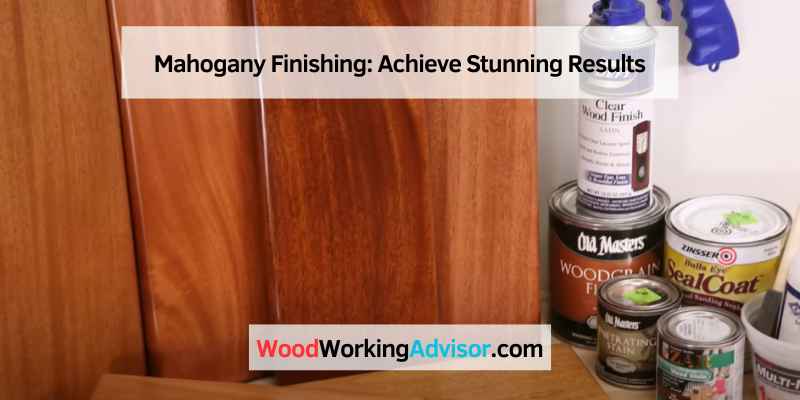
The best finish for mahogany is a grain filler first, then a coat of dewaxed shellac as a sealer, followed by a wipe-on oil/varnish blend, and finished with paste wax for luster. Skip the grain filler and you’ll spend twice as long trying to build a flat, glossy film over mahogany’s open pores.
Mahogany’s heartwood is dense, stable, and takes stain evenly – which is exactly why it rewards a proper finishing sequence instead of a single quick coat. Below is the process in the order it actually needs to happen, the real products worth using at each step, and the mistakes that cause blotching or a cloudy, uneven sheen.
Step 1: Fill the Grain
Best Sealer Before Staining Mahogany
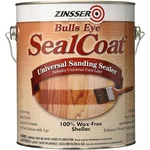 |
Zinsser SealCoat Universal Sanding Sealer – $92.99 This is the washcoat that locks in grain filler and evens out absorption before stain or topcoat goes on mahogany.
|
Mahogany is an open-pored wood, meaning it has visible pores running through the grain that will telegraph through any film finish unless you fill them first. Skip this step and a glossy topcoat will look rippled instead of flat no matter how many coats you apply.
Old Masters Wood Grain Filler is the standard choice here – a linseed-oil-and-wood-flour paste that packs into the pores and dries to a sandable, stainable base. An oil-based grain filler (mineral spirits, oil, and ground talc) is the faster-drying alternative, though it’s harder to apply evenly and rewards practicing on scrap first.
The application sequence is the same regardless of which filler you pick:
- Wipe the surface clean with a tack cloth – any dust left behind will show as a speck under the finish.
- Work the filler into the grain with a putty knife, pushing across the grain so it packs into the pores rather than skating over them.
- Scrape off the excess with a flat scraper before it fully skins over – timing matters more than technique here.
- Let it cure fully per the can’s instructions (this varies more by humidity than most labels admit – give it extra time in a damp shop).
- Sand flush with fine-grit paper once hard.
For mix ratios and dry times by brand, see our complete mahogany wood grain filler guide.
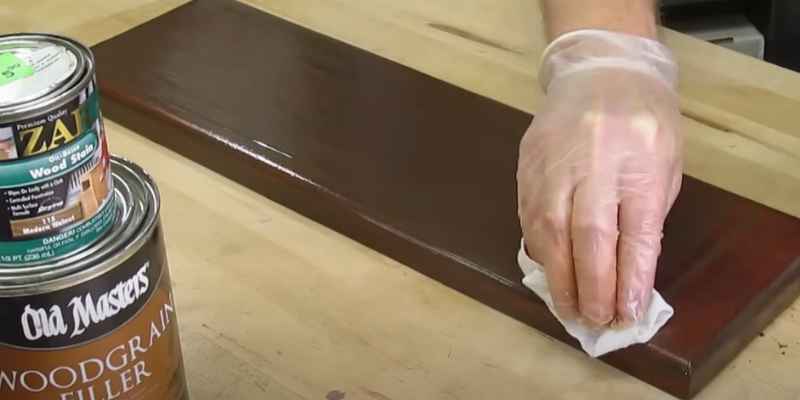
Wiping grain filler into mahogany before staining
Step 2: Seal Before You Stain or Finish
A washcoat of dewaxed shellac between the filled grain and whatever comes next solves two problems at once: it locks the grain filler in place so a stain won’t drag it back out, and it evens out absorption so color goes on consistently instead of blotching in the softer areas.
Zinsser SealCoat is the standard here because it’s genuinely universal – it dries fast, sands easily, and accepts any topcoat over it (oil, water-based, lacquer, wax) without adhesion problems. Brush it on in thin, even coats, let each dry about an hour, and apply two to three coats total, sanding lightly between them.
Step 3: Stain (Optional) or Go Straight to a Clear Finish
Mahogany’s natural reddish-brown color is already attractive enough that plenty of woodworkers skip staining entirely and go straight to a clear topcoat. If you want to deepen or even out the color, though, mahogany takes stain unusually evenly for an open-pored wood, especially once the grain is filled and sealed.
Old Masters Dark Mahogany Penetrating Stain is a common pick for a subtle, warm brown that makes the grain pop without looking artificial. For a deeper red tone, a merlot-toned wiping stain (Zar’s Merlot shade is a frequent choice) pushes the color further without muddying the grain. Minwax Gel Stain is worth knowing about too – it sits on the surface rather than soaking in, which gives you a longer open time to even out the color by hand.
Step 4: The Topcoat
A wipe-on oil/varnish blend (tung oil cut with varnish) is the most forgiving topcoat for mahogany – it builds a film slowly over several thin coats, which matters on an open-pored wood where a single heavy coat of straight varnish is more likely to trap bubbles in the pores you just filled.
Apply with a rag or foam brush, wipe off any excess after a few minutes so it doesn’t gum up, and let each coat cure fully (usually overnight) before the next. Three to four coats is typical for a durable, low-sheen finish; more if you want a higher gloss.
Step 5: Wax for the Final Luster
Once the oil/varnish coats are fully cured (give it a few days, not just overnight), a coat of paste wax buffed out by hand adds a soft, warm sheen that a film finish alone doesn’t give you. It’s not a structural layer – think of it as the last 5% of polish, not protection – so it needs to be reapplied periodically on pieces that see regular handling.
If You’re Finishing Mahogany for Outdoor Use
The indoor sequence above assumes furniture, cabinetry, or trim. Outdoor mahogany (porch columns, exterior doors, marine trim) needs a product built for UV and moisture cycling instead: a marine-grade sealer or an exterior wood stain formulated for direct weather exposure, reapplied on the schedule the label specifies rather than “when it looks like it needs it.” Interior finishing products like SealCoat or wipe-on oil/varnish blends aren’t rated for that exposure and will fail faster outdoors than their indoor performance would suggest.
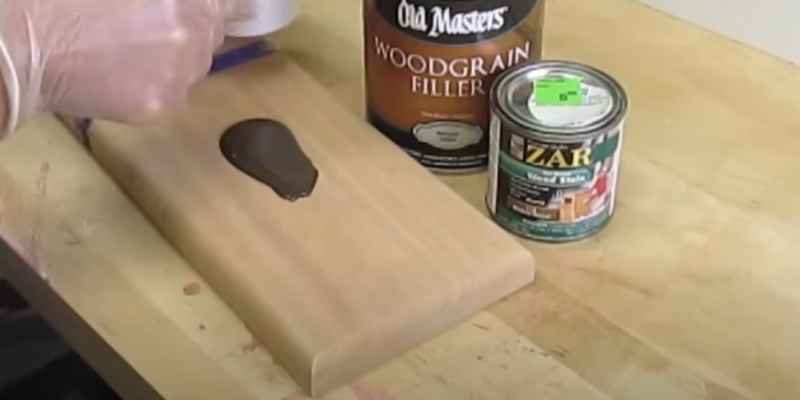
A test patch showing filled grain and stain color before committing to the full piece
Mistakes That Cause Blotching or a Cloudy Finish
Staining before filling the grain: Stain pools in unfilled pores and darkens unevenly.
Skipping the sealer washcoat: Without it, stain or oil absorbs unevenly across the grain and softer areas blotch.
Applying the topcoat too heavy, too fast: Traps solvent and bubbles in the filled pores – thin coats, patience, full cure time between them.
Skipping the test patch: Color and sheen both shift once filler, stain, and topcoat stack up – always test the full sequence on an offcut first.
Waxing before the topcoat has fully cured: Wax over a soft film traps solvent underneath and can cloud the finish.
Frequently Asked Questions of Mahogany Finishing
What is the best finish for mahogany wood?
Grain filler first, then a washcoat of dewaxed shellac (Zinsser SealCoat), a wipe-on oil/varnish blend for the topcoat, and paste wax for the final sheen. Skipping the grain filler is the single most common reason a mahogany finish looks rippled instead of flat.
What do you finish mahogany with?
Shellac as a sealer, a wipe-on oil/varnish blend or straight varnish as the topcoat, and wax as the final touch. If you want color first, a penetrating stain like Old Masters Dark Mahogany goes on after the grain is filled and before the sealer coat.
Does mahogany finish well?
Yes – mahogany takes stain and film finishes more evenly than most open-pored hardwoods, especially once the grain is filled. Heartwood in particular is dense and stable, which helps the finish build a consistent sheen.
What color stain looks best on mahogany?
A warm brown penetrating stain (Old Masters Dark Mahogany Penetrating Stain is a common pick) makes the grain pop without looking artificial. For a deeper red, a merlot-toned wiping stain pushes the color further. Always seal with a washcoat first so the color goes on evenly.
Bottom Line
Mahogany rewards patience more than any single product choice: fill the grain, seal it, stain if you want color, build the topcoat in thin coats, and wax last. Skip a step – especially the grain filler or the sealer washcoat – and you’ll be fighting blotching or a rippled sheen instead of enjoying the wood’s natural depth.
Sponsored / affiliate links. As an Amazon Associate I earn from qualifying purchases. I may earn additional commission from eligible campaigns.