Okoume vs Mahogany: Hardness, Rot Resistance and Marine Plywood
Okoume is a light, pale-pink African wood that rates 400 lbf on the Janka scale, while mahogany runs 850 to 900 lbf and resists rot better. That gap decides whether your project is a boat panel or a tabletop. This guide compares hardness, weight, rot resistance, color, plywood grades, and cost.
Okoume vs Mahogany: The Short Answer
Choose okoume when weight, bending, and price matter and you will seal the wood well, as in marine plywood, guitars, and painted cabinet panels. Choose mahogany when you need a harder, more decay-tolerant wood for furniture, trim, or a visible hardwood surface. Okoume looks a little like mahogany, but it does not behave like it.
Best Okoume Marine Plywood Pick | |
 |
OKOUME Marine Plywood 3/8 x 24 x 24 A small, void-free okoume panel sanded on both sides. A low-cost way to see okoume’s pale grain and light weight in person before you commit to full sheets.
|
As an Amazon Associate we earn from qualifying purchases. | |
Hardness, Weight and Strength: The Real Numbers
Numbers below come from the Wood Database. They describe solid lumber, not plywood panels, but they show what each species brings to a panel or a board. For a deeper look at the mahogany family see our guide to mahogany wood types.
| Property | Okoume | African mahogany (Khaya) | Honduran mahogany |
|---|---|---|---|
| Janka hardness | 400 lbf | 850 lbf | 900 lbf |
| Density | 27 lb/ft3 (430 kg/m3) | 33.9 lb/ft3 (545 kg/m3) | 36.8 lb/ft3 (590 kg/m3) |
| Modulus of rupture | 10,870 lbf/in2 | 11,730 lbf/in2 | 11,710 lbf/in2 |
| Elastic modulus | 1,228,000 lbf/in2 | 1,410,000 lbf/in2 | 1,458,000 lbf/in2 |
| Strength per lb/ft3 (MOR / density) | about 403 | about 346 | about 318 |
| Rot resistance | Non-durable | Moderately durable | Moderately to very durable |
Two things stand out. First, mahogany is 2.1 to 2.25 times harder than okoume, so it resists dents and scratches far better. Second, the strength gap is small. Okoume’s bending strength is only about 7 percent below either mahogany, yet it weighs 20 to 27 percent less. Divide bending strength by density and okoume comes out roughly 16 percent ahead of African mahogany and 26 percent ahead of Honduran. That ratio (our own arithmetic from the published figures) explains why boatbuilders reach for okoume when every pound counts.
Rot Resistance: The Marine Plywood Myth
Here is the misconception that costs people money: marine-grade okoume plywood is not rot-proof. The Wood Database rates okoume as non-durable, with poor insect resistance. African mahogany is moderately durable, and Honduran mahogany ranges from moderately to very durable, with wild-grown timber outlasting plantation stock.
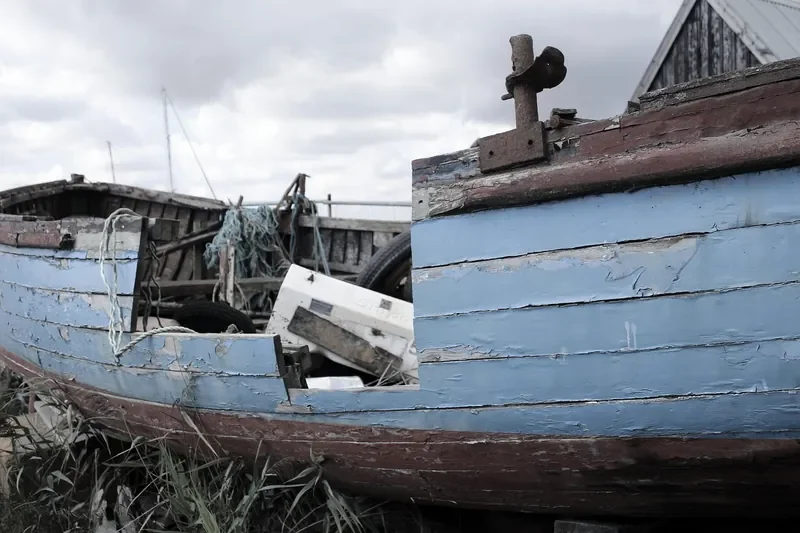
So what makes marine okoume plywood work outdoors? The construction, not the species. Panels are void-free, so water cannot pool in hidden gaps, and they are made to be sealed. One popular listing describes its okoume panel as premium grade and ready for sealing, and states it is not treated against decay the way pressure-treated plywood is. In practice that means epoxy on every edge and face, or a marine varnish system, and a re-coat before the finish fails. Our guide to marine plywood vs pressure-treated plywood covers that difference, and whether marine plywood warps covers what happens when moisture does get in.
Sealing Okoume Properly
- Seal end grain and cut edges first, since they absorb water fastest.
- Use a penetrating epoxy or a marine epoxy coat, then top-coat with a UV-stable spar varnish or paint.
- Inspect the coating every season. Chips and cracks are the failure point, not the wood surface itself.
Color and Grain: How Close Is Okoume to Mahogany?
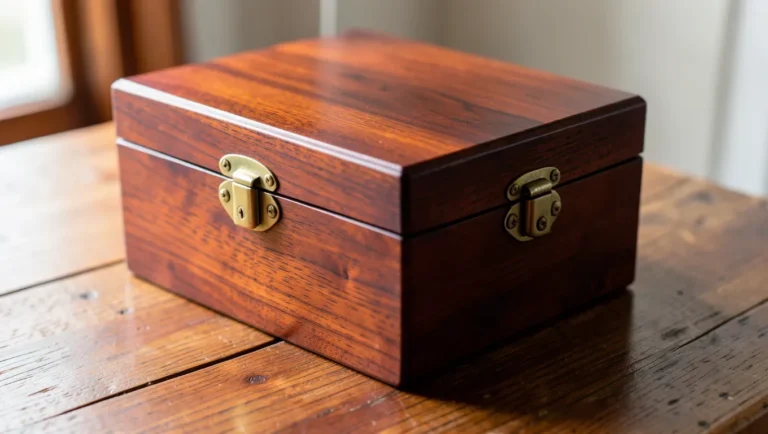
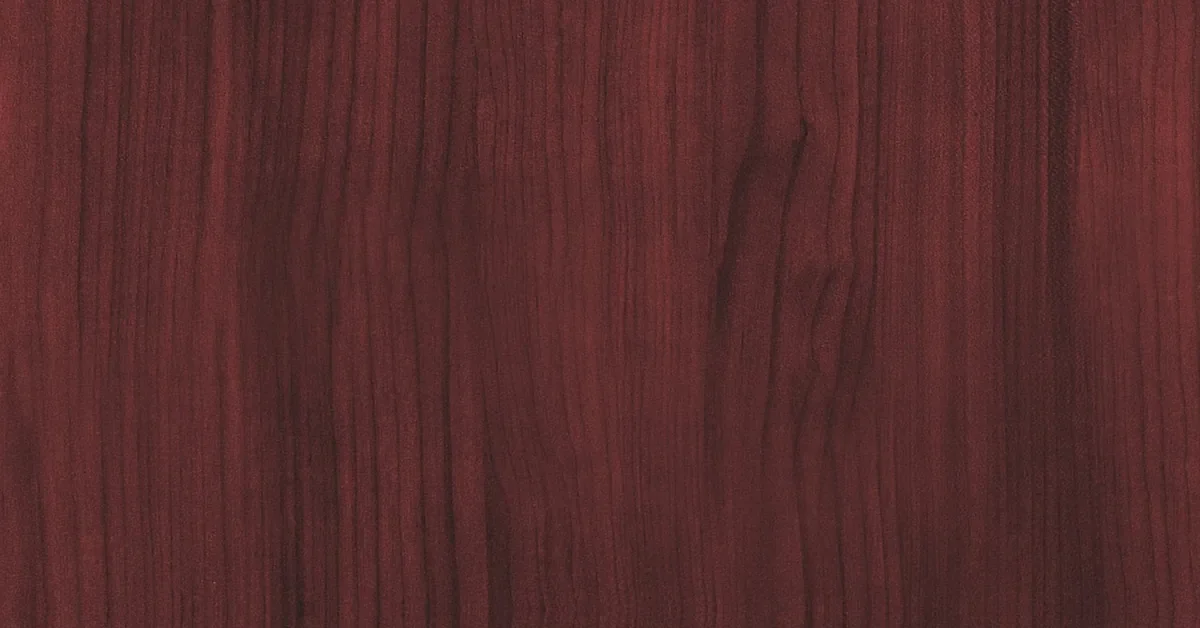
Okoume heartwood ranges from pale pink to light brown and darkens with age. The Wood Database notes its grain can resemble mahogany, and it is straight to wavy or slightly interlocked with a medium texture. Mahogany runs from pale pinkish brown to deep reddish brown and also darkens over time. African mahogany adds strong chatoyancy, a shimmering effect as light moves across the grain.
Fresh okoume is noticeably paler and plainer than a good mahogany board. Under a tinted varnish or a mahogany-toned stain it can read as mahogany at arm’s length, but up close the hardness and depth of color are different. If genuine reddish figure is the point of your project, see mahogany wood cabinets for what real mahogany looks like in use.
Marine Plywood: Okoume Panels vs Mahogany Panels
Shopping for a boat panel adds a wrinkle: much of what is sold as mahogany plywood is not genuine mahogany. Marine “mahogany” panels are commonly built from meranti or sapele, so the label tells you the look, not the species. Okoume panels are the light option, and boatbuilders commonly point out that okoume is the easiest of the popular marine plywoods to bend, while denser mahogany-type panels are heavier and better suited to stain-grade work.
Quality also varies between suppliers. A stamp on a panel does not guarantee every layer beneath the face veneer is clean, so ask for the species, ply count, glue type, and void-free claim in writing, and inspect a cut edge when you can. Our explainer on how plywood is made shows why the inner plies matter as much as the face.
Workability and Finishing
Mahogany is the friendlier wood in the shop. Honduran mahogany is typically very easy to work with hand and machine tools, and sands, turns, glues, and finishes well. African mahogany is generally easy too, though interlocked grain can tear out.
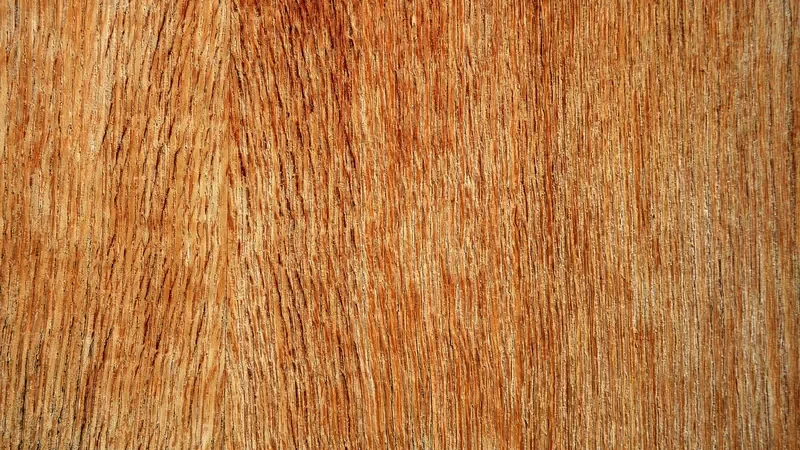
Okoume glues and finishes well, but its high silica content has a pronounced blunting effect on cutters and it can tear out. Use sharp carbide blades and bits and expect to sharpen more often. Wear a dust mask: the Wood Database lists skin, eye, and respiratory irritation, asthma-like symptoms, and conjunctivitis among okoume’s health hazards.
Both species also turn up in furniture, veneer, boatbuilding, and musical instruments, according to the Wood Database. In instruments and cabinet boxes, okoume’s light weight is a feature. In a tabletop or a stair tread, mahogany’s extra hardness is what you are paying for. If tearout shows up on either wood, slow the feed rate, use a sharp blade with more teeth, and back the cut with a sacrificial board.
Cost and Sustainability
Okoume is described as moderately priced for an imported hardwood, mostly sold as veneer and plywood. Honduran mahogany is mid-range and pricier than African mahogany. As a reference point, Amazon listings in September 2026 showed a 3/8 inch okoume marine panel at 24 x 47 inches for about $63 and a 24 x 24 inch piece for about $32. Prices move, so check before you buy. For solid mahogany pricing, read how much mahogany costs.
Conservation matters too. The IUCN lists okoume as vulnerable after a population decline above 20 percent. African mahogany is CITES Appendix II listed and vulnerable, and Honduran mahogany is IUCN endangered and CITES Appendix II. Ask suppliers for chain-of-custody or certification documents.
Which Should You Choose?
- Boat hulls, decks, and paddle craft: okoume marine plywood, fully epoxy-sealed, for the best strength-to-weight ratio.
- Tables, doors, and trim that take daily wear: mahogany, for roughly twice the dent resistance.
- Painted cabinet boxes and shop projects: okoume plywood, since paint hides the plain color and the light weight helps.
- Outdoor furniture with minimal maintenance: neither is ideal. For a broader hardwood comparison, see teak vs mahogany.
The bottom line: okoume is a lightweight, well-priced, mahogany-looking wood that needs a sealed finish to survive water, while mahogany is heavier, harder, and naturally more durable. Match the wood to how the finished piece will be used, not to the look on the sample.
Frequently Asked Questions
Is okoume as strong as mahogany?
Not quite, but it is close by weight. Okoume’s modulus of rupture is 10,870 lbf/in2, about 7 percent below Honduran mahogany at 11,710. It is far softer on the Janka scale (400 lbf vs 900 lbf), so it dents more easily. Per pound of wood, okoume is actually the stronger choice.
Is okoume waterproof?
No. Okoume is rated non-durable with poor insect resistance, so the wood itself will rot if it stays wet. Marine okoume plywood survives on boats because it is void-free, made for wet service, and sealed with epoxy or varnish. If the coating fails, the panel is vulnerable.
Can okoume pass for mahogany?
Visually, often yes. Okoume heartwood runs from pale pink to light brown and its grain can resemble mahogany. It is lighter in color than aged mahogany and much softer, so it works for painted or stained cabinet panels but not for surfaces that take hard wear.
Is marine plywood made of mahogany?
Rarely true mahogany. Many panels sold as mahogany marine plywood use other species such as meranti or sapele, and okoume panels are common too. Always read the species on the spec sheet rather than trusting the word mahogany in a listing.
Which is cheaper, okoume or mahogany?
In plywood form okoume is generally the moderately priced option. As solid lumber, Honduran mahogany is mid-range for an imported hardwood and costs more than African mahogany. For a boat or a paint-grade project, okoume panels usually make the cheaper start.
Sponsored / affiliate links. As an Amazon Associate I earn from qualifying purchases. I may earn additional commission from eligible campaigns.
 MECCANIXITY 4PCS Mahogany Plywood Sheets,12 x 12 x 1/8 Inch Unfinished Wood Board Lightweight/Durable Wood Panels for Laser Cutting & Engraving,Crafts,Painting, Aircraft Model
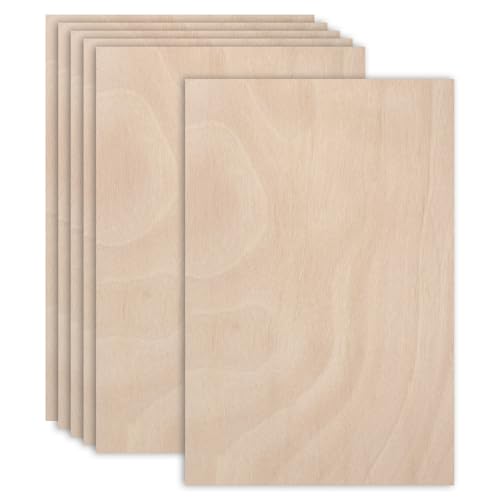 MECCANIXITY 6PCS Mahogany Plywood Sheets,12 x 18 x 1/8 Inch Unfinished Wood Board Lightweight/Durable Wood Panels for Laser Cutting & Engraving,Crafts,Painting, Aircraft Model