What Is Mahogany Wood Used For? (Species, CITES Status + Uses)
Mahogany wood is used for furniture, boat decking, and guitar bodies because it resists rot and machines cleanly — but genuine mahogany (Swietenia) has been CITES Appendix II-protected since 2003, so most lumber sold today is African mahogany (Khaya) or sapele instead. Buying unpermitted logs can violate international trade law. This guide covers real species differences, sustainable sourcing, and where each type actually belongs in a project.
Insert your Affiliate Disclosure reusable block here
What Is Mahogany? (Species and Family)
Mahogany is a category of reddish-brown tropical hardwoods in the mahogany family (Meliaceae) prized for a fine, straight grain, easy workability, and natural rot resistance. The name covers several distinct botanical species that are not interchangeable in price, legality, or performance.
- Honduran mahogany (Swietenia macrophylla) — also called big-leaf mahogany, the most widely traded “genuine” mahogany, native to Central and South America.
- Cuban/West Indies mahogany (Swietenia mahagoni) — the original mahogany used in 18th-century furniture; now scarce and rarely sold commercially.
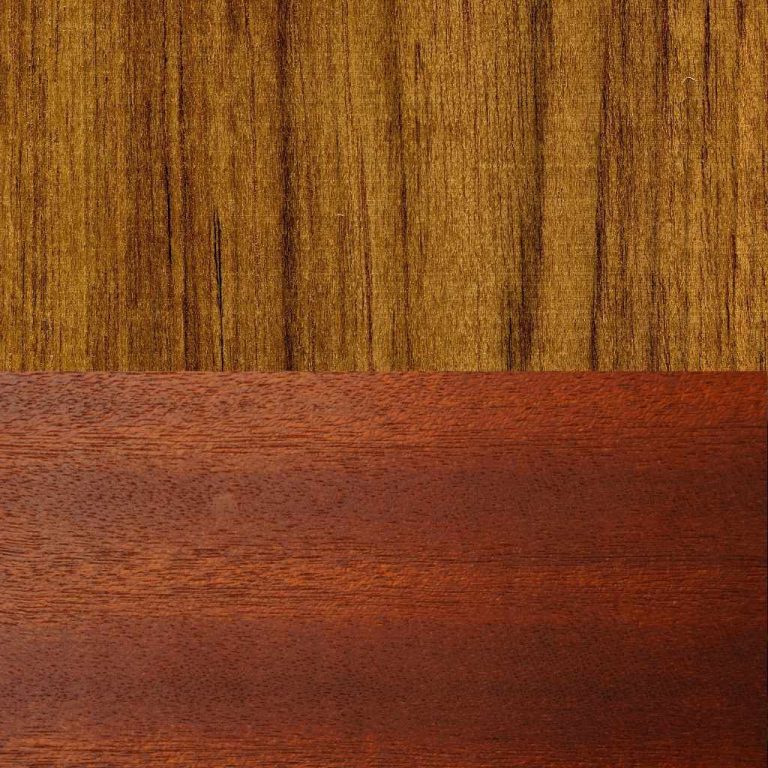
- African mahogany (Khaya species) — a different genus from the same family, lighter pinkish-brown, more color/grain variation board to board, and the most common substitute for genuine mahogany today.
- Philippine mahogany — a trade name for Shorea species (a different family entirely); it looks similar but is not true mahogany at all.
If you’re trying to confirm which one you actually have, our mahogany wood and African Mahogany vs. Sapele guides walk through the grain and color tells in more detail.
📊 Honduran mahogany rates about 900 lbf on the Janka hardness scale, with a density around 36.8 lbs/ft³ — roughly in the same range as black walnut, noticeably softer than red oak (1,290 lbf). African mahogany runs harder, closer to 1,100 lbf. Source: The Wood Database, Honduran Mahogany
Is Mahogany Sustainable? CITES Status Explained
Genuine mahogany (Swietenia macrophylla, big-leaf/Honduran mahogany) has been listed on CITES Appendix II since November 2003, after decades of overharvesting across Latin America. That listing doesn’t ban the trade outright, but every legal shipment of logs, sawn wood, veneer, or plywood requires an export permit confirming the harvest didn’t harm wild populations. The IUCN currently rates the species Vulnerable. Cuban mahogany (S. mahagoni) is also Appendix II-listed and rated Near Threatened — it’s largely gone from commercial supply.
This is the main reason African mahogany (Khaya) and sapele have become the default “mahogany” sold at most U.S. lumber yards and big-box stores: they’re not CITES-restricted, so supply is more consistent and paperwork isn’t required at the register. When a listing just says “mahogany” with no species name, it’s almost always African mahogany or a substitute, not genuine Honduran stock.
📊 Bigleaf mahogany has been regulated under CITES Appendix II since 2003, requiring exporting countries to certify that each shipment was legally harvested and non-detrimental to wild populations. Source: US Forest Service Research & Development, Big-Leaf Mahogany on CITES Appendix II
What Is Mahogany Wood Used For?
Mahogany’s combination of rot resistance, dimensional stability, and a fine, easy-to-finish grain puts it in five main categories of use: furniture, marine construction, musical instruments, architectural millwork, and flooring/veneer.
Furniture Making
Mahogany wood is one of the classic furniture hardwoods — it was the dominant wood of 18th-century Georgian and Chippendale case pieces, and it’s still used today for dining tables, cabinets, bed frames, and chairs. Its straight grain machines cleanly with hand tools and power tools alike, and it takes stain evenly without the blotching problems softer woods like pine or birch can show.
Boat Building and Marine Trim
Mahogany’s natural resistance to rot and moisture, combined with a relatively low density for its strength, has made it a standard boatbuilding wood for over a century — used for hulls, decking, trim, and interior joinery on everything from small runabouts to classic yachts. It’s still the reference wood for marine-grade plywood used in boat construction.
Because marine mahogany takes constant sun and water exposure, the finish matters as much as the wood species — see our mahogany finish comparison for exterior-rated options that hold up outdoors.
Musical Instruments
Mahogany is one of the most widely used tonewoods in guitar building. Luthiers use it for solid-body electric guitar bodies, acoustic guitar backs and sides, and necks on both, because it produces a warm, midrange-focused tone with controlled bass response — distinct from the brighter, more harmonically complex tone of spruce or maple. It’s also used for drum shells and, less commonly, piano cases.
Architectural Millwork and Doors
Interior and exterior doors, window sashes, staircases, and paneling are common mahogany applications, especially where the wood will be exposed to weather — entry doors are a good example, since mahogany resists swelling and warping better than most domestic species.
Flooring and Veneer
Mahogany veneer is used over cheaper substrates to bring the wood’s rich color and figure to cabinetry and flooring at a fraction of solid-lumber cost. Solid mahogany flooring is also used directly in higher-traffic residential and commercial spaces where its hardness (around 900 lbf) holds up well, though it’s softer than red oak or hard maple flooring.
Mahogany vs. Other Woods
| Wood | Janka Hardness | CITES Status | Best For |
|---|---|---|---|
| Honduran mahogany | ~900 lbf | Appendix II (permit required) | Fine furniture, restoration work |
| African mahogany | ~1,100 lbf | Not listed | Doors, millwork, budget furniture |
| Sapele | ~1,410 lbf | Not listed | Flooring, exterior trim, guitars |
| Red oak | ~1,290 lbf | Not listed | Flooring, budget furniture |
| Black walnut | ~1,010 lbf | Not listed | Fine furniture, gunstocks |
Mahogany is generally priced above oak and walnut for genuine Honduran stock, largely because of CITES paperwork and limited supply; African mahogany and sapele price closer to premium domestic hardwoods.
Choosing and Finishing Mahogany Wood
Mahogany is graded and sold much like other hardwood lumber — select/better grade gives a clean, uniform board for visible furniture parts, while lower grades with more character (mineral streaks, small knots) work fine for structural or hidden parts at a lower price. When buying, ask specifically which species you’re getting: a supplier selling unlabeled “mahogany” at a suspiciously low price is almost never selling genuine Honduran stock.
Because mahogany’s open, straight grain absorbs oil finishes evenly, penetrating oils (tung oil, Danish oil) and marine spar varnish are the standard choices — both let the natural reddish-brown color deepen with age instead of masking it. For outdoor and marine use, a UV-resistant spar varnish over an oil base holds up best; for indoor furniture, a straight tung or Danish oil finish is usually enough.
Best Mahogany Finish Pick
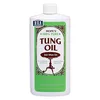
Hope’s 100% Pure Tung Oil (17oz) – $17.99
A penetrating oil finish that soaks into mahogany’s open grain instead of forming a surface film — matches the oil-finish approach this guide recommends for indoor mahogany furniture.
- Best for: indoor mahogany furniture and cutting boards
- Why we picked it: 100% pure tung oil with no additives, food-safe once cured, deepens mahogany’s natural reddish tone
- Main drawback: needs multiple thin coats and longer cure time than film finishes
Compare more mahogany finish options
 Option 1 Hope’s Pure Tung Oil (32oz) – $29.99
|
 Option 2 Murdoch’s Hard Sealer (32oz) – $60.95
|
 Option 3 NetLea Pure Tung Oil (32oz) – $19.99
|
As an Amazon Associate we earn from qualifying purchases.
Real-World Examples of Mahogany in Use
Furniture and Decorative Pieces
Mahogany’s ability to hold intricate detailing has made it a favorite for carved wall panels, picture frames, and decorative boxes, in addition to case furniture like dressers and dining sets.
Boats and Outdoor Decking
Mahogany decks and boat interiors combine the wood’s natural rot resistance with a warm reddish tone that’s hard to replicate with composite decking. Classic runabouts and small yachts still rely on it for hulls and trim.

Frequently Asked Questions About Mahogany Wood
Why is mahogany wood so special?
Mahogany combines rot and moisture resistance with a fine, straight grain that machines, sands, and finishes more predictably than most hardwoods. That combination — durability plus workability — is why it’s been a top choice for furniture, boats, and instruments for over 200 years.
What is the best use of mahogany wood?
There’s no single “best” use — it depends on the species. African mahogany and sapele are well suited to doors, millwork, and everyday furniture. Genuine Honduran mahogany, being scarcer and CITES-restricted, is generally reserved for fine furniture, restoration work, and instrument building where its exact color and grain matter most.
Is mahogany expensive wood?
Genuine Honduran mahogany typically costs more than oak or African mahogany because of limited supply and CITES export paperwork. African mahogany and sapele, which aren’t CITES-restricted, price closer to premium domestic hardwoods like walnut.
Is it legal to buy mahogany wood?
Yes, as long as it was legally harvested and traded under CITES export permits — genuine mahogany from a reputable domestic lumber supplier is legal. What’s restricted is unpermitted logging and cross-border trade of Swietenia species without the required CITES documentation.
What’s the difference between mahogany and African mahogany?
They’re different genera in the same plant family. Genuine mahogany (Swietenia) has a finer, straighter grain and a deeper orange-red color; African mahogany (Khaya) is lighter and pinkish with more grain variation, runs harder on the Janka scale, and isn’t CITES-restricted.
What can you make with mahogany wood?
Mahogany wood is used for furniture, doors, flooring, veneer, boat hulls and decking, and guitar bodies and necks. It’s durable, workable, and rot-resistant enough for both structural marine use and fine detail work.
Conclusion
Mahogany’s reputation rests on a real combination of rot resistance, workability, and grain quality — but “mahogany” on a label can mean several different species with different prices, hardness, and legal status. Check whether you’re buying genuine Honduran mahogany (CITES-protected, pricier) or African mahogany/sapele (unrestricted, more affordable) before you commit a project to it.