Milwaukee Reciprocating Saw Price Guide: What You’re Really Paying For
Milwaukee reciprocating saw prices run from around $120 for a basic corded model to $250-plus for a top-tier cordless FUEL saw, and the spread isn’t random. Three things set the price ladder: whether the saw is corded or battery-powered, how long and how fast the blade strokes, and whether the saw adds orbital blade motion for faster wood cutting. Below is what each of those actually buys you, current pricing by model, and how to land on the right tier without overpaying.
What Actually Drives Milwaukee Reciprocating Saw Prices
Milwaukee doesn’t price its reciprocating saws off the logo – it prices them off the motor, the stroke, and (on a few corded models) the blade path. A bare M12 Hackzall and a bare M18 FUEL Sawzall can be $130 apart, and that gap maps directly onto real mechanical differences, not marketing.
Best One-Handed Cordless Pick
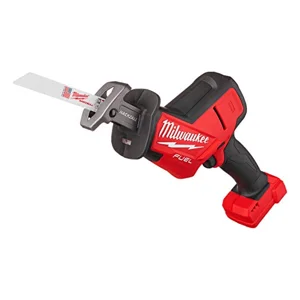 |
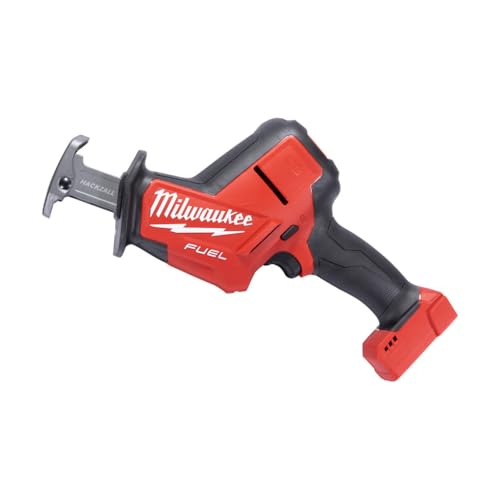
Milwaukee 2719-20 M18 FUEL Hackzall (Bare Tool) – $144 A POWERSTATE brushless motor and 7/8 in. stroke in a compact one-handed body – the mid-tier price point this guide breaks down below.
|
Cordless vs. Corded: The Base Price Split
A corded Milwaukee reciprocating saw is the cheapest way into the lineup because there’s no battery platform to buy into – the saw pulls power straight from the wall, so the purchase price only has to cover the motor and housing. That’s why Milwaukee’s corded 15-amp Super Sawzall (model 6538-21) lands around $195-$230, case included, for a saw with more sustained power than most cordless models can match on a long job.
Cordless models add cost in two places: the brushless motor itself, and the battery/charger if you buy a kit instead of a bare tool. Milwaukee’s FUEL line uses a POWERSTATE brushless motor paired with REDLINK PLUS electronics that manage power delivery and prevent overload – real components that cost more to build than a brushed motor, and that’s reflected in the price. Buying “bare tool” (tool only, no battery) is the standard way to cut $80-$150 off a cordless saw’s price if you already own compatible M12 or M18 batteries from another tool.
Stroke Length and SPM: Why Longer Strokes Cost More
Stroke length is how far the blade travels forward and back on each cycle, and strokes per minute (SPM) is how many times it does that in 60 seconds. Multiply the two and you get a rough measure of how much material the saw can remove per minute. Milwaukee’s compact one-handed saws (the M12 Hackzall and M18 FUEL Hackzall) use a shorter 7/8-inch stroke to keep the tool small and light, which caps their raw cutting speed compared to a full-size Sawzall. Milwaukee’s larger M18 FUEL Sawzall models step up to a 1-1/4-inch stroke at up to 3,000 SPM – more than 3,700 inches of blade travel per minute – and that longer-stroke mechanism, plus the larger motor needed to drive it, is a real part of why the full-size FUEL Sawzall costs $60-$100 more than a Hackzall.
Orbital Action: The Premium Cutting Feature
On most reciprocating saws the blade only moves in a straight line, back and forth. A handful of Milwaukee’s higher-end corded models, including the 6538-21 Super Sawzall, add an orbital action setting that moves the blade in a small elliptical path instead of a straight line. In wood, that orbital motion lets the teeth bite more aggressively on the forward stroke, which speeds up cutting noticeably – Milwaukee’s own spec sheet lists the 6538-21 at 0-2,800 SPM with orbital action as a selectable mode you can turn off for metal, where a straight stroke gives a cleaner cut. Because it requires an extra cam mechanism inside the gear case, orbital action is a feature you mostly find on step-up corded models, not entry-level saws, and it adds to the price accordingly.
Milwaukee Reciprocating Saw Prices by Model
Prices below are bare-tool (no battery/charger) for cordless models and reflect typical retailer pricing as of September 2026 – tool prices move with sales and stock, so treat these as ranges to check against the current listing rather than fixed numbers.
| Model | Type | Stroke / SPM | Typical Price Range | Best For |
|---|---|---|---|---|
| M12 FUEL Hackzall (2520-20) | Cordless, 12V | 7/8 in / up to 3,000 | ~$150-$180 bare tool | One-handed light-duty and overhead cuts |
| M18 FUEL Hackzall (2719-20) | Cordless, 18V | 7/8 in / up to 3,000 | ~$140-$180 bare tool | DIYers, tight spaces, one-hand control |
| M18 FUEL Sawzall (2720-20 / 2722-20) | Cordless, 18V | 1-1/4 in / up to 3,000 | ~$170-$280 bare tool | Pros, framing, heavy demolition |
| Super Sawzall, 15A (6538-21) | Corded | 1-1/4 in / up to 2,800, orbital | ~$195-$230 with case | All-day jobsite use, no battery limits |
Caption: Real bare-tool price ranges by Milwaukee reciprocating saw model, current as of this update.
How to Pick the Right Tier for Your Budget
If you’re only cutting the occasional branch, drywall opening, or nail-embedded board, the M12 Hackzall’s shorter stroke and lower price make more sense than paying for a full-size Sawzall’s extra stroke length you won’t use. If you already own M18 batteries from a drill or impact driver, the M18 FUEL Hackzall bare tool is usually the best value in the lineup – you’re paying for the brushless motor and stroke, not a second battery platform. Pros doing daily demolition or framing get real value from the longer-stroke M18 FUEL Sawzall or the corded 6538-21: the extra $60-$100 buys faster material removal over a full workday, which is where stroke length and orbital action actually pay for themselves.
Ways to Save on a Milwaukee Reciprocating Saw
- Buy bare tool, not the kit: If you already have M12 or M18 batteries, skip the kit price and buy tool-only – this alone is usually the single biggest discount available.
- Compare current listings before assuming MSRP: Milwaukee’s full-size FUEL Sawzall lists near $279 but is commonly discounted well below that at major retailers – check the live price rather than budgeting off the sticker number.
- Watch for blade or battery bundles: Retailers periodically bundle a blade set or a second battery at little to no extra cost – worth more than a small price cut if you need either anyway.
Common Mistakes When Buying a Milwaukee Reciprocating Saw
- Buying a kit you don’t need: Paying for a battery and charger you already own from another M12/M18 tool wastes $80-$150 that a bare-tool purchase would have saved.
- Assuming a longer stroke is always better: A full-size 1-1/4 in. stroke saw is heavier and less maneuverable than a Hackzall – great for demolition, overkill and awkward for one-handed overhead or tight-space cuts. See our Hackzall vs Sawzall comparison for the side-by-side specs.
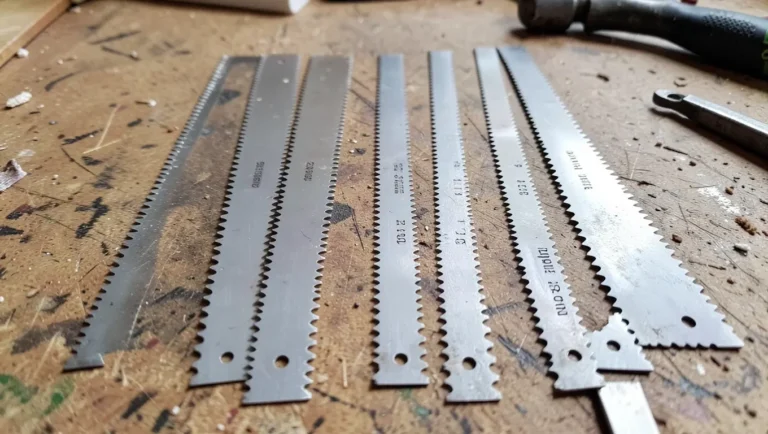
- Ignoring blade choice: Even the most expensive saw cuts poorly with the wrong blade – wood blades for lumber, bi-metal blades for nail-embedded wood or metal, and matching blade length to the material thickness.
Milwaukee vs. DeWalt vs. Makita: Price Context
Milwaukee isn’t the cheapest brand in this category, and the gap is mostly the same stroke-length story. DeWalt’s DCS367B undercuts Milwaukee’s full-size Sawzall at around $199 with a slightly shorter 1-1/8 in. stroke at 2,900 SPM. Makita’s XRJ07ZB comes in lower still, around $130, with a shorter 13/16 in. stroke. Milwaukee’s M18 FUEL Sawzall costs more in part because its 1-1/4 in. stroke and up to 3,000 SPM work out to the fastest blade-travel rate of the three – a real, measurable difference, not just brand premium. For a full spec-by-spec breakdown, see our cordless reciprocating saw comparison.
Frequently Asked Questions
What Is the Average Milwaukee Reciprocating Saw Price?
Most Milwaukee reciprocating saws run $140-$280 bare tool, depending on model. Compact one-handed Hackzall models sit at the low end (~$140-$180), full-size FUEL Sawzalls at the high end (~$170-$280), and the corded 15-amp Super Sawzall lands around $195-$230 with a case included.
Are Milwaukee Reciprocating Saws Worth the Price?
For the stroke length, SPM, and brushless-motor durability you get, yes – Milwaukee’s FUEL line consistently posts some of the fastest blade-travel rates in independent testing among cordless recip saws. If budget matters more than raw speed, DeWalt and Makita offer real savings with a shorter stroke and slightly slower cutting.
What’s the Difference Between the M12 and M18 Hackzall?
Both use the same 7/8-inch stroke and one-handed body style, but the M18 draws on Milwaukee’s larger 18V battery platform for more sustained power and run-time, while the M12 is lighter and pairs with Milwaukee’s smaller 12V tools. Pricing is close – within about $10-$20 of each other bare tool – so platform compatibility with batteries you already own usually decides which makes more sense.
Does Orbital Action Matter for Wood Cutting?
Yes, for wood specifically. Orbital action moves the blade in a small elliptical path instead of straight back-and-forth, letting the teeth bite harder on the forward stroke and cut noticeably faster in wood. It’s typically a switchable mode on higher-end corded models like the 6538-21, and should be switched off for metal, where a straight stroke cuts more cleanly.
Should I Buy a Bare Tool or a Kit?
Buy bare tool if you already own a compatible M12 or M18 battery and charger from another Milwaukee tool – it typically saves $80-$150 over the kit price. Buy the kit only if this is your first Milwaukee tool on that platform, since a battery and charger purchased separately usually costs more than the kit premium.
What Blades Should I Use with a Milwaukee Reciprocating Saw?
Use wood-cutting blades for lumber, bi-metal blades for wood with embedded nails or mixed demolition, and dedicated metal-cutting blades for pipe or metal stock. Blade length should match or slightly exceed the material thickness so the full stroke clears the cut.
Sponsored / affiliate links. As an Amazon Associate I earn from qualifying purchases. I may earn additional commission from eligible campaigns.