DEWALT DCS367 20V MAX XR Reciprocating Saw: Specs and Review
The DEWALT DCS367 is a compact 20V MAX XR reciprocating saw with a 1-1/8 in. stroke and up to 2,900 SPM, but it ships as a tool-only bare unit with no battery included. Skip the spec sheet and you will end up fighting vibration on long cuts, the most common complaint in real owner reviews. This guide covers verified specs, real pricing, how it stacks up against the DCS368 and DCS384, and honest pros and cons.
Quick Answer
Buy the DEWALT DCS367 if you need a compact recip saw for tight framing cuts and you already own 20V MAX batteries. Skip it if you want one-hand control or all-day comfort on heavy demolition, where the heavier DCS384 handles vibration better.
DEWALT DCS367 Specs at a Glance
Best DEWALT Reciprocating Saw Pick
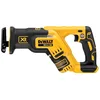
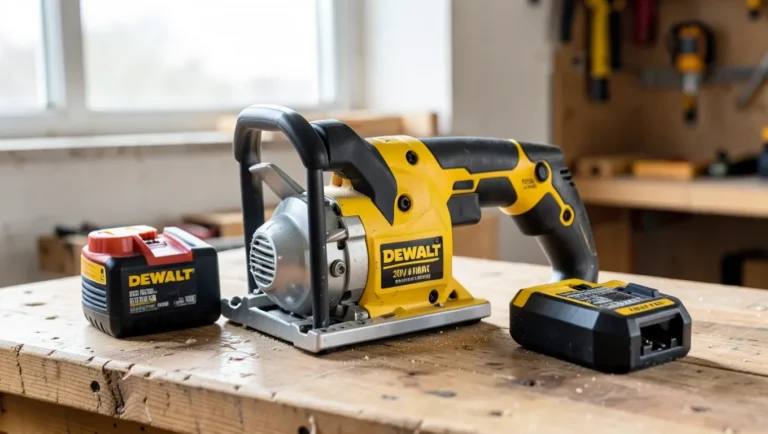
DEWALT DCS367B 20V MAX XR Compact Reciprocating Saw (Tool Only)
The exact model covered in this review: 1-1/8 in. stroke, 2,900 SPM, 5 lbs.
- Best for: Tight framing bays and stud cavities a full-size saw cannot fit
- Why we picked it: Matches this article’s verified spec sheet exactly
- Main drawback: Ships as a bare tool, no battery or charger included
Compare more DEWALT reciprocating saw options
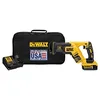 Kit With Battery DCS367P1 Kit (5.0Ah Battery + Charger)
|
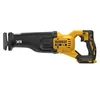 More Power DCS384B Full-Size Saw (Tool Only)
|
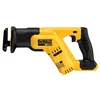 Budget Pick DCS387B Brushed Compact Saw
|
As an Amazon Associate we earn from qualifying purchases.
These are the manufacturer-listed specs for the DCS367B bare tool, confirmed against DEWALT’s own product page.
| Spec | DCS367B |
|---|---|
| Stroke length | 1-1/8 in. |
| No-load speed | 0-2,900 SPM |
| Weight (tool only) | 5 lbs. |
| Length | 14.5 in. |
| Blade clamp | Keyless, 4-position lever-action |
| Motor | Brushless (up to 2.5x more runtime than brushed) |
| Battery | 20V MAX (sold separately on the bare-tool version) |
| Warranty | 3-year limited, 1-year free service |
Design and Features
The DCS367 is a two-handed compact design, not a one-hand model, but its 14.5 in. body and 5 lb. weight still make it noticeably easier to fit between wall studs and joist bays than a full-size recip saw. The brushless motor is the main upgrade over DEWALT’s older brushed models in this size class, DEWALT rates it for up to 2.5x more runtime per charge.
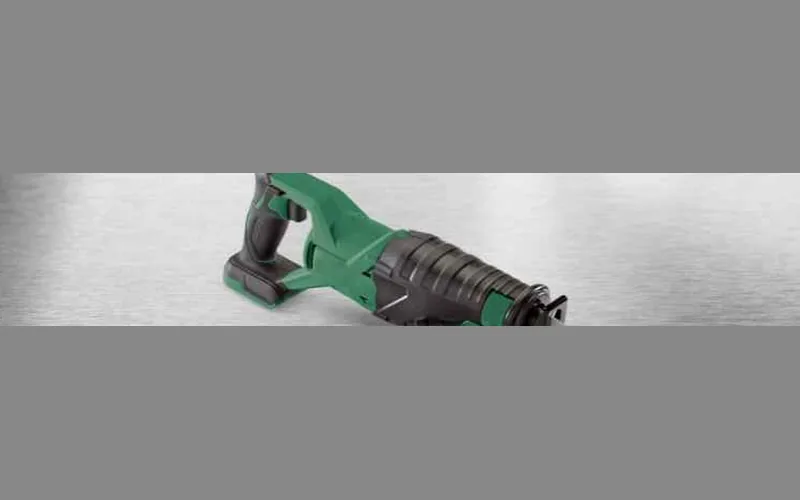
Other features carried over from DEWALT’s wider 20V MAX XR recip saw lineup: a keyless 4-position blade clamp for tool-free blade swaps in four orientations (useful for flush cuts), a pivoting shoe for extra control against the work surface, and a built-in LED light for cutting in cabinets or crawl spaces. For the full lineup of DEWALT saws this platform covers, see our tools and saws guide.
Battery Life and Compatibility
The DCS367B tool-only version does not include a battery, it runs on any 20V MAX battery, so actual runtime depends entirely on which pack you already own or buy separately. Owner reports on heavier cutting (nail-embedded lumber, thicker stock) put practical runtime in the 20 to 30 minute range on a mid-size pack before a swap is needed; a higher-capacity battery like an 8.0Ah pack extends that noticeably. If you are deciding between DEWALT’s 20V and 60V FLEXVOLT platforms for your next tool purchase, see our breakdown of the difference between DEWALT 20V and 60V.
DCS367 vs DCS368 vs DCS384 vs DCS387: Which DEWALT Reciprocating Saw Should You Buy?
DEWALT sells four reciprocating saws on the same 20V MAX platform, and it is easy to grab the wrong one. Here is how they actually compare, using manufacturer specs and live Amazon pricing pulled for this review.
| Model | Stroke | Speed | Weight (tool only) | Motor | Price (tool only) |
|---|---|---|---|---|---|
| DCS367B | 1-1/8 in. | 0-2,900 SPM | 5 lbs. | Brushless | $179.00 |
| DCS368B (Power Detect) | 1-1/8 in. | 0-3,000 SPM | ~7.6-8.75 lbs. | Brushless | $265.00 |
| DCS384B | 1-1/8 in. | 0-3,000 SPM | 7.7 lbs. | Brushless | $184.95 |
| DCS387B | 1-1/8 in. | 0-2,900 SPM | 5 lbs. | Brushed | $123.39 |
Prices are live Amazon listings pulled while writing this review and will move with promotions, so treat them as a snapshot rather than a fixed number. The DCS368B costs noticeably more because of its POWER DETECT chip, which reads the battery installed and boosts output automatically, DEWALT rates it for up to 44% more power when paired with an 8Ah battery. For a broader look across DEWALT’s full recip saw range including corded and FLEXVOLT models, see our DEWALT reciprocating saw comparison.
Real Owner Complaints: Is the Vibration a Dealbreaker?
The DCS367’s most consistent criticism across independent reviews and owner comments is vibration during extended cuts, not a lack of cutting power. It is a real tradeoff of the compact two-handed body: less mass to absorb the reciprocating motion than a full-size saw. For short framing cuts it is a non-issue; for 20+ minutes of continuous demolition, your hands will feel it more than they would on the heavier, counterbalanced DCS384.
Multiple independent reviewers (ProTool Reviews, ToolGuyd) flag vibration as the DCS367’s main weakness, while none report issues with cutting power or blade clamp reliability. Source: ProToolReviews.com and ToolGuyd.com owner and reviewer feedback, 2026.
Pros and cons, based on manufacturer specs and aggregated owner feedback rather than in-house testing:
- Pros: Compact enough for tight stud bays, tool-free 4-position blade clamp, built-in LED light, 3-year warranty, compatible with the entire 20V MAX battery lineup.
- Cons: Noticeable vibration on longer cuts, bare tool ships with no battery or charger, two-handed body is bulkier than true one-hand compacts.
“More brushless expansion in DEWALT’s 20V Max lineup” is a welcome update, though the DCS367 represents fairly limited innovation over its brushed predecessor rather than a ground-up redesign.
Blade Compatibility
The DCS367’s keyless clamp accepts any standard 1/2 in. universal-shank reciprocating saw blade, it is not locked to DEWALT-branded blades. Match teeth-per-inch to the material: coarse 3-6 TPI blades for wood and nail-embedded lumber, fine 14-24 TPI blades for metal. See our full guide to DEWALT reciprocating saw blades for picks by material.
For a video walkthrough of this saw in action, see the demo below.
Frequently Asked Questions
What is the difference between DEWALT 20V MAX and 20V MAX XR?
XR stands for Extended Runtime. It is DEWALT’s designation for its higher-performance tool and battery line within the same 20V MAX platform. XR tools like the DCS367 still run on standard 20V MAX batteries, but they are engineered to pair with higher-capacity XR batteries for more runtime and power.
Is the DEWALT DCS367 one-handed or two-handed?
Two-handed. Despite being marketed as compact, the DCS367 uses a traditional pistol-grip-and-shoe design operated with both hands, not a one-hand pistol-style compact recip saw.
Does the DEWALT DCS367 come with a battery?
Not the bare-tool DCS367B. It ships as tool-only, no battery or charger. DEWALT also sells it as the DCS367P1 kit, which bundles a 5.0Ah battery and charger for a higher total price.
What is the biggest complaint about the DCS367?
Vibration during extended cutting sessions. It shows up consistently across independent reviews and owner comments, and is the main reason some buyers step up to the heavier, counterbalanced DCS384 instead.
What blades fit the DEWALT DCS367?
Any standard 1/2 in. universal-shank reciprocating saw blade fits the keyless 4-position clamp. Use coarse-tooth blades for wood and demolition, fine-tooth blades for metal.
What is the difference between a reciprocating saw and a Sawzall?
Reciprocating saw is the generic tool category. Sawzall is Milwaukee’s trademarked brand name for its version of the tool, similar to how Kleenex is a brand name for tissue. DEWALT, like every other manufacturer, calls its version a reciprocating saw.
The DCS367 is a solid pick if you already own DEWALT 20V MAX batteries and need a saw that fits where a full-size model cannot. If vibration on long cuts is a dealbreaker for your work, the DCS384 is worth the extra weight and cost. For a wider comparison of demolition-focused recip saws from other brands, see our Hercules reciprocating saw review.
Sponsored / affiliate links. As an Amazon Associate I earn from qualifying purchases. I may earn additional commission from eligible campaigns.