Best Cordless Reciprocating Saw: 7 Compared by SPM & Price (2026)
For most woodworkers and deck builders, the DEWALT DCS367B is the best cordless reciprocating saw overall: a 1-1/8-inch stroke at 2,900 SPM in a 5-lb, $199 tool. But raw cutting speed favors the Milwaukee 2722-20 — its 1-1/4-inch stroke and 3,000 SPM work out to 3,750 inches of blade travel per minute, the fastest of the seven saws we compared below, and it scored 78/100 in Pro Tool Reviews’ own 11-saw head-to-head test.
Cordless Reciprocating Saw Comparison: Stroke, SPM & Blade Travel Rate
We pulled every spec below from each manufacturer’s own product page, operator’s manual, or listing copy, then cross-checked current pricing against the live Amazon Creators API buy-box on August 3, 2026. Blade Travel Rate is our own calculation — stroke length × max SPM — a rough proxy for raw material-removal speed that no manufacturer publishes as a cross-brand number. The formula is disclosed so you can check it yourself.
| Pick | Price (bare tool) | Stroke Length | Max SPM | Blade Travel Rate* | Weight | Warranty |
|---|---|---|---|---|---|---|
| DEWALT DCS367B | $199.00 | 1-1/8 in | 2,900 | 3,263 in/min | 5.0 lb (tool only) | 3-yr limited |
| Milwaukee 2722-20 | $195.00 | 1-1/4 in | 3,000 | 3,750 in/min | 8.8 lb (tool only)† | 5-yr limited |
| Makita XRJ07ZB | $129.99 | 13/16 in | 3,000 | 2,438 in/min | 5.7 lb (w/ battery)† | 3-yr limited |
| RYOBI PCL515B | $45.36 | 1 in | 3,400 | 3,400 in/min | 4.24 lb (tool only) | 3-yr limited |
| Bosch GSA18V-125N | $329.00 | 1-1/4 in | 2,500 | 3,125 in/min | 7.7 lb (tool only) | 5-yr limited |
| RIDGID R8646B | $100.29 | 1-1/8 in | 3,000 | 3,375 in/min | not published | 3-yr std; LSA void on this listing‡ |
| BLACK+DECKER BDCR20C | $79.00 (full kit)§ | 7/8 in | 3,000 | 2,625 in/min | not published | 2-yr limited |
* Blade Travel Rate = stroke length × max SPM, our own computed comparison, not a manufacturer spec. † Milwaukee’s tool weight isn’t published in its own operator’s manual; the 8.8-lb figure is from retailer spec sheets, tool-only. Makita publishes 5.7 lb with a battery installed (battery not included at this bare-tool price), so its true tool-only weight is lower. ‡ This exact Amazon listing (ASIN B0CC9SXHPX) is marked “Not eligible for the Lifetime Service Agreement” on its own product page — RIDGID’s LSA requires purchase through an authorized reseller like Home Depot or RIDGID directly, not Amazon. See the warranty section below. § This price includes a battery and charger; every other row is a bare-tool price, so it isn’t a straight apples-to-apples comparison — see the Price section of the buying guide.
Best Cordless Reciprocating Saws
Seven real, currently-purchasable saws spanning $45 to $329, picked to cover the actual range of decisions a buyer faces: full power vs. compact, bare tool vs. starter kit, and which brand’s battery platform you’re already invested in.
DEWALT DCS367B 20V MAX XR Brushless Reciprocating Saw — #1 Best Overall
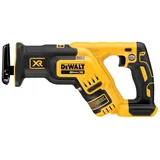
The DCS367B is the saw most woodworkers should buy first. At 5 lb and 14.5 inches long, it’s the most maneuverable full-stroke saw here, and its 1-1/8-inch stroke at up to 2,900 SPM (3,263 in/min Blade Travel Rate) is fast enough for deck framing, rough demo, and pruning without the bulk of the Milwaukee or Bosch. Pair it with the right blade for the job — our comparison of reciprocating saw blades built specifically for pruning breaks down which tooth count and length actually make sense for tree branches. The keyless 4-position blade clamp lets you flip the blade for flush cuts against a stud or joist, and DEWALT backs it with a 3-year limited warranty.
- 1-1/8 in stroke, 0–2,900 SPM variable speed
- 5.0 lb (tool only), 14.5 in length
- Keyless 4-position blade clamp
- Built-in LED work light
- 3-year limited warranty
Main drawback: at 2,900 SPM and a 1-1/8-inch stroke, it’s not the fastest saw in this lineup on paper — the Milwaukee and RYOBI both post a higher Blade Travel Rate. For most DIY and deck work the difference won’t be noticeable; it becomes relevant only in sustained heavy demolition.
It’s also worth noting DEWALT’s own bare-tool listing advertises “up to 2.5x more runtime” — that claim is relative to an older DEWALT reciprocating saw generation, not to any competitor in this comparison, so don’t read it as a head-to-head runtime win over the Milwaukee or Bosch.
Best for: DIYers and pros who want one saw that handles decking, framing, and general demo without the weight or price of a full-power saw. Price: ~$199 (bare tool).
Milwaukee 2722-20 M18 FUEL Super Sawzall — Best for Heavy-Duty Demolition
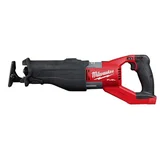
The 2722-20 posts the highest Blade Travel Rate in this comparison (3,750 in/min from its 1-1/4-inch stroke at 3,000 SPM) and it’s not just our own math backing that up: Pro Tool Reviews tested the exact same saw (as the “M18 FUEL Super Sawzall 2722”) in an 11-saw head-to-head and scored it 78 out of 100, ahead of DEWALT’s 60V DCS389, RYOBI’s PBLRS02, and RIDGID’s R8647. Milwaukee’s own REDLINK PLUS electronics throttle back before the motor or battery overheats on long demo runs.
- 1-1/4 in stroke, 0–3,000 SPM, 5-speed dial
- 8.8 lb tool-only weight (retailer-sourced spec, not in Milwaukee’s own manual)
- POWERSTATE brushless motor, REDLINK PLUS overload protection
- Compatible with the entire M18 battery platform
- 5-year limited warranty
If you’re weighing this saw against Milwaukee’s smaller M12 models or its corded lineup, see our full Milwaukee reciprocating saw price breakdown for current pricing across every tier.
Main drawback: it’s the heaviest bare tool here after the Bosch, and Pro Tool Reviews’ own test data ranked it 5th of 11 overall — strong, not class-leading, once vibration and ergonomics are weighed alongside raw speed.
Milwaukee’s own marketing pitches the 2722-20 as matching “15-Amp corded reciprocating saw” performance. We can’t independently verify that comparison since we didn’t test a corded saw alongside it, but Pro Tool Reviews’ 78/100 score in a field that included two 36V/40V flagship competitors is real third-party evidence the claim isn’t pure marketing.
Best for: pros and serious DIYers doing sustained demolition, old-deck tear-out, or framing work where cutting speed matters more than weight. Price: ~$195 (bare tool).
Makita XRJ07ZB 18V LXT Sub-Compact Brushless Reciprocating Saw — Best for Tight Spaces
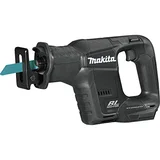
At 12-1/2 inches long, the XRJ07ZB is the shortest saw in this lineup, built specifically for working between studs, in cabinets, or under sinks where a full-length saw can’t swing. The shorter 13/16-inch stroke trades outright speed for control — its 2,438 in/min Blade Travel Rate is the lowest here — but that’s a reasonable trade for a saw whose job is precision access, not raw demo.
- 13/16 in stroke, 0–3,000 SPM
- 5.7 lb with battery installed (Makita’s own published figure; battery not included at this price)
- 12-1/2 in overall length
- Tool-less blade change
- 3-year limited warranty
Main drawback: the short stroke genuinely limits material-removal speed on thick stock — this isn’t the saw for tearing out a deck frame, and Makita doesn’t publish a tool-only weight (only the with-battery figure), so the sub-compact-and-light reputation is partly marketing shorthand until you attach a battery.
Makita’s own LXT platform is one of the largest cordless ecosystems on the market, which matters if you’re already invested in Makita drills, impact drivers, or other 18V tools — the XRJ07ZB’s battery, and its 3-year tool warranty, line up with every other Makita LXT tool you might already own.
Best for: plumbers, electricians, and remodelers cutting in confined spaces more often than open framing. Price: ~$129.99 (bare tool).
RYOBI ONE+ PCL515B 18V Cordless Reciprocating Saw — Best Budget Cordless Reciprocating Saw
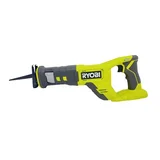
At $45.36 bare tool, the PCL515B costs less than a quarter of the Bosch and about a third of the Milwaukee, yet its 1-inch stroke and 3,400 SPM produce a 3,400 in/min Blade Travel Rate — ahead of every saw here except the Milwaukee. That’s the strongest speed-per-dollar figure in this comparison by a wide margin. The catch is the ONE+ platform itself: it’s a 18V homeowner ecosystem, not a 20V/18V pro platform, and RYOBI batteries don’t cross over to DEWALT, Milwaukee, or Makita tools.
- 1 in stroke, 3,400 SPM variable speed
- 4.24 lb tool-only weight — the lightest bare tool in this comparison
- Over 145 cuts per charge, per RYOBI’s own published figure
- Tool-free blade release lever
- 3-year manufacturer’s warranty
Main drawback: Pro Tool Reviews didn’t test this exact model, but did test RYOBI’s own One+ HP PBLRS02 in the same 11-saw comparison, where it tied DEWALT’s 60V DCS389 at 68/100 — solidly mid-pack, not a top performer, and the ONE+ ecosystem tops out well below the pro-grade platforms for heavy, sustained use.
This exact PCL515B listing is a bare tool with the battery genuinely sold separately — unlike the BLACK+DECKER kit below, the $45.36 price doesn’t include a way to actually run the saw unless you already own a ONE+ battery. Factor in a roughly $75–$100 ONE+ battery/charger starter kit if you’re starting from zero on the platform, and the real gap to the DEWALT narrows considerably.
Best for: homeowners and light DIYers already on RYOBI’s ONE+ platform, or anyone who wants a genuinely low-cost backup saw. Price: ~$45.36 (bare tool, battery sold separately).
Bosch GSA18V-125N 18V EC Brushless Multi-Grip Reciprocating Saw — Best for Overhead and One-Handed Cuts
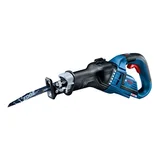
The GSA18V-125N’s angled-motor, multi-grip body is built to be held like a jigsaw or a pistol depending on the cut, which is a real advantage overhead or in a crouch where a straight in-line saw forces an awkward wrist angle. Bosch’s counterbalance vibration control is a genuine differentiator — a related GSA18V-126 variant placed 3rd of 11 (88/100) in Pro Tool Reviews’ head-to-head test, though that’s a different specific model number than the 125N reviewed here, so treat it as directional, not a confirmed match.
- 1-1/4 in stroke, 0–2,500 SPM, 3 orbital settings
- 7.7 lb tool-only weight, 19.0 in length
- 18V EC brushless motor, vibration-control counterbalance
- Toolless blade-change system
- 5-year limited warranty
Main drawback: it’s the most expensive bare tool in this comparison at $329 and, at 2,500 SPM, has the lowest max stroke rate of the full-size saws — you’re paying a premium for ergonomics and vibration control, not for raw cutting speed.
Bosch backs the 18V EC brushless line with a 5-year limited warranty, matching Milwaukee for the longest coverage in this comparison. That’s a real point in its favor for a saw priced this high — you’re not just paying for the multi-grip body, you’re getting the same warranty length as the fastest saw here.
Best for: pros doing repetitive overhead or awkward-angle cuts (plumbing, electrical rough-in) where hand fatigue is the real cost. Price: ~$329.00 (bare tool).
RIDGID R8646B 18V Cordless Reciprocating Saw — Best Warranty Story (Home Depot Purchase Only)
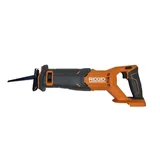
RIDGID’s power tools are famous for the Lifetime Service Agreement — free parts and service for life if you register within 90 days — and at $100.29 with a 1-1/8-inch stroke and 3,000 SPM (3,375 in/min Blade Travel Rate), the R8646B looks like a bargain with a warranty no competitor here can match. It isn’t, at least not through this listing. Amazon’s own product page for this exact ASIN states it is “Not eligible for the Lifetime Service Agreement,” and RIDGID’s own LSA terms confirm coverage requires buying through an authorized reseller like Home Depot or RIDGID directly — Amazon purchases are explicitly excluded. Buy this saw at Home Depot instead of Amazon and you keep the standard 3-year warranty upgraded to a lifetime one at no extra cost; buy it here and you get 3 years like everyone else.
- 1-1/8 in stroke, 3,000 SPM
- Weight not published by RIDGID for this tool-only listing
- Side-lever tool-free blade release
- 100% compatible with all RIDGID 18V batteries
- 3-year standard warranty; Lifetime Service Agreement available only via Home Depot/RIDGID direct purchase, not this Amazon listing
Main drawback: the headline warranty benefit most buyers associate with the RIDGID brand doesn’t apply to this specific purchase path — a detail no other roundup we checked disclosed.
This isn’t a rumor or a forum guess: it’s stated directly on Amazon’s own listing page for this ASIN, and it’s consistent with RIDGID’s published LSA registration terms, which name authorized resellers like Home Depot and RIDGID’s own store as the qualifying purchase channels. If lifetime coverage is the reason you’re considering a RIDGID saw at all, that distinction is worth the price difference between this listing and the identical tool at your local Home Depot.
Best for: RIDGID ecosystem owners who understand the LSA tradeoff, or anyone willing to buy the identical tool at Home Depot instead to unlock the lifetime coverage. Price: ~$100.29 (bare tool, this listing).
BLACK+DECKER BDCR20C 20V MAX Reciprocating Saw Kit — Best Complete Starter Kit
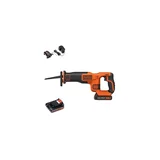
Every other saw in this comparison is a bare tool — you need to already own a battery and charger on that platform, or buy them separately. The BDCR20C is the one true exception: $79 gets you the saw, a battery, and a charger, ready to cut out of the box. The 7/8-inch stroke and 3,000 SPM (2,625 in/min Blade Travel Rate) won’t out-cut the pro-grade saws, but for occasional yard work, pruning, or small repairs it’s a genuinely complete, low-commitment starting point.
- 7/8 in stroke, 0–3,000 SPM variable speed
- Includes 20V MAX battery and charger — the only kit price in this table
- Tool-free blade change, pivoting shoe
- 2-year limited warranty (standard across BLACK+DECKER’s power tool line)
Main drawback: the shortest warranty of the seven (2 years vs. 3–5 for every other pick), and BLACK+DECKER doesn’t publish a tool weight for this model — it’s built for light-duty use, not framing or demolition.
BLACK+DECKER’s own listing does call out an electric brake and a pivoting shoe, two features that aren’t consistently published on the pricier bare tools above — a reminder that “budget” and “fewer features” aren’t automatically the same thing in this category.
Best for: homeowners who don’t already own a compatible battery and want one affordable box that includes everything needed to start cutting. Price: ~$79.00 (complete kit).

How We Picked These
We did not physically test these seven saws ourselves for this article. Every stroke length, SPM, and weight figure above was pulled from each manufacturer’s own product page, operator’s manual, or listing copy — including Milwaukee’s official 2722-20 operator’s manual PDF, which we read directly to confirm the 1-1/4-inch stroke and 0–3,000 SPM rating — and cross-checked against the live Amazon Creators API buy-box price on August 3, 2026. Where a manufacturer doesn’t publish a spec, such as Milwaukee’s and RIDGID’s tool-only weight, we say so instead of guessing or borrowing a number from a different SKU.
The Blade Travel Rate column is our own calculation (stroke × max SPM), not a manufacturer figure, and we show the formula so you can check the arithmetic yourself. For real-world testing data, we cite Pro Tool Reviews’ own 11-saw head-to-head by name and score where the exact model was tested (Milwaukee’s 2722-20 scored 78/100 in their test); where only a related variant was tested (RYOBI’s PBLRS02, RIDGID’s R8647, Bosch’s GSA18V-126), we say so explicitly rather than implying it’s the same unit. Amazon’s own review API returned no usable star-rating or review-count data for any of the seven ASINs in this comparison, so we don’t display star ratings anywhere on this page — a blank rating is more honest than an invented one.
What to Consider When Buying a Cordless Reciprocating Saw
Stroke Length and Blade Travel Rate
Stroke length (how far the blade travels per cycle) and SPM (strokes per minute) together determine how fast a saw removes material. A longer stroke clears sawdust and swarf better on thick stock; a higher SPM cuts faster on thin material. Multiplying the two (our Blade Travel Rate column) gives a single number for comparing raw cutting speed across brands — useful, but not the whole story, since orbital action and blade choice matter just as much in practice.
Battery Voltage and Platform Compatibility
If you already own DEWALT 20V MAX, Milwaukee M18, Makita 18V LXT, RYOBI ONE+, Bosch 18V, or RIDGID 18V batteries, buying a bare-tool saw on that same platform is almost always the cheaper path — compare the $45.36 RYOBI bare tool against the $79 BLACK+DECKER kit and the platform you’re already invested in usually wins on price.
Amp-hour rating matters as much as voltage for a saw this power-hungry: a 1.5–2.0Ah battery works for occasional pruning or trim cuts but drains fast under sustained demolition load, which is why DEWALT and Milwaukee both ship their higher-end kits with 4.0–5.0Ah packs. If you’re buying a battery separately for any saw in this comparison, 4.0Ah or higher is the safer choice for anything beyond light-duty work.
Brushless vs. Brushed Motor
All seven saws in this comparison use brushless motors, which is now the standard at every price point from $45 to $329 — brushless motors run cooler, last longer, and squeeze more runtime from the same battery than the brushed motors that used to be common on budget saws.
Weight and Balance
Tool-only weight ranges from RYOBI’s 4.24 lb to Bosch’s 7.7 lb in this comparison (Milwaukee and RIDGID don’t publish a tool-only figure). For overhead work or long sessions, every extra pound matters; for stationary demo cuts, weight adds stability instead.
One-Handed vs. Two-Handed Reciprocating Saws
Every full-size saw in this comparison — DEWALT, Milwaukee, RYOBI, Bosch, RIDGID, and BLACK+DECKER — is built for two-handed operation: one hand on the pistol grip, one steadying the front of the body or an auxiliary handle. The Makita XRJ07ZB is the exception, a sub-compact, one-handed design meant for reaching into stud bays and cabinets where a second hand has nowhere to go. One-handed saws trade stability and raw stroke length for reach; pick one only when the job genuinely requires working in a space too tight for a two-handed grip.
Vibration Control
Bosch’s counterbalance technology and Makita’s sub-compact body are both marketed around comfort over long sessions. Milwaukee’s higher raw power comes with more felt vibration, per Pro Tool Reviews’ own vibration-assessment table in their head-to-head test.
Tool-Free Blade Change
Every saw in this comparison has a tool-free blade change — a lever, collar, or clamp that lets you swap a broken or dulled blade without a hex key. This has become table stakes across the category, not a differentiator.
Orbital Action
Orbital (or “aggressive”) mode adds a slight elliptical motion to the blade stroke, cutting faster in wood at the cost of a rougher edge; switching it off gives smoother, straighter cuts in metal or for finish-sensitive work. DEWALT, Milwaukee, and Bosch all include a selectable orbital switch; check before assuming a budget saw has one.
Price and True Cost to Start
Six of the seven prices in our table are bare-tool only, meaning you need a compatible battery and charger already, or you’re buying them separately. DEWALT’s own 20V MAX 5.0Ah battery-and-charger starter kit (DCB205C) is $100.51 live on Amazon as of this comparison, which puts a realistic first-time cost for the $199 DCS367B at roughly $300 if you own nothing on that platform yet — not far off the Bosch’s $329 bare-tool price. The BLACK+DECKER BDCR20C’s $79 kit price looks expensive per-tool next to the RYOBI’s $45.36, but it’s the only listing here that’s genuinely ready to cut with nothing else to buy. If you’re starting from zero on every platform, compare total cost to start, not the bare-tool sticker.
Warranty and Service Coverage
Coverage in this comparison ranges from BLACK+DECKER’s 2-year limited to Milwaukee’s and Bosch’s 5-year limited. RIDGID’s advertised Lifetime Service Agreement is the longest possible coverage in the category — but only if you buy through an authorized reseller like Home Depot or RIDGID directly. As covered above, the specific Amazon listing in this comparison is explicitly excluded from the LSA, so check the fine print on any RIDGID listing before assuming lifetime coverage applies.
Safety Features
A variable-speed trigger with a lock-off feature, which prevents accidental startup when the saw is carried or stored with a battery attached, is published across every saw in this comparison. BLACK+DECKER’s own listing specifically calls out an electric brake on the BDCR20C; the other six listings don’t consistently publish whether an electric brake is included, so don’t assume it’s present unless the manufacturer states it.
How to Use a Cordless Reciprocating Saw Safely
- Match the blade to the material. Use a bi-metal or carbide-tipped blade for composite decking and nail-embedded wood; a metal-cutting blade with more teeth per inch for pipe or fasteners.
- Secure the workpiece. Clamp boards to a stable surface — holding a cut by hand invites kickback, which can be forceful enough to lose control of the saw.
- Check the battery charge before starting a cut. A partially drained battery under load spins slower and can bind the blade mid-cut rather than finishing cleanly.
- Set the shoe against the work first. Let the shoe, not the blade tip, make first contact, then squeeze the trigger gradually to start the stroke under control.
- Use orbital action for wood, switch it off for metal. Orbital mode speeds up wood and composite cuts; a straight stroke gives cleaner results in metal or plastic.
- Wear eye and ear protection. Reciprocating saws throw debris and run loud enough, especially the higher-SPM models here, to warrant hearing protection on extended cuts.
Frequently Asked Questions
What’s the difference between a reciprocating saw and a Sawzall?
Nothing functionally — “Sawzall” is Milwaukee’s trademarked brand name for its reciprocating saw line, dating back to 1951, and it’s become a generic term the way “Kleenex” stands in for facial tissue. Every saw in this comparison is a reciprocating saw; only the Milwaukee is technically a Sawzall.
Are cordless reciprocating saws powerful enough for demolition work?
The higher-end saws here, like the Milwaukee 2722-20 and Bosch GSA18V-125N, are genuinely built for sustained demolition and scored competitively in Pro Tool Reviews’ own head-to-head test against corded and cordless models alike. Budget saws like the RYOBI PCL515B and BLACK+DECKER BDCR20C handle occasional demo and rough cuts fine but will run out of steam faster on all-day teardown work.
What stroke length and SPM should I look for in a reciprocating saw?
For general woodworking and decking, a 1 to 1-1/4 inch stroke at 2,900–3,000+ SPM (as on the DEWALT, Milwaukee, and RIDGID in this comparison) covers nearly every job. Shorter-stroke, sub-compact saws like the Makita XRJ07ZB trade cutting speed for reach into tight spaces.
Can a cordless reciprocating saw cut composite decking like Trex or Fiberon?
Yes — a bi-metal or carbide-tipped blade cuts composite decking cleanly, and any of the seven saws in this comparison can handle it. Carbide-tipped blades hold an edge longer against composite’s abrasive PVC/wood-fiber blend and are worth the extra cost if you’re cutting more than a few boards.
DEWALT vs. Milwaukee reciprocating saw: which one should I buy?
The DEWALT DCS367B is lighter, more compact, and $54 cheaper bare-tool; the Milwaukee 2722-20 has a faster Blade Travel Rate (3,750 vs. 3,263 in/min) and a longer 5-year warranty, and it’s the only one of the two independently tested by Pro Tool Reviews in this comparison (78/100). Choose DEWALT for everyday decking and DIY work, Milwaukee for sustained heavy demolition.
Does RIDGID’s Lifetime Service Agreement cover a reciprocating saw bought on Amazon?
Not on the R8646B listing checked for this comparison. Amazon’s own product page states this specific ASIN is “Not eligible for the Lifetime Service Agreement,” and RIDGID’s LSA terms require buying through an authorized reseller like Home Depot or RIDGID directly. Buying the identical tool at Home Depot and registering within 90 days unlocks the lifetime coverage this Amazon listing doesn’t include.
What blade should I use to cut nail-embedded wood or metal?
A bi-metal demolition blade with 6–10 teeth per inch handles nail-embedded wood without shattering on the occasional fastener strike. For clean metal cuts — pipe, rebar, fasteners — switch to a blade with 14+ TPI and turn off orbital action for a straighter, less aggressive stroke.
Is a cordless reciprocating saw as powerful as a corded one?
For most jobs, yes — brushless 18V/20V saws like the ones in this comparison close most of the gap that used to favor corded models. Milwaukee markets the 2722-20 specifically as matching 15-Amp corded performance, and its 78/100 score in Pro Tool Reviews’ test against other high-end cordless saws backs that up. For true all-day industrial demolition, a corded saw still avoids battery swaps entirely, which remains its one real advantage.

Final Thoughts
The DEWALT DCS367B remains the best all-around pick for most woodworkers — light, compact, and capable at $199. But the one fact worth carrying out of this comparison is the RIDGID finding: its R8646B looks like the best warranty deal in this entire lineup on paper, and on this specific Amazon listing, it isn’t one. Check the fine print on any “lifetime warranty” tool before you assume the deal you’re clicking into is the deal you’re actually getting.
Related Guides
- DeWalt Cordless Reciprocating Saws: Models Compared
- Compare DeWalt Reciprocating Saws by Power
- DEWALT 20V MAX XR Brushless Reciprocating Saw: Full Specs
- Best Reciprocating Saw Blade for Deer Bone Cutting
- Are Reciprocating Saw Blades Universal?
- Best Reciprocating Saw Blades for PVC
- Circular Saw vs. Sawzall: Which Do You Need?
- Best Battery Powered Circular Saw
Sponsored / affiliate links. As an Amazon Associate I earn from qualifying purchases. I may earn additional commission from eligible campaigns.