Miter Saw vs Circular Saw: Crosscuts, Rips & Which to Buy
A miter saw only makes crosscuts on a fixed table, while a circular saw is the only one of the two that can rip a full sheet of plywood in half. Picking the wrong saw first often means buying the second one within a year. This guide compares blade capacity, price, and safety, then shows how to fake a miter saw’s angle cuts with a circular saw and a clamped straightedge.
Miter Saw vs Circular Saw at a Glance
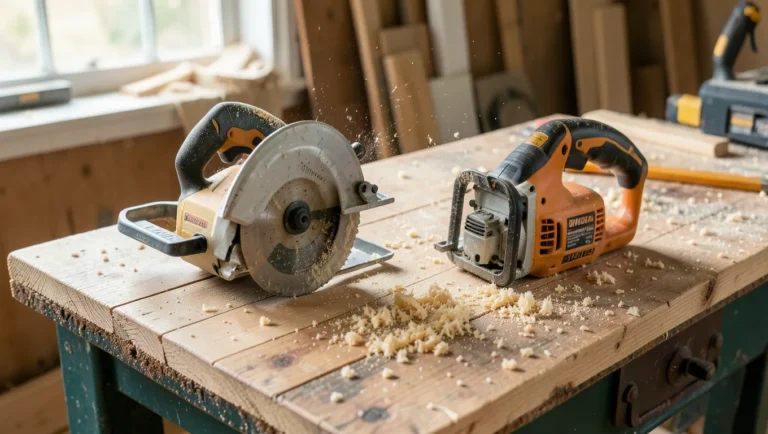
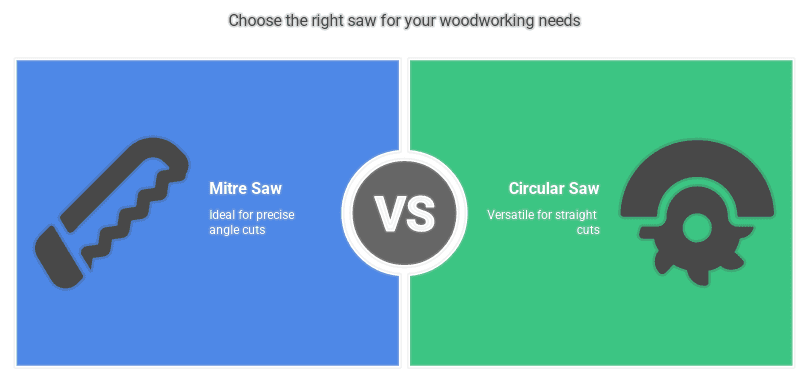
Both tools cut wood, but they are not interchangeable. A miter saw (also spelled mitre saw) is a stationary tool that pulls a fixed blade down through the board at a set angle. A circular saw is handheld and pushed through the material by hand, which is what lets it rip a board lengthwise — something a miter saw physically cannot do.
| Spec | Miter Saw | Circular Saw |
|---|---|---|
| Cut types | Crosscuts, miters, bevels, compound cuts — no rip cuts | Rip cuts, crosscuts, angle cuts — any direction, freehand |
| Typical blade size | 8-1/2" to 12" | 6-1/2" to 7-1/4" |
| Max crosscut width at 90° | ~6" on a 10" saw; up to ~12–16" on a 12" sliding compound saw | Unlimited length — limited only by the guide track |
| Max cut depth at 90° | Not applicable — set by blade diameter and table height | About 2-1/2" with a 7-1/4" blade |
| Portability | Stationary — needs a bench or stand | Handheld — fits in a bag or truck |
| Typical price (2026) | $130–$600+ | $50–$220 |
| Best for | Trim, molding, framing, repeat angle cuts | Sheet goods, deck boards, job-site rough cuts |
What a Miter Saw Does Best
Miter saws excel at repeat angle cuts — the pivoting arm locks to a set angle so the fifth cut matches the first, which is exactly what crown molding, picture frames, and door casing need. A compound miter saw tilts the blade for bevels too, and a sliding compound model adds a rail so the head travels forward, extending crosscut capacity past what the blade diameter alone would allow.
The tradeoff is versatility: a miter saw cannot rip a board lengthwise and cannot break down a 4×8 sheet of plywood at all — the table and fence are built only for crosscutting narrower stock. It also needs a dedicated bench or stand and a power outlet, so it stays in the shop rather than riding along to a job site.
What a Circular Saw Does Best
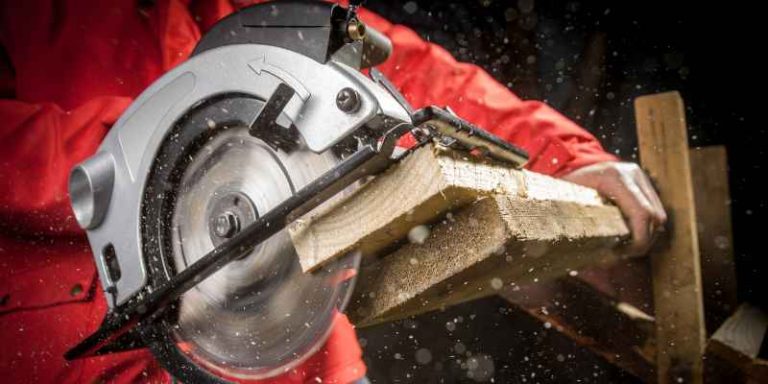
A circular saw is the tool for breaking down sheet goods and cutting boards to rough length on site. Because the saw moves through the material instead of the material moving into the saw, it can make rip cuts of any length — a full 8-foot rip on a sheet of plywood is a one-pass job with a circular saw and a straight guide, and not a cut a miter saw can make at all.

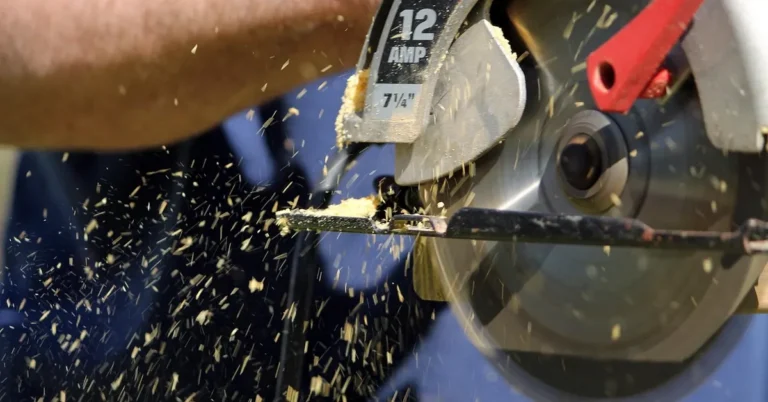
The cost is accuracy and control. A handheld circular saw depends on a steady hand or a clamped guide to stay on line, and adjusting depth and bevel means loosening and re-locking levers on the shoe rather than reading a fixed scale. For quick, straight cuts on lumber and sheet material it is faster to set up than a miter saw; for repeat angled trim cuts it is slower and less consistent.
How to Make Accurate Angle and Bevel Cuts With a Circular Saw
A circular saw can make nearly every cut a miter saw makes — crosscuts, miters, bevels, even compound cuts — it just takes a guide and a slower pace to get there. This is the technique to use when there is no miter saw in the shop yet:
- Mark the cut line: Square a line across the board with a combination square, then mark the angle if the cut isn’t a square crosscut.
- Set the bevel angle: Loosen the shoe-angle lock, tilt the saw to the marked angle on the shoe’s scale, and re-tighten firmly before cutting.
- Clamp a straightedge guide: Clamp a straight board or track guide parallel to the cut line, offset by the exact distance from the blade to the edge of the shoe.
- Support the waste side: Rest the workpiece on sacrificial supports so the offcut can drop free at the end of the cut instead of pinching the blade.
- Cut in one smooth pass: Start the saw before the blade touches the wood, keep the shoe flat against the guide the whole way, and push forward without twisting the saw.
Best Circular Saw Guide Rail Pick
 |
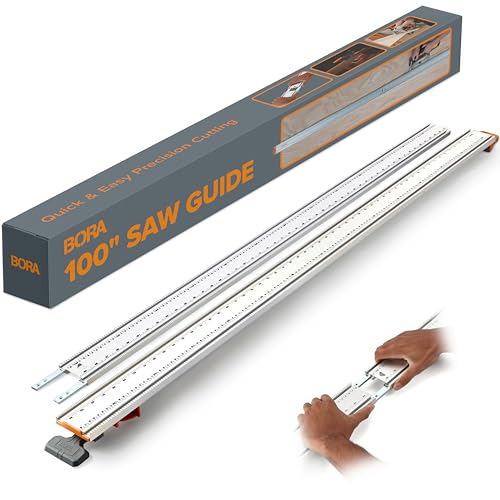
BORA NGX Circular Saw Guide Rail, 100″ – $89.99 The clamp-edge rail this guide’s straightedge step above describes — it locks to the board with a dual T-track system so the saw shoe can’t drift off the marked line during a long rip or bevel cut.
|
As an Amazon Associate we earn from qualifying purchases.
Precision, Portability and Safety Compared
A miter saw’s fixed base and locked pivot make it inherently more consistent — the blade travels through the same plane every time, so repeat cuts match without extra measuring. A circular saw depends entirely on the guide and the operator’s grip, which is why professional trim carpenters keep a miter saw in the shop even when they own a full lineup of circular saws.
Safety favors the miter saw too: the blade is guarded above and below the table and the operator’s hands stay well clear of the cut line. A circular saw’s blade guard retracts as it enters the material, so hand placement and a clear line of sight matter more. Both tools call for eye and hearing protection, a stable work surface, and full attention while the blade is spinning — never reach across a running blade on either tool.
Cost and Long-Term Investment
A basic corded circular saw runs $50 to $90 in 2026, and a brushless cordless model with a battery kit lands closer to $150 to $220. A compact 10" compound miter saw starts around $130 to $200, while a 12" sliding compound miter saw — the version with the widest crosscut capacity — runs $300 to $600 or more.
Upkeep favors the circular saw slightly: fewer moving parts, a simpler blade change, and less to calibrate. Miter saws hold their angle settings well once set, but the fence and bevel stops are worth checking against a square periodically, especially after the saw has been moved.
Which Should You Buy First?
If most projects involve trim, molding, framing, or furniture with repeat angle cuts, buy the miter saw first — the accuracy and speed on repeat cuts pay for themselves quickly. If the immediate need is breaking down sheet goods, building a deck, or general job-site rough carpentry, a circular saw covers more ground on its own and costs less to start with.
“We ran a circular saw and a clamped straightedge alone for the first couple of years in the shop — it handles framing and rough carpentry fine. The miter saw earned its spot on the bench the day we started cutting crown molding, where five matching 45° corners in a row is the whole job.”
Frequently Asked Questions
Is a Miter Saw Better Than a Circular Saw?
Neither is better overall — they solve different problems. A miter saw is better for precise, repeat angle cuts like trim and molding. A circular saw is better for rip cuts, sheet goods, and portability. Most active woodworking shops eventually own both.
Can a Miter Saw Do Everything a Circular Saw Can Do?
No. A miter saw cannot make a rip cut along the length of a board, and it cannot cut material wider than its crosscut capacity, such as a full sheet of plywood. A circular saw handles both of those jobs, though with less repeat-cut accuracy than a miter saw.
Can a Circular Saw Make Bevel Cuts Like a Miter Saw?
Yes. Tilting the circular saw’s shoe to the marked angle and cutting against a clamped straightedge produces a bevel cut close to miter-saw accuracy. It takes more setup time and a steady pass, since nothing locks the angle as firmly as a miter saw’s fence.
What Is a Disadvantage of the Miter Saw?
A miter saw’s biggest disadvantage is limited portability and cut width — it needs a bench or stand and a power source, and it can only cut material within its crosscut capacity, so it can’t break down large sheet goods the way a circular saw can.
What Should You Never Cut With a Miter Saw?
Never cut metal, PVC, or masonry with a standard wood-cutting miter saw blade — those materials can shatter or damage the blade and create a kickback hazard. Use a blade rated for the specific material, or a different tool entirely, and always follow the saw manufacturer’s material guidelines.
Which Saw Is Safer, a Circular Saw or a Miter Saw?
A miter saw is generally considered safer for beginners because the blade is fixed, guarded, and moves in one predictable path. A circular saw’s retracting guard and handheld operation put more of the safety margin on the operator’s grip, footing, and attention.
Conclusion
A miter saw and a circular saw solve different problems rather than competing for the same job. Choose the miter saw first for repeat, precise angle cuts on trim and molding; choose the circular saw first for rip cuts, sheet goods, and portability. Most home shops end up with both within a year or two, and knowing which cuts each tool actually makes — and which it can’t — is what decides which one earns the first purchase.
Sponsored / affiliate links. As an Amazon Associate I earn from qualifying purchases. I may earn additional commission from eligible campaigns.