Metal Mitre Saw Blade: Why the Wrong One Is a Safety Risk
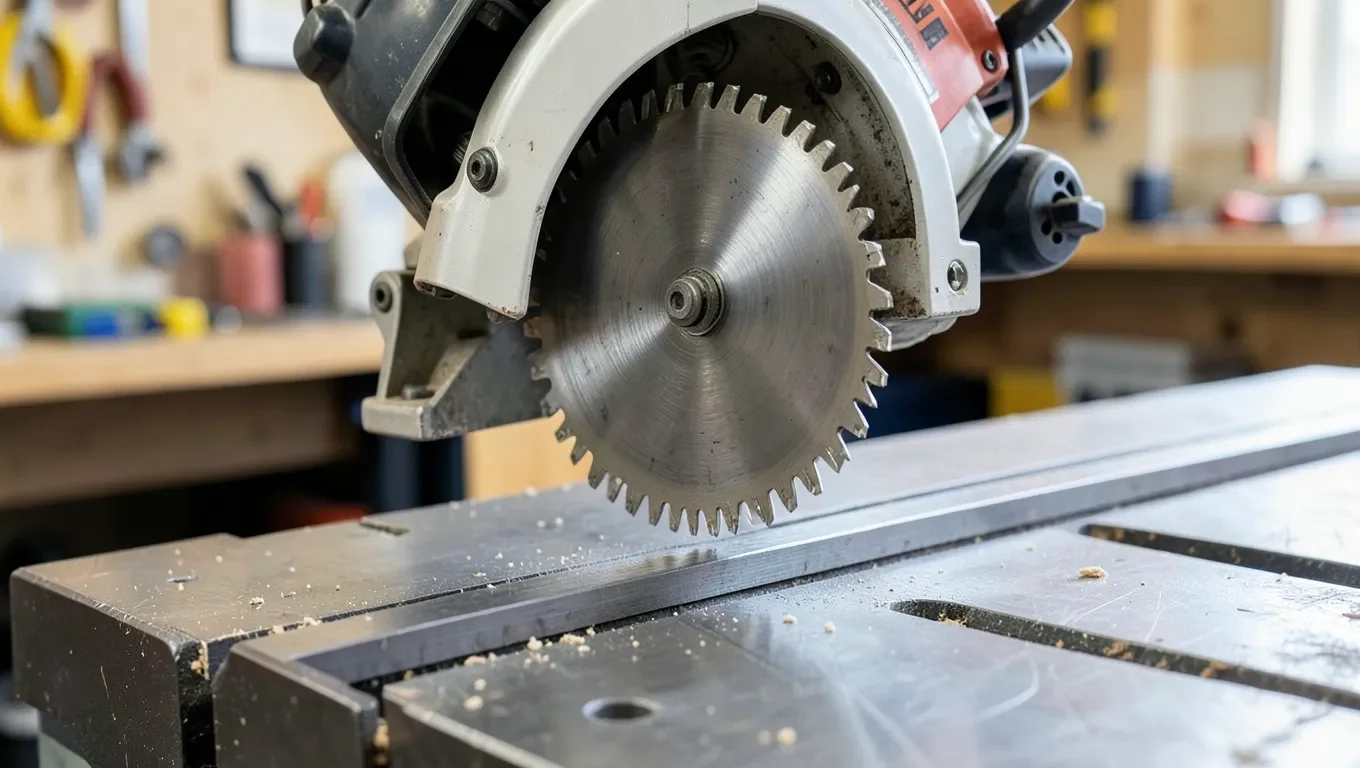
A standard wood-cutting blade will not just cut metal badly, it can genuinely fail while you’re holding the saw. A metal mitre saw blade uses harder tooth material, a different tooth angle, and a much higher tooth count so it can shear through steel or aluminum without the tooth damage, overheating, and kickback risk that comes from forcing a wood blade to do a job it was never built for. Which blade you need also depends on one distinction most buying guides skip entirely: whether you’re cutting a ferrous metal like steel, or a non-ferrous metal like aluminum or copper.
Why a Dedicated Metal-Cutting Blade Matters
Wood-cutting blades are built with a positive hook angle, meaning each tooth is tilted forward into the cut. That’s exactly what you want in soft wood fiber, because it helps the blade pull itself through the material efficiently. Metal doesn’t behave like wood fiber. When a positive-hook wood blade meets steel or aluminum, the teeth tend to grab and self-feed into the material instead of shearing it cleanly. That grabbing motion is what causes kickback on a miter saw: the workpiece or the saw head jerks unexpectedly, and the blade itself can chip or shatter a tooth under the sudden load. A tooth failure at full RPM is a real projectile hazard, not just an inconvenience.
On top of the safety risk, a wood blade dulls almost immediately against metal. The heat generated by metal-on-carbide friction is far higher than anything wood produces, and standard carbide teeth aren’t shaped or tempered to shed that heat. A blade rated for metal uses a negative hook angle (the teeth tilt backward, away from the cut) so each tooth scrapes rather than bites, plus tooth counts that are often double or more what a wood blade uses, spreading the cutting load across more, smaller teeth. That’s the mechanical reason a metal-rated blade “runs cooler” — it’s not a marketing phrase, it’s a direct result of the tooth geometry.
Best Ferrous Metal-Cutting Pick
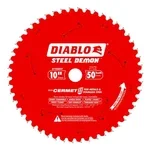 |
Diablo Steel Demon Cermet II 10" Metal-Cutting Blade – $57.22 A cermet-tipped, negative-hook blade built specifically for the ferrous metals this article covers — steel, angle iron, and conduit.
|
Ferrous vs. Non-Ferrous: Two Different Blades
This is the distinction most “just use a metal blade” advice skips, and it matters for both cut quality and blade life.
- Ferrous metal blades (rated for steel, angle iron, threaded rod, EMT conduit) typically use cermet tips — a ceramic-metal composite that’s harder and more heat-resistant than standard carbide. Ferrous cutting generates significantly more friction heat than aluminum, so these blades often run at a slower recommended RPM and have moderate tooth counts (40 to 60 teeth on a 10-inch blade is common) to keep each tooth’s cutting load manageable.
- Non-ferrous metal blades (rated for aluminum, copper, brass) use standard triple-chip-ground carbide, run at normal saw RPM, and pack in far more teeth — 80 to 100 on a 10-inch blade isn’t unusual — because these softer metals cut cleaner with many small, fast bites rather than fewer aggressive ones.
Using a non-ferrous (aluminum) blade on steel will dull the tips almost immediately and can overheat the plate until it warps. Using a ferrous (ceramic/cermet) blade on aluminum works but is needlessly slow and expensive for a softer metal that a standard carbide non-ferrous blade handles fine at a fraction of the cost. Match the blade to the specific metal, not just “metal” as a category. If you’re specifically cutting aluminum, our dedicated guide to aluminum-cutting miter saw blades covers non-ferrous blade selection in more depth.
Tooth Count and Hook Angle: What They Actually Control
Tooth count controls how much material each tooth removes per rotation. Fewer teeth means each one bites off more material per pass — fast, but rougher, and each tooth absorbs more shock. More teeth means each one takes a smaller bite, which spreads out the load and heat and leaves a cleaner edge, at the cost of a slightly slower feed rate. That’s why fine-toothed blades dominate metal cutting: metal punishes an aggressive, low-tooth-count blade far more than wood does.
Hook angle is the tilt of the tooth relative to the center of the blade. A positive hook (common on wood blades, often 15 to 20 degrees) pulls the blade into the cut. A negative hook (common on metal blades, often -5 to -7 degrees) pushes back against that self-feeding tendency, so you control the feed rate instead of the blade controlling it. On a miter saw specifically, that control matters more than on a table saw, because you’re lowering the spinning blade down into the stock rather than feeding stock into a fixed blade — a self-feeding positive-hook blade meeting metal at that angle is a significantly more dangerous kickback scenario than the aluminum-warps-with-heat problem alone.
Choosing the Right Blade for Your Miter Saw
Start with your saw’s rated blade diameter and arbor size — a metal-cutting blade has to match both exactly, the same as any wood blade would. Most miter saws take a 10-inch or 12-inch blade with a 5/8-inch or 1-inch arbor; check your saw’s manual rather than assuming. Next, confirm your saw’s maximum RPM against the blade’s rated max RPM. Metal-cutting blades, especially cermet ferrous blades, often have a lower max RPM than wood blades of the same size, and running one above its rating is a real failure risk, not just a warranty issue.
Finally, match the blade to the actual material and thickness you’re cutting most often. A blade rated for thin EMT conduit and studs will struggle on thick solid bar stock, and pushing it there raises heat and wear well beyond normal. If you cut a mix of wood and metal in the same shop, keep dedicated blades for each — swapping a wood blade back onto metal “just this once” is exactly the scenario that causes the tooth damage and kickback risk described above. For background on how metal-cutting geometry compares to blades built for other materials, see our breakdown of circular saw blade types.
Safety Precautions When Cutting Metal on a Miter Saw
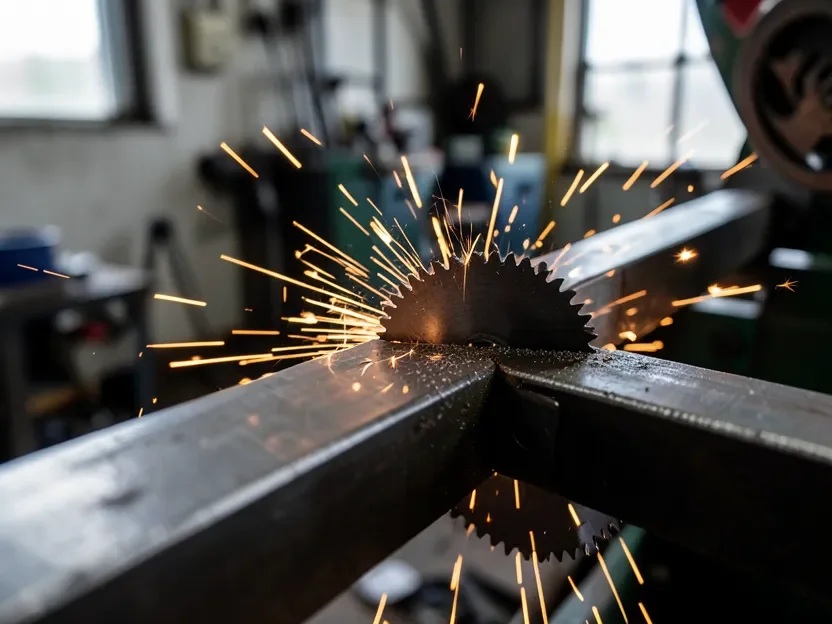
- Eye and face protection is non-negotiable. Metal cutting throws hot sparks and small metal filings, not sawdust — standard safety glasses plus a face shield for extended cuts is the safer combination.
- Clamp the workpiece. Metal stock is rigid and won’t flex out of the way like wood can; an unclamped piece that shifts mid-cut is a common cause of blade binding and kickback.
- Slow your feed rate. Let the blade’s tooth geometry do the cutting instead of forcing the head down — forcing a negative-hook blade only generates more heat, it doesn’t cut faster.
- Check tooth condition before every session. A chipped or missing cermet/carbide tip unbalances the blade at speed and should be replaced immediately, not “used until it’s really bad.”
- Ventilate the area. Cutting galvanized or coated steel can release fumes that shouldn’t be breathed in an enclosed space; cut coated metals outdoors or with active ventilation.
Maintenance to Extend Blade Life
Clean metal residue and built-up film off the blade after each use with a dedicated blade cleaner or a mild soap solution — a soft brush, not a wire brush, which can damage the tips. Inspect the cermet or carbide tips for chips or excessive rounding; a rounded tooth edge cuts progressively slower and hotter, and continuing to use it accelerates damage to the rest of the blade. Store metal-cutting blades separately from wood blades so they don’t get mixed up under time pressure, since that mix-up is the single most common way a wood blade ends up meeting metal in the first place.
Frequently Asked Questions
Can I use a wood-cutting blade on metal in a pinch?
No. A wood blade’s positive hook angle causes it to self-feed and grab when it meets metal instead of shearing cleanly, which is a genuine kickback and tooth-failure risk, not just a quality issue. The teeth will also dull or chip almost immediately from the heat, ruining the blade for wood cutting afterward too.
What’s the difference between a ferrous and non-ferrous metal-cutting blade?
Ferrous blades (for steel, angle iron, threaded rod) use heat-resistant cermet tips and moderate tooth counts, often 40 to 60 teeth on a 10-inch blade. Non-ferrous blades (for aluminum, copper, brass) use standard carbide with much higher tooth counts, often 80 to 100 teeth, since softer metals cut cleaner with many small bites. Using the wrong type causes excess heat and rapid tooth wear.
Why does a metal-cutting blade have a negative hook angle?
A negative hook angle tilts the teeth backward so they scrape rather than bite into the material, which keeps the blade from self-feeding into metal the way a positive-hook wood blade would. That gives you control over the feed rate and significantly reduces the kickback risk that comes from a blade grabbing rigid metal stock.
What size metal-cutting blade fits my miter saw?
Match your saw’s rated blade diameter (commonly 10-inch or 12-inch) and arbor size (commonly 5/8-inch or 1-inch) exactly, and confirm the blade’s maximum RPM rating meets or exceeds your saw’s spindle speed. Check your saw’s manual rather than assuming compatibility, since cermet ferrous blades in particular often carry a lower max RPM than wood blades of the same diameter.
Choosing the right metal mitre saw blade comes down to matching tooth geometry and material rating to the specific metal you’re cutting, not just grabbing anything labeled “metal blade.” Get the ferrous-versus-non-ferrous choice right, respect the RPM and arbor specs, and a dedicated metal-cutting blade will outlast and outperform any wood blade pressed into service, safely.
Sponsored / affiliate links. As an Amazon Associate I earn from qualifying purchases. I may earn additional commission from eligible campaigns.