Nominal Lumber Size Calculator: Actual Sizes Chart
A nominal lumber size calculator can turn labels like 2×4 into actual dimensions, often around 1.5×3.5 inches for dressed softwood. I check the board itself when moisture, planing, or milling may have changed the size. Miss the real size and you waste stock, shift layout lines, and can blow a load estimate or joint fit. This guide gives the conversion chart, shows when to trust it, when to measure the board, and how to use actual size for board feet, spacing, and takeoff.
How is this calculated?
Press Calculate to see the math with your numbers.
What nominal lumber size means


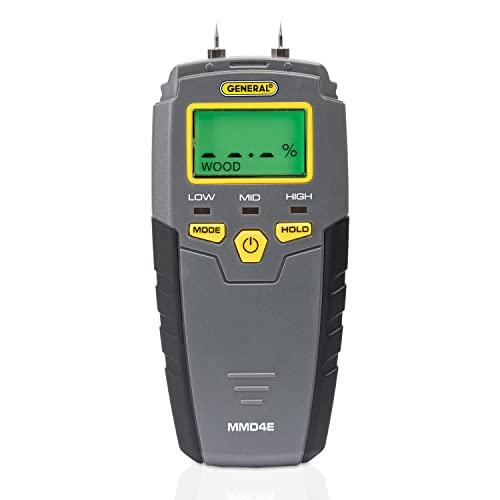
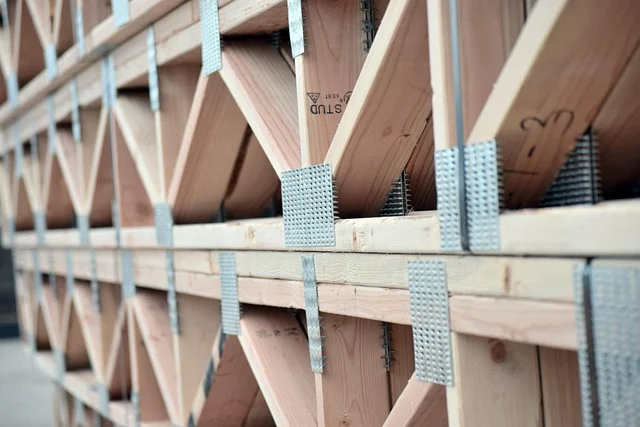
Nominal lumber size is the trade label on the bundle, not the finished measurement. A 2×4, 2×6, 2×8, 2×10, or 2×12 tells you the stock class, but the board you receive is usually smaller after drying and surfacing. That gap affects layout, clearance, and volume.
Why the name on the bundle is not the finished size
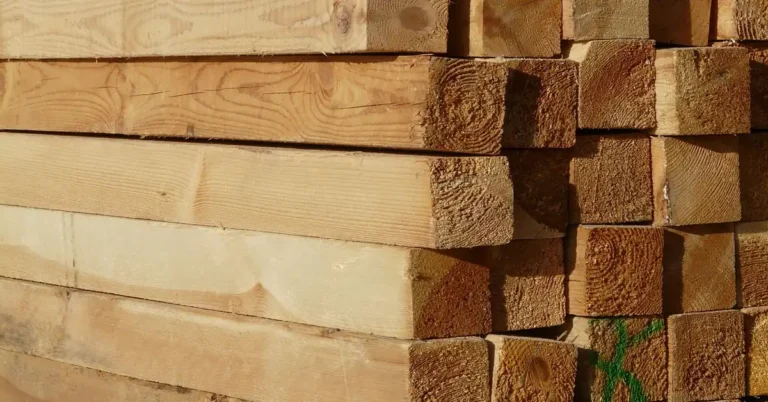
Most North American softwood dimension lumber is sold by nominal size and finished to a dressed size later in the process. The label stays the same even when the board loses thickness or width in surfacing. That is why a 2×4 is not a true 2 by 4 on the rack.
Common nominal labels you will see on site
- 2×4
- 2×6
- 2×8
- 2×10
- 2×12
- 4×4
- 4×6
- 6×6
When nominal labels are useful and when they are not
Nominal labels help with ordering, rough estimating, and talking through a takeoff with a supplier. They are not the right number for joinery, cabinet fit, stair layout, or any hard clearance. If the board has to land in a pocket, a groove, or a joist hanger, measure the actual piece.
Nominal vs actual lumber size chart
Use the chart below as the first lookup for standard dressed stock. It matches common North American softwood sizes and gives inch and metric values for quick takeoff work. The actual size is the usable dimension for layout, joinery, and clearances.
| Nominal size | Actual size, inches | Approximate metric |
|---|---|---|
| 1×2 | 0.75 x 1.5 | 19 x 38 mm |
| 1×4 | 0.75 x 3.5 | 19 x 89 mm |
| 2×4 | 1.5 x 3.5 | 38 x 89 mm |
| 2×6 | 1.5 x 5.5 | 38 x 140 mm |
| 2×8 | 1.5 x 7.25 | 38 x 184 mm |
| 2×10 | 1.5 x 9.25 | 38 x 235 mm |
| 2×12 | 1.5 x 11.25 | 38 x 286 mm |
| 4×4 | 3.5 x 3.5 | 89 x 89 mm |
| 4×6 | 3.5 x 5.5 | 89 x 140 mm |
| 6×6 | 5.5 x 5.5 | 140 x 140 mm |
How to read the table for quick takeoff work
For stock that matches standard dressed dimensions, use the actual size row and keep the nominal label only for ordering. For mixed-unit jobs, round carefully. A 38 mm layout line is not the same as 40 mm, and that small gap can move a hole, notch, or stair stringer out of line.
Why does lumber shrink after milling?
Lumber shrinks because drying removes moisture before the board reaches the rack, and surfacing removes more material when the board is planed smooth. The finished piece is smaller than the rough, green board that started the process. Species, drying method, and final surfacing all affect how far the size moves.
Drying loss before the board reaches the rack
As wood dries, it loses moisture and changes dimension. That movement is not the same in every species, and it is not always even across thickness and width. Pressure-treated stock can also arrive wetter than regular dressed lumber, which can make the piece read larger at the yard and smaller later on site.
Surfacing loss from planing and smoothing
Dressed S4S lumber is surfaced on four sides. That finish removes material so the board is smooth and ready for use, but it also makes the size smaller than the nominal label. Rough-sawn lumber is not surfaced the same way, so it can stay closer to nominal dimensions and is often used in traditional framing and heavy timber work.
How species and moisture condition change the result
Actual lumber size varies by supplier, species, and moisture condition. Two boards sold as the same nominal size can measure differently if one is kiln-dried and the other is still carrying more water. That is why a site check matters when the job depends on exact fit.
How do i convert nominal lumber size to actual size?
Convert nominal lumber size to actual size by using a standard lookup table for dressed stock or by measuring the board in hand when the job needs a tight fit. The table works for common softwood dimension lumber. The measured board should win whenever the piece came from a mixed lot, pressure-treated stack, or rough-sawn source.
Use the chart for standard stock
If the board is standard dressed lumber from a normal retail or supply-yard line, the chart is usually the fastest way to move from nominal to actual. That is enough for framing takeoff, rough cuts, and estimating board feet when the stock is consistent.
Measure the board when the job depends on exact fit
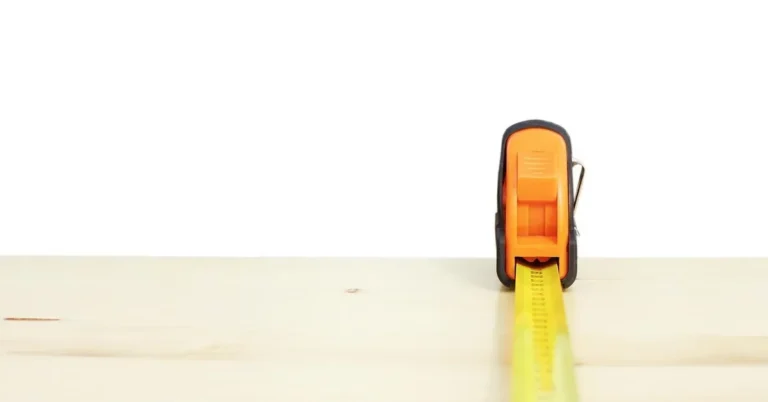
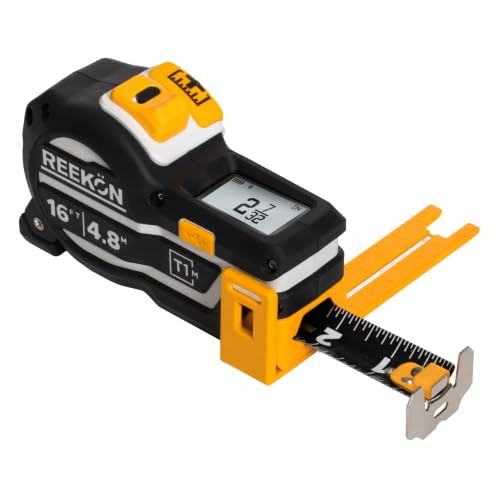
Use a tape, rule, or caliper on the board itself when the dimension affects joinery, clearances, or a finished opening. The actual piece matters more than the label when a groove, mortise, hanger, or trim detail has to land on size.
When a supplier listing should replace the lookup value
If the supplier lists a dressed size that differs from the usual chart, use the listing and verify the board in hand. This is common when stock is surfaced to a product line standard, when wood is sold as rough-sawn, or when a special-use package has its own finish dimension.
When should you trust the chart and when should you measure?
Trust the chart for standard dressed stock that is dry, uniform, and used for rough estimating. Measure the board when the lot is mixed, the moisture content is uncertain, the stock is pressure-treated, or the fit matters. That choice changes cut lists, board feet, and hauling estimates fast.
A site-use decision rule
- Use the chart if the lumber is standard S4S, the supplier line is known, and the job is rough framing or takeoff.
- Measure the board if the pieces will fit into a housing, pocket, hanger, or finished opening.
- Measure again if the lot mixes different mills, moisture conditions, or pressure-treated and dry stock.
- Use actual dimensions for board feet whenever the measured size is known and matters to cost or load.
Batch variation, pressure-treated stock, and mixed lots
A batch-variation check catches the cases where the label is not enough. Pressure-treated stock can read different from dry stock. Mixed lots can include small changes from one mill run to the next. If the yard stack looks uneven, the chart is only a starting point.
Batch-variation checklist and measured examples

This checklist shows when to use the chart and when to override it with a measured board. The aim is simple: keep the takeoff honest. If the actual piece differs from the lookup, the board feet, cut-list length, and final fit should follow the board in hand.
Batch-variation checklist
- Check whether the stock is dressed S4S or rough-sawn.
- Measure one board from each bundle, not just one from the top.
- Look for swelling, twist, or cupping in pressure-treated material.
- Compare the measured width and thickness to the chart value.
- Use the measured size if the job is tight, the lot is mixed, or the supplier line is unusual.
2×4 example: chart value versus measured value
A standard 2×4 is 1.5 inches by 3.5 inches. If a board in hand measures close to that, the chart is fine for layout and basic takeoff. If the board runs larger or smaller because of moisture or milling differences, use the measured piece for spacing, fastener placement, and hanger fit.
2×6 example: effect on board feet and cut list
A 2×6 actual size is 1.5 inches by 5.5 inches. Since board feet use actual thickness times actual width times length times quantity divided by 12, a smaller measured width changes the total. For ten 8-foot 2x4s, the estimate is 35 board feet, which shows how quantity and length move the total quickly.
4×4 example: when actual size changes fit and handling
A 4×4 actual size is 3.5 inches by 3.5 inches. That is the number to use for post pockets, base hardware, and truck loading. If the measured stock differs from the chart, the difference changes both fit and the amount of wood being hauled, so the actual piece should override the label.
Can i use nominal size for board foot calculations?
Nominal size can be close enough for rough estimating, but actual dimensions should replace it whenever the board is measured and the total matters. Board feet depend on thickness, width, length, and quantity, so even a small change in size can move cost, yield, and hauling estimates.
How quantity and length change total board feet
Board feet are calculated from actual thickness times actual width times length times quantity divided by 12. Quantity multiplies the total fast, and length does the same. A short run of longer boards can weigh more and cost more than a larger count of shorter pieces.
When nominal values are close enough for rough estimating
For early budgeting, bid-stage framing, or quick ordering, nominal values are often close enough to get in the ballpark. That is safest when the stock is standard dressed lumber and the goal is rough takeoff rather than final invoice control or precise stock optimization.
Weight per foot and hauling decisions
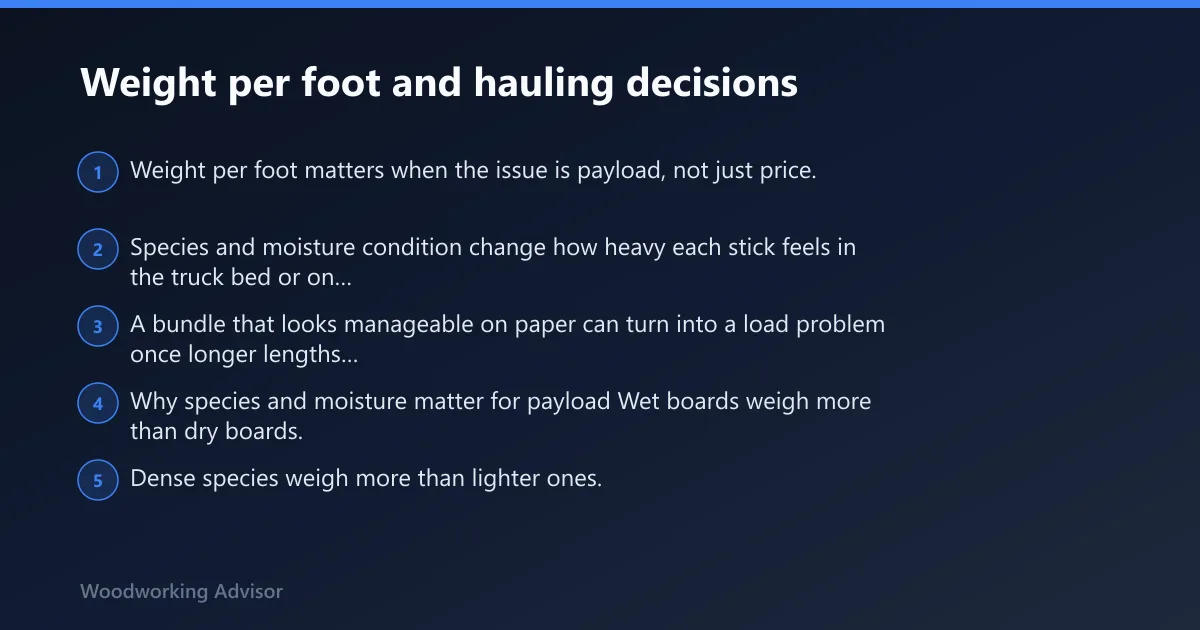
Weight per foot matters when the issue is payload, not just price. Species and moisture condition change how heavy each stick feels in the truck bed or on the trailer. A bundle that looks manageable on paper can turn into a load problem once longer lengths and higher quantity are added.
Why species and moisture matter for payload
Wet boards weigh more than dry boards. Dense species weigh more than lighter ones. That means two stacks with the same nominal size can load very differently, and the estimate should reflect the actual stock line whenever hauling margin is tight.
Choosing between 2×6, 2×8, and 4×4 for handling
For handling, 2×6 stock is often easier to move than 2×8 stock because the width changes the bundle weight and the way the pieces stack. A 4×4 is thicker and can be awkward in short lengths. The practical choice depends on where the load is carried, how far it moves, and whether a helper is available.
Quick checks for truck loading and jobsite carry
Check quantity first, then length, then weight per foot. Long pieces add drag and make unloading harder. If the order mixes sizes, split it by bundle so the heaviest material is not buried under lighter stock. That saves time and lowers the chance of damage during carry-in.
What is the nominal size of lumber
The nominal size of lumber is the name printed or spoken for the board, such as 2×4 or 4×4, before finishing. It is a convenience label used in North American softwood dimension lumber. The usable board is the actual size, which is smaller after drying and surfacing.
Frequently asked questions
is a 2×4 really 2 by 4
No. A 2×4 actual size is 1.5 inches by 3.5 inches for dressed softwood. The nominal label stays in use because it identifies the stock class, but it is not the finished measurement. For cut lists and joinery, the actual size is the number that matters.
what is the actual size of a 2×6
A 2×6 actual size is 1.5 inches by 5.5 inches. That dressed size is the one to use for layout, spacing, and board-foot work when the board matches standard stock. If the lumber is rough-sawn or wet pressure-treated material, measure the board before trusting the chart.
why do lumber dimensions shrink after milling
Lumber dimensions shrink after milling because the wood loses moisture during drying and then loses more material when it is planed smooth. The amount can vary with species, moisture condition, and product line. Rough-sawn stock stays closer to nominal, while S4S lumber is smaller and more uniform.
what sizes are standard dimensional lumber
Standard dimensional lumber commonly includes 2×4, 2×6, 2×8, 2×10, and 2×12, along with larger posts such as 4×4, 4×6, and 6×6. These are the sizes most often found in dressed North American softwood stock. Always check the actual piece before using it in a tight fit.
Sponsored / affiliate links. As an Amazon Associate I earn from qualifying purchases. I may earn additional commission from eligible campaigns.