Building a Deck in Winter: Can You Do It?
Yes, you can build a deck in winter if the site is accessible, the footings can be dug below frost depth, and temperatures stay within the material and adhesive limits. Skip those checks and you risk heaving footings, delayed inspections, and fastener or lumber problems that are expensive to fix. This guide gives you a winter go/no-go check for site conditions, code issues, footing depth, and material limits.
Winter deck decision table



Use this table as a readiness check, not a wish list. If more than one column lands in the caution or no-go range, pause the build and reset the plan around site access, footing method, or material choice.
| Temperature band | Ground condition | Footing method | Material risk | Go/no-go recommendation |
|---|---|---|---|---|
| Above 40°F | Clear, thawed, and accessible | Standard excavation to below frost line; concrete can be protected normally | Lower risk for wood, composite, and fasteners if stored dry | Go, if permits and inspections are in place |
| 25°F to 40°F | Firm but diggable; some snow or ice cleanup needed | Deeper excavation may be needed; concrete needs cold-weather protection | Composite gapping must follow cold-temperature instructions; wood movement increases | Caution; proceed only with a winter plan and protection for cure |
| Teens to mid-20s°F | Frozen ground likely; access and layout are harder | Specialized equipment may be needed; footing work slows sharply | Fastener driving gets harder; cold materials become stiffer | Borderline; only proceed if the excavation and cure plan are proven |
| Teens or single digits | Frozen or snow-packed ground | Excavation and concrete curing become high-risk | Greater risk of brittle handling, poor spacing, and freeze damage | No-go for most builds |
Can you build a deck in winter?
Yes, but only when the site and methods are set up for cold weather. Winter work can be workable because schedules are often more open, and some projects move with more predictable timing than spring and summer. The build still has to clear excavation, footing depth, cure protection, and material checks.
When winter is workable
Winter is workable when the site can be cleared safely, the soil can be excavated to the required depth, and concrete can cure without freezing. A simple deck is easier to schedule than a complex one. Standard decks can be completed in 4-7 days during winter, while more complex projects like screened-in porches take 3-6 weeks.
When winter is a bad bet
Winter is a poor choice when the ground is frozen solid, the cure window sits below freezing, or the job site is unsafe because of ice or poor access. Once temperatures drop into the teens or single digits, the work may stop making sense. If that happens, pausing is safer than forcing the schedule.
What changes from a summer build
Cold weather slows work because of ice, wind, and shorter daylight hours. Footings often need more planning, concrete may need blankets or heated protection, and material spacing rules matter more. Permits and inspections can also slow down if your jurisdiction wants footing depth verified before the next phase starts.
Frost line and footing depth
Deck footings must be placed below the frost line, which means below the local seasonal frost depth for your area. That depth varies by location and code. The reason is simple: if the soil freezes and thaws around a shallow footing, frost heave can lift or shift the support.
Why footings must go below seasonal frost depth
Footings below the frost line sit in soil that is less likely to move with seasonal freezing. That reduces the chance that expanding ice in the soil will push the deck upward. Local code officials often want that depth confirmed before framing continues, so footing depth is both a structural issue and an inspection issue.
How frost heave damages decks
Frost heave is freeze-thaw soil movement. It can tilt posts, crack footings, open deck gaps, and throw off stair alignment. A small lift at the base can become a visible problem at the railing or ledger. Once the supports move, the rest of the deck has to absorb that movement.
What local code and inspection officials look
Inspectors usually care about depth, soil bearing, and whether the footing reaches undisturbed soil. They may also want to know that the excavation was not made deeper than needed and then left loose at the bottom. In winter, the timing of the inspection matters because snow and frost can hide the footing condition.
Frozen ground and excavation
Frozen ground makes digging post holes significantly harder. It can slow the schedule, force a change in equipment, and make even a simple footing layout a longer job. If the frost layer is deep enough, the crew may need specialized equipment or a different footing method.
What frozen soil changes on site
Frozen soil is harder to cut cleanly, and that affects both speed and accuracy. The crew may spend more time clearing ice and snow before layout can start. Snow cover also hides grades, utility markings, and layout points, which raises the chance of a misplaced hole or an inspection delay.
When specialized equipment becomes necessary
When hand digging stops being practical, augers, breakers, or other equipment may be needed to reach the required depth. That changes the job from a light winter project into a heavier excavation task. If equipment cannot reach the site safely, the best move is to wait.
How snow cover affects access and layout
Snow has to be cleared before the first layout check. You need room for material staging, footing layout, and safe walking paths. If the yard slopes or freezes under the snow, the crew may not be able to move ladders, concrete, or lumber without creating a slip hazard.
Concrete curing in cold weather
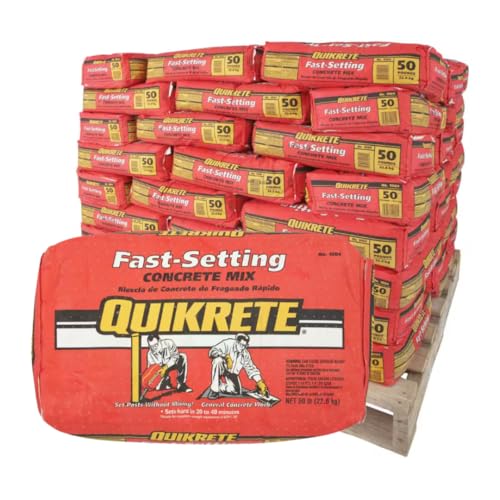
Concrete for footings takes much longer to set in low temperatures. The colder it gets, the slower strength develops, and fresh concrete must not freeze during cure. That is why winter footing work often needs blankets, insulation, or heated protection around the pour.
Why cure time slows in cold air
Cold weather slows the chemical reaction that gives concrete strength. The surface may appear firm before the footing has developed enough internal strength to carry load. That is a real risk on winter jobs because the next step often depends on the footing being ready.
How to keep concrete from freezing
Protect the pour immediately after placement. Common methods include insulated blankets, heated enclosures, or other approved cold-weather protection. The goal is to keep the concrete above freezing while it gains strength. If the footing freezes during cure, the support may never reach the intended performance level.
When protection may be needed
If the forecast stays cold overnight, protection is not optional. It is also more important when the footing is small, the wind is strong, or the ground is already cold. A brief warm afternoon does not erase a freezing night.
Winter deck materials
Cold weather changes how materials behave. Wood shrinks and reacts to moisture content. Composite decking becomes more rigid and needs spacing that matches the temperature. Fasteners still have to drive cleanly, even when the material is denser or colder than usual.
Wood decking in cold, dry conditions
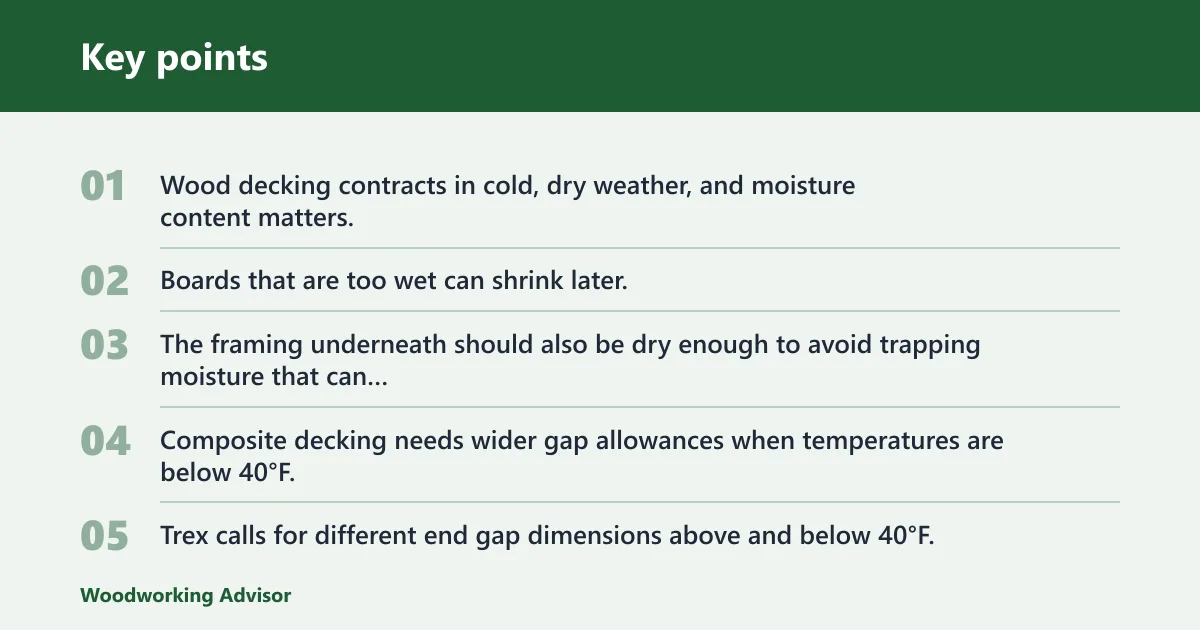
Wood decking contracts in cold, dry weather, and moisture content matters. Boards that are too wet can shrink later, while very dry boards may move less after installation but still need proper acclimation and fastening. The framing underneath should also be dry enough to avoid trapping moisture that can later affect movement.
Composite decking spacing and rigidity
Composite decking needs wider gap allowances when temperatures are below 40°F. Trex calls for different end gap dimensions above and below 40°F, and TimberTech changes spacing requirements as temperatures change. In cold weather, composite boards also feel stiffer, so forcing them tight can create trouble later when temperatures rise.
Fasteners that still perform in cold materials
Use approved exterior fasteners, and check that they are suitable for the product being installed. Cold, dense material can make screws harder to drive cleanly, and some fasteners are more likely to snap or strip if the pilot hole or driver setup is wrong. That problem is avoidable, but only if the fastener matches the material.
Picture a 12-by-16-foot platform deck built in late January. The footing layout is fine, but the composite boards are stacked in an unheated garage at 28°F. If the installer follows warm-weather spacing, the deck can bind later when the temperature rises and the boards expand.
Winter deck build decision table
Use this quick guide to decide whether to move ahead, slow down, or pause. The point is not to find a perfect weather day. The point is to match the footing method, cure plan, and material rules to the actual site conditions.
| Condition | Site and footing check | Material check | Action |
|---|---|---|---|
| Clear ground, above freezing | Can excavate to frost depth and inspect footing depth | Materials stored dry and installed per manufacturer rules | Proceed |
| Light snow, thawing soil | Access must be cleared; layout and footing depth still verifiable | Composite gaps and wood moisture should be checked before install | Proceed with caution |
| Frozen top layer | Excavation is slow; deeper digging may need equipment | Fasteners and boards may be harder to handle cleanly | Review method first |
| Snow-packed or solidly frozen ground | Reliable footing work is not practical | Material rules do not offset the site problem | Pause |
| Cure window below freezing | Concrete protection would be unreliable | All framing that depends on the footing is at risk | No-go |
Winter deck prep checklist
This is the part homeowners can control before the crew arrives. Good prep cuts down on delays, avoids missed inspections, and keeps the build from stalling because the site is buried under snow or the materials are left exposed.
- Clear access for workers, material delivery, and equipment.
- Remove snow and ice from the deck area, staging area, and walking path.
- Confirm the permit and inspection sequence for your jurisdiction.
- Verify the local frost depth so footing plans match code.
- Store lumber, composite boards, and fasteners under cover and off wet ground.
- Plan concrete protection before the pour, including blankets or another approved method.
- Check the installation instructions for the exact decking product, especially cold-weather spacing.
Hypothetical homeowner
Suppose the yard is clear but the delivery route still has packed snow near the side gate. The framing can wait, but the lumber truck cannot get close enough to unload safely. In that case, the job is not ready, even though the deck location itself looks fine.
When to pause the project
Pause the project when the ground is frozen or snow-packed, when the cure window sits below freezing, or when work would be unsafe because of ice, wind, or poor daylight. That is not a delay for its own sake. It prevents footing failure, concrete damage, and avoidable rework.
Frozen or snow-packed ground
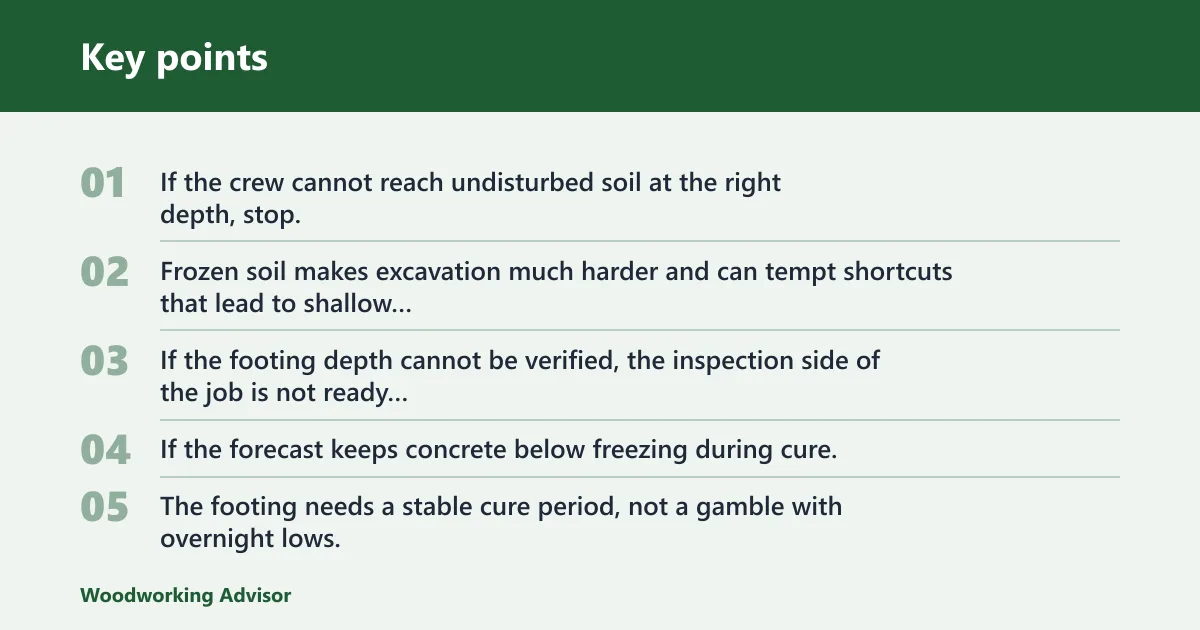
If the crew cannot reach undisturbed soil at the right depth, stop. Frozen soil makes excavation much harder and can tempt shortcuts that lead to shallow footings. If the footing depth cannot be verified, the inspection side of the job is not ready either.
Temperature below the cure window
If the forecast keeps concrete below freezing during cure, do not pour without a valid protection plan. The footing needs a stable cure period, not a gamble with overnight lows. A warm afternoon does not solve a freezing night.
Unsafe work conditions
Short daylight, cold hands, slick surfaces, and gusty wind all reduce control. If the crew cannot fasten safely, move materials safely, or inspect the layout accurately, the job should stop. Safety failures are expensive, and they tend to create bigger structural mistakes.
Frequently asked questions
How do you build a deck when the ground is frozen?
You usually need more excavation power, better snow clearing, and a plan for slower footing work. Frozen ground makes digging post holes significantly harder, so the project may need specialized equipment or a different schedule. If the soil cannot be cut to undisturbed depth, pause the build.
What temperature is too cold to build a deck?
There is no single national cutoff, because footing depth, cure protection, and product instructions all matter. As a practical matter, once temperatures drop into the teens or single digits, the work may stop making sense. Below freezing during the cure period is the bigger red flag for footings.
Do deck footings have to go below the frost line?
Yes. Footings must be placed below the frost line so freeze-thaw soil movement does not lift or shift the support. The frost line varies by location, so local code and inspection requirements control the depth. That depth should be verified before framing continues.
Can composite decking be installed in cold weather?
Yes, but spacing has to follow the cold-weather instructions for the specific product. Composite decking needs wider gap allowances when temperatures are below 40°F, and brands such as Trex and TimberTech change spacing requirements as temperatures change. Cold boards are also stiffer, so handle them carefully.
Does winter make deck construction cheaper?
Sometimes, but not always, and cost should not be the main reason to start. Winter deck construction can offer lower material prices and faster contractor availability, yet frozen ground, slower concrete cure, and extra protection can offset those savings. Ask for a winter-specific price, not a summer estimate with the same scope.
Sponsored / affiliate links. As an Amazon Associate I earn from qualifying purchases. I may earn additional commission from eligible campaigns.