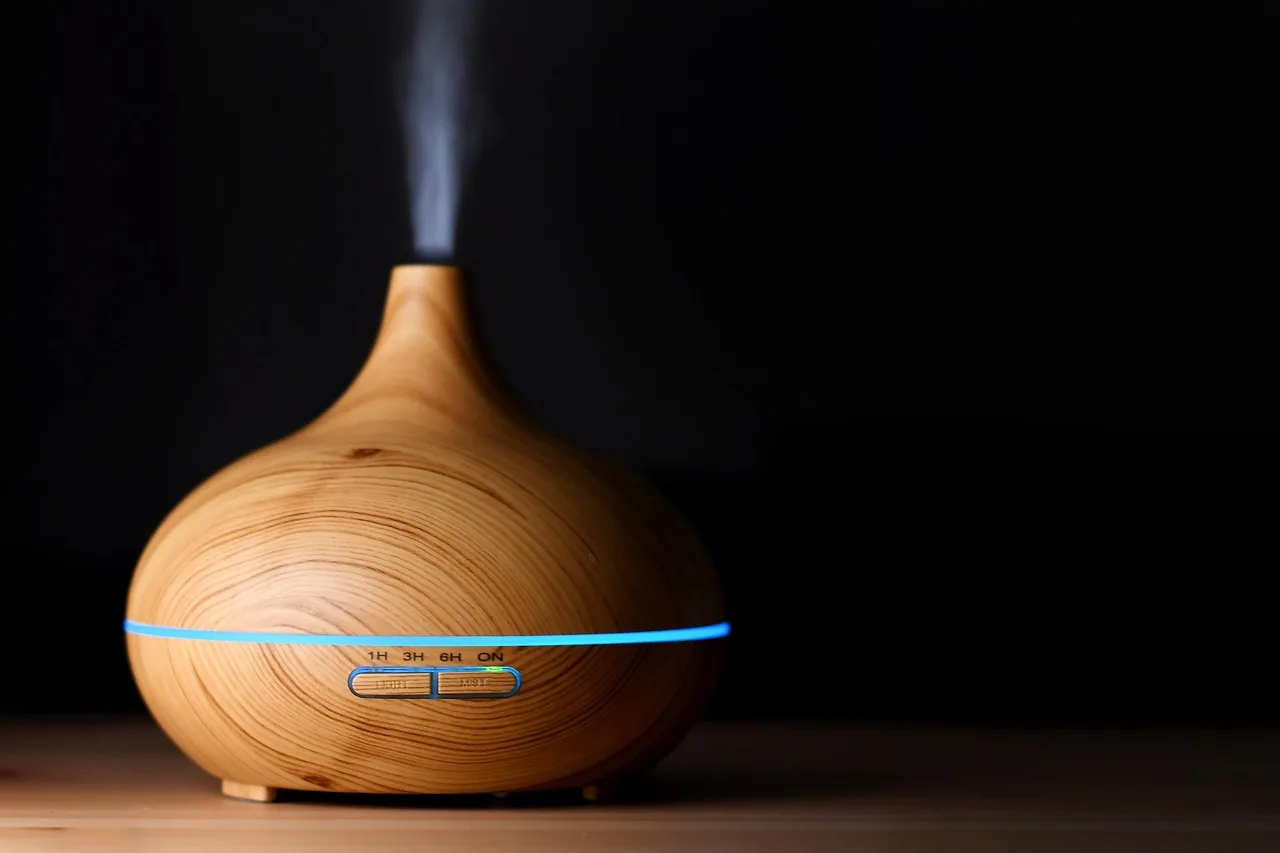
Can a Humidifier Ruin Wood Furniture?
A humidifier can damage wood furniture if it leaks, blows mist directly on it, or raises humidity to around 55% or higher. Too much moisture can swell joints, cup panels, lift veneer, and stain finishes. This guide shows how to tell normal humidity control from accidental wetting, then gives a simple decision tree for safe placement, target humidity, and warning signs.
Can a humidifier ruin wood furniture?
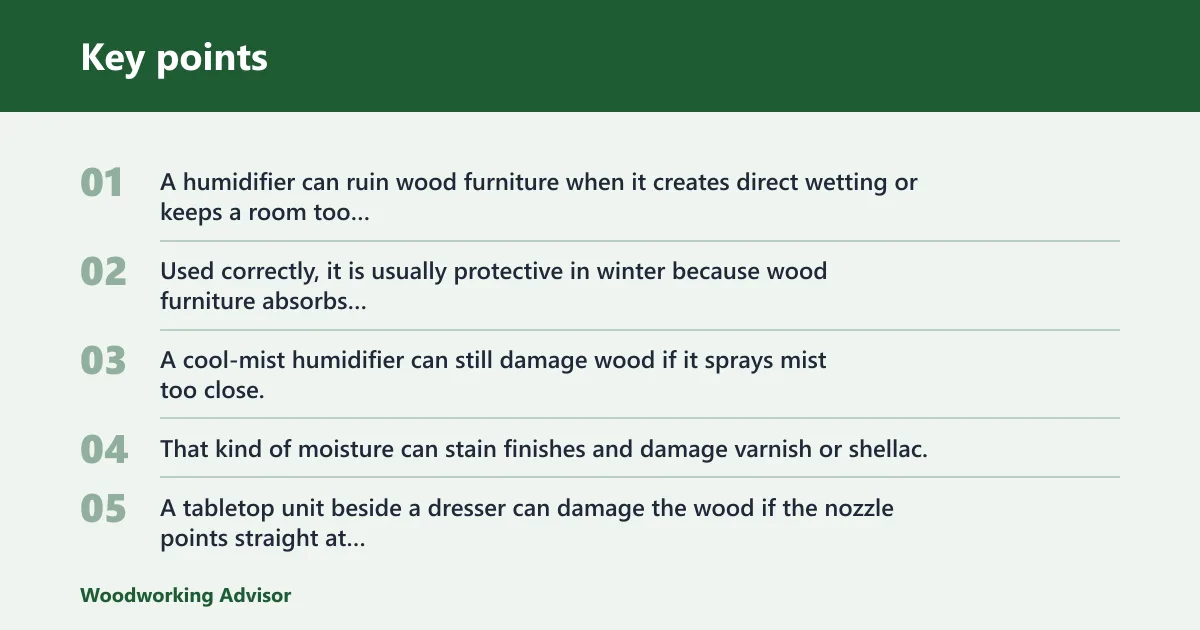


A humidifier can ruin wood furniture when it creates direct wetting or keeps a room too damp. Used correctly, it is usually protective in winter because wood furniture absorbs moisture from dry air and can crack, split, or shrink. The main risk is not the device itself. It is the way the moisture reaches the wood.
The real problem: mist, leaks, spills, and condensation
Normal room humidity is one thing. Wetting the furniture surface is another. A cool-mist humidifier can still damage wood if it sprays mist too close, leaks from the tank, spills during refilling, or leaves condensation on a tabletop, wall, or cabinet. That kind of moisture can stain finishes and damage varnish or shellac.
A tabletop unit beside a dresser can damage the wood if the nozzle points straight at the side panel. The room may still read 42% RH, which is fine, but the side panel can still get damp. That local wetting is enough to cloud finish, raise grain, or swell an edge.
How wood reacts to moisture
Wood furniture does not respond to moisture in one uniform way. Solid wood can swell, cup, or warp; joints can tighten, then separate later as the wood cycles between wet and dry. Veneer is thinner and generally more vulnerable than solid wood. Once the glue line softens or the edge lifts, the damage can spread.
Finishes react too. Lacquer, shellac, varnish, paint, wax, and polish can all slow moisture exchange, but they do not make wood waterproof. Too much moisture can cloud a finish, soften a coated surface, or leave a pale stain ring where condensation sat. Failing finish is often the first visible sign, not the last.
What humidity is safe for wood?
For wood furniture, relative humidity is the variable to watch, and a hygrometer is the tool that measures it. A good winter target is about 30% to 50%, with many experts aiming for about 40% indoors. Keep indoor humidity from going above 55% when possible, and do not let it exceed 60%.
Use a hygrometer, not guesswork
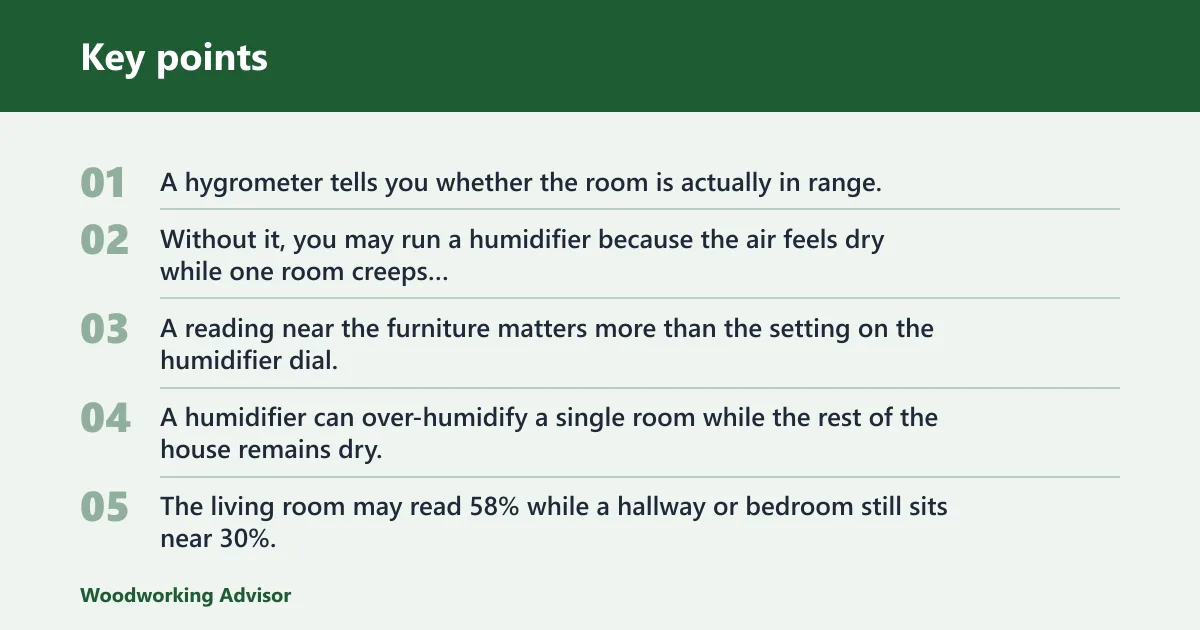
A hygrometer tells you whether the room is actually in range. Without it, you may run a humidifier because the air feels dry while one room creeps above safe levels. A reading near the furniture matters more than the setting on the humidifier dial.
| Reading or condition | Label | Why | Next action |
|---|---|---|---|
| 35% RH | Safe | Within the common winter target range for wood furniture. | Keep monitoring with a hygrometer. |
| 45% RH | Safe | Comfortable indoor level and still within the safe range for most wood. | Maintain current setting if no condensation appears. |
| 55% RH | Caution | At the upper edge of the recommended band; risk rises if the room stays there. | Reduce output or shorten run time. |
| 60% RH | Risk | Above the limit that can ruin furniture structure. | Turn the humidifier down or off and ventilate the room. |
| Visible condensation | Risk | Surface moisture is already collecting on wood, glass, or walls. | Move the unit and dry the area immediately. |
| Musty smell | Risk | Suggests excess moisture and possible mold growth in the room or tank. | Inspect the room and clean the humidifier before reuse. |
Why one room can be too damp
A humidifier can over-humidify a single room while the rest of the house remains dry. That matters in winter. The living room may read 58% while a hallway or bedroom still sits near 30%. If the humidifier is near furniture in the damp room, that furniture is the one at risk.
Where should you place a humidifier?
Place the humidifier away from wood surfaces, keep it off the floor, and aim the mist into open air. That keeps the nozzle from wetting furniture directly and gives the moisture time to disperse. A tray or protective mat helps catch drips, especially during refills or when the tank is moved.
Keep it off wood surfaces
Do not put a humidifier directly on a wooden table, dresser, cabinet, or shelf unless the manufacturer specifically allows it and the setup still keeps mist away from the surface. Even a cool-mist unit can leave a wet ring or drip line if the outlet points toward the furniture.
Use spacing, height, and open-air mist direction
Set the unit on a stable stand or table that is not made of wood, then leave space around it so the mist disperses before reaching furniture or walls. Do not aim the mist at corners, painted trim, or cabinet doors. Open-air direction matters more than distance alone.
A common first-timer mistake is setting a console humidifier beside a bookcase because the room feels dry near the bookshelf. The unit may read a safe 44% RH, yet a fine plume lands on the cabinet face every hour. The room is fine; the placement is not.
Why trays and mats help
A tray or protective mat is a backup, not a cure. It helps if the tank drips, if condensation forms under the unit, or if a refill splashes. It does not make a bad location safe. If the unit sits on wood, the mat should be thick enough to block water and large enough to catch overflow.
When does a humidifier become a risk?
A humidifier becomes a risk when it leaks, spills, leaves condensation on furniture, or keeps the room above the safe range. It also becomes a risk when musty odor appears, because that can point to mold in the room or inside the humidifier tank. The danger is moisture that stays put.
Leakage and spills
Leakage is a major failure mode. A cracked tank, loose cap, or poor seal can send water onto a tabletop or into a cabinet seam. That can damage varnish, finish, and even the wood structure beneath. Poor-quality humidifiers can cause irreparable damage to wooden structure when they fail in this way.
Visible condensation
Condensation on furniture, windows, or walls means the moisture load is too high for the room temperature and airflow. That is a warning sign, not a normal byproduct. If a tabletop feels damp or shows a hazy patch, stop the unit, dry the surface, and lower the humidity target.
Musty smell and mold risk
Mold can grow from excess humidity, and it can also grow inside humidifier tanks. A musty smell is often the earliest clue that either the room or the unit is staying damp too long. Clean the tank, replace standing water, and inspect nearby furniture, especially hidden edges and undersides.
Wood furniture humidifier decision matrix
This matrix separates normal humidity control from direct wetting. Use the row that matches the setup you have now, then follow the next action. If more than one condition applies, treat the setup as the higher risk row.
| Setup | Label | Reason | Next action |
|---|---|---|---|
| Tabletop cool-mist on dresser, mist aimed toward the room, room at 40% RH | Safe | Humidity is in range and the unit is not spraying the wood surface. | Keep using a hygrometer and check for drips. |
| Console humidifier near cabinet, no visible wetting, room at 45% RH | Caution | Placement is close enough that mist drift could reach the cabinet. | Move it farther away and aim into open air. |
| Unit on tray beside a wooden table, room at 35% RH | Safe | Tray helps with minor spills and the room is within range. | Keep the tray dry and inspect after refilling. |
| Unit leaking onto a wood floor or shelf | Risk | Direct wetting can stain finish and damage the structure. | Shut it off, dry the area, and repair or replace the unit. |
| Room humidity at 35% | Safe | Within the lower part of the recommended range for winter. | Run the humidifier only as needed. |
| Room humidity at 45% | Safe | Comfortable target range for most wood furniture. | Maintain the setting and keep monitoring. |
| Room humidity at 55% | Caution | At the upper edge where damage risk starts to rise. | Lower output and watch for condensation. |
| Room humidity at 60% | Risk | Above the limit that can ruin furniture structure. | Stop humidifying and increase airflow. |
| Visible condensation on wood furniture | Risk | The surface is already getting wet. | Dry the surface and move the humidifier. |
| Musty smell near the unit or furniture | Risk | Suggests excess moisture or mold in the tank or room. | Clean the humidifier, check hidden surfaces, and cut humidity. |
Protection starts with placement, monitoring, and maintenance. Keep the humidifier away from wood surfaces, monitor relative humidity with a hygrometer, and clean the unit often enough that the tank does not become a mold source. Use trays, mats, and careful refilling as backup, not as the main defense.
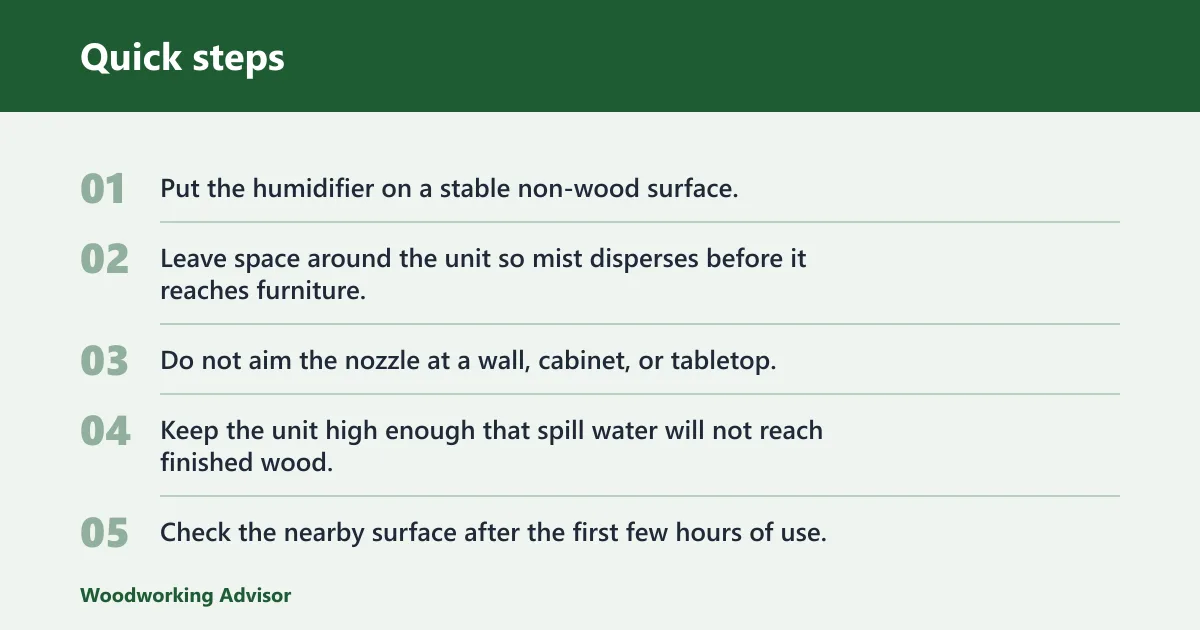
Placement and spacing rules
- Put the humidifier on a stable non-wood surface.
- Leave space around the unit so mist disperses before it reaches furniture.
- Do not aim the nozzle at a wall, cabinet, or tabletop.
- Keep the unit high enough that spill water will not reach finished wood.
- Check the nearby surface after the first few hours of use.
Cleaning and maintenance for the humidifier
Regular cleaning matters because standing water can support mold inside the tank and on internal parts. Empty the tank, dry it, and remove any visible film or odor before the next run. If the unit smells musty, do not put it back beside wood furniture until it is clean and fully dry.
Finish care, trays, and protective mats
Wood finish is the last line of defense, not a shield. Varnish, shellac, lacquer, paint, wax, and polish can slow moisture entry, but direct wetting can still stain or cloud the surface. A tray or mat helps catch spills, while felt pads and coasters help protect contact points under nearby objects.
What to do if damage has already started
If the surface looks cloudy, dry the area first and stop the moisture source. If the mark is a fresh water ring or slight haze, it may improve once the wood dries fully. If veneer is lifting, a joint is opening, or the panel is warped, the issue is more likely permanent and needs repair.
Picture a veneered cabinet with a pale ring under one corner and no swelling elsewhere. That is more likely to be a finish mark than full structural damage. If the same cabinet also has a lifted edge and a sticky door, the moisture reached deeper than the finish layer.
Frequently asked questions
Will a humidifier ruin wood furniture?
Not usually, if it keeps room humidity in the safe range and stays away from the wood. The risk comes from direct mist, leaks, spills, or humidity that stays above about 55% for long periods. A hygrometer is the best way to tell whether the setup is safe.
Can a humidifier ruin furniture?
Yes, a humidifier can ruin furniture if it wets the surface or pushes the room too damp. Solid wood may swell, veneer may lift, and finishes can cloud or soften. Used correctly, though, a humidifier often protects furniture during dry winter air.
Does a humidifier ruin furniture?
It can, but only under the wrong conditions. Direct spray, leakage, and condensation are the most common causes. If the humidifier is clean, stable, and placed away from wood, it is more likely to help than harm, especially when room humidity stays near 30% to 50%.
Does humidity ruin wood furniture?
Excess humidity can ruin wood furniture by making it swell, warp, split, or lose its finish. The problem usually appears when the room stays above 55% or 60%, or when moisture sits on one spot. Moderate humidity, checked with a hygrometer, is the safer target.
Can I put a humidifier on a wooden table
It is better not to. A humidifier can damage a wooden table if the table gets too wet, and even small drips can leave marks. If you must place it nearby, use a non-wood stand or a thick protective mat, and aim the mist away from the surface.
How do I protect wood furniture from humidifier moisture?
Keep the unit off wood, use a tray or mat, and aim the mist into open air. Monitor room humidity with a hygrometer and hold winter levels near 30% to 50%. Clean the tank often, because mold can grow inside the humidifier as well as in a damp room.
Can humidifiers cause mold?
Yes. Mold can grow in a room that stays too damp, and it can also grow inside a humidifier tank if standing water is left in place. A musty smell is a warning sign. Clean the unit, lower humidity, and check hidden areas around furniture and walls.
Sponsored / affiliate links. As an Amazon Associate I earn from qualifying purchases. I may earn additional commission from eligible campaigns.