Peruvian Walnut vs Black Walnut: Real Janka Numbers & Price Compared
Peruvian walnut and American black walnut are not the same tree, and despite Peruvian walnut’s darker, more uniform color, it is actually the slightly softer of the two: 960 lbf on the Janka hardness scale versus 1,010 lbf for black walnut (Juglans nigra). That’s only about a 5% gap – small enough that the two woods perform almost the same under a chisel, a sander, or a kitchen knife, even though photos make Peruvian walnut look like the tougher, denser board.
Below is a side-by-side comparison built from The Wood Database’s published dried-weight and Janka figures for both species, plus the botanical, cost, and sustainability facts that actually change which one belongs in your shop.
Peruvian Walnut vs Black Walnut at a Glance
Best Finish For Bringing Out Walnut Grain
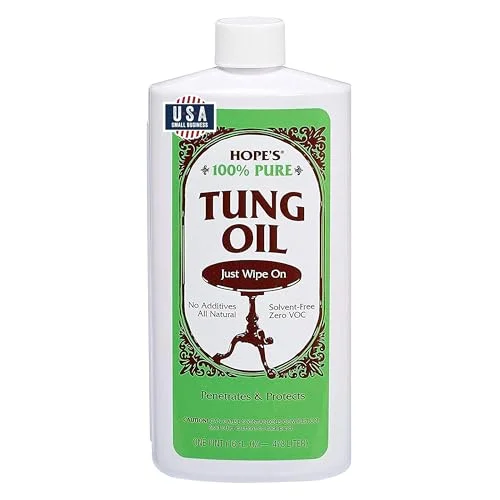 |
Hope’s 100% Pure Tung Oil, 16 oz – $17.99 Whichever walnut you end up with, a pure tung oil finish penetrates the grain instead of sitting on top of it, deepening the natural color difference between the two species without a plastic-looking sheen.
|
Here’s how the two species stack up on the numbers that actually matter for a woodworking project:
| Property | Peruvian Walnut | Black Walnut |
|---|---|---|
| Scientific name | Juglans neotropica (also sold as J. australis, J. olanchana) | Juglans nigra |
| Common name | Nogal, Tropical Walnut | American Walnut, Eastern Black Walnut |
| Janka hardness | 960 lbf (4,250 N) | 1,010 lbf (4,490 N) |
| Average dried weight | 37 lb/ft³ (600 kg/m³) | 38 lb/ft³ (610 kg/m³) |
| Specific gravity (12% MC) | 0.50–0.60 | 0.51–0.61 |
| Origin | Southern Mexico through Central & South America | Eastern United States |
| IUCN status | J. neotropica: Endangered | Least Concern |
Source: The Wood Database’s published hardwood profiles for Peruvian walnut and black walnut.
Are They the Same Species? Botanical Origins Explained
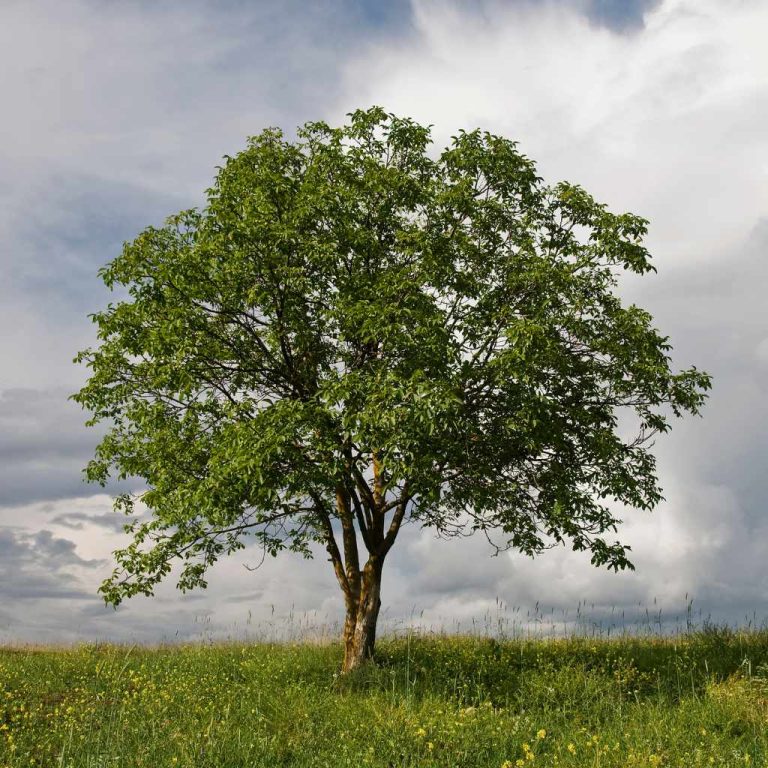
American black walnut is a single, well-defined species – Juglans nigra – native to the eastern United States, from the Great Plains to the Atlantic coast. “Peruvian walnut” is different: it’s a trade name, not a single botanical species. Lumber sold under that name most often comes from Juglans neotropica, but shipments can also include the closely related Juglans australis and Juglans olanchana, harvested across a range that stretches from southern Mexico down through Central America and into the Andean highlands of Peru, Ecuador, and Bolivia.
That distinction matters for buyers: two boards labeled “Peruvian walnut” from different suppliers may technically come from different trees within the same genus, which is part of why color and grain consistency can vary more on Peruvian walnut than on domestically sourced black walnut.
Janka Hardness and Density: Which Is Actually Harder
This is where most comparisons online get it backwards. Because Peruvian walnut looks darker and denser in photos, it’s commonly assumed to be the harder wood. The Janka test – which measures the force needed to embed a steel ball halfway into a wood sample – says otherwise: black walnut rates 1,010 lbf, Peruvian walnut rates 960 lbf. Black walnut is the harder species, just not by much.
In practical terms, a 5% Janka gap is close to the margin of error between individual boards of the same species – growing conditions and moisture content shift real-world hardness more than that. Both woods sit in the same general hardness tier as oak, which is why either one works for tabletops, flooring, and cutting boards without one being a clearly “tougher” choice. Density tells the same story: 38 lb/ft³ for black walnut versus 37 lb/ft³ for Peruvian walnut, a difference you would not feel picking up two boards side by side.
Color, Grain, and Texture
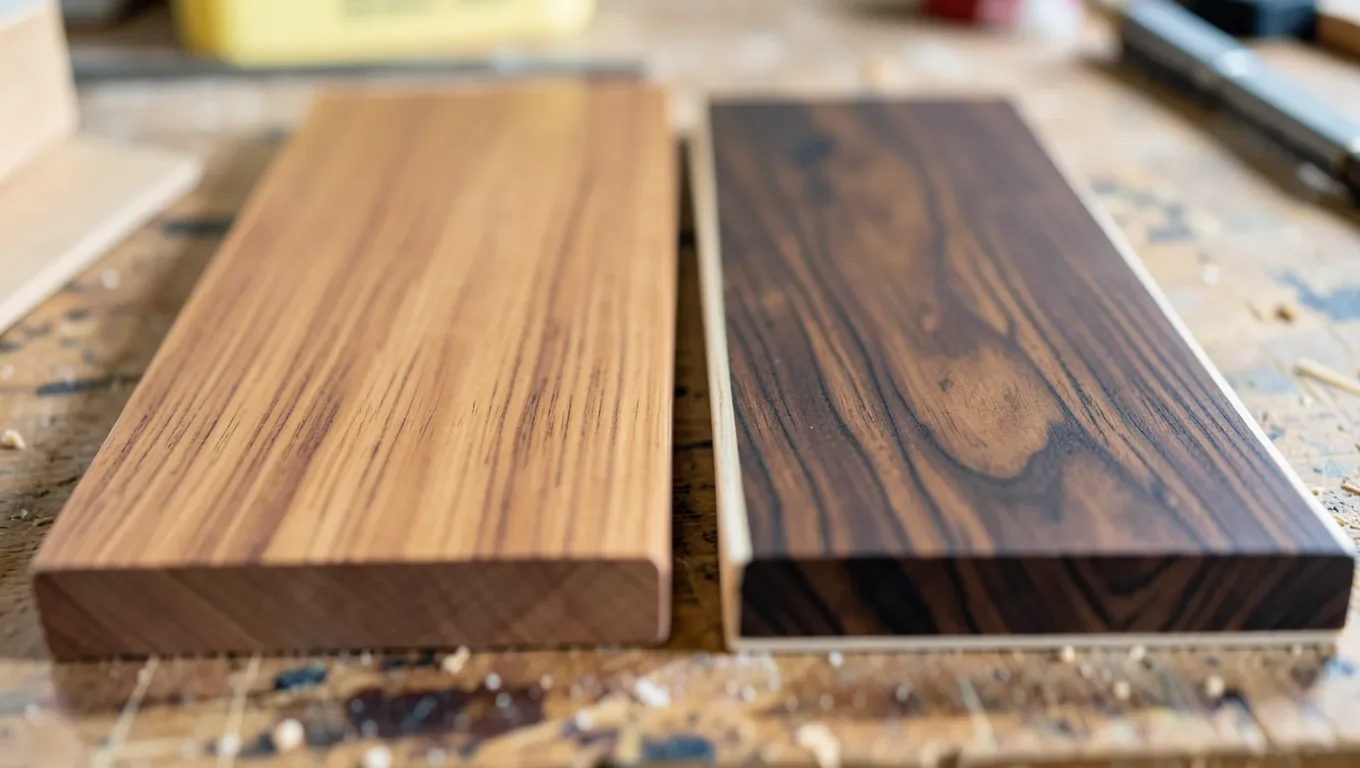
Color is the biggest real difference between the two. Black walnut heartwood ranges from pale to dark chocolate brown with streaks of gray, purple, or reddish tones, and it typically comes attached to a noticeable band of pale yellow-gray to nearly white sapwood – which is often steamed to even out the color, and which accounts for a lot of waste when a board is cut for furniture. Peruvian walnut runs a more uniform deep chocolate brown with a purplish cast and comparatively little pale sapwood, though it can show its own light-colored mineral streaks running through the heartwood itself.
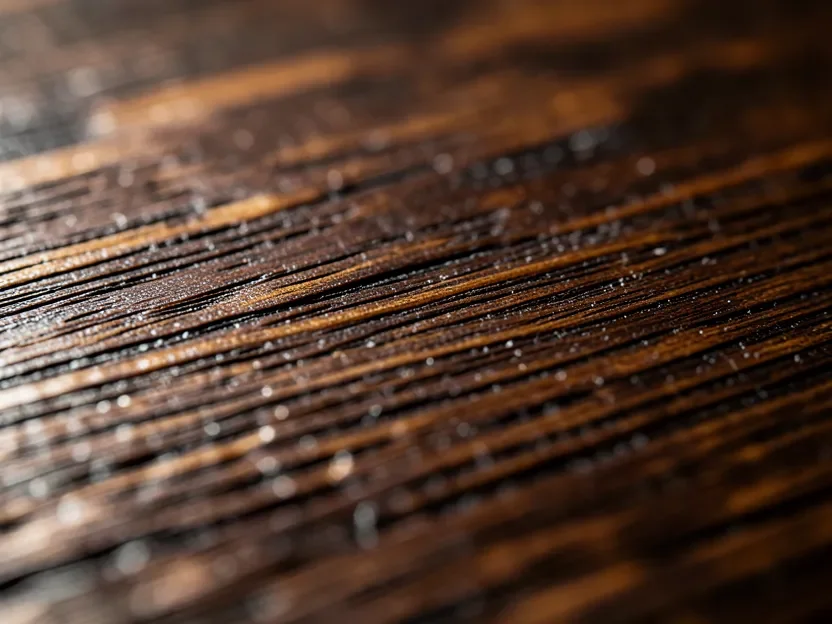
Grain-wise, black walnut is typically straight but can turn wavy or figured, with a medium texture and a natural luster once finished. Peruvian walnut’s grain is also usually straight, but it runs coarser and more porous, which is why it’s slightly more prone to splintering during machining – some woodworkers compare its feel to mahogany more than to domestic walnut.
Workability: Cutting, Sanding, and Finishing
Both species machine well with sharp tools. Black walnut planes cleanly along straight grain, though figured or irregular sections can tear out under a planer, and it responds well to steam bending for curved parts like chair backs. Peruvian walnut is generally easy to cut and shape too, and its straighter grain often means less tearout overall – but its coarser texture dulls edges a little faster and needs a finer sanding progression to avoid visible scratches under a clear finish.
Both take stain and oil finishes evenly, but neither strictly needs one: a penetrating oil like the tung oil above is usually enough to bring out full color and grain contrast on either wood without masking it under a film finish. Wear a dust mask when sanding either species – walnut dust is a known skin and respiratory irritant for some woodworkers.
Cost and Availability
Pricing varies by region and supplier, but Peruvian walnut is frequently the more affordable option in U.S. lumber yards, which surprises people who assume the imported wood costs more by default. The reason comes back to sapwood: because Peruvian walnut logs yield more usable heartwood with less pale sapwood to trim away, a supplier often gets more sellable board footage per log, which can offset the cost of importing it. Black walnut is a widely available premium domestic hardwood, but demand, narrower board widths, and high sapwood wastage keep its price elevated in most U.S. markets.
Sustainability: Is Peruvian Walnut Endangered?
Yes, and this is a fact a lot of “Peruvian walnut vs black walnut” comparisons skip entirely. Juglans neotropica, the species most often sold as Peruvian walnut, is classified as Endangered by the IUCN, with a population decline of more than 50% over the past three generations from habitat loss and overharvesting. It is not currently listed under CITES, so there’s no international trade restriction, but that also means there’s less regulatory oversight – look for FSC-certified stock if sustainable sourcing matters to your project.
Black walnut is the opposite story: the IUCN rates it Least Concern, it’s abundant across its native range, and it’s commonly harvested from managed U.S. forests and even backyard trees, making it the lower-impact choice if sustainability is a deciding factor.
Which Walnut Should You Choose?
Pick black walnut if you want the classic American cabinetry look, slightly better hardness for high-wear surfaces, and a wood harvested under stronger sustainability data. Pick Peruvian walnut if you want a more uniformly dark board with less sapwood waste, often at a lower price per board foot, and don’t mind a coarser texture that needs a bit more sanding care – and consider asking for FSC certification given its endangered status. For cutting boards specifically, either works once sealed with a food-safe oil finish; for fine furniture where color consistency matters most, Peruvian walnut’s more uniform heartwood has a real edge.
Frequently Asked Questions
Is Peruvian Walnut Harder Than Black Walnut?
No. Peruvian walnut tests slightly softer, at 960 lbf on the Janka scale versus 1,010 lbf for American black walnut (Juglans nigra) – about a 5% difference. Its darker, more uniform color often makes it look tougher than it actually measures.
Is Peruvian Walnut the Same Species as Black Walnut?
No. “Peruvian walnut” is a trade name covering several South and Central American Juglans species, most often Juglans neotropica, while American black walnut is the single species Juglans nigra native to the eastern United States.
Is Peruvian Walnut Good for Cutting Boards?
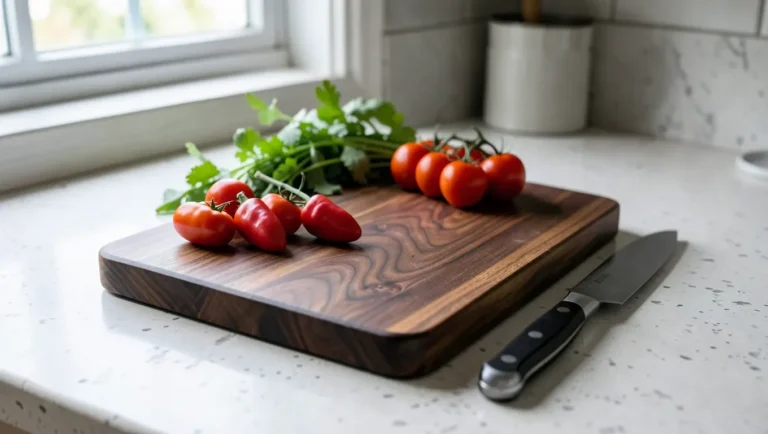
Yes. At 960 lbf it’s dense enough to resist knife dents, and once finished with a food-safe oil like tung oil it performs very similarly to black walnut for cutting boards and butcher blocks.
Which Is More Expensive, Peruvian Walnut or Black Walnut?
It varies by region, but Peruvian walnut is often the more affordable option in the U.S. because logs yield more usable heartwood with less pale sapwood waste than black walnut, even after accounting for import costs.
Is Peruvian Walnut Endangered?
Juglans neotropica, the species most commonly sold as Peruvian walnut, is classified as Endangered by the IUCN due to overharvesting, even though it isn’t CITES-listed. Black walnut, by contrast, is rated Least Concern.
Conclusion
Peruvian walnut and black walnut are close enough in hardness and density – both landing in roughly the same tier as oak on the Janka scale – that the choice usually comes down to color consistency, sapwood waste, price, and sustainability rather than durability. Black walnut is the marginally harder, more sustainably documented species with the classic domestic look; Peruvian walnut offers a more uniformly dark board, often for less money, from a species that’s worth sourcing responsibly. Either one, finished with a penetrating oil, will hold up well in furniture, flooring, or cutting boards for decades.
Sponsored / affiliate links. As an Amazon Associate I earn from qualifying purchases. I may earn additional commission from eligible campaigns.