Do Walnut Trees Bloom? Growth Cycle Explained
Walnut trees do bloom, but their flowers are not showy like many other trees. They produce separate male and female flowers on the same tree. This allows them to self-pollinate, though cross-pollination can improve nut yield.
Understanding Walnut Tree Blooms
Walnut trees are part of the Juglans genus. They are what we call monoecious. This means each tree has both male and female flowers.
You won’t see bright petals. Instead, the flowers are small and often go unnoticed. They play a vital role in the tree’s life cycle.
Without these blooms, there would be no walnuts!
The timing of these blooms is key. It usually happens in the spring. This is when the weather starts to warm up.
The tree is waking up from its winter rest. It’s getting ready to produce new leaves and, of course, nuts.
Why Walnut Blooms Look Different
If you’re used to seeing apple blossoms or cherry blossoms, walnut flowers will surprise you. They don’t have bright colors. They don’t have a strong scent.
This is a deliberate design for their pollination method. Many trees with showy flowers rely on insects to carry pollen. Bees and butterflies are drawn to bright colors and sweet smells.
Walnut trees, however, primarily rely on wind for pollination. Wind-pollinated flowers are typically small and inconspicuous. They focus their energy on producing lots of pollen.
This pollen is then carried by the wind to other walnut trees. Think of them as tiny, functional wind catchers and pollen factories. They do their job quietly, without fanfare.
The Two Types of Walnut Flowers
On a single walnut tree, you’ll find two distinct types of flowers. They serve different purposes. One type is the male catkin.
The other is the female flower cluster. Both appear on the same branches, often at different times. This difference in timing helps prevent self-pollination within the same flower cluster.
The male flowers are called catkins. These are the long, drooping, yellowish-green structures you might see hanging from branches in early spring. They look a bit like fuzzy caterpillars.
Each catkin is packed with pollen. When the wind blows, it shakes these catkins. This releases clouds of pollen into the air.
The female flowers are much smaller. They are usually found at the tips of new shoots. They look like tiny green buds with little red or pink stigmas sticking out.
These stigmas are sticky. They are designed to catch pollen that drifts on the wind. A female flower only needs one grain of pollen to be fertilized.
This starts the process of nut development.
When Do Walnut Trees Bloom?
The blooming period for walnut trees is typically in the spring. For most regions in the United States, this means April or May. The exact timing depends on your local climate and the specific variety of walnut tree.
Warmer climates might see blooms a bit earlier. Colder climates might see them a bit later. The tree needs a certain amount of warmth to trigger flowering.
It also needs to have completed its dormancy period.
The catkins usually mature and release pollen before the female flowers are receptive. This is called dichogamy. For walnuts, this is often protandry.
This means the male parts (anthers in the catkins) mature and shed pollen before the female parts (stigmas on the female flowers) are ready to receive it. This helps promote cross-pollination between different trees.
The Role of Pollination
Pollination is the crucial step for walnut trees to produce nuts. It’s how the tree reproduces. For walnut trees, pollination relies heavily on the wind.
This is called anemophily.
The male catkins release their pollen. This pollen is carried by the wind. It travels to other walnut trees.
If a pollen grain lands on the sticky stigma of a receptive female flower, pollination occurs. This fertilization is what leads to the development of a walnut.
While walnut trees can self-pollinate, they often produce better nut yields with cross-pollination. This means pollen from a different walnut tree fertilizes the female flowers. This is why planting two different varieties of walnut trees can be beneficial.
They can help pollinate each other, leading to a larger and more robust crop of nuts.
From Flower to Fruit: The Walnut’s Journey
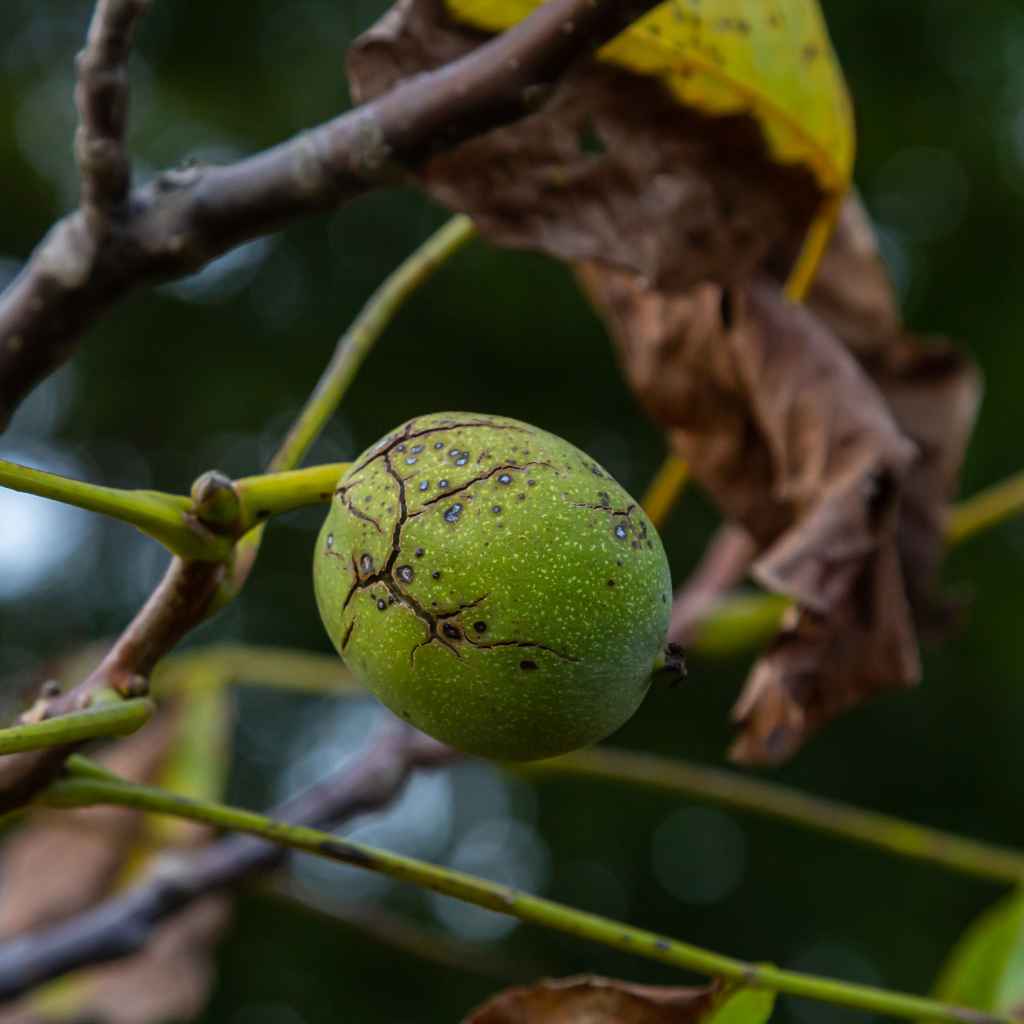
Once a female flower is successfully pollinated, the real magic begins. The fertilized flower starts to develop. It transforms into the green, fleshy husk that encloses the walnut we know.
This husk protects the developing nut inside.
Inside the husk, the shell and the kernel begin to form. The kernel is the edible part of the walnut. The entire process, from pollination to a mature nut ready for harvest, takes several months.
Walnuts are typically ready for harvest in the fall.
The husk is important. It swells and eventually splits open as the nut matures. This usually happens in September or October.
The splitting husk reveals the hard shell of the walnut. This is when the nuts are ready to be collected.
Personal Experience: A Spring Surprise
I remember one spring, I was tending to my small backyard garden. I had a young English walnut tree I’d planted a few years prior. It had always been a bit of a mystery to me.
It grew well, its leaves were lush, but I never saw what I considered “flowers.” I was watering some roses nearby, and a gentle breeze rustled the walnut tree’s branches.
Suddenly, I saw it. A fine, yellowish dust rained down from the branches. It settled on my hands and the leaves of the rose bushes.
I looked closer at the walnut tree. Hanging from some of the upper branches were these long, dangly things. They looked like fuzzy brown-yellow threads.
I realized then, with a little gasp of delight, that these were the male flowers, the catkins! It was like the tree was secretly shedding gold dust. It was a quiet, almost shy event, but it was happening.
I felt a new appreciation for this silent producer of delicious nuts. It was a small moment, but it made the whole process click for me.
Spotting Walnut Blooms: A Quick Guide
Look for Catkins: These are the long, drooping male flowers. They appear in early spring. They are usually yellowish-green and hang in clusters.
Find Female Flowers: These are tiny and found at the tips of new shoots. They often have small, reddish stigmas.
Timing is Key: Blooms happen in spring, typically April or May. Check your local weather patterns.
Wind is Your Friend: You’re more likely to notice pollen release during a breezy day.
Factors Affecting Walnut Bloom
Several things influence when and how well your walnut tree blooms. These factors are important for both flower development and nut production.
Weather: Spring frosts can be a problem. A late frost can damage the delicate new growth, including the flowers. This can prevent them from developing into nuts.
Consistent, mild spring temperatures are ideal.
Tree Age: Young trees take time to mature. A walnut tree usually needs to be several years old before it starts producing flowers and nuts reliably. Some varieties might start earlier than others, but patience is often needed.
Tree Health: A healthy tree is more likely to produce abundant blooms. Proper watering, good soil, and protection from pests and diseases are vital. A stressed tree might focus its energy on survival rather than reproduction.
Sunlight: Walnut trees need full sun. They thrive in locations that get at least six to eight hours of direct sunlight per day. Sunlight is essential for energy production, which supports flowering and fruiting.
Common Walnut Tree Varieties and Their Blooms
There are many types of walnut trees. Each has slightly different characteristics. The most common are English walnuts and Black walnuts.
Their blooming patterns are generally similar, but there can be subtle differences.
English Walnuts (Juglans regia): These are the most common walnuts found in grocery stores. They tend to be more cold-sensitive than black walnuts. Their blooming period is generally in the spring.
Varieties like ‘Chandler’ and ‘Howard’ are popular.
Black Walnuts (Juglans nigra): These are native to eastern North America. They are very hardy and produce a rich, flavorful nut. Black walnuts are known for being strong growers.
Their blooms also occur in the spring, often around the same time as English walnuts.
Other varieties include Japanese walnuts and hybrids. Understanding the specific needs of your tree variety can help you anticipate its blooming cycle. Always check with local horticultural resources for the best advice for your region.
Walnut Bloom vs. Other Trees
Contrast: Showy Flowers vs. Wind Pollinators
Showy Flowers (e.g., Cherry, Apple):
- Bright petals.
- Sweet scents.
- Attract insects (bees, butterflies).
- Pollination relies on insect activity.
- Often bloom for a visible period.
Walnut Flowers (Catkins & Female Buds):
- Small, inconspicuous.
- No bright colors or strong scents.
- Rely on wind for pollination.
- Male flowers (catkins) hang down.
- Female flowers are tiny buds at shoot tips.
- Bloom is functional, not ornamental.
What Happens If Blooms Are Damaged?
It’s disheartening when something affects your tree’s ability to produce nuts. Several things can go wrong with the blooming and pollination process.
Frost Damage: As mentioned, a late spring frost can kill the tender new growth and the flowers. This means no fertilization can occur. The result is a year with few or no walnuts.
Poor Pollination: If there aren’t enough pollinator trees nearby, or if wind conditions are unfavorable during pollination, fertilization may be poor. This can lead to fewer nuts, or nuts that don’t fill out properly.
Pest and Disease: Certain pests can damage flowers or young nuts. Diseases can weaken the tree, making it less able to support flowering and fruiting.
Nutrient Deficiency: A lack of essential nutrients can prevent the tree from producing healthy flowers or developing nuts. This is why good soil health is so important.
Myths vs. Reality: Walnut Blooms
Myth: Walnut trees don’t have flowers.
Reality: They do have flowers, but they are small and wind-pollinated, not showy like many fruit trees.
Myth: All walnut trees bloom at the exact same time.
Reality: Timing varies by variety, climate, and local weather conditions.
Myth: You only need one walnut tree to get nuts.
Reality: While some self-pollination can occur, cross-pollination from another nearby walnut tree often leads to better yields.
Real-World Context: Why Walnuts Bloom Like This
The way walnut trees bloom is a perfect example of natural adaptation. Their strategy focuses on efficiency and survival in their native environments.
Native Habitats: Walnut trees originated in diverse regions. Their blooming strategy evolved to suit these conditions. Wind pollination works well in forests where trees might be spaced apart.
It doesn’t rely on attracting insects, which might be scarce at certain times or in certain areas.
Energy Conservation: Producing bright, scented flowers takes a lot of energy. Walnut trees are large, long-lived trees. They need to conserve energy for growth and surviving harsh seasons.
Their simple, wind-focused flowers are an energy-saving design.
Seed Dispersal: While the blooms are for pollination, the resulting nuts are a food source. Animals like squirrels and birds eat the nuts and help disperse seeds. This ensures the next generation of walnut trees can grow.
US Climate: In much of the U.S., spring can be unpredictable. Early warm spells can trick trees into blooming, only for a late frost to cause damage. The wind pollination method means that even if some catkins are damaged, there’s still a chance for pollen to travel.
The female flowers’ timing is also crucial, opening when pollen is most likely to be available.
What This Means for You
Understanding the bloom cycle of walnut trees helps you appreciate them more. It also helps you care for them better.
When It’s Normal: Seeing small, inconspicuous flowers in spring is normal. Observing pollen falling on a windy day is also normal. If your tree is healthy and mature, this is a sign it’s doing what it should.
When to Worry: If a mature tree consistently fails to bloom or produce nuts, something might be wrong. Look for signs of stress, disease, or pests. Also, consider if your growing conditions are ideal (sunlight, soil, water).
Simple Checks: Before worrying, check the tree’s age. Ensure it’s getting enough sun. Look at the soil around the base.
Is it healthy? Are there any obvious signs of damage or disease?
Quick Scan: Walnut Bloom Facts
Bloom Type: Monoecious (male & female flowers on same tree)
Male Flowers: Catkins (long, drooping)
Female Flowers: Tiny buds at shoot tips
Pollination Method: Wind (Anemophily)
Timing: Spring (April-May in most US)
Key Factor for Nuts: Successful pollination and fertilization
Quick Tips for Walnut Tree Owners
If you have a walnut tree, or are thinking of planting one, here are a few tips related to its bloom and nut production.
Choose the Right Variety: Select a variety suited to your climate. This increases your chances of successful blooming and nut set.
Plant for Pollination: If possible, plant at least two different compatible walnut varieties. This ensures good cross-pollination and a better harvest. Space them appropriately so pollen can travel.
Protect from Frost: In areas prone to late frosts, consider ways to protect young trees during blooming. This might involve covering them or using frost cloths.
Maintain Tree Health: Provide good care. Water consistently, especially during dry spells. Ensure the soil is well-drained and nutrient-rich.
Prune only when necessary and at the right time of year.
Be Patient: Remember that trees take time to mature. A young tree might not produce nuts for several years. Enjoy its growth and shade in the meantime.
Observational Flow: The Walnut’s Yearly Cycle
Late Winter: Tree is dormant. Buds are formed, holding potential for flowers.
Early Spring (Bud Break): Catkins begin to elongate. Female flower buds swell at shoot tips.
Mid-Spring (Flowering/Pollination): Catkins release pollen. Wind carries it to receptive female flowers. Fertilization begins.
Late Spring/Early Summer: Young nuts start to form, enclosed in husks. Growth is focused on nut development.
Summer: Nuts continue to grow and mature within their husks. Tree foliage is full and green.
Late Summer/Early Fall: Husks begin to soften and split. Nuts mature inside, shells harden.
Fall (Harvest): Husks fully split. Nuts are collected. Tree prepares for dormancy.
Winter: Tree enters dormancy. Cycle pauses until next spring.
Frequently Asked Questions About Walnut Blooms
Do walnut trees bloom every year?
Ideally, yes, a healthy, mature walnut tree should bloom every year. However, factors like severe weather (late frosts, extreme heat), pest infestations, or poor tree health can cause a tree to skip blooming or have a reduced bloom in certain years.
Can I see the male and female flowers on a walnut tree at the same time?
You can see both male and female flowers on the tree during the spring blooming period. However, they often mature at slightly different times. The male catkins usually release pollen before the female flowers are fully receptive.
This timing difference, called dichogamy, helps encourage cross-pollination between different trees.
What is the purpose of the catkins on a walnut tree?
The catkins are the male flowers of the walnut tree. Their sole purpose is to produce and release pollen. This pollen is then carried by the wind to fertilize the female flowers on other walnut trees, which is essential for the development of walnuts.
Are walnut blooms edible?
No, the male catkins and female flowers of walnut trees are not typically considered edible in the way that fruit tree blossoms might be used in some culinary applications. They are functional parts of the tree’s reproductive process and lack the desirable flavor or texture for consumption.
How do I know if my walnut tree is being pollinated?
You can tell if pollination is occurring by observing the development of young nuts after the blooming period. If you see small, green husks beginning to form on the branches where the female flowers were, it indicates successful pollination and fertilization. Poor or absent nut development after flowering suggests pollination issues.
What should I do if my walnut tree blooms but doesn’t produce nuts?
If your walnut tree blooms but doesn’t produce nuts, the most common reasons are poor pollination or frost damage to the flowers. Ensure you have another compatible walnut tree nearby for cross-pollination. Protect young trees from late frosts if possible.
Also, check for any signs of pests or diseases that might be interfering.
Conclusion
So, yes, walnut trees do bloom! They do it in their own quiet, efficient way. Their flowers are not for show but for function.
They are a testament to nature’s clever design for wind pollination. Understanding their bloom cycle helps you better care for these impressive trees. Enjoy watching them prepare for another season of growth and nut production.
Sponsored / affiliate links. As an Amazon Associate I earn from qualifying purchases. I may earn additional commission from eligible campaigns.