What Size Pocket Screw for 3/4 Plywood? Use 1-1/4″
Use a 1-1/4″ coarse-thread pocket screw for 3/4-inch plywood — that’s Kreg’s own chart, not a guess, and it holds whether you’re using a Kreg jig or another brand’s system. The one exception: hardwood-veneer plywood needs fine thread instead, since coarse threads can tear dense face veneers. This guide covers the verified length chart, how many screws each joint actually needs, and the step-by-step setup so your first joint doesn’t split.
[Insert your Affiliate Disclosure reusable block here]
Kreg-Verified Screw Length Chart for Pocket-Hole Joints
Best Pocket Screw Pick for 3/4″ Plywood
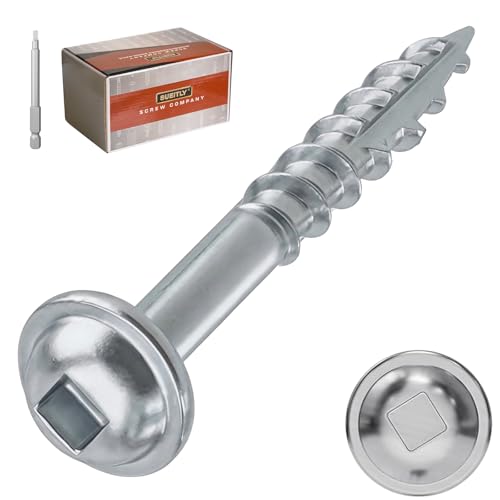
Kreg Zinc Pocket-Hole Screws, 1-1/4″ Coarse Thread (100 ct)
The exact length and thread confirmed by Kreg’s own chart for 3/4″ plywood — the safest first purchase if you’re not sure what you need yet.
- Best for: standard indoor plywood joints, first-time pocket-hole projects
- Why we picked it: matches the exact 3/4″ chart spec above — no guessing on length or thread type
- Main drawback: zinc coating isn’t rated for outdoor or high-moisture use
Compare more pocket screw options
 Option 1 Kreg 1-1/4″ Screws, 250 Ct
|
 Option 2 Kreg Blue-Kote 1-1/4″ (Weather-Resistant)
|
 Option 3 LIONMAX #8 x 1-1/4″, 600 Ct (Non-Kreg)
|
As an Amazon Associate we earn from qualifying purchases.
Screw length is set by material thickness, not by habit or what’s left in the jar. Kreg’s official reference chart maps each actual thickness to one correct length — go shorter and the joint has almost no grip, go longer and the tip can poke through the receiving board’s face.
| Material Thickness (Actual) | Pocket Screw Length | Jig Setting |
|---|---|---|
| 1/2″ (12mm) | 3/4″ or 1″ | 1/2″ mark |
| 5/8″ (16mm) | 1″ | 5/8″ mark |
| 3/4″ (19mm) — plywood | 1-1/4″ | 3/4″ mark |
| 1″ (25mm) | 1-1/2″ | 1″ mark |
| 1-1/2″ (38mm) | 2-1/2″ (HD screw) | 1-1/2″ mark |
This chart applies whether you’re driving Kreg’s own SML-C125 screws or a compatible brand — length is a physical relationship to material thickness, not a brand-specific spec. If you’re working with a different thickness, see our full wood screw size chart for the same logic applied to standard wood screws, or browse our full plywood category for sizing, pricing, and joinery guides.
Sticking specifically with the Kreg brand and want the full jig setup, clutch settings, and a dedicated Kreg screw chart for this exact thickness? Our companion guide, Kreg screws for 3/4″ plywood, walks through the Kreg-specific process step by step.
Why “3/4-Inch” Plywood Isn’t Actually 3/4 Inch
Here’s the detail most screw-size guides skip: plywood sold as “3/4-inch” is manufactured to a nominal size, and sanding during production brings the real thickness down to roughly 23/32″ (0.703″) — about 1/32″ thinner than the name suggests. For pocket screws that 1/32″ rarely changes which length you pick (1-1/4″ still applies), but it explains why a screw that “should” have plenty of clearance sometimes sits closer to the surface than expected on premium hardwood plywood, which is often sanded even truer to size.
If you want the full breakdown of nominal-versus-actual sheet sizing, our 23/32 vs 3/4 plywood comparison covers it in more depth — worth a look before you buy if the project has tight tolerances.
Coarse Thread or Fine Thread: Which One for Plywood?
Coarse-thread pocket screws are the correct choice for 3/4″ plywood. Kreg’s own guidance groups plywood with softwoods (pine, fir, MDF, particle board) specifically because these materials are less dense — the deep, aggressive coarse threads bite into the layers and hold. Fine-thread screws are built for hardwoods like oak, maple, and walnut, where dense grain would strip out under a coarse thread’s bigger bite.
“Woods like pine and spruce…are soft and not very dense. That means they need a screw with deep, aggressive threads. Hardwoods like oak, maple, and cherry are too dense and hard for coarse-thread screws — the aggressive threads tend to tear the wood fibers.”
— Kreg Tool, official screw selection guide
The one exception inside “plywood”: hardwood-veneer plywood (oak-faced or maple-faced sheets used for cabinet doors) behaves more like the hardwood it’s veneered with. On those sheets, switch to fine thread to avoid tearing the thin face veneer near the pocket hole.
Screw diameter matters too, though it’s rarely discussed. Standard pocket-hole screws use a shank close to a #8 wood screw — that’s the diameter you’ll see on generic (non-Kreg) coarse-thread pocket screws sold by the box, and it’s compatible with any standard 3/8″ pocket-hole jig, not just Kreg’s.
How Many Pocket Screws Does a 3/4″ Plywood Joint Need?
Most competing guides stop at “use 1-1/4-inch screws” and never say how many to actually drive. For a standard edge or butt joint in 3/4″ plywood, space pocket screws 6 to 8 inches apart along the joint line, with the first and last screw no more than 1 inch from each end to prevent the corners from lifting. A typical 12″-wide cabinet side needs 2 screws; a 24″-wide shelf needs 3.
For load-bearing joints — a shelf that will carry books, a drawer bottom, a cabinet carcass corner — add one extra screw per joint beyond this spacing, and keep pocket holes at least 3/4″ back from any edge that will be cut, routed, or drilled later so you don’t hit a screw head with a bit.
How to Drill and Drive Pocket Screws in 3/4″ Plywood
- Measure the actual thickness: Use calipers on the sheet’s edge — don’t assume it’s a true 3/4″; it’s usually 23/32″.
- Set the jig to the 3/4″ mark: Even if the sheet measures 23/32″, use the 3/4″ setting on a Kreg-style jig; the built-in tolerance covers the difference.
- Clamp the workpiece: Secure the plywood in the jig so it can’t shift while drilling — movement is the top cause of blown-out pocket holes.
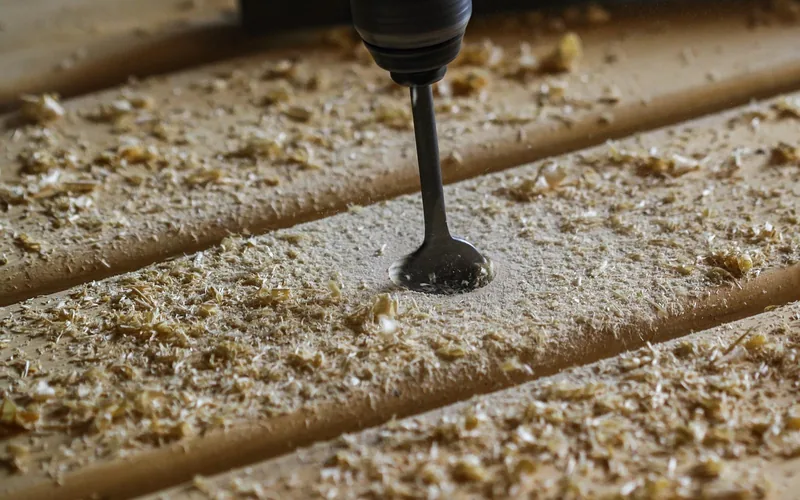
- Drill the pocket holes: Use the step-drill bit sized for your jig, drilling until the stop collar contacts the guide block.
- Set clutch torque low: Start on a low clutch setting (2-3 on most drivers) to avoid stripping the screw head or over-driving into the second board.
- Drive the 1-1/4″ screw: Hold pieces flush, drive straight through the pocket hole until the screw head seats — stop as soon as it’s snug, not when the drill stalls.
For more on setting pilot-hole depth and drill-bit sizing outside of dedicated pocket-hole jigs, see our guide on pre-drilling holes for screws. If you’re joining full sheets edge-to-edge rather than at a corner, our broader guide to joining plywood covers biscuit, dowel, and glue alternatives worth comparing against pocket screws.
Common Mistakes to Avoid
- Using 1-1/2″ screws “to be safe”: on true 3/4″ plywood this is often too long and can poke through the receiving board’s face on thinner sheets.
- Skipping the clamp: plywood shifts more than solid wood under drill pressure because the face veneer has less grip on the jig.
- Using fine-thread screws on standard plywood: they won’t grip the cross-laminated layers as well as coarse thread and can strip out under load.
- Over-tightening on high torque: strips the screw head or splits the receiving board’s face near the joint.
Frequently Asked Questions
What size pocket screw is used for 3/4-inch plywood?
A 1-1/4-inch coarse-thread pocket screw, per Kreg’s official chart. This applies to standard plywood, particle board, and MDF at true 3/4″ thickness; switch to fine thread only for hardwood-veneer plywood.
Can I use a 1-inch screw on 3/4-inch plywood instead?
No. A 1-inch screw is sized for 5/8″ material and won’t fully engage 3/4″ stock, leaving a weaker joint that can pull apart under load. Use 1-1/4″ for true 3/4″ plywood.
Do I need Kreg-brand screws, or will any coarse-thread pocket screw work?
Any coarse-thread pocket-hole screw sized 1-1/4″ with a comparable #8 shank will work in a standard 3/8″ pocket-hole jig. Kreg’s own screws are chart-matched to Kreg jigs, but the length and thread logic is universal, not brand-locked.
How many pocket screws should I use per joint?
Space screws 6 to 8 inches apart along the joint, with the first and last screw within 1 inch of each end. A 12″-wide joint typically needs 2 screws; add one more per joint for load-bearing shelves or drawer bottoms.
Why does my screw poke through the other side of the plywood?
The screw is too long for the receiving board’s thickness, or the jig’s stop collar isn’t set correctly for the material. Re-check the actual (not nominal) thickness and reset the jig to match before re-drilling.
Should I use fine-thread screws on oak-veneer plywood?
Yes. Hardwood-veneer plywood (oak, maple, cherry face) behaves like the hardwood it’s veneered with — coarse threads can tear the thin face veneer near the pocket hole, so switch to fine thread on these sheets.
Conclusion
For 3/4-inch plywood, a 1-1/4-inch coarse-thread pocket screw is the Kreg-verified standard — confirmed against the manufacturer’s own chart, not a rounded-off rule of thumb. Get the thread type right for veneered sheets, space screws 6-8 inches apart, and set your jig to the actual measured thickness rather than the nominal label, and the joint will hold as strong as the chart promises.
Sponsored / affiliate links. As an Amazon Associate I earn from qualifying purchases. I may earn additional commission from eligible campaigns.