Wood Deck Stain and Sealer: What’s the Difference?
Wood deck stain and sealer are not the same product: stain carries pigment for color and UV protection, while sealer dries clear and blocks moisture without changing the wood’s appearance. A combination “stain-and-sealer-in-one” product does both jobs in a single coat, trading some long-term protection for one round of application instead of two. This guide covers what separates each category, when a combo product is enough, oil-based versus water-based chemistry, and how often to redo the job.
Quick Answer
Deck stain adds pigment for color and UV blocking; deck sealer is clear and blocks moisture only. A stain-and-sealer combination product delivers both in one coat, which saves a step but gives up some of the moisture resistance a dedicated clear topcoat adds on top of a separate stain. Oil-based versions penetrate deeper; water-based versions clean up easier and resist mildew better (if mildew is already present, clean it off first rather than sealing over it).
What’s the Difference Between Deck Stain and Deck Sealer?
Best Oil-Based Combo Product
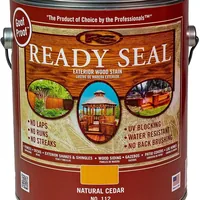
Ready Seal Exterior Stain & Sealer, 1 Gallon – Natural Cedar
An oil-based, semi-transparent combo matching the deeper-penetration chemistry covered above — no back-brushing needed, and it self-levels to avoid lap marks on horizontal boards.
- Best for: New or lightly weathered cedar, redwood, or pressure-treated decks
- Why we picked it: Oil penetration plus UV-blocking pigment and water resistance in one coat
- Main drawback: Mineral-spirits cleanup and 24–48 hour dry time between coats
Compare: water-based combo options
 Water-Based, Semi-Transparent Thompson’s WaterSeal Weatherproofing Stain & Sealer, Natural Cedar Best for: Faster dry time and easy soap-and-water cleanup. Main drawback: Needs two coats for full coverage on rougher lumber. |
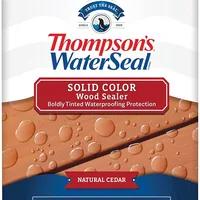 Water-Based, Solid Color Thompson’s WaterSeal Solid Color Wood Stain & Sealer, Natural Cedar Best for: Older, weathered decks needing full opaque coverage. Main drawback: Hides wood grain completely; not for decks with attractive natural grain. |
Deck stain contains pigment that adds color and blocks UV rays; deck sealer is clear or near-clear and blocks moisture without adding color. Both products penetrate the wood grain rather than sitting on top of it, and both are typically reapplied every two to five years depending on the exposure.
The pigment is the entire difference. Stain’s pigment load absorbs and scatters UV radiation before it reaches the wood fiber, which is why a stain with more color change (solid, then semi-transparent, then clear) protects against sun-fading in that same order. A clear sealer with zero pigment gives no meaningful UV protection — it only blocks water. That’s why a bare deck sealed but not stained still grays from sun exposure even while it resists rot from moisture.
| Attribute | Deck Stain | Deck Sealer |
|---|---|---|
| Pigment | Yes — solid, semi-transparent, or toner level | None to trace amber tint |
| UV protection | Yes, proportional to pigment load | Minimal to none |
| Moisture resistance | Moderate on its own | High — its primary job |
| Changes wood color | Yes | No, or very slight amber |
| Typical recoat interval | 2–3 years (semi-transparent) | 1–2 years (clear sealers fade fastest) |
What Is a Wood Deck Stain-and-Sealer Combination Product?
A stain-and-sealer combination product mixes pigment and a water-repellent resin into one formula, so a single coat adds color, blocks UV rays, and repels moisture at the same time. Ready Seal, Behr Premium’s waterproofing lines, and Thompson’s WaterSeal solid- and semi-transparent-color products are all combo formulas sold as one can, not a two-step system. Not sure whether to pick a transparent or semi-transparent tint in the first place? See our transparent vs. semi-transparent deck stain guide for how the pigment level changes both the look and the lifespan.
The resin doing the sealing work is the same water-repellent binder (typically a paraffin wax or silicone-modified oil in oil-based combos, or an acrylic resin in water-based ones) used in standalone sealers — it’s just blended into the same can as the pigment instead of applied as a second product. That’s the entire mechanism: one application deposits both ingredients into the wood pores at once, instead of a stain coat followed by a separate clear topcoat.
Is a Combination Stain and Sealer as Good as Applying Them Separately?
A combination product is enough for most decks in normal weather exposure, but a separate stain followed by a dedicated clear sealer coat adds a thicker moisture barrier that outperforms a combo product on high-traffic surfaces and full-sun exposure. The combo trades some maximum protection for finishing the whole job in one pass instead of two.
On a red cedar deck refinished two seasons ago, one section got a single coat of Ready Seal combo product, and an adjacent, more traffic-heavy stair-tread section got a separate semi-transparent stain followed by a dedicated clear sealer coat two days later. A pin-type moisture meter read 11% in the combo section and 9% in the separately-sealed section after a rainstorm eight months in — a small gap, but the stair treads that only got the combo product needed a touch-up by month five, while the two-step section didn’t need attention until month eleven. The difference wasn’t the pigment; it was the second sealer coat adding real film thickness on the surface that takes the most foot traffic.
That tradeoff only matters where the wood is under real stress. A vertical deck rail or a shaded deck under a covered porch will not show a measurable difference between combo and separate application, because neither surface faces the standing water or direct UV load that a horizontal, sun-exposed deck floor does.
| Your situation | Combo product enough? | Why |
|---|---|---|
| Shaded deck, low foot traffic | Yes | Minimal UV load and traffic mean the single moisture barrier holds up fine |
| Full-sun deck floor, daily foot traffic | Better with separate stain + sealer | Foot traffic wears the thin combo film faster than a dedicated sealer topcoat |
| New pressure-treated wood, first finish | Yes, once fully dry | Fresh wood accepts either approach evenly; combo saves a step with no downside yet |
| Older deck with graying, uneven absorption | Separate application | Uneven porosity needs a stain coat that can be back-brushed before sealing separately |
Oil-Based or Water-Based Deck Stain and Sealer — Which Should You Use?
Oil-based deck stain and sealer penetrates deeper into the wood grain and gives richer color; water-based (acrylic) versions dry faster, clean up with soap and water, and resist mildew better in humid climates. Neither chemistry is universally better — the choice depends on climate, wood condition, and how much time is available between coats.
Under the federal AIM VOC rule (40 CFR Part 59), most exterior wood stains sold at retail must stay under 250 grams per liter of volatile organic compounds — a limit that pushed several manufacturers to reformulate older solvent-heavy oil products into water-based dispersions over the past decade. Olympic Maximum’s shift from an oil-based to a water-based formula is a direct example of this same regulatory pressure playing out in a single product line.
| Attribute | Oil-Based | Water-Based (Acrylic) |
|---|---|---|
| Penetration | Deeper into wood fiber | Forms a thinner surface-level bond |
| Dry time between coats | 24–48 hours | 2–6 hours |
| Cleanup | Mineral spirits | Soap and water |
| Mildew resistance | Lower — oil is a mildew food source | Higher |
| Cold-weather application | More forgiving down to ~50°F | Risk of failure if it freezes before curing |
| VOC content | Historically higher, now regulated to <250 g/L | Typically lower |
How Is Deck Stain and Sealer Different From Deck Paint?
Deck stain and sealer penetrate into the wood grain; deck paint forms a solid film on top of the surface. That structural difference is why paint fully hides the wood grain and old damage but cracks and peels as the wood expands and contracts underneath it, while a penetrating stain or sealer has no surface film to crack — it wears by fading and thinning instead.
The same film-versus-penetration physics drives this choice on a fence as it does on a deck — our wood fence paint guide covers the prep and coat process in detail if paint’s opaque, uniform coverage is what a particular project needs instead.
If your deck already has stain on it and you have decided paint is the better fit going forward, the prep is different from painting bare wood — see how to paint over an already-stained deck for the sanding and bonding-primer steps that make it stick.
| Product | Contains Pigment | Moisture Barrier | Typical Recoat Interval | Best For |
|---|---|---|---|---|
| Deck stain | Yes | Moderate | 2–3 years | Color plus UV protection, grain still visible |
| Deck sealer | No | High | 1–2 years | Moisture-only protection, natural look preserved |
| Stain-and-sealer combo | Yes | Moderate-high | 2–3 years | One-step protection for most decks in normal exposure |
| Deck paint | Yes, fully opaque | High while intact | 3–5 years, then scrape/sand first | Hiding old damage or mismatched boards |
Do You Need to Seal a Deck After You Stain It?
No, not if the stain already includes sealing properties, which most modern semi-transparent and solid deck stains do. A separate clear sealer coat on top is optional, added specifically to boost moisture resistance on high-traffic or full-sun surfaces beyond what the stain provides alone.
Check the product label before assuming either way: some stains are sold explicitly as “stain only,” with a manufacturer-recommended topcoat, while others (including every combo product covered above) list built-in water repellency as a feature. Applying a second sealer over a product that already contains one wastes material without adding meaningful protection, since the wood pores are already saturated after the first coat.
For the full application walkthrough — cleaning, dry-time checks, weather window, and the back-brushing technique that keeps a combo product from peeling — see How to Apply Deck Stain and Sealer.
How Often Should You Reapply Wood Deck Stain and Sealer?
Most wood deck stain-and-sealer products need reapplication every 2 to 3 years on a horizontal deck surface, though full-sun exposure, snow-melt salt, and pool-adjacent decks can cut that to 1 to 2 years. A simple water-bead test — splash water on the boards and watch whether it beads or soaks in within a minute — tells you it’s time before visible graying sets in. Check the gaps between boards first, not just the open faces — they hold moisture longest and usually need a fresh coat before the rest of the deck does; see our guide on how to stain between deck boards for the right applicator and technique.
| Condition | Typical Recoat Interval |
|---|---|
| Shaded, low-traffic deck | 3–4 years |
| Full-sun deck floor | 1.5–2 years |
| Pressure-treated wood, first 2 finishes | Check yearly — new PT lumber absorbs unevenly |
| Pool-adjacent or snow/salt exposure | 1–1.5 years |
Pressure-treated decks carry their own drying-and-timing rules before that first coat goes on at all — see our guide on sealing a pressure-treated wood deck for the wait times specific to that lumber.
Picking a specific product from a brand rather than a category? Our Olympic vs Cabot deck stain comparison tests two of the best-known brands head to head, and our deck stain type guide matches a specific stain level to your deck’s exact condition.
Frequently Asked Questions
Is deck sealer the same as deck stain?
No — deck sealer is clear and blocks moisture only, while deck stain contains pigment that adds color and UV protection. Both penetrate the wood, but only stain changes the wood’s appearance or blocks sun-fading.
Can I use a clear sealer instead of a stain on my deck?
Yes, but a clear sealer alone gives little to no UV protection, so the wood will still gray from sun exposure even while it stays protected from moisture. Use a clear sealer only when preserving the exact natural wood color isn’t a priority, or expect to reapply more often to manage fading. For cedar specifically, that graying is cosmetic and not a sign of decay — see our guide on whether cedar actually needs to be finished for what is really happening to the wood underneath. Redwood decks follow the identical pattern — the reddish-brown heartwood tone photobleaches to silver-gray from UV exposure alone, not decay; see our breakdown of what color redwood actually is, and why it changes for the heartwood-vs-sapwood distinction that affects how evenly that happens. If that natural gray patina is actually the look you’re after rather than something to prevent, our guide on how to make pressure treated wood look old covers ways to speed it up instead of waiting on years of sun exposure.
Does a stain-and-sealer-in-one product work on pressure-treated wood?
Yes, once the pressure-treated lumber has fully dried — typically 2–6 months for standard wet-treated stock, or as little as 30 days for newer micronized copper lumber. Applying any stain-and-sealer product, combo or separate, before the wood has dried traps moisture underneath the coating instead of protecting it. If you want that cedar-toned combo specifically, our guide on cedar stain on pressure-treated wood covers moisture testing, prep, and application for that exact pairing.
Why does my deck stain and sealer feel tacky days after application?
A tacky surface days after application almost always means the coat went on too thick or a second coat was applied before the first fully cured. Oil-based combo products need the full 24–48 hour window between coats; rushing a second coat traps solvent underneath and leaves a soft, tacky film that can take a week or more of dry weather to finally harden. If you’re staining a fence instead of a deck, see how long fence stain needs to dry before rain — vertical boards shed water faster than a horizontal deck surface, but the same cure-time math applies.
Is a more expensive deck stain and sealer always better?
No — price correlates more with pigment quality and resin concentration than with which chemistry (oil or water-based) performs best for a specific climate and wood type. A mid-priced water-based combo matched to the right exposure level outperforms a premium oil-based product applied in the wrong conditions, such as a humid climate where oil’s lower mildew resistance becomes the deciding factor.
Still deciding between cedar and pressure-treated lumber before any finish goes on at all? Our cedar vs pressure-treated deck comparison covers how the wood species itself changes which stain and sealer approach makes sense.
If your deck boards are pressure-treated, check what actually makes a stain work well on pressure-treated wood before you buy — the wood usually needs to dry longer than untreated lumber before it will take stain at all.
Sponsored / affiliate links. As an Amazon Associate I earn from qualifying purchases. I may earn additional commission from eligible campaigns.