5 Best Cedar Closet Liner Kits (2026): research shows
The best cedar closet liner kit is the one that fits your closet size and wall condition: use solid Eastern red cedar panels for full coverage, and thinner kits or planks for small closets or tight budgets. Pick poorly, and you can end up with weak odor control, poor moth resistance, warped boards, or a liner that fails in humid conditions. This guide compares cedar closet liner kits by coverage, installation method, cedar species, and fit so you can choose the right one for your space.
Best cedar closet liner kit: what to buy
Top pick: Cedar Elements Aromatic Red Cedar Planking Closet Liner — best all-around value for a full-wall cedar look because it gives you larger planks, tongue-and-groove edges, and enough coverage to matter in a real closet, not just a drawer.
Quick picks
- Best for small reach-in closets: Household Essentials Cedar Drawer and Closet Shelf Liner
- Best for larger walk-in closets: Cedar Elements Aromatic Red Cedar Planking Closet Liner
- Best for humid or basement closets: Homode Cedar Closet Liner Planks
- Best for the easiest DIY install: Cedar Essence Cedar Drawer Liners
- Best for shelves and drawers only: Gersoniel Scented Drawer Liners
Quick comparison
| Product | Badge | Best for | Price | ||
|---|---|---|---|---|---|
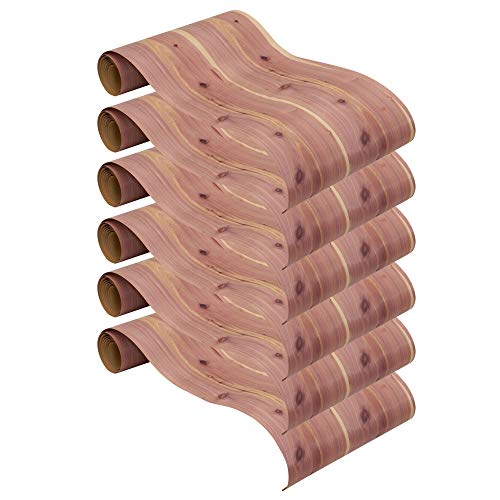 |
Household Essentials Cedar Drawer and Closet Shelf Liner |Household Essentials | Our pick | 6-pack · 100% real cedar veneer · 36 ft total | $32.99
Price as of 13 Oct 2026
|
View |
 |
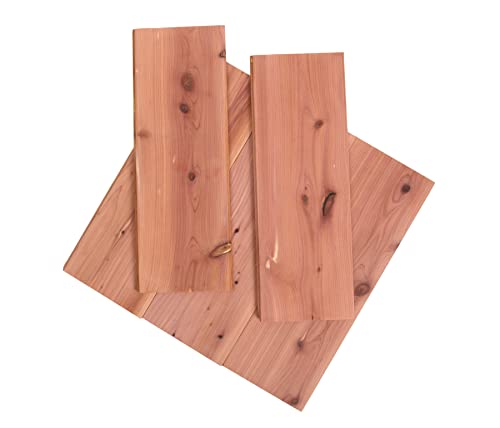
Homode Cedar Closet Liner Planks, Set of 8 Drawer Liners,Homode | Also great | Set of 8 · tongue and groove · aromatic red cedar | $26.16
Price as of 13 Oct 2026
|
View |
 |
Cedar Essence Cedar Drawer Liners Made in USACedar Essence | Budget pick | Made in USA · set of 5 · tongue and groove | $16.00
Price as of 13 Oct 2026
|
View |
 |
Cedar Elements Aromatic Red Cedar Planking Closet LinerCedar Elements | Upgrade pick | 15 sq ft · tongue and groove · US-grown red cedar | $54.99
Price as of 13 Oct 2026
|
View |
 |
Gersoniel 10 Sheets Scented Drawer Liners, Cedar, Red CedarGersoniel | Pair with it | 10 sheets · scented paper · red cedar aroma | $13.49
Price as of 13 Oct 2026
|
View |
The specs that matter most are coverage, board size, and installation method. A kit that looks inexpensive can turn costly if it only covers drawers or needs a lot of seam matching in a full closet.
Check thickness and finish too. Thicker planks usually handle a closet wall better, while prefinished or smooth-sanded faces can cut prep time and help the liner look cleaner on visible walls.
How we chose
We compared coverage efficiency, waste allowance, and the kind of closet each kit fits best. We also weighed installation difficulty, fastener needs, species choice, and whether a kit is realistic on painted drywall, uneven walls, or in a damp room.
For this topic, a good buy is not the cheapest roll. It is the kit that fits your closet geometry, holds up on your wall surface, and leaves enough material for cuts, corners, and mistakes.
Cedar Elements Aromatic Red Cedar Planking Closet Liner: best for larger closets
This kit suits a reach-in or walk-in closet where you want full wall coverage and a more finished look. The 1/4-inch by 3-3/4-inch by 48-inch tongue-and-groove planks give you 15 square feet per package, which makes planning easier for visible walls.
The main strength is that it looks and installs more like trim-grade material than thin shelf liner. The drawback is coverage: one pack is not enough for most closets, so you need to calculate square footage and buy extra for waste, corners, and door deductions.
Homode Cedar Closet Liner Planks: best for easy scent refresh
This kit is a good fit if you want aromatic U.S. eastern red cedar with an included sanding option for future scent refresh. The set of 8 tongue-and-groove panels is sized for smaller closet projects, and the interlocking edges make layout cleaner than loose strips.
The drawback is that the panel size is compact, so it may take more seams in a large closet. It works best when you want an easier DIY wall lining and accept that you may need multiple sets for anything beyond a compact reach-in.
Cedar Essence Cedar Drawer Liners: best for small closets and shelves
This is the simplest cedar option for drawers, shelf tops, or a very small closet with limited wall area. The made-in-USA eastern red cedar and tongue-and-groove ends make it easy to assemble into a neat run without much cutting.
The drawback is obvious: it is drawer-liner scale, not a full wall-cladding solution. If you want to line a whole closet, you will likely need several sets and a careful layout to avoid too many joints.
Household Essentials Cedar Drawer and Closet Shelf Liner: best for the lowest-skill install
This kit is the easiest choice when you want cedar on shelves, drawer bottoms, or a short closet run. The rolls are easy to trim with scissors or a knife, and the 36 feet total coverage helps when you are lining multiple shelves rather than entire walls.
The drawback is that it is veneer liner, not thick planking, so it is better for shelf faces and light-duty lining than for a full closet-wall makeover. It also relies more on a smooth substrate and careful trimming to look clean.
Gersoniel Scented Drawer Liners: best for shelves and temporary coverage
This is the budget choice for shelves, drawers, or quick odor masking in a closet where you do not need structural wall panels. The 10 sheets are light, easy to place, and useful when you want a simple aromatic liner with almost no installation time.
The drawback is that paper liners are not closet wall kits in the usual sense. They are better for drawer interiors and shelf surfaces than for a full lining job, and they will not give you the same durability as cedar boards or planks.
Which one should you buy
Choose Cedar Elements if you want the most practical all-around closet-wall kit and can handle measuring, cutting, and fastening full planks. Choose Homode if scent refresh matters and you want a smaller tongue-and-groove system. Choose Household Essentials or Gersoniel only when you are lining shelves, drawers, or a very small closet area.
For a budget reach-in closet, Cedar Essence is the more sensible wood option because it uses real eastern red cedar and simple joinery. For a walk-in closet, start with the wall area, not the product price. A cheap kit that covers only a fraction of the space can cost more once you add the missing panels.
Say your closet is about 6 feet wide, 2 feet deep, and 8 feet tall. If you line three walls and skip the ceiling, you are looking at roughly 130 square feet of wall area before deductions. That is a very different purchase than a shallow linen closet where one or two small sets may be enough.
What is the best cedar closet liner kit for my closet size?
The best cedar closet liner kit for your closet size is the one that covers the needed wall area with reasonable waste left over. Small reach-in closets usually do fine with planks or board kits, while walk-in closets often need multiple packages, wider boards, or a wall-and-ceiling plan to avoid patchwork seams.
Start by measuring wall height, wall width, and the number of surfaces you want to cover. Then subtract doors, built-ins, and open shelving zones, because those areas do not need full liner coverage and can change the material count enough to affect the kit choice.
How to match format to closet size
- Panels: best when you want faster wall coverage with fewer seams.
- Planks: best when you want a more finished look and easier fit around trim.
- Strips or drawer liners: best for shelves, drawers, and narrow spaces.
Board width changes layout efficiency. Wider planks cover more area per piece, while narrow strips can waste less material around corners, outlets, and shelving. Board length matters too, because longer boards usually reduce the number of end joints in a tall closet.
how to install cedar closet lining
Install cedar closet lining by preparing the wall, checking layout lines, fastening the boards, and trimming around obstructions. The easiest jobs use clean drywall and straight studs; the hard jobs involve painted surfaces, uneven framing, or damp walls that need repair before any adhesive goes on.
Basic install sequence
- Measure the closet and mark stud locations.
- Check wall flatness and repair loose paint, nail pops, or moisture damage.
- Dry-fit the first row to confirm height and cut lines.
- Apply adhesive only where the product allows it.
- Fasten with brad nails or finish nails into studs when possible.
- Continue row by row, staggering joints if the board pattern requires it.
- Trim around outlets, shelves, corners, and door casings.
Do not skip stud checks on heavy planks. Adhesive alone can be risky on painted drywall, especially if the paint film is slick or the wall has slight bowing. Fasteners hold alignment while the adhesive cures and help the liner stay flat over time.
How do you install cedar closet liner kits?
Most cedar closet liner kits install with a mix of adhesive and nails, but the exact method depends on the board thickness and the manufacturer’s instructions. Thin veneer rolls need a smooth substrate and careful cutting, while tongue-and-groove planks are easier to align and usually need both adhesive support and mechanical fastening.
Drywall, paint, and surface prep
On drywall, remove dust and check for loose paint, because adhesive bonds poorly to chalky or peeling surfaces. On painted walls, lightly scuffing the finish may help adhesion if the kit permits it, but any moisture problem must be fixed first. Cedar will not correct a damp wall.
Uneven walls are a separate issue. If the wall bows or the framing is out of plane, rigid planks can gap at the edges or telegraph the wall shape. In that case, thinner strips or added furring may be a better route than forcing a flat board to bend.
How do I install cedar closet liner strips over drywall?
To install cedar closet liner strips over drywall, start with a clean, dry wall and a level reference line. Then dry-fit the strips, locate studs, and use the adhesive and nail pattern allowed by the kit. Thin strips can follow the wall more easily, but they still need a stable surface.
On painted drywall, the failure point is often the paint, not the cedar. If the paint is glossy, dusty, or already separating from the drywall paper, the liner can release with it. That is why surface prep matters as much as the cedar species you choose.
Common fastening choices
- Construction adhesive: useful for broad support, but only on compatible, clean surfaces.
- Brad nails: good for lighter boards and quick alignment.
- Finish nails: better for thicker planks or trim-grade applications.
Adhesive plus nails is the most common combination for wall lining. Adhesive provides contact area; nails keep the piece from sliding while the bond sets. If studs do not align with a board edge, you may need to adjust the layout rather than rely on adhesive alone at every seam.
How much coverage does a cedar closet liner kit provide?
Coverage depends on whether the kit is sold as planks, panels, rolls, or drawer sheets. Some kits list square feet directly, while others require you to convert board size into coverage. For closet planning, square footage is the first number to check, then linear feet if the boards run vertically or horizontally.
Closet-sizing and kit-selection worksheet
| Closet type | Common size example | Approx. wall area to line | Board-foot guide | Waste allowance | Fastener guide |
|---|---|---|---|---|---|
| Small reach-in | 3 ft x 2 ft x 8 ft | About 64 sq ft for 3 walls | About 64 board feet if using 1-inch nominal coverage equivalent | Add 10% to 15% | About 1 brad nail every 8 to 12 inches on supported edges |
| Standard reach-in | 6 ft x 2 ft x 8 ft | About 128 sq ft for 3 walls | About 128 board feet at 1-inch nominal coverage equivalent | Add 10% to 15% | Plan for more than one tube of adhesive and stud fastening at regular intervals |
| Small walk-in | 6 ft x 6 ft x 8 ft | About 192 sq ft for 4 walls, before deductions | About 192 board feet at 1-inch nominal coverage equivalent | Add 15% if walls are uneven or cut-heavy | Fasten into studs where possible; adhesive alone is not enough for heavy boards |
| Walk-in with ceiling | 8 ft x 8 ft x 8 ft | About 256 sq ft for walls only; more with ceiling | About 256 board feet at 1-inch nominal coverage equivalent | Add 15% to 20% | Expect more cuts, more seams, and more fastening points |
Use the table as a planning tool, not a substitute for exact measurements. Door openings, built-in shelving, and mirrored sections reduce the area you need to cover. Ceiling coverage adds more material and more labor, so line the ceiling only if odor control or appearance justifies the extra work.
Do cedar closet liner kits need adhesive, nails, or both?
Most cedar closet liner kits work best with both adhesive and nails, provided the substrate supports that method. Adhesive gives broad contact, while brad or finish nails keep boards seated during curing and help hold the pieces against any slight wall movement.
That said, the wall surface matters. Painted drywall with a smooth finish may not offer the same grip as bare drywall or properly prepared wood backing. If the kit is thin and light, nails may be enough in some layouts; if the boards are thick, use both unless the manufacturer says otherwise.
Install failure cases to watch
- Painted drywall: adhesive can fail if the paint film is weak or glossy.
- Humid closets: moisture can weaken bonds and raise mold risk.
- Uneven walls: boards can bridge, gap, or bow if the surface is out of plane.
- Stud misalignment: sparse fastening leaves heavy planks under-supported.
Can I install cedar lining in a closet myself?
You can install cedar lining yourself if the project is a small reach-in closet, the walls are flat, and the kit uses forgiving board sizes. A larger walk-in closet, ceiling coverage, or a damp basement room raises the difficulty because layout accuracy, fastening, and moisture control matter more.
For a first-time DIY job, start with a shelf, drawer, or one wall before committing to every surface. A common first-timer mistake is buying too little material, then trying to patch the remaining area with short scraps that leave visible gaps and awkward seams.
DIY skill levels by kit type
- Easy: drawer liners, shelf liners, thin strips.
- Moderate: short planks on a straight drywall wall.
- Advanced: full-wall planking, ceiling lining, irregular corners, or humid basements.
Suppose your closet has built-in shelving on one wall and a door opening on another. The install is still manageable, but you need careful cuts around the shelves and more waste allowance for trim work. That is where tongue-and-groove planks usually beat loose panels.
How do I maintain or refresh cedar closet liners over time?
Cedar scent fades over time, and the usual fix is to refresh the wood surface rather than replace the liner. Light sanding with fine grit, if the product allows it, can expose fresh aromatic wood. Good airflow also matters, because stagnant closets hold moisture and can dull the smell faster.
Maintenance is simple. Keep the closet dry, vacuum dust from the boards, and avoid blocking ventilation with overpacked storage boxes. If the liner is in a humid room or basement closet, check for discoloration or musty odor before assuming the cedar itself is the problem.
Species and refresh potential
Aromatic cedar and western red cedar are both used in closet lining, but they do not age the same way. Aromatic cedar is prized for scent strength and moth-deterrent use in closets, while western red cedar is known for stability, color range, and a closet-friendly appearance. Either can need sanding to refresh aroma after the surface oxidizes.
Should I choose aromatic cedar or western red cedar for a closet liner?
Choose aromatic cedar when scent strength and classic closet use matter most. Choose western red cedar when you want good stability, attractive color, and a lining material that still belongs in a closet but may be sold in broader appearance grades. Neither species fixes moisture problems on its own.
The grade matters almost as much as the species. Cleaner, more consistent boards usually look better on exposed walls, while utility grades can work on hidden sections or inside shelf runs. If you plan to sand later, make sure the face thickness can tolerate that step.
Frequently asked questions
how to cedar line a closet
To cedar line a closet, choose a format that matches the space: panels or planks for walls, strips or sheets for shelves and drawers. Calculate square footage first, add waste allowance, and verify that the wall is dry, flat, and suitable for the fastening method you plan to use.
Sponsored / affiliate links. As an Amazon Associate I earn from qualifying purchases. I may earn additional commission from eligible campaigns.