Cedar Wood Uses and Benefits by Species Comparison
Use Western Red Cedar for outdoor builds, Eastern Red Cedar for closets and chests, and Spanish Cedar for humid cabinetry or cigar storage; the rule is to match the species to moisture, odor, and food-contact needs. Pick wrong and you can waste money on failed decking, overwhelm storage with scent, or put unsuitable wood near heat or food. I sort cedar by the job first, then by price, because each species brings its own strengths, weak spots, and easy-to-miss misuse risks in outdoor work, closets, storage, grilling, and specialty jobs.
What counts as cedar wood?


“Cedar” can mean two different groups: true cedar in the Cedrus genus, and the many false cedars sold for everyday lumber and products. That naming mix-up matters because Western Red Cedar, Eastern Red Cedar, incense cedar, and Spanish cedar behave very differently from true cedar when used outdoors, indoors, or near food.
True cedar: the Cedrus genus
Cedrus is a small genus in the pine family, Pinaceae. True cedars are native to the mountains of the western Himalayas and the Mediterranean region. The group includes Atlas cedar, cedar of Lebanon, and deodar cedar. (en.wikipedia.org)
These trees matter more in ornamental planting, specialty woodworking, and historical reference than in everyday North American deck and fence lumber. Deodar cedar is also common in yard planting; deodar cedars grow 40-50 feet tall and 20-30 feet wide.
False cedar: most of the practical lumber people buy
Most cedar boards used in houses, yards, closets, pencil stock, and utility woodworking come from false cedar species. Western red cedar, eastern red cedar, and incense cedar are the names that show up most often in practical cedar products.
This is where project choice goes wrong. I see homeowners hear “cedar” and assume rot resistance, strong aroma, grilling safety, and outdoor durability all come together in one material. They do not. One species fits fences. Another fits closets. Another belongs nowhere near food.
Why the name confusion causes bad material choices
If the board yard label only says cedar, ask which species, whether it is heartwood or sapwood heavy, and where it will be used. That single step avoids common mistakes: soft Western Red Cedar in hard-wear stair treads, aromatic Eastern Red Cedar near cooking heat, or expensive cedar where pressure-treated lumber would do the harder job better.
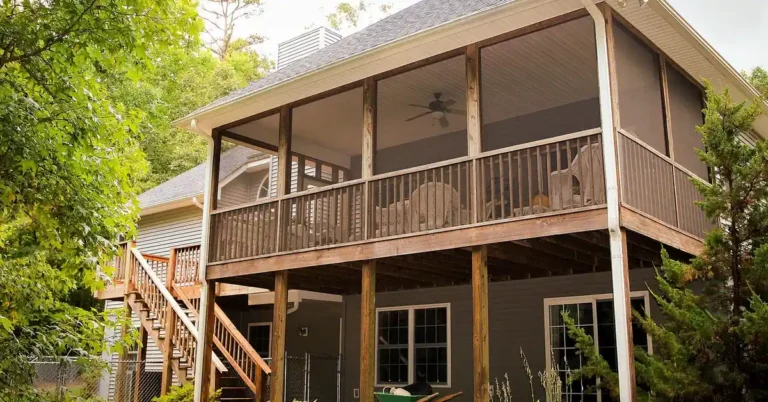
📊 Northern Lights barrel saunas use 100% clear Western Red Cedar. Source: Cedarbarrelsaunas.
What are the benefits of cedar wood?
Cedar’s main benefits depend on species, but the big ones are natural decay resistance in some heartwood, useful aroma in enclosed storage, low weight, and easy workability. The tradeoff is wear resistance: some cedar dents fast, some smells too strongly for living spaces, and some is poor around direct food contact.
Decay resistance starts with heartwood
Western red cedar heartwood contains thujaplicins and lignans that resist fungal decay and insect damage. That is why Western Red Cedar is used for decks, fences, siding, shingles, pergolas, and garden beds.
Heartwood matters more than the name on the invoice. Sapwood is usually less durable than heartwood, so a cheap cedar board with a lot of pale sapwood can perform well below expectations in wet exposure.
Aroma can help, but it is not magic
Cedar wood and cedarwood oil are naturally repellent to moths. That fact supports the long use of aromatic cedar in enclosed storage, but it does not mean cedar cures an active insect problem in a whole house, open closet, attic, or garage.
The scent works best in small, enclosed spaces where oils remain near fabrics. Old cedar closets often seem “dead” because the surface has oxidized. A light sanding can refresh aroma, though overdoing it can leave surfaces fuzzy.
Low weight and easy cutting are real advantages
Western Red Cedar is soft and lightweight. That makes long siding courses, fence pickets, pergola parts, and shingles easier to handle and cut than many hardwoods or denser softwoods. In my shop, it also machines with less strain on tools than heavier stock.
The drawback is simple: softness buys convenience, then gives some of it back in dents, edge bruising, and wear. Cedar is often pleasant to work, but it is not the right answer for every surface people walk on, slide things across, or strike with hard objects.
Which cedar species fits which project?
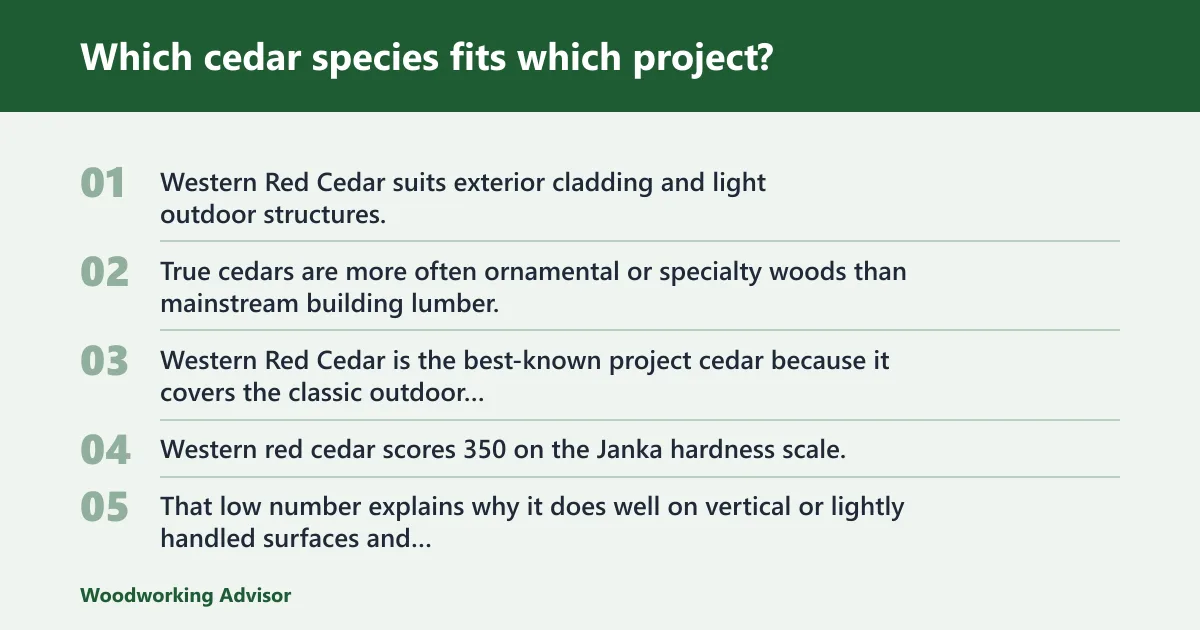
Match species to job before comparing price. Western Red Cedar suits exterior cladding and light outdoor structures, Eastern Red Cedar suits closets and aromatic storage, Spanish cedar suits humid cabinetry, and incense cedar suits lining and utility work. True cedars are more often ornamental or specialty woods than mainstream building lumber.
Western Red Cedar for exterior cladding and garden structures
Western Red Cedar is the best-known project cedar because it covers the classic outdoor list: siding, shingles, fences, pergolas, garden beds, and some deck parts. Its heartwood durability is the draw. Its wear resistance is the limit.
Western red cedar scores 350 on the Janka hardness scale. That low number explains why it does well on vertical or lightly handled surfaces and less well on heavy-traffic horizontals. It can work for decking, but the user should expect more denting and surface wear than with harder woods.
Eastern Red Cedar for closets and aromatic storage
Eastern Red Cedar is around 900 on the Janka hardness scale, making it much harder than Western Red Cedar. It is also strongly aromatic. Eastern red cedar is the classic closet and storage chest wood.
That combination makes it a smart choice for closet lining, blanket chests, drawer bottoms, and storage interiors where scent is welcome. It is a poor choice for grilling planks, cutting boards, or food-prep surfaces. Strong aroma in a closet is useful. Strong aroma in direct food contact is a warning sign.
Incense cedar and Spanish cedar in practical specialty roles
Incense cedar often shows up in lining, trim, pencil stock, and light utility work. It can be a workable choice where a cedar-like look or smell is wanted without paying for top-grade Western Red Cedar.
Spanish cedar is another false cedar and is often used for humid cabinetry, cigar storage, and box work rather than outdoor decking or heavy-wear parts. It is valued for odor and moisture tolerance, not for abuse resistance.
True cedar species in ornamental and specialty use
Atlas cedar, cedar of Lebanon, and deodar cedar matter more as trees than as common home-center lumber species. When used as wood, they are usually specialty choices rather than default options for fences, siding, or closet lining.
Cedar use-by-project matrix
| Species | Recommended applications | Not recommended | Durability and wear notes | Odor traits | Safety and misuse warnings |
|---|---|---|---|---|---|
| Western Red Cedar | Deck parts, fences, siding, shingles, pergolas, garden beds, sauna interiors, outdoor furniture with light wear | High-traffic stair treads, hard-use tabletops, workbenches, cutting boards | Naturally durable heartwood; very soft; Janka 350; dents and abrades faster than harder woods | Mild to moderate cedar scent, usually less intense than Eastern Red Cedar | Use heartwood where decay matters; sapwood is less durable; only western red cedar is suitable for cedar plank grilling |
| Eastern Red Cedar | Closet lining, storage chests, drawer parts, aromatic interior panels, small decorative work | Grilling planks, cutting boards, utensils, heavy exterior framing | Harder than Western Red Cedar; around 900 Janka; better dent resistance, but still project-specific rather than universal | Strong aromatic scent associated with moth deterrence | Do not recommend for cooking; scent can overwhelm enclosed spaces if overused |
| Incense cedar | Lining, trim, utility boards, pencil stock, light indoor joinery | Heavy wear surfaces, direct food-prep surfaces, high-abuse decking | Useful for light-duty parts; buy by grade because performance varies | Pleasant cedar aroma, usually less forceful than Eastern Red Cedar | Confirm species before any food-related use; “cedar” label alone is not enough |
| Spanish cedar | Humid cabinetry, cigar storage, box interiors, selected millwork | Hard-wear floors, deck boards, butcher-block tops | Chosen for odor and moisture behavior more than abrasion resistance | Distinct aromatic scent valued in enclosed storage | Do not assume grilling or cutting-board safety because it has “cedar” in the name |
| True cedar (Cedrus) | Specialty woodworking, ornamental context, occasional carved or decorative work | Assuming it substitutes one-for-one for Western Red Cedar in exterior lumber jobs | Performance depends on species and stock source; not the default cedar at a lumberyard | Can be aromatic, but practical behavior varies | Botanical cedar is different from most commercial “cedar” lumber |
| Northern white cedar | Yard and light outdoor uses where available, specialty garden work | Assuming it equals Western Red Cedar in every application without checking stock and grade | Species and grade matter; often chosen regionally | Usually milder scent | Northern white cedar grows 40-60 feet tall and 10-15 feet wide; buy for the job, not the name |
Is cedar good for outdoor projects?

Cedar is good for outdoor projects when the project needs decay resistance more than impact resistance. Western Red Cedar is the main outdoor choice, especially in heartwood-rich stock, but it underperforms on high-wear walking surfaces, stair treads, and any part that must resist dents, abrasion, and repeated hard knocks.
Best outdoor uses
Western Red Cedar is used for decks, fences, siding, shingles, pergolas, and garden beds. Those are sensible uses because they play to the wood’s low weight, decent stability, and naturally durable heartwood.
Siding and shingles are especially good fits. Vertical exposure lets cedar do what it does best while avoiding constant foot traffic. Pergolas and fence pickets also suit the material because the structure benefits from manageable weight and natural weather resistance.
Where outdoor cedar disappoints
Deck framing can be one question, deck surfaces another. Cedar deck boards look good early, feel comfortable underfoot, and are easy to cut, but they dent more easily than harder alternatives. The same caution applies to top rails, stair treads, outdoor tabletops, and bench seats.
Outdoor furniture made from cedar can work well if the design accepts dents and occasional checking. For pieces dragged across patios, stacked often, or used roughly, a denser species usually ages better.
Weathering, checking, and finish behavior
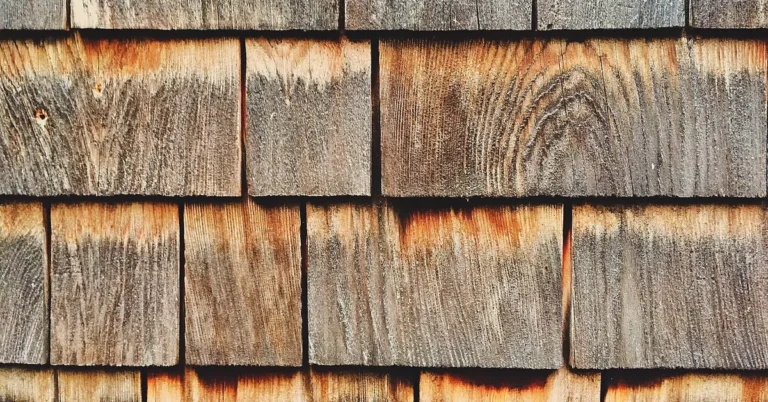
Unfinished cedar turns gray outdoors. Many owners like that look. Others do not. Clear film finishes outside often fail early on cedar because sun and moisture cycles break the coating, then peeling and patchiness start.
Penetrating oil or stain is usually the easier maintenance path when color retention matters. If the goal is low maintenance rather than fresh color, leaving cedar unfinished is often the simpler choice. Expect checking, especially on wider parts and end grain exposure.
Fasteners, staining, and installation details
Cedar extractives can react with poor fasteners and leave staining. Good corrosion-resistant fasteners are worth the extra cost here. I also predrill near ends because cedar can split, especially in dry stock and narrow members.
- Ask for species and grade, not “cedar” alone.
- Choose heartwood-rich boards where decay resistance matters most.
- Reserve cedar for vertical, low-wear, or light-traffic outdoor parts.
- Use better fasteners to limit staining and corrosion problems.
- Decide early whether the goal is gray weathering or retained color.
Which cedar is best for closets, storage, and indoor use?
Eastern Red Cedar is usually the best cedar for closets and storage because its stronger aroma suits enclosed spaces and it has a long track record in chests and closet lining. Western Red Cedar is milder and better saved for outdoor work, while Spanish cedar suits selected humid-storage and cabinetry jobs.
Why Eastern Red Cedar became the closet standard
Eastern red cedar is the classic closet and storage chest wood. Its scent is the key benefit, and cedar wood and cedarwood oil are naturally repellent to moths.
Still, the effect is limited. Cedar helps most in enclosed storage with clean textiles. It is not a substitute for washing infested fabrics, controlling humidity, or dealing with an established pest problem.
How aroma changes over time
Cedar closets lose punch as exposed oils fade at the surface. That does not mean the wood failed. It means the active aromatic surface layer has aged.
Lightly refreshing the surface can bring back scent. Use restraint. Aggressive sanding can leave rough grain, especially on softer cedar stock, and can fill the space with aromatic dust that some people find irritating.
When aromatic cedar makes sense, and when it does not
Cedar closet lining can make sense in enclosed spaces, blanket chests, and drawers for seasonal fabrics. It makes less sense in whole-room paneling, where the smell may become tiring, or in kitchen cabinets where food odors and wood aroma can clash.
For humid cabinetry and cigar storage, Spanish cedar often fits better than Eastern Red Cedar. For sauna and bath-adjacent interiors, Western Red Cedar is widely chosen. Northern Lights barrel saunas use 100% clear Western Red Cedar, and the company positions cedar as the premier sauna wood.
Can cedar be used for food contact or grilling?
Cedar can be used for grilling only with the right species and setup. Cedar plank grilling should use only western red cedar. Eastern Red Cedar should not be recommended for cooking, and cedar in general is a poor choice for cutting boards, butcher-block tops, utensils, or direct food-prep surfaces.
Cedar plank grilling: species matters
Cedar plank grilling should use only western red cedar. That is the plain rule. The “cedar” name by itself is not enough.
Flavor depends on species and heartwood extractives, which is one reason the wrong cedar is a bad gamble. Western Red Cedar is the established grilling species. Eastern Red Cedar is strongly aromatic in a very different way and should stay out of cooking use.
Where cedar belongs in kitchens, and where it does not
Cedar can make sense around kitchens as decorative paneling, selected cabinet parts, or storage where direct food contact is absent. It does not belong in cutting boards, spoons, spatulas, rolling surfaces, or butcher-block counters.
Storage use is different from prep use. A cedar chest can hold linens. A cedar plank can support fish when the correct species is used. That does not make cedar a general food-safe work-surface wood.
What are the drawbacks of cedar wood?
Cedar’s main drawbacks are softness, visible denting, checking, uneven finish absorption, and species confusion at purchase. It can also split near ends, hold screws less firmly than denser woods, and create odor or dust issues for sensitive users. These limits matter more on wear surfaces than on siding or closet lining.
Janka hardness explains a lot
Western red cedar scores 350 on the Janka hardness scale. Eastern red cedar is around 900 on the Janka hardness scale. Those two figures explain why one excels in cladding and garden structures while the other is more credible in chests and small interior parts.
Neither number makes cedar the first pick for kitchen worktops, hard-use dining tables, workshop tops, or heavily used stairs. Cedar can do many jobs well, but abrasion and impact are where alternatives often win.
Movement, fuzzing, and shop behavior
Cedar usually cuts easily, but the surface can fuzz, especially with dull cutters or against difficult grain. End grain can split near fasteners. Screw holding is acceptable for many uses, though less reassuring than with denser species when parts will be stressed repeatedly.
Finish absorption also varies. Some boards drink finish quickly while others blotch, especially when sapwood and heartwood mix in the same piece. I always test on offcuts with cedar because surprises show up fast.
Cost, grade variation, and when alternatives fit better
Cedar is worth paying for when its natural decay resistance, aroma, or low weight directly helps the project. It is a weaker value when the job really needs hardness, low denting, or lower upfront material cost.
Pressure-treated lumber often makes more sense for hidden structural parts. Cypress or redwood can be strong alternatives for outdoor appearance work. A hardwood can be the better choice for tabletops, treads, and benches that take abuse.
Dust, scent, and user comfort
Some people like cedar smell. Some do not. Strong aromatic species can be tiring in closed interior rooms, and cedar dust can bother sensitive users during cutting or sanding. That is another reason to match cedar to contained storage, outdoor exposure, or limited accent use rather than assume more cedar is always better.
Other cedar uses beyond boards and lumber
Cedar use goes beyond deck boards and closet panels. Cedarwood oil, bark, fiber, carving stock, pencils, and decorative small parts all draw on species-specific traits such as aroma, pliability, color, or easy cutting, and those uses make more sense when the exact cedar type is identified first.
Cedarwood oil in fragrance and aromatherapy
Cedarwood oil contains cedrol and beta-cedrene. It is widely used in perfumery and aromatherapy, and calming effects are associated with the oil.
That point should stay in its lane. The presence of cedarwood oil in fragrance work does not mean a cedar room has medical effects, nor does it say anything about wear resistance, outdoor life, or grilling safety.
Cedar bark and fiber
Cedar bark and fiber have long been traditional Indigenous materials for weaving, ropes, baskets, and nets. Species differences affect pliability, so one cedar’s bark or fiber can suit a task better than another.
That matters because “cedar” is not one cultural material any more than it is one lumber product. Fiber behavior varies with species, age, and part of the tree used.
Decorative and small-work uses
Incense cedar and Eastern Red Cedar often appear in pencils, carved items, small boxes, and accent parts. Their aroma and workable texture help. Western Red Cedar can also suit carved outdoor signs and light utility pieces where low weight helps more than hardness.
Frequently asked questions
What is cedar wood used for?
Cedar wood is used for species-specific jobs: Western Red Cedar for siding, shingles, fences, pergolas, garden beds, and some deck parts; Eastern Red Cedar for closets and chests; incense cedar for lining and utility work; and cedarwood oil for fragrance and aromatherapy rather than building performance.
Is cedar good for outdoor projects?
Cedar is good outdoors when decay resistance matters more than abrasion resistance. Western Red Cedar is the main outdoor choice, especially in heartwood-rich stock, but it is still soft. It works better in siding, fences, and pergolas than in hard-wear stair treads, busy deck surfaces, or heavy-use tabletops.
Which cedar is best for closets or storage?
Eastern Red Cedar is usually the best choice for closets or storage because it is strongly aromatic and is the classic closet and storage chest wood. Its scent can help deter moths in enclosed spaces, though older surfaces may need light refreshing to restore aroma.
Can cedar be used for food contact or grilling?
Cedar plank grilling should use only western red cedar. Eastern Red Cedar should not be used for cooking. In general, cedar is a poor pick for cutting boards, butcher-block tops, utensils, and prep surfaces because grilling use with one species does not make all cedar food-contact safe.
What is the difference between true cedar and false cedar?
True cedar means species in the Cedrus genus, a small genus in the pine family, Pinaceae, native to the western Himalayas and Mediterranean region. False cedars include Western Red Cedar, Eastern Red Cedar, incense cedar, and Spanish cedar, which supply most everyday cedar lumber and products.
Does cedar really repel insects?
Cedar wood and cedarwood oil are naturally repellent to moths, so cedar can help in enclosed storage such as chests and lined closets. It is not a full-house insect fix, and it does not replace cleaning, isolation, or pest treatment when an active infestation is already present.
Sponsored / affiliate links. As an Amazon Associate I earn from qualifying purchases. I may earn additional commission from eligible campaigns.