Recoating vs Refinishing Hardwood Floors: What to Choose
Deciding between recoating and refinishing your hardwood floors can feel a bit tricky, especially when you’re new to home improvement projects. Both sound like they’ll make your floors look great, but they’re actually quite different processes. It’s easy to get them mixed up, which can lead to choosing the wrong one for your needs.
But don’t worry, we’re going to break down Recoating vs Refinishing Hardwood Floors: What to Choose in a way that makes perfect sense, step by step. Let’s get your floors looking their best!
Recoating Hardwood Floors Explained
Recoating hardwood floors is a lighter touch-up process designed to refresh the look and protection of your existing floor finish without removing the original wood layers. Think of it like giving your floor a fresh coat of paint, but instead of paint, we’re talking about a new layer of sealant or top coat. This method is ideal when your floors have light wear and tear, such as minor scratches, scuffs, or a dull appearance, but the wood itself is still in good shape and the original stain color is still desirable.
The main goal of recoating is to add a protective layer that seals in the current look of your hardwood. This is a much quicker and less invasive process than full refinishing, meaning less dust, less disruption to your home, and generally lower costs. It’s a way to revitalize your floors and extend their lifespan by providing a renewed barrier against daily wear and tear.
When Recoating Is The Right Choice
You’ll know recoating is the way to go if your hardwood floors show signs of surface-level damage. This means the finish looks worn, hazy, or scratched, but you don’t see deep gouges or damage to the wood itself. If the original stain color is still exactly what you want, and there are no significant dents or chips in the wood, recoating is likely your best bet.
It’s also a smart option if you’re on a tighter budget or have less time for the project.
Recoating is particularly effective for floors that have been well-maintained but have simply lost their luster over the years due to foot traffic and regular use. It can bring back a brilliant shine and provide that much-needed protective barrier, preventing minor surface issues from becoming bigger problems down the line. Imagine your floors looking almost new again with minimal effort.
-
- Light Surface Scratches and Scuffs
When your floor has minor scratches that haven’t penetrated the wood, recoating can effectively cover them up. The new top coat will smooth out the surface, making these imperfections disappear. This is a common sign that your floor’s protective layer is wearing thin and needs a refresh to prevent deeper damage.
-
- Dull or Hazy Finish
Over time, the protective finish on your hardwood floors can become dull due to wear, cleaning products, or UV exposure. Recoating removes this dullness by applying a fresh, clear top coat, restoring the floor’s natural sheen and vibrancy. It’s like polishing a tarnished piece of jewelry to bring back its sparkle.
-
- Maintaining Original Stain Color
If you love the current color of your hardwood floors and don’t want to change it, recoating is the perfect solution. It adds protection without altering the wood’s underlying tone or the original stain. This is a major advantage if the current color perfectly matches your home’s decor and you’re not looking for a style update.
The Recoating Process Step-by-Step
The recoating process typically involves a few key steps, all focused on preparing the surface and applying a new top layer of finish. First, the floors need to be thoroughly cleaned to remove all dirt, grime, and any existing wax or polish. Then, the surface is lightly abraded, usually with a buffer and a fine-grit screen or sandpaper.
This step is crucial; it doesn’t remove the existing finish but rather scuffs it up just enough to create a surface that the new coat can adhere to properly. This is where the term “screening” often comes into play.
After screening, all dust is meticulously removed. A new coat of polyurethane or another suitable top finish is then applied. Depending on the product and desired durability, multiple thin coats might be applied, with drying time in between.
The entire process is much faster than refinishing, often completed in just a day or two, and the drying and curing times are typically shorter as well. This makes it a convenient option for busy households.
Sample Scenario: The Everyday Family Home
- Assessment: A busy family notices their oak floors look a bit dull, with faint scratches from kids and pets. The original honey stain is still beautiful and suits their decor perfectly.
- Preparation: The floors are deep cleaned. A buffer with a screening pad is used to lightly scuff the surface of the existing finish. All dust is vacuumed and wiped away.
- Application: Two coats of a water-based polyurethane are applied, allowing sufficient drying time between coats.
- Result: The floors regain their shine, minor scratches are less visible, and they are protected for the next few years. The original stain color remains unchanged.
Refinishing Hardwood Floors Explained
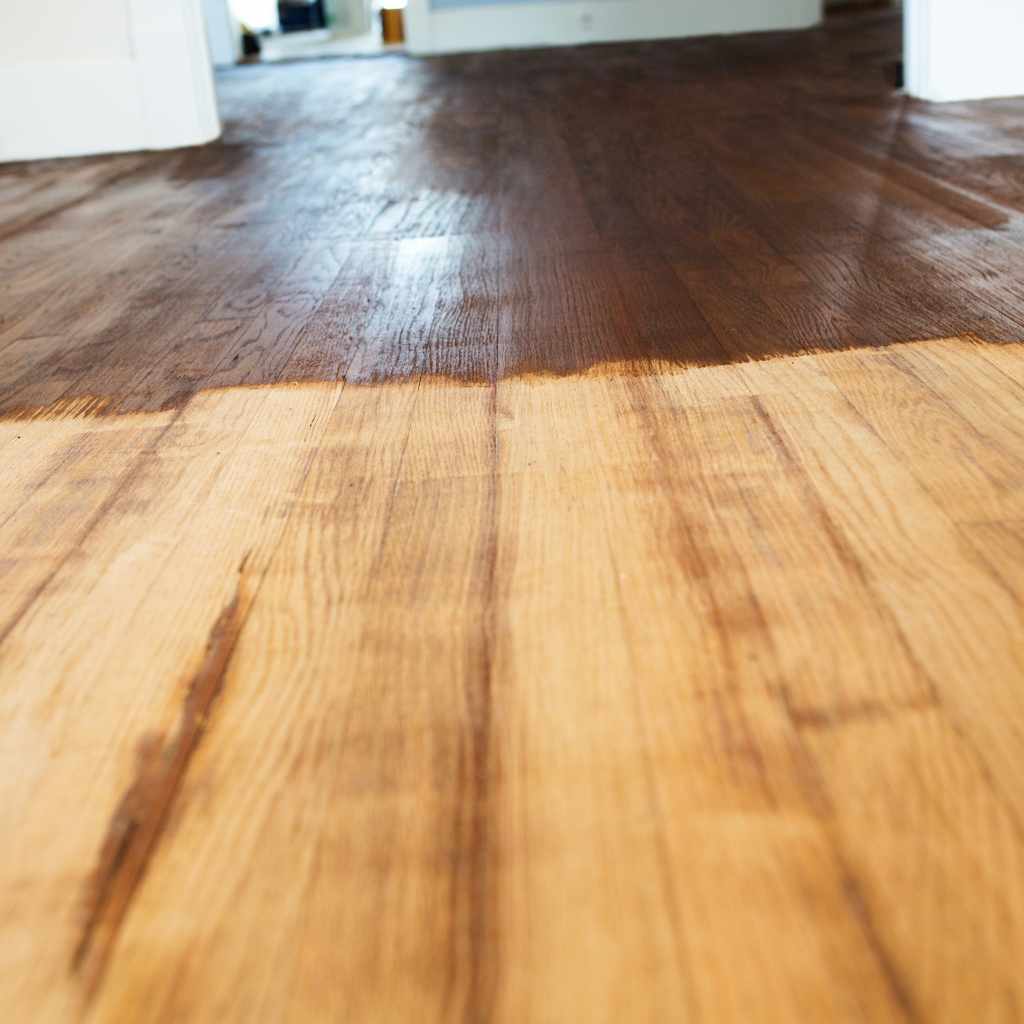
Refinishing hardwood floors is a more intensive process that involves sanding down the existing finish and a thin layer of wood to reveal a fresh surface. This is the method to choose when your floors have significant damage that recoating can’t fix. Think deep scratches, gouges, warping, stains, or even just a desire to completely change the color or style of your wood floors.
The primary purpose of refinishing is to strip away all imperfections and old finish, exposing virgin wood. This allows for a completely new look, whether you want to apply a different stain color, opt for a different sheen, or even switch to a different type of finish altogether. It’s a comprehensive restoration that brings your floors back to their prime condition and offers maximum flexibility in terms of aesthetics.
When Refinishing Is The Right Choice
You should consider refinishing if your hardwood floors have experienced more than just surface wear. Deep scratches, gouges, pet stains, water damage, or significant wear patterns that have gone through the finish and into the wood itself are clear indicators that sanding is necessary. If you’re looking to change the color of your floors, perhaps from a dark stain to a lighter one, or vice versa, refinishing is your only option.
Refinishing is also the best choice for older floors that may have been previously coated multiple times, making them uneven or brittle. By sanding down to a fresh surface, you can achieve a uniformly smooth and beautiful floor. It’s a significant undertaking but results in a floor that looks brand new and can significantly increase the value of your home.
It’s the ultimate solution for floors that are truly past their prime for a simple refresh.
-
- Deep Scratches and Gouges
When damage goes beyond the finish and affects the wood itself, sanding is required to remove the damaged areas. Refinishing can effectively eliminate these deep imperfections, leaving a smooth, flawless surface. This is crucial for restoring the structural integrity and visual appeal of the floor.
-
- Stains and Water Damage
Stubborn stains from pets, spills, or water damage can penetrate the wood, and recoating won’t remove them. Sanding down to fresh wood is the only way to get rid of these unsightly marks and restore the floor to its original beauty. This is especially important for preventing mold or rot from deeper moisture issues.
-
- Changing the Floor’s Color or Style
Refinishing opens up a world of possibilities for changing your floor’s appearance. You can opt for a completely different stain color, from light, natural tones to dark, rich hues, or even go for a whitewashed or gray look. You can also choose a different finish type, like matte, satin, or high gloss, to match your home’s aesthetic.
-
- Uneven or Worn Areas
If your floors have areas that are significantly more worn than others, or if previous coatings have created an uneven surface, refinishing is necessary to achieve a consistent look and feel. Sanding levels the entire floor, ensuring a uniform appearance across the entire space.
The Refinishing Process Step-by-Step
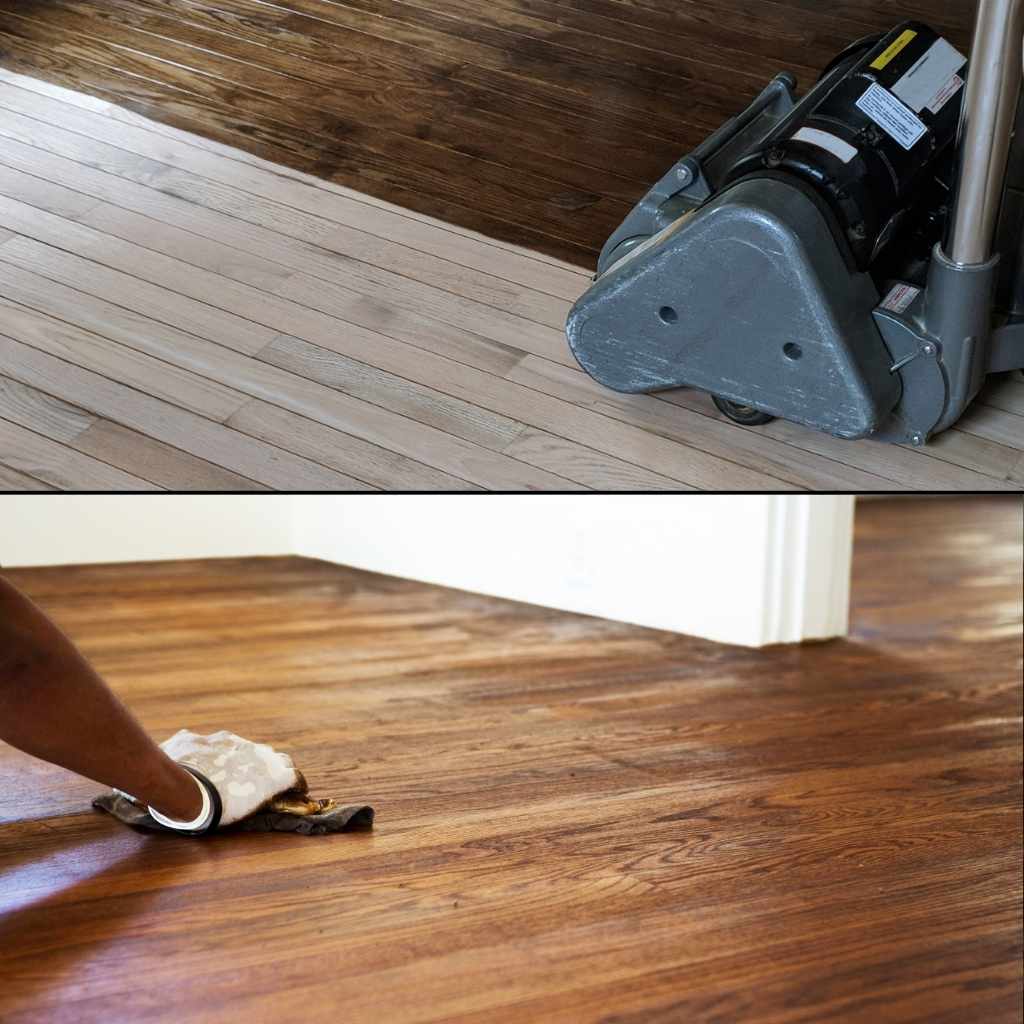
The refinishing process is more involved and typically requires professional expertise. It begins with heavy-duty sanding using drum sanders with progressively finer grits of sandpaper. This removes the old finish, any stains, and a thin layer of wood.
The edges and corners, which the drum sander can’t reach, are sanded using an edge sander and an orbital or multi-disc sander for the final passes.
After sanding, the entire floor is vacuumed and often tack-clothed to remove all dust. Then comes the staining process, if a new color is desired. A stain is applied and wiped off to achieve the desired hue.
Once the stain is dry, multiple coats of a protective finish, like polyurethane, are applied. Each coat needs to dry thoroughly and may require light buffing between applications for a perfectly smooth result. The entire process can take several days to a week, depending on the size of the area and drying times.
Sample Scenario: The Historic Home Restoration
- Assessment: An old Victorian house has hardwood floors with deep scratches from decades of use, some water stains in a corner, and a very dark, dated stain color. The owners want a lighter, more modern look.
- Preparation: Professional sanders are used to remove the old finish and damaged wood, revealing fresh oak. The floors are thoroughly cleaned.
- Staining: A light gray stain is applied, followed by wiping to achieve a subtle, contemporary look.
- Finishing: Three coats of a durable satin polyurethane finish are applied, with light sanding between coats.
- Result: The floors are transformed, looking brand new with a completely new color and a smooth, protected surface. The historic charm is preserved with a modern update.
Recoating vs Refinishing Hardwood Floors What to Choose Comparison
Choosing between recoating and refinishing boils down to the condition of your floors and your desired outcome. It’s a critical decision that impacts cost, time, and the final appearance of your hardwood. Understanding the core differences will help you make the best choice for your home.
Let’s look at how they stack up side-by-side in key areas.
Recoating is essentially a cosmetic refresh. It enhances the existing finish, making it look newer and providing a fresh protective layer. Refinishing, on the other hand, is a deep restoration.
It removes all the old layers and allows you to start with a completely blank canvas, offering the chance to change colors, tones, and even the type of finish. This fundamental difference drives all the other distinctions between the two processes.
| Feature | Recoating Hardwood Floors | Refinishing Hardwood Floors |
|---|---|---|
| Damage Level Addressed | Light surface scratches, scuffs, dullness. | Deep scratches, gouges, stains, warping, significant wear. |
| Process Intensity | Light screening and new top coat. | Heavy sanding to remove old finish and wood layer. |
| Time Required | 1-2 days. | 3-7 days (or more). |
| Cost | Lower. | Higher. |
| Ability to Change Color | No, maintains original stain. | Yes, allows for new stain colors. |
| Wood Removal | Minimal to none. | Thin layer of wood removed. |
| Lifespan Extension | Extends lifespan by protecting existing finish. | Restores to near-new condition, significantly extending lifespan. |
Cost Differences and Considerations
The most significant difference in terms of practicality for many homeowners is the cost. Recoating is considerably less expensive than refinishing. This is primarily because it requires less labor, less specialized equipment (no heavy-duty sanders), and fewer materials.
The cost of recoating can range from $1 to $3 per square foot, depending on your location and the specific products used. This makes it an accessible option for those looking to spruce up their floors without a major financial commitment.
Refinishing hardwood floors is a more substantial investment. The cost typically ranges from $3 to $8 per square foot, and can go even higher for very large areas, custom stains, or premium finishes. This higher price reflects the labor-intensive nature of sanding, the cost of high-quality sanding equipment, the materials for multiple coats of stain and finish, and often the need for specialized skills.
While the upfront cost is higher, it’s important to consider that refinishing can dramatically increase your home’s value and the longevity of your floors, offering a long-term return on investment.
Typical Cost Ranges Per Square Foot
-
- Recoating: $1 – $3 per sq ft
This range covers the labor and materials for cleaning, screening, and applying one or two new coats of protective finish. It’s a cost-effective way to bring life back to moderately worn floors.
-
- Refinishing: $3 – $8 per sq ft
This price point includes the complete sanding process, stain application (if desired), and multiple coats of high-quality finish. The higher end of this range may include premium stains or specialized finishes.
When To Call A Professional
Both recoating and refinishing can sometimes be tackled as DIY projects, but there are definite advantages to hiring a professional, especially for refinishing. For recoating, if your floors are relatively new and you’re comfortable with basic sanding and finishing, you might consider doing it yourself. However, even then, a professional can ensure even application and proper surface preparation, which is key to a good result.
For refinishing, it’s almost always recommended to hire a professional. The sanding process is aggressive and can easily damage your floors if not done correctly. Uneven sanding can create visible low and high spots, and improper dust containment can create a huge mess.
Professionals have the experience and equipment to handle the entire process efficiently and effectively, ensuring a beautiful and long-lasting finish. They also carry insurance, which can protect you from costly mistakes.
Benefits of Professional Service
-
- Expertise and Experience
Professionals have years of experience dealing with various wood types, finishes, and challenging floor conditions. They know how to identify the best approach for your specific floor.
-
- Specialized Equipment
They have access to high-quality, professional-grade sanders, vacuums, and application tools that are far superior to what is typically available for rent.
-
- Time Savings
Professionals can complete the job much faster than a DIYer, minimizing disruption to your home life. They also work efficiently, ensuring timely completion.
-
- Warranty and Guarantees
Reputable companies offer warranties on their work, giving you peace of mind. If any issues arise, they will return to fix them.
-
- Proper Dust Containment
Professional refinishing services often use advanced dust containment systems to minimize the amount of dust that escapes into your home, making cleanup much easier.
Making Your Final Decision
To make your final decision about Recoating vs Refinishing Hardwood Floors: What to Choose, consider the overall health and appearance of your current floors. Ask yourself if the wood is structurally sound and if the existing color is still to your liking. If the answer is yes to both, recoating is likely the more economical and quicker solution.
However, if your floors have seen better days, with deep imperfections, or if you’re dreaming of a new look, then refinishing is the path to take. It’s an investment that can completely transform your space. Weigh the costs against the benefits and the desired outcome.
Sometimes, even if recoating is an option, investing in a full refinish can provide a more significant and lasting improvement to your home’s beauty and value.
Assessing Your Floor’s Condition
Before you can confidently decide, a thorough assessment of your hardwood floors is paramount. Walk across your floors and look closely at the surface. Are the issues superficial, like faded color or minor scratches?
Or are they deeper, such as actual divots in the wood, peeling finish, or dark stains that look like they’ve soaked into the wood?
Another key indicator is the age and history of your floors. If they’ve been refinished before, there might be less wood to work with for future refinishing. If they’ve only ever been coated, they might be prime candidates for a refresh.
Feeling the surface can also tell you a lot. If it feels rough or uneven even after cleaning, it suggests the finish is worn through or damaged.
-
- Examine the Depth of Scratches
Run your fingernail across any scratches. If your nail catches significantly, the scratch is deep and likely into the wood, requiring refinishing. If your nail glides over it, the scratch is probably in the finish layer, which recoating can often hide.
-
- Check for Water or Pet Stains
Stains that have seeped into the wood are a strong indicator that sanding is needed. Recoating will simply seal in these blemishes, making them permanent.
-
- Assess Overall Finish Wear
Is the entire floor uniformly dull and hazy, or are there specific worn-down paths? Widespread dullness might be addressed by recoating, but worn-out traffic lanes often mean the finish is completely gone and the wood is exposed, necessitating refinishing.
Budget and Time Constraints
Your budget and how much time you can afford to have your floors out of commission will play a huge role in your decision. Recoating is budget-friendly and can often be completed over a weekend. This means minimal disruption to your daily life.
You can typically walk on recoated floors within 24-48 hours, with full curing taking a few days to a week, during which you should avoid heavy furniture moving or abrasive cleaning.
Refinishing is a more significant investment, both in terms of money and time. It can take a week or more to complete, and you’ll need to be completely out of the area or live with significant dust and fumes during the process. The curing period for refinished floors is also longer, often requiring careful treatment for up to a month.
If you need your floors done quickly and affordably, recoating is the winner. If you have the resources and time for a complete overhaul, refinishing offers a more dramatic transformation.
Sample Scenario: The Renter’s Dilemma
- Assessment: A renter notices the laminate flooring is scratched in high-traffic areas. They want to improve the look during their lease.
- Constraint: Renter cannot make permanent changes or invest heavily.
- Decision: Recoating is not applicable to laminate. The renter opts for large area rugs to cover the damaged areas and potentially use removable floor mats in high-traffic zones to protect further. (Note: If it were hardwood, recoating would be a consideration if permitted by the landlord and if the damage was superficial).
This scenario highlights how constraints, like being a renter, limit options to superficial fixes or coverings rather than actual floor treatment.
Frequently Asked Questions
Question: How often should hardwood floors be recoated?
Answer: Hardwood floors can typically be recoated every 2-5 years, depending on the amount of foot traffic they receive and how well they are maintained. Floors in high-traffic areas or homes with pets and children might need recoating more frequently.
Question: How often should hardwood floors be refinished?
Answer: Hardwood floors can usually be refinished every 10-20 years. This depends on the thickness of the wood and the quality of the original installation. Each refinishing removes a thin layer of wood, so it’s not a process that can be done repeatedly without eventually wearing down the floorboards.
Question: Can I change the stain color during a recoating?
Answer: No, you cannot change the stain color when recoating. Recoating only adds a new protective top coat over the existing finish and stain. If you want to change the color, you must refinish the floors by sanding down to the bare wood.
Question: Is recoating a dusty process?
Answer: Recoating, which involves light screening, creates significantly less dust than full refinishing. Professional recoating services often use dust containment systems to minimize airborne particles. However, some dust is inevitable.
Question: Will refinishing remove pet stains?
Answer: Yes, refinishing will typically remove pet stains because the sanding process removes the stained layer of wood. However, very deep or old stains might require additional steps or could leave a residual mark that a professional would assess.
Final Thoughts
Deciding between recoating and refinishing your hardwood floors comes down to a clear assessment of their current condition and your goals for their future appearance. If your floors have light wear, minor scratches, and you’re happy with the existing color, recoating offers an economical and efficient way to refresh their protective layer and restore their shine. It’s a fantastic option for maintaining your floors and extending their life without a major overhaul.
On the other hand, if your floors are showing significant damage, deep scratches, stains, or if you’re eager for a completely new look with a different stain color, then refinishing is the necessary and rewarding choice. While it requires a larger investment of time and money, the result is a floor that looks brand new, often breathing new life into your entire home and adding significant value. Carefully evaluate the wear and tear, consider your budget, and think about the aesthetic you want to achieve to make the best decision for your beautiful hardwood floors.