Rockwell Delta Table Saws: Brand History and Who Makes Them Now
Yes, Delta table saws are still made today — the brand has just changed hands several times, which is exactly why “Rockwell Delta” causes confusion. Delta Specialty Company was founded in 1919 in Milwaukee by Herbert Tautz, and Rockwell Manufacturing bought the company in 1945, which is where the “Rockwell Delta” name comes from during that ownership era. Rockwell sold Delta decades ago; the brand you’d buy new today has no operational connection to Rockwell beyond that shared history in the name.
The Full Ownership Chain
A Current-Production Delta Model
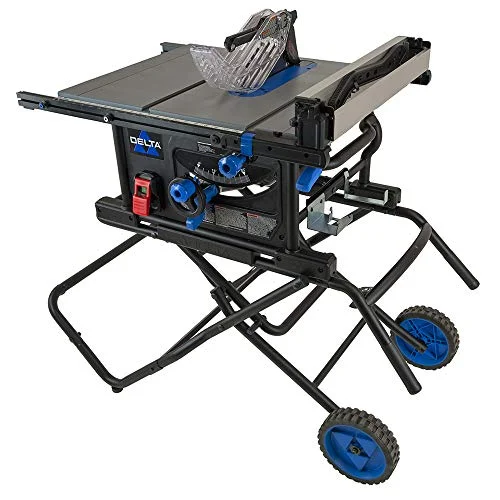 |
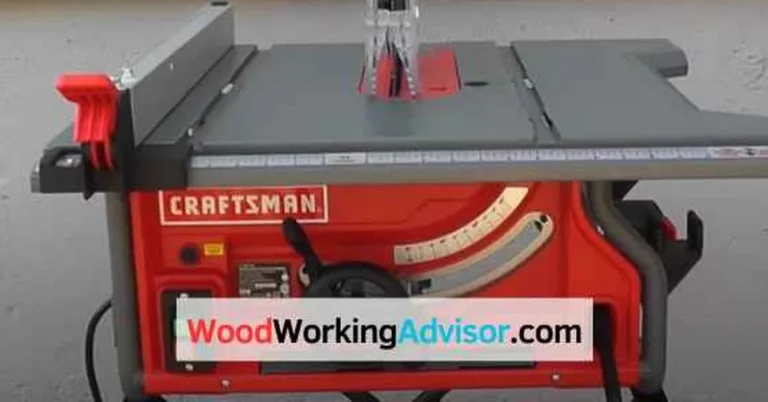
Delta 36-6023 10″ Jobsite Table Saw – $499.99 A genuine current-production Delta saw with a 32.5″ rip capacity and folding rolling stand — proof the brand is still actively manufacturing, not just a name on old iron.
|
After Rockwell Manufacturing acquired Delta in 1945, the brand passed to Pentair in 1981, then to Black & Decker (which also owned Porter-Cable) in 2005. When Stanley Works merged with Black & Decker in 2009 to form Stanley Black & Decker, Delta came along with that merger. Today, Delta Machinery is owned by Chang Type Industrial Co., Ltd., a Taiwan-based manufacturer that produces the current lineup of Delta stationary and benchtop tools — table saws, band saws, jointers, planers, and lathes — from its own manufacturing facilities. Each ownership change moved manufacturing and design decisions to a new parent company, which is part of why quality and features can vary noticeably between a saw made under one owner versus another, even with the same “Delta” name on it.
The Unisaw: Delta’s Most Historically Significant Model
Delta’s Unisaw, launched in 1937, is the model most responsible for the brand’s reputation among serious woodworkers — it changed table saw design by tilting the blade arbor to make beveled cuts, rather than tilting the entire table as earlier designs did. That basic arbor-tilt design became the industry standard and is still how most cabinet-style table saws work today, regardless of brand. Vintage Unisaws from the Rockwell and early Pentair eras are still actively bought, restored, and used by woodworkers today, and original cast-iron construction from that period has a strong reputation for durability that keeps used units in demand on the secondhand market.
Vintage Rockwell-Era Delta vs. Current Chang Type Production
If you’re shopping secondhand, a saw stamped “Rockwell Delta” or just “Rockwell” dates to the 1945-1981 ownership window and is now decades old — parts availability and compatibility with modern accessories can be a real practical concern, not just a collector’s curiosity. Current Chang Type-era Delta saws are new production with modern safety features and standard accessory compatibility, but represent a different manufacturing operation entirely from the vintage Rockwell-era saws that built the brand’s reputation. Neither is objectively “better” across the board — a well-maintained vintage cast-iron Unisaw can still outperform some current benchtop models on rigidity and vibration, while current production offers modern safety features, warranty support, and available replacement parts a 60-year-old saw won’t have.
Beyond the Table Saw: Delta’s Other Legacy Machines
Delta’s reputation isn’t built on table saws alone — the 14″ bandsaw and the DJ-20 jointer from the same Rockwell and Pentair eras are almost as sought-after on the used market as the Unisaw, for the same reasons: heavy cast-iron construction and a design that’s stayed fundamentally similar even as ownership changed. Woodworkers restoring a full vintage Delta shop often collect these alongside a Unisaw specifically because parts, belts, and general maintenance knowledge overlap significantly across the product line from the same era, making a matched vintage set more practical to maintain than mixing brands.
Delta vs. Other Vintage American Machinery Brands
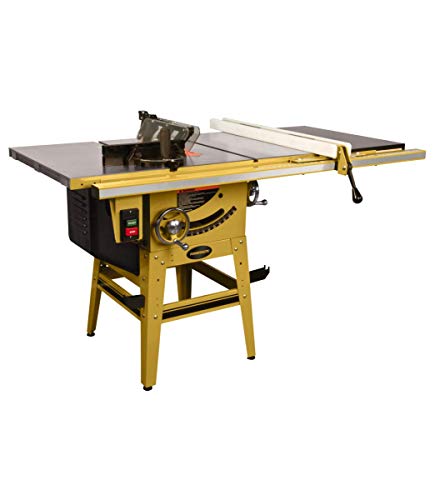
Delta isn’t the only classic American machinery brand with a similarly tangled ownership history — Powermatic (known for heavier, often pricier cabinet saws) and Craftsman/Sears (which rebadged saws built by various manufacturers, including some by Emerson Electric) both went through comparable changes in ownership and manufacturing location. What sets vintage Delta apart in collector circles is less about raw build quality — Powermatic is generally considered at least as robust — and more about sheer production volume and name recognition; more Delta saws were sold over the decades, so there’s a larger used market, more community knowledge, and more parts availability than for some competing vintage brands. That practical advantage, more than any specific engineering superiority, is why Delta remains the default recommendation for someone looking to buy their first vintage cast-iron table saw.
Buying a Vintage Rockwell-Era Saw: What to Actually Check
A vintage Rockwell-Delta saw can be a genuine bargain, but only if the fundamentals check out. Spin the arbor by hand and feel for play or roughness in the bearings — replacing arbor bearings is doable but adds real cost on top of the purchase price. Check the table for flatness with a straightedge; cast iron can warp or develop rust pitting over decades, and a warped table affects cut accuracy in a way that’s expensive to fix. Ask about the motor’s condition and whether it still runs on standard household voltage, since some older industrial units were wired for shop-specific power that needs conversion. Finally, check that the miter slot and fence rail dimensions are standard sizing — some vintage Rockwell-era saws used measurements that don’t match modern aftermarket fences and jigs, which can limit your accessory options even on an otherwise solid machine.
Parts and Support: The Real Difference Between Eras
This is the most practical difference between buying vintage versus new: current Chang Type-era Delta saws have manufacturer support, warranty coverage, and a supply chain for genuine replacement parts. A Rockwell-era saw from the 1950s-70s relies entirely on the used and reproduction parts market — drive belts, switches, and blade guards are generally available from specialty vintage-tool suppliers, but arbor assemblies and other precision components can be genuinely hard to source if they fail. Factor this into the decision if you’re planning to use the saw as a daily workhorse rather than a restoration project or occasional-use machine.
How to Date a Vintage Delta Saw
The model number and serial number stamped on the motor plate or casting are the starting point for figuring out which ownership era a given saw came from, and roughly how old it is. Online archives run by vintage tool enthusiast communities maintain serial number and model reference databases specifically for Delta and Rockwell-branded machinery, cross-referencing casting date codes and catalog records to pin down a production year range. This matters practically, not just for curiosity: knowing the exact era tells you which parts catalogs and community forums are relevant, since a Rockwell-era part number won’t necessarily match a Pentair-era replacement even on what looks like the same model.
Frequently Asked Questions
Are Delta table saws still made?
Yes. Delta Machinery is currently owned by Chang Type Industrial Co., a Taiwan-based manufacturer that actively produces table saws, band saws, jointers, planers, and lathes under the Delta name.
Why do some Delta table saws say “Rockwell” on them?
Rockwell Manufacturing owned Delta from 1945 until it sold the brand in 1981. Saws stamped “Rockwell Delta” date from that specific ownership era and are now decades old.
Who owns Delta table saws today?
Chang Type Industrial Co., Ltd., based in Taichung, Taiwan. The brand previously passed through Rockwell Manufacturing (1945), Pentair (1981), and Black & Decker/Stanley Black & Decker (2005-2009 era) before its current ownership.
What is the Delta Unisaw known for?
Launched in 1937, it was the first table saw to tilt the blade arbor for beveled cuts instead of tilting the whole table, a design that became the industry standard still used on cabinet saws today.
Are vintage Delta bandsaws and jointers as good as the table saws?
Yes, the 14″ bandsaw and DJ-20 jointer from the same Rockwell and Pentair eras have a similarly strong reputation among woodworkers restoring vintage cast-iron shop equipment, for the same heavy-construction reasons as the Unisaw.
Conclusion
“Rockwell Delta” refers to a specific 1945-1981 ownership era of a brand that’s changed hands five times since Herbert Tautz founded it in 1919 — and it’s still actively manufactured today under Chang Type Industrial. Whether a vintage Rockwell-era Unisaw or a current benchtop model suits your shop better depends on what you value: proven cast-iron rigidity and a restoration project, or new-production reliability with modern parts support and manufacturer warranty coverage behind it.
Sponsored / affiliate links. As an Amazon Associate I earn from qualifying purchases. I may earn additional commission from eligible campaigns.