Sam Maloof Chair Dimensions: Real Sizes by Chair Type
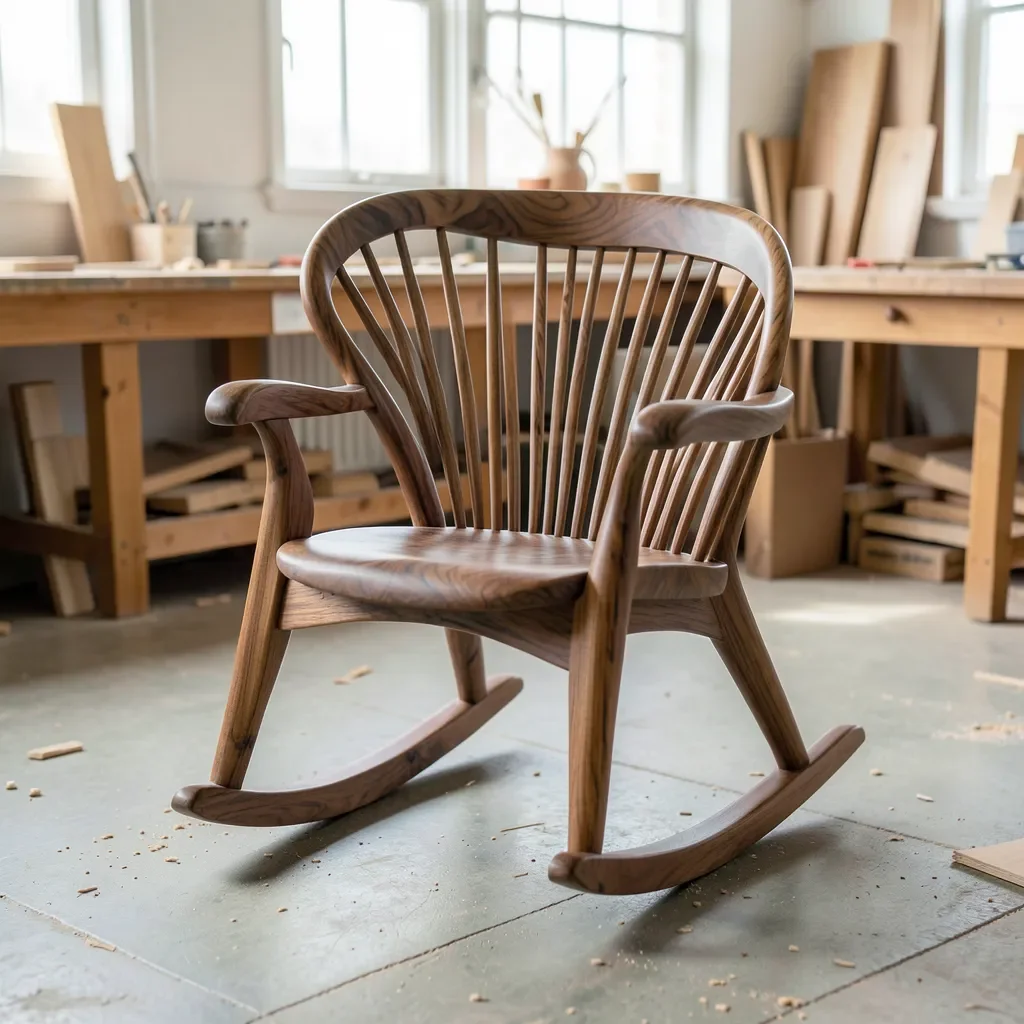
A documented Sam Maloof rocking chair in the Museum of Fine Arts Boston’s collection measures 45″ H x 27.75″ W x 46″ D with a 22″ seat depth — but Maloof never worked from a fixed blueprint, so his low-back dining chairs, armchairs, and rockers each carry different typical dimensions. Guessing a single number risks a chair that doesn’t fit your body or your room. This guide covers the real, sourced dimension ranges for each Maloof chair type, why seat height varies by design, and how to size a Maloof-style build for your own space.
The Legacy of Sam Maloof
Chair-Carving Tool Pick
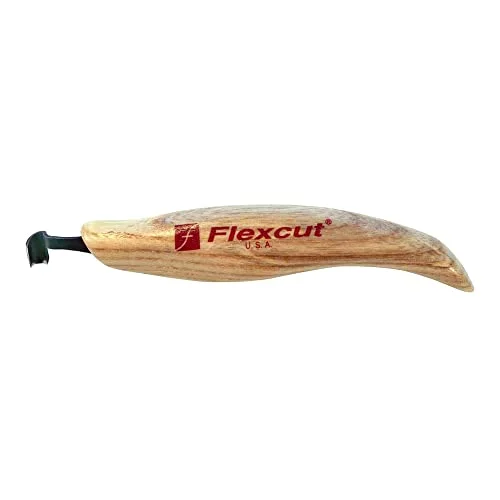 |
Flexcut Right-Handed Scorp, 3/16″ (KN22) – $28.99 The saddle-carved seat this guide describes is hand-hollowed, not sanded flat — a scorp is the standard tool for roughing out that concave curve before final shaping.
|
Sam Maloof (1916–2009) was a self-taught woodworker widely credited as a founding figure of the American studio furniture movement. He became known for sculptural, hand-shaped joinery — most famously his rocking chairs, which use a distinctive floating-joint rocker design rather than a simple curved runner. His work is held in museum collections including the Smithsonian and the Museum of Fine Arts Boston, and two of his chairs have been used in the Oval Office by multiple U.S. presidents.
Because Maloof built each chair by hand and adjusted proportions to the client’s body, there is no single official “Maloof dimension” — only a documented range across surviving and reproduction pieces. The rest of this guide breaks that range down by chair type instead of presenting one invented average.
Real Dimensions by Chair Type
These figures come from documented museum pieces and catalogued reproductions — not a single averaged guess. Expect some variation since Maloof-style chairs are still hand-built to order by many makers today.
| Chair Type | Overall Height | Width | Seat Height | Seat Depth |
|---|---|---|---|---|
| Rocking chair (MFA Boston, 1975 piece) | 46″ | 27.75″ | — (rocker, no fixed seat height) | 22″ |
| Rocking chair (typical reproduction range) | 44″–48″ | 26″–28″ | 17″–20″ | 20″–22″ |
| Low-back dining/side chair | ~30″–34″ | 20″–24″ | 17″–18″ | 17″–18″ |
Notice the rocking chair’s seat height isn’t a fixed number the way a dining chair’s is — because the chair rocks, effective seat height changes with how far back it’s tilted, which is why Maloof and modern makers building in his style size the rocker curve to the client’s height and weight rather than to a stock measurement.
What Makes These Dimensions Work: Design Features
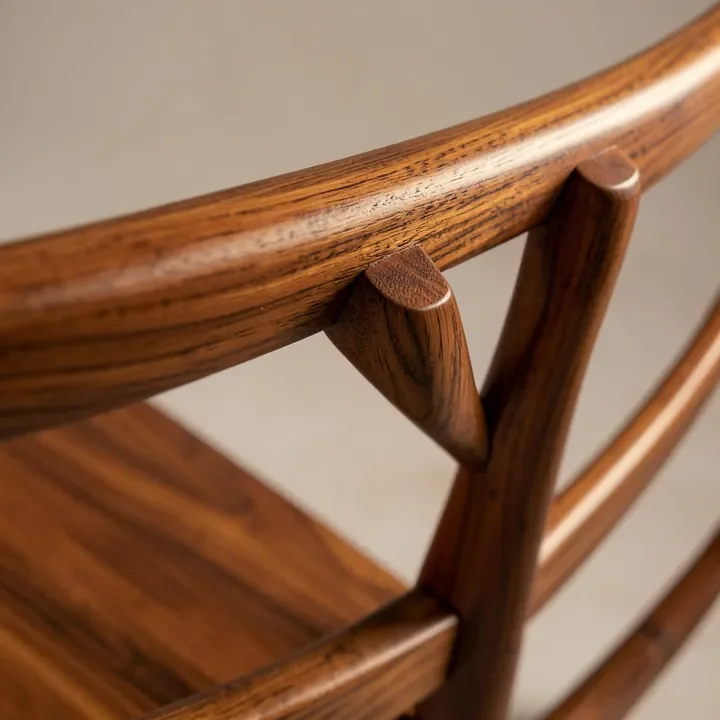
A Maloof-style chair’s comfort comes from shape more than size. The seat is carved into a saddle contour rather than left flat, so it supports the sit bones without needing extra cushioning. The backrest uses a fanned spindle arrangement that flexes slightly and follows the spine’s natural curve, and the armrests are sculpted with a scooped top edge sized to the forearm, not just a flat rail.
Traditional material choice is solid walnut or cherry — hardwoods stable enough to hold the compound curves without cracking at the joints, which matters more on a rocker than a stationary chair since the rocking motion puts repeated flex stress on the same joints for decades.
Sizing a Maloof-Style Chair to Your Own Body
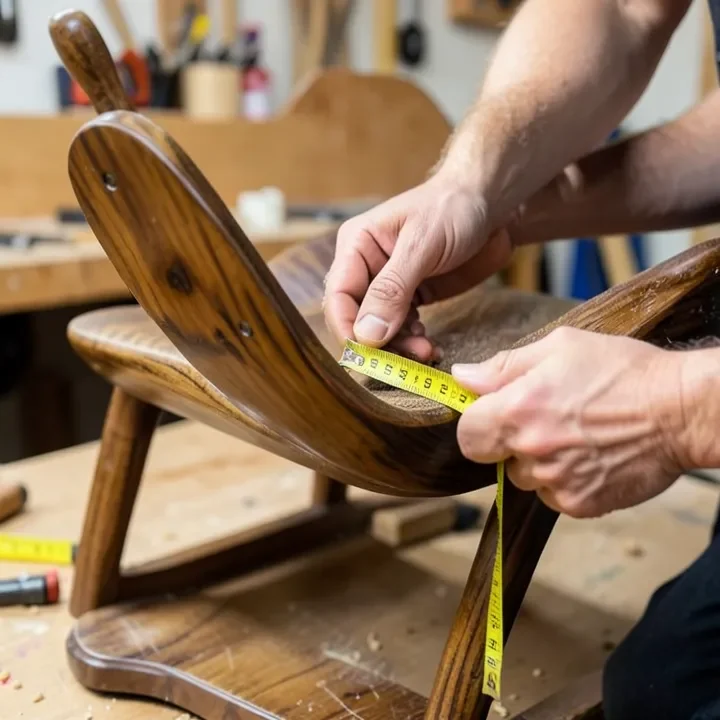
If you’re building or commissioning a Maloof-style chair rather than buying a fixed-size reproduction, size it the way Maloof himself did — to the sitter, not to a catalog number:
- Seat height: measure from floor to the back of your knee while seated with feet flat, then subtract about 1″ for cushioning give.
- Seat depth: measure from your back to just behind your knee crease, leaving 2–3″ of clearance so the front edge doesn’t press into your calves.
- Backrest height: for a low-back chair, top out around shoulder-blade height; a taller backrest changes the fanned-spindle geometry significantly.
- Armrest height: measure from the seated elbow down to the seat, adding roughly 1″ for a relaxed rather than braced arm position.
For the joinery and lathe work these curves require, see this guide’s companion piece on Sam Maloof chair-making techniques, and if you want a full-scale pattern to cut from rather than working out compound curves freehand, real Maloof chair templates are the faster starting point.
Wood Choice Affects the Numbers Too
Maloof most often used black walnut, but also built in cherry, maple, and occasionally exotic hardwoods for lamination accents. Denser woods like walnut hold a thinner spindle profile without flexing excessively, which is part of why reproductions in softer domestic woods sometimes need slightly thicker spindles than the original dimension range above — see our wood selection guide for Maloof-style builds before scaling a pattern to a different species.
Frequently Asked Questions
What are the real dimensions of a Sam Maloof rocking chair?
A documented Maloof rocking chair in the Museum of Fine Arts Boston’s collection measures 45″ H x 27.75″ W x 46″ D with a 22″ seat depth. Reproductions typically range 44″–48″ in overall height, 26″–28″ wide, with a 17″–20″ seat height, since Maloof sized each chair to its owner rather than to one fixed spec.
Are Sam Maloof chairs comfortable?
Yes — the comfort comes from the carved saddle seat and fanned, slightly flexible spindle backrest, both shaped to follow the body rather than relying on cushioning. This is also why the dimensions vary chair to chair: Maloof adjusted the curves to the specific person the chair was built for.
What wood did Sam Maloof use for his chairs?
Primarily black walnut, along with cherry and maple. Walnut’s density lets it hold thin, sculpted spindle profiles without excessive flex, which matters most on the rocking chair where the joints see repeated stress over years of use.
Where can I find a real Maloof chair template?
Full-scale templates for the seat, backrest, and leg curves are sold by a small number of specialty woodworking suppliers and covered in Maloof-technique workshops; see our guide to sourcing real chair templates for current options rather than guessing at proportions freehand.
Conclusion
There’s no single official Sam Maloof chair dimension — only a documented range that shifts with chair type and the person it was built for. Use the museum-sourced numbers above as your reference range, then size the seat, depth, and armrests to your own body the way Maloof sized every chair he built.
Sponsored / affiliate links. As an Amazon Associate I earn from qualifying purchases. I may earn additional commission from eligible campaigns.