Silica Gel in a Toolbox: Does It Stop Rust?
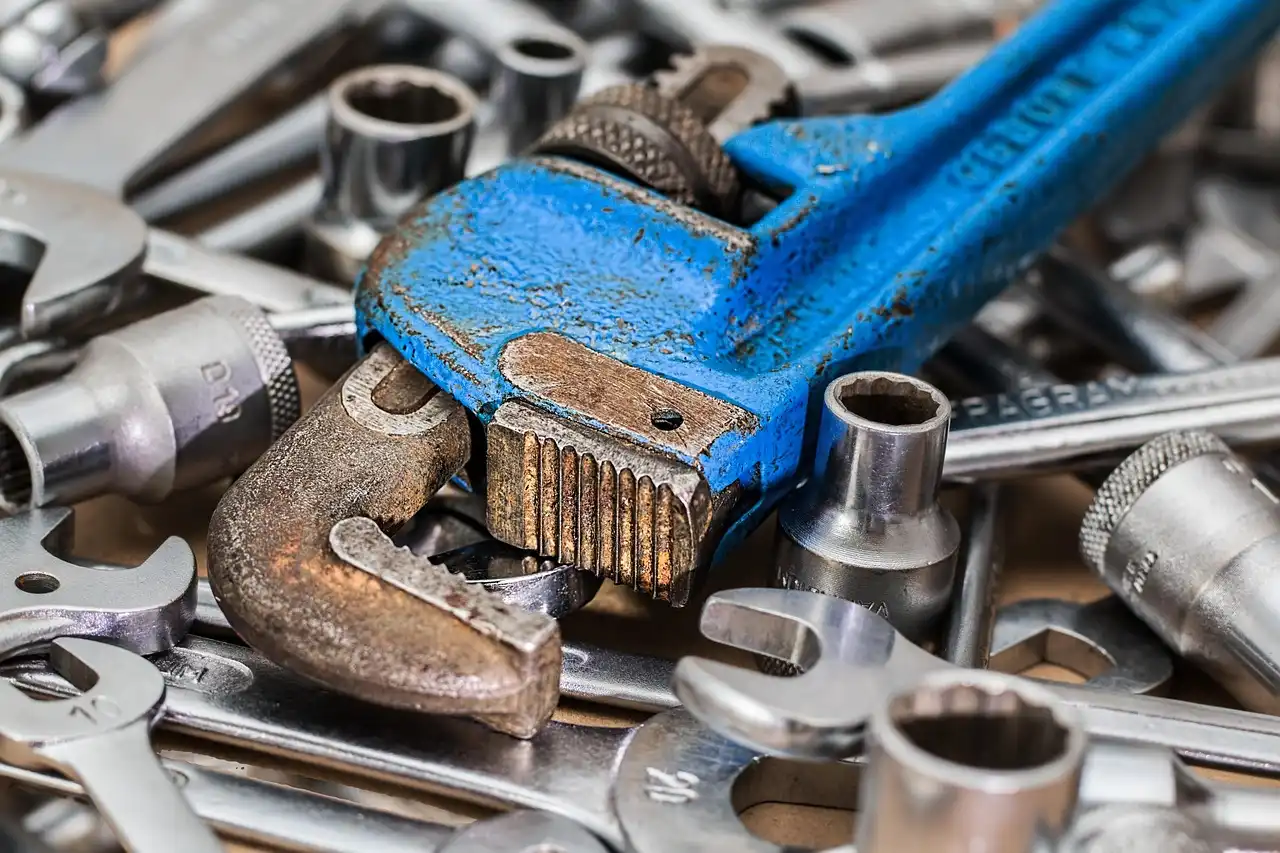
Silica gel can slow rust in a toolbox when the box is fairly airtight and the tools go in dry. If the toolbox leaks or you store damp steel, it will not do enough. Ignore that, and you get orange spots, pitting, stuck joints, and damaged edges. This guide covers when silica gel works, when it fails, and how to pair it with drying and light oiling.
What you’ll need


- Silica gel packets or a reusable desiccant canister
- Rust preventive oil or spray for bare steel
- A mostly sealed toolbox, drawer, tub, or zipper bag
- Optional hygrometer for checking relative humidity
- Optional vapor corrosion inhibitor tabs for enclosed storage
- Optional airtight bags or containers for small parts, bits, taps, and drills
How silica gel works in a toolbox
Silica gel is a drying material that pulls water vapor out of humid air. In a closed toolbox, it lowers moisture in the small air space faster than the room can replace it. That matters because rust forms when steel has moisture and oxygen, and tools can rust even while stored neatly.
Seal quality matters more than packet count alone. A toolbox with lid gaps, worn latches, or gasket leaks tends to keep exchanging air with the garage, so the desiccant keeps meeting new humidity. The same packet can seem useless in an open tray and useful in a tight drawer.
Common packet colors include white, orange, and blue variants. Blue silica gel may contain cobalt chloride, so safer choices are white, orange, or blue-free packets. Some reusable packets can be heated again if the packaging allows it.
Does silica gel stop rust in a toolbox?
Yes, but only in the narrow case where the toolbox stays mostly sealed and the tools go in dry. In that setup, silica gel can help create a low-moisture space inside the box. It does not stop rust if the container leaks badly or the steel already carries water.
No, not by itself in a humid garage with frequent opening. Every opening swaps dry air for damp air, and relative humidity drives rust risk. Suppose a 20-inch steel toolbox sits in a garage that stays damp overnight and gets opened a dozen times a day; the packets keep loading up with moisture, so the protection drops fast.
Not by itself for wet or sweaty tools. Silica gel is not a drying step for liquid water on the tool surface. If the tool is still damp, dry it first, then store it.
Toolbox rust-prevention decision table
| Scenario | Is silica gel alone enough? | Start with | When to add oil | First warning sign |
|---|---|---|---|---|
| Dry tools in a mostly sealed toolbox | Usually yes for light rust control | One regular-sized packet, then add another if the box is large | Only on bare steel that stays in storage a long time | Dull spots or a packet that stays saturated |
| Humid garage storage with frequent opening | No | Two or three packets, plus better sealing | Use a thin protective film on exposed steel | Orange specks on wrenches, bits, or drawer corners |
| Wet tools after use | No | Zero until the tool is dried; then use packets | After the surface water is gone, especially on carbon steel | Condensation, water beads, or rust within a day |
For small parts, a zipper bag or airtight container often works better than a loose drawer. Organizing bits, taps, and drills also cuts damage from contact, which matters because those edges rust and stain quickly when air stays damp.
How many silica gel packets do you need?
Start with enough desiccant to match the enclosure size, then check the result. House Digest says one regular-sized packet should be enough for a toolbox, while Museums Galleries Scotland recommends 0.3 to 0.7 ounces of silica gel per 10 square feet. Those numbers point in the same direction: the tighter and smaller the enclosure, the less you need.
A practical rule is to begin with one packet for a compact hand-tool box, then move to two or three packets for a larger toolbox, drawer stack, or tool bag with more air space. Plant Heroes recommends two or three silica gel packs in a tool bag.
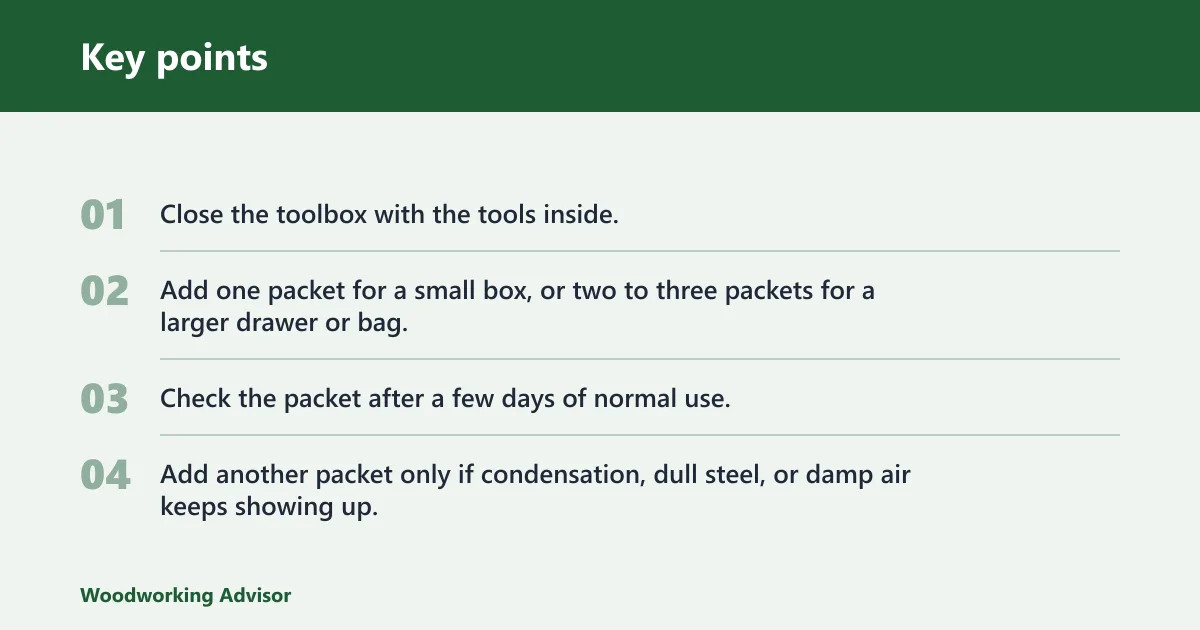
- Close the toolbox with the tools inside.
- Add one packet for a small box, or two to three packets for a larger drawer or bag.
- Check the packet after a few days of normal use.
- Add another packet only if condensation, dull steel, or damp air keeps showing up.
Picture a shallow toolbox holding wrenches and socket bits in a dry basement: one packet may be enough. Now change only the storage location to a humid garage and open the lid several times a day; the packet count matters less than the leak rate and the ambient humidity.
Should you use silica gel with oil or spray?
Use both when humidity is a real risk. Silica gel lowers moisture in the air, while a thin rust preventive oil adds a barrier on steel. Robot Room notes that rust prevention can include a thin protective oil coating, and that is the right scale here: thin, not greasy.
- Wipe tools dry before storage.
- Apply a light film of rust preventive oil to bare steel that sits unused.
- Keep cutting edges only lightly coated so they do not gum up.
- Place the tools in a closed container with silica gel.
Do not coat bits, taps, or drill flutes so heavily that residue collects in the cutting geometry. The goal is a barely visible film, not a wet surface. For daily-use tools, a light wipe is usually enough; for long storage, the oil matters more.
What kind of silica gel is safe to use around tools?
White, orange, and blue-free packets are the safer, simpler choices around tools. Blue silica gel may contain cobalt chloride, and House Digest warns that those blue beads can contain toxic cobalt chloride. If the packet color is unclear, treat it as unknown and avoid using it near open tool storage.
Reusable silica gel packets are fine if the package says they can be dried again. The same source says reusable silica gel packs may change color when wet, and some packets can be heated again in an oven at 245 degrees Fahrenheit or 250°F. Use only the temperature and method the packet maker allows.
Common mistakes
- Putting wet tools away. Dry the steel first; silica gel does not remove liquid water from the surface.
- Trusting an open toolbox. A lid gap or frequent opening brings in moist air faster than the packet can handle.
- Ignoring saturation. Replace or reactivate packets when they no longer dry out or the color indicator shows moisture.
- Using blue packets without checking the label. Some contain cobalt chloride.
- Skipping oil on bare steel in damp storage. Dry air helps, but a thin protective film adds another layer of defense.
A common first-timer mistake is treating a tidy drawer as a dry drawer. Organization helps, but a neat layout does not stop high relative humidity from reaching steel.
If the toolbox still shows rust, the next step is usually not more packets. First, check sealing, then check whether the tools are truly dry, and then decide whether you need oil, airtight bags, or a larger enclosure control such as a dehumidifier.
When should you replace silica gel in a toolbox?
Replace or reactivate the packets when they stop keeping the box dry, when a color indicator shows saturation, or when the same toolbox keeps showing condensation. That timing depends on use, not the calendar. A frequently opened garage box may need attention far sooner than a closed drawer in a dry room.
If the packets can be reactivated, follow the maker’s heat limit exactly. If they cannot dry out again, replace them. For recurring damp storage, move up to a larger desiccant setup, add vapor corrosion inhibitor tabs, or store small parts in airtight bags.
Frequently asked questions
Do silica gel packets actually stop rust in a toolbox?
They can slow rust when the toolbox is fairly airtight and the tools go in dry. They do not stop rust in a leaky box or on damp steel. For best results, keep the box closed, dry the tools first, and add a thin oil film on bare steel that will sit for a while.
How many silica gel packets do I need for a toolbox?
Start with one regular-sized packet for a small toolbox. For a larger box, drawer stack, or tool bag, two or three packets are a practical starting point. Then check whether condensation, dull steel, or a saturated packet still shows up and adjust from there.
How long do silica gel packets last in a tool box?
That depends on how sealed the toolbox is and how humid the garage stays. A packet in a tight, dry box lasts much longer than one in a box that gets opened often. Watch for indicator color changes or persistent dampness, then reactivate or replace the packet.
Can you reuse silica gel packets after they get wet?
Some reusable packets can be dried again if the packaging allows it. The same source notes that some can be heated again in an oven at 250°F, while other sources mention 245 degrees Fahrenheit. Use only the heat limit printed on the packet, and replace it if the packet no longer dries out.
Should silica gel be used with oil or rust preventive spray?
Yes, when humidity is a real risk. Silica gel lowers air moisture, and a thin rust preventive film adds a second layer on steel. Keep the coating light, especially on cutting edges, so the tool still stores cleanly and remains ready for use.
Does silica gel work in a sealed toolbox better than an open one?
Yes. A sealed toolbox works better because the desiccant has less new humid air to fight. Lid gaps, gasket leaks, and frequent opening reduce the benefit fast. If the box is open most of the time, silica gel alone will not control rust for long.
Sponsored / affiliate links. As an Amazon Associate I earn from qualifying purchases. I may earn additional commission from eligible campaigns.