Mr. Heater in a Garage: Is It Safe Around Sawdust?
Yes, a Mr. Heater can be safe in a garage shop, but only if the unit is approved for the way you plan to use it, the space has airflow, and sawdust plus solvent fumes stay away from the heater. Fine dust can ignite, and fuel-burning heaters add combustion risk on top of that. The safest choice depends on model type, cleanup discipline, and what else is stored or running in the shop.
What you’ll need


- The exact Mr. Heater model manual and installation instructions
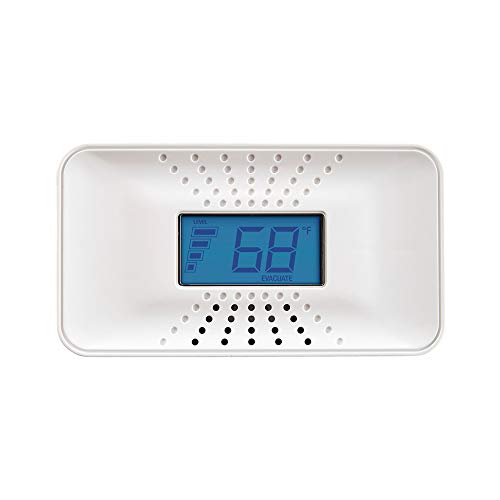
- A carbon monoxide alarm placed per the alarm maker and local code
- A flashlight for checking burners, louvers, hoses, wiring, and the mounting area
- A broom, dust extractor, and trash bags for preheat cleanup
- Gloves for moving rags, cardboard, and finish containers
- A noncontact thermometer if the manual calls for surface checks
How to decide if it is safe
Start with the exact model. The answer changes with heater type, fuel, and installation. A garage-safe electric unit is a different risk profile from a vent-free propane heater or a wall-mounted natural gas model, and the manual comes first.
- Identify the heater type and model number from the label.
- Read the manual before plugging in, lighting, or mounting anything.
- Check the shop condition: loose dust, open finish cans, solvent vapors, and oily rags all raise risk.
- Confirm airflow. For fuel-burning units, crack a door or window slightly; if the model is direct-vent, use the outside-air setup the manual requires.
- Verify clearance and power. Keep combustibles out of the listed zone, and use a dedicated circuit for electric heaters.
A common first-timer mistake is treating a familiar brand as a familiar setup. A 20,000 BTU vent-free propane heater and an electric cabinet heater do not have the same clearance, airflow, or maintenance needs.
Garage heater checklist
| Mr. Heater model type | Shop condition | Safe or not safe | Reason |
|---|---|---|---|
| Electric garage heater | Light dust, no wet finishes, dedicated circuit available | Usually safer | No combustion, but dust still needs cleanup and the circuit must handle the load |
| Vent-free propane heater | Active sanding, closed garage, or poor airflow | Not safe | Combustion byproducts and reduced oxygen make airflow critical |
| Direct-vent or properly installed natural gas unit | Clean shop, clear combustibles, correct wall-mount setup | Conditional | Follow the exact manual, code, and clearance rules |
| Any heater | Paint, solvent, gasoline, or cardboard stored inside the clearance zone | Not safe | Combustible storage increases ignition risk |
What type of Mr. Heater is safest for a workshop?
Electric is usually the cleanest choice for a dusty woodworking space if the circuit can support it. There is no flame, pilot, or combustion exhaust, so sawdust matters mostly as a cleanliness and fire-loading issue. Fuel-burning units can work only when the model is rated for indoor use, installed correctly, and used with airflow.
Electric, propane, natural gas, and infrared
Electric garage heaters need a dedicated electrical circuit; do not run them from extension cords. Propane and natural gas units need combustion air and carbon monoxide awareness. Infrared or radiant styles can heat people and surfaces quickly, but they still create hot surfaces and need the same clearance discipline as other fuel-burning heaters.
Mr. Heater’s Buddy series is explicitly rated for indoor use, and that approval is tied to ANSI Z21.11.2 standards. The Buddy series includes an oxygen depletion sensor that shuts off at low oxygen. The portable Buddy is described as 9,000 BTU and compact, and the Big Buddy line is listed at 9,000-18,000 BTU.
How much clearance does a Mr. Heater need from sawdust and combustibles?
Clearance is model-specific, so the manual is the source that matters most. A conservative floor is to keep combustibles out of the manufacturer’s stated zone and to remove loose dust from the heater’s immediate area before use. Sawdust piles, cardboard, rags, gasoline, paint, and solvent containers do not belong near the unit.
Use the manual first
One guide calls for an 18-inch radius around the heater, and another repeats a 3-foot clearance rule for combustibles. Treat those as examples, not a substitute for your exact manual. The same guide also says garages have dust from sawdust, drywall work, or insulation that can clog heaters.
For combustion heaters, the lower 18 inches is a gasoline vapor zone, and one garage heater guide says combustion heaters should be at least 6 feet off the floor. That does not make a heater safe by itself. It means floor-level vapors and storage matter as much as wall clearance.
Can I use a propane Mr. Heater in a closed garage?
No, not as a blanket rule. A closed garage is the wrong setting for a fuel-burning heater unless the exact model and installation instructions allow it and the garage still has the airflow the manual calls for. Propane units need combustion air, and attached garages raise the stakes because gases can move into the house.
Vent-free propane in a garage
The Mr. Heater MHVFBF20LPT vent-free propane heater is a 20,000 BTU unit with an oxygen depletion sensor, thermostat control, battery-powered electronic ignition, and coverage up to about 700 sq. ft. Even with those features, it still depends on careful airflow management and a clean room. In a dusty or tightly sealed garage, it may be the wrong choice.
Say your 24-by-24-foot garage is closed on a cold morning and you plan to sand trim for an hour. A vent-free propane heater is a poor fit there because dust load, low air exchange, and combustion byproducts stack up at the same time.
Do I need a carbon monoxide detector for a garage heater?
For any fuel-burning heater, a carbon monoxide alarm belongs in the plan, but the exact requirement depends on jurisdiction, appliance type, and installation. Place the alarm according to the alarm maker and local code, and test it monthly. Built-in safety devices on the heater do not replace an alarm.
Placement and testing
A CO alarm should not be treated as decoration. Put it where the manufacturer recommends for the garage, keep batteries current if the unit uses them, and replace the alarm on schedule. If the garage is attached to the house, that alarm becomes even more important because combustion gases can migrate indoors.
What about the Mr. Heater Big Maxx garage heater?
The Big Maxx is a garage heater line, not one fixed model. Mr. Heater appears to offer it in multiple capacities and configurations, and one common garage setup is a natural-gas wall-mount version. It is built for permanent installation, includes a safety shutoff, and uses a heat exchanger designed for durability.
Wall-mount gas heat
That kind of unit can be a good shop heater when the installation is correct and the area stays clear. It still needs the manufacturer’s clearance from walls and ceilings, proper gas supply, and outside air or venting as specified. Wall-mounted does not mean maintenance-free; dust still settles on louvers and around ignition parts.
Suppose the garage is mostly clean, the heater is mounted per the manual, and the finish cabinet is stored in another room. That setup is far safer than running the same heater during active sweep-up with solvent cans open on a bench.
Can I run a Mr. Heater near paint, solvent, or oily rags?
No. Keep gasoline, paint, cardboard, and rags away from the heater, especially inside the clearance zone. Finish fumes and solvent vapors can ignite, and oily rags can self-heat in storage. If the heater is fuel-burning, those materials also add to the overall fire and air-quality risk.
Woodshop-specific cleanup before heat
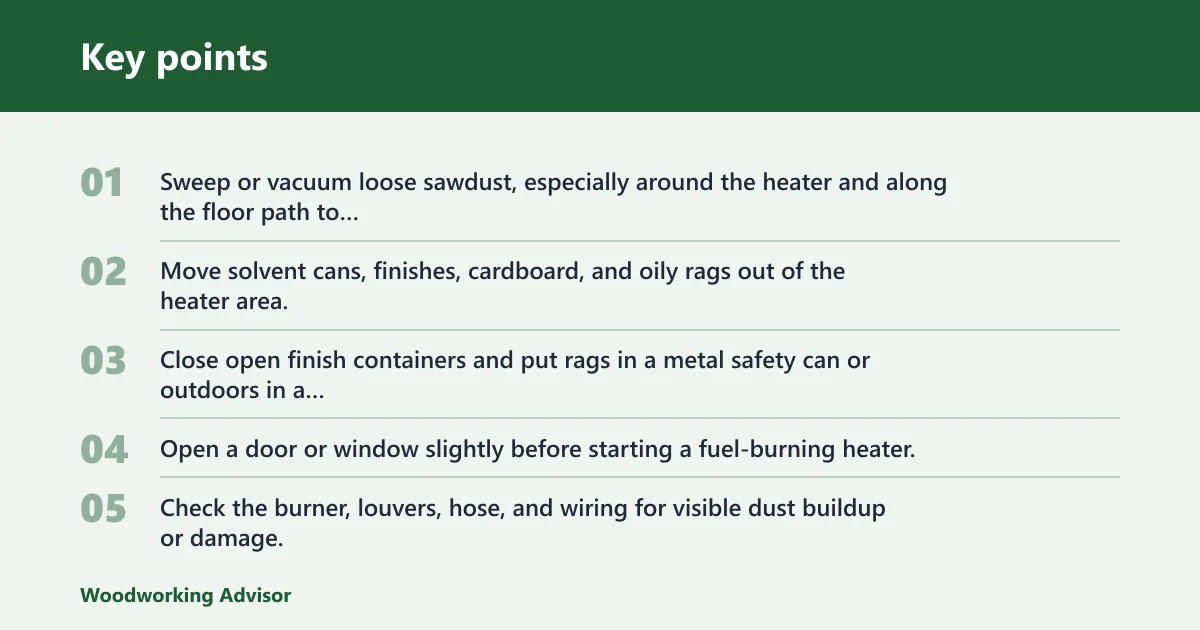
- Sweep or vacuum loose sawdust, especially around the heater and along the floor path to the door.
- Move solvent cans, finishes, cardboard, and oily rags out of the heater area.
- Close open finish containers and put rags in a metal safety can or outdoors in a code-compliant container.
- Check the burner, louvers, hose, and wiring for visible dust buildup or damage.
Dust changes maintenance frequency too. A clean shop may only need a quick preheat wipe-down, while a sanding-heavy day can leave enough fine dust on intake grilles, burners, or sensors to justify a more thorough cleaning before the next run.
Common mistakes
The most common mistakes are simple and costly. They usually come from skipping the manual, treating sawdust like ordinary dirt, or assuming a heater that worked in a clean garage will behave the same in a shop full of airborne fines.
- Running the heater during active sanding or sweep-up without first removing loose dust
- Parking paint cans, solvent containers, gasoline, cardboard, or rags inside the clearance area
- Using an extension cord with a high-draw electric heater
- Ignoring burner, pilot, louver, or sensor cleanup on fuel-burning units
- Skipping local code, listing marks, or the exact manual because the heater is a familiar brand
If that didn’t work, try this next
- Turn the heater off and let it cool fully.
- Recheck the manual for clearance, venting, and installation limits.
- Reduce dust load by vacuuming the area and moving combustibles farther away.
- Improve airflow by cracking a door or window, or switch to a direct-vent or electric setup if the space stays dusty.
Preheat and shutdown checks
Use the same habits every time. Consistency matters more than a last-minute blast of heat, especially in a garage where dust, fumes, and stored materials change from one job to the next.
Mr heater checklist
- Sweep or vacuum loose sawdust near the heater
- Remove cardboard, finish cans, paint, solvents, gasoline, and oily rags from the clearance zone
- Check that the heater sits or mounts per the manual
- Confirm the CO alarm is in place and working if the heater burns fuel
- Open airflow as required by the unit
Shutdown checklist
- Turn the heater off
- Let it cool before you move tools or store materials nearby
- Store fuels, finishes, and rags away from the heater
- Look for dust buildup on louvers, burners, sensors, and the floor around the unit before the next use
Frequently asked questions
Is a Mr. Heater safe to use in a garage with sawdust?
Yes, if the model is approved for the space and you control the dust. Sawdust changes the risk profile because fine particles can ignite and can also settle into burners, louvers, and sensors. Electric heat is usually the cleaner option; fuel-burning units need stronger cleanup and airflow discipline.
Will sawdust clog or affect a Mr. Heater?
Yes. Dust can collect on burners, pilots, louvers, ignition parts, and sensors, which can reduce airflow and interfere with safe operation. The fix is routine cleanup, not forced operation. If the shop is producing a lot of airborne dust, stop heating until the area is cleaned and aired out.
Is a vent-free Mr. Heater okay in an attached garage?
Only if the exact model, local code, and installation conditions allow it, and even then it deserves caution. Attached garages increase the consequence of any combustion issue because gases can migrate indoors. If the garage is dusty or tightly sealed, a vent-free unit is usually the wrong fit.
Sponsored / affiliate links. As an Amazon Associate I earn from qualifying purchases. I may earn additional commission from eligible campaigns.