Simple Wood Joints: 6 Types Every Beginner Should Know
Six joints cover almost everything a beginner needs: butt, miter, dado, rabbet, lap, and dovetail. Each trades off differently between ease of cutting and finished strength — a butt joint takes thirty seconds and no special tools but relies entirely on glue and fasteners, while a dovetail takes real practice but needs no metal fasteners at all once it’s cut correctly.
Butt Joint
Two boards meet end-to-end or edge-to-edge with no interlocking cut at all — just square-cut faces pressed together. It’s the fastest joint to make and requires no special tools beyond a saw that cuts square, but it’s also the weakest on its own: all the holding strength comes from glue and fasteners (nails, screws, dowels, or biscuits), not from the joint’s shape. Reinforce it if the joint will see any real stress; use it plain only for low-load work like simple boxes or interior framing that will be covered anyway.
Good for: quick frames, crates, shelving, anywhere the joint gets reinforced with screws or dowels.
Miter Joint
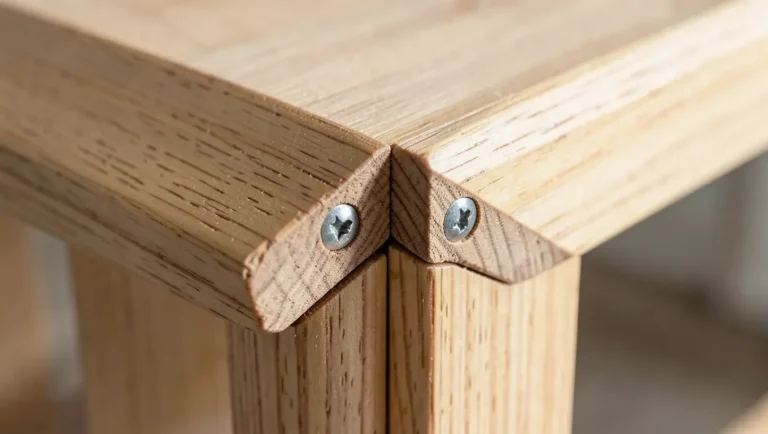
Two pieces are each cut at 45 degrees and joined to form a 90-degree corner, hiding the end grain for a cleaner look than a butt joint — this is why picture frames and trim use miters instead of butt joints. The trade-off is that a miter joint is actually weaker than a butt joint glue-for-glue, since end grain (exposed on the cut faces) doesn’t absorb glue as well as long grain does. For anything beyond a lightweight frame, reinforce a miter with a spline, biscuit, or corner brace.
Good for: picture frames, trim corners, boxes where appearance matters more than raw strength.
Build Stronger Joints Faster
Best for Reinforcing Butt & Miter Joints
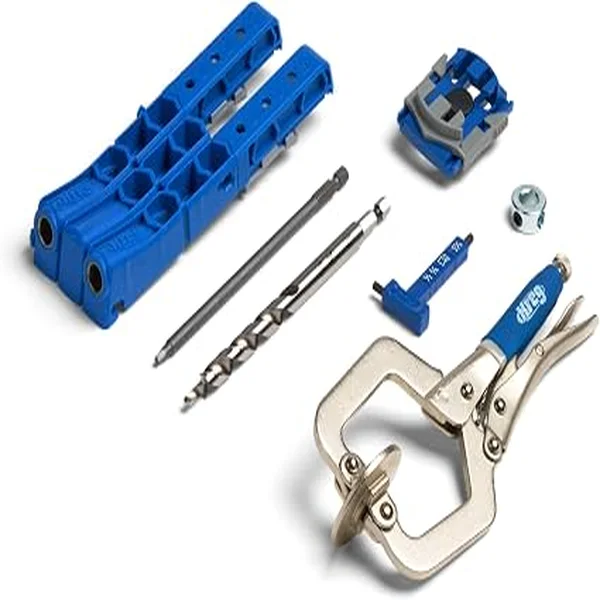 |
Kreg Pocket-Hole Jig 320 with Classic 2″ Face Clamp – $49.00 Pocket-hole screws turn a plain butt joint into one of the strongest, fastest joints in this list — no glue-up clamping time required.
|
Dado Joint
A dado is a groove cut across the grain of one board that a second board’s edge fits into — think of the grooves that hold shelves inside the side panels of a bookcase. It’s cut with a table saw dado stack, a router with a straight bit, or multiple passes of a regular saw blade. Because the groove supports the inserted piece on three sides, a dado handles weight well and is the standard choice for shelving.
Good for: bookcase and cabinet shelves, dividers, anywhere a panel needs to be supported from below and on both sides.
Rabbet Joint
A rabbet is like a dado cut along an edge instead of across the middle — an L-shaped notch removed from the corner of a board that another piece sets into. It’s the standard joint for cabinet backs and drawer bottoms because it hides the plywood edge of the inserted panel while still providing real glue surface and mechanical support, unlike a plain butt joint.
Good for: cabinet backs, drawer bottoms and sides, box corners.
Lap Joint
Half the thickness is removed from each of the two overlapping pieces so they sit flush when joined, rather than stacking on top of each other at full thickness. The large flat glue surface (much bigger than a butt joint’s end-grain contact) makes lap joints noticeably stronger, and they’re forgiving to cut with just a saw and chisel or a router.
Good for: frame corners, cross-halving joints in stretchers and aprons, anywhere you want more strength than a butt joint without dovetail-level skill.
Dovetail Joint
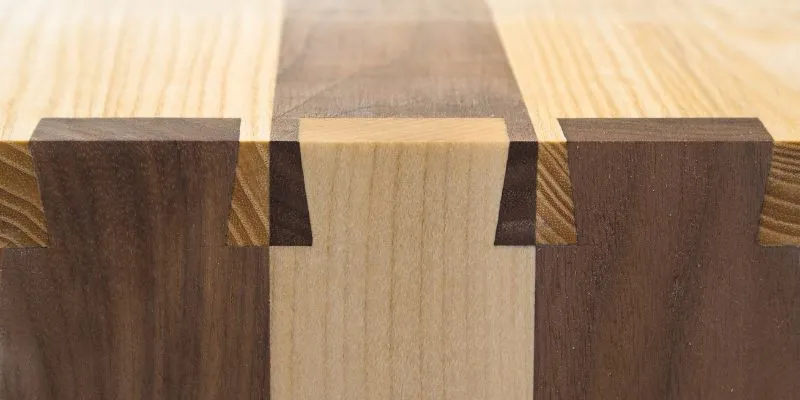
Interlocking trapezoidal “tails” and “pins” fit together like a puzzle and physically resist being pulled apart in the direction the joint would naturally fail — this mechanical interlock, not glue, is what makes a well-cut dovetail one of the strongest joints in woodworking. It’s the traditional choice for drawer boxes specifically because drawers get pulled outward constantly, which is exactly the direction a dovetail resists best.
Cutting one well takes real practice: mark the tails first, cut just outside your lines with a fine-toothed saw, clean up with a chisel, then transfer that exact shape onto the second board to mark the pins. For the complete hand-tool process — baseline setup, the right dovetail angle for hardwood versus softwood, and how to fix a loose or gappy fit — see our full guide to cutting dovetail joints by hand.
Good for: drawer boxes, fine furniture corners, anything where both strength and appearance matter.
Choosing the Right Joint for Your Project
| Need | Best Joint |
| Fastest, simplest, will be reinforced anyway | Butt joint (+ pocket screws or dowels) |
| Clean corner, hidden end grain, lighter loads | Miter joint |
| Shelf that needs support from below | Dado joint |
| Cabinet back or drawer bottom panel | Rabbet joint |
| More strength than a butt joint, still simple to cut | Lap joint |
| Maximum strength, no fasteners, drawer boxes | Dovetail joint |
Beyond these six, projects that need to resist twisting force at a right angle (chair and table leg-to-rail connections especially) usually call for a mortise and tenon joint instead — a step up in complexity but the strongest option for that specific kind of load.
Keeping Joints Tight Over Time
Wood moves seasonally with humidity, and that movement is what eventually loosens a joint that was cut perfectly on day one. Check glued joints periodically for the telltale hairline crack or slight wiggle that means the glue bond has started to fail — catching it early means a quick glue-and-clamp repair instead of a full rebuild. If a joint has actually failed, clean out the old dried glue completely before regluing; fresh glue doesn’t bond well over old cured glue residue.
Frequently Asked Questions
What is the simplest wood joint?
The butt joint. Two square-cut pieces are simply pressed together with no interlocking cut, then reinforced with glue, nails, screws, or dowels.
What is the easiest way to join two pieces of wood together?
A butt joint reinforced with wood glue and pocket screws or dowels – it requires no interlocking cuts and can be assembled quickly with basic tools.
Which simple joint is actually the strongest?
Of the beginner-friendly joints, the dovetail is strongest because its interlocking shape mechanically resists being pulled apart, independent of the glue bond. For a reinforced butt joint, pocket screws add significant strength over glue alone.
What is the easiest joint in carpentry for shelving?
The dado joint – a groove cut across one board that a shelf’s edge sets into, supporting the shelf on three sides and handling weight well without extra fasteners.
Bottom Line
Start with a butt joint reinforced with pocket screws or dowels for most quick projects, move to a dado or rabbet when a shelf or panel needs real support, and save the dovetail for drawers and fine work where the extra practice pays off in both strength and looks.
Sponsored / affiliate links. As an Amazon Associate I earn from qualifying purchases. I may earn additional commission from eligible campaigns.