How to Build a Dust Collector
Build a dust collector around the tool that demands the most airflow in your shop: about 350 CFM for handheld sanders and about 700–900 CFM at a 4-inch port for one machine. Use short ducts, put a cyclone ahead of the filter, and size the system for the longest run and the tightest port. Get it wrong and fine dust stays airborne, filters clog fast, and you pay for noise without getting chips out of the way. This guide covers collector types, airflow targets, duct sizing, separator choices, and tuning steps for low-noise, low-loss dust collection.
Choose the right dust collector path


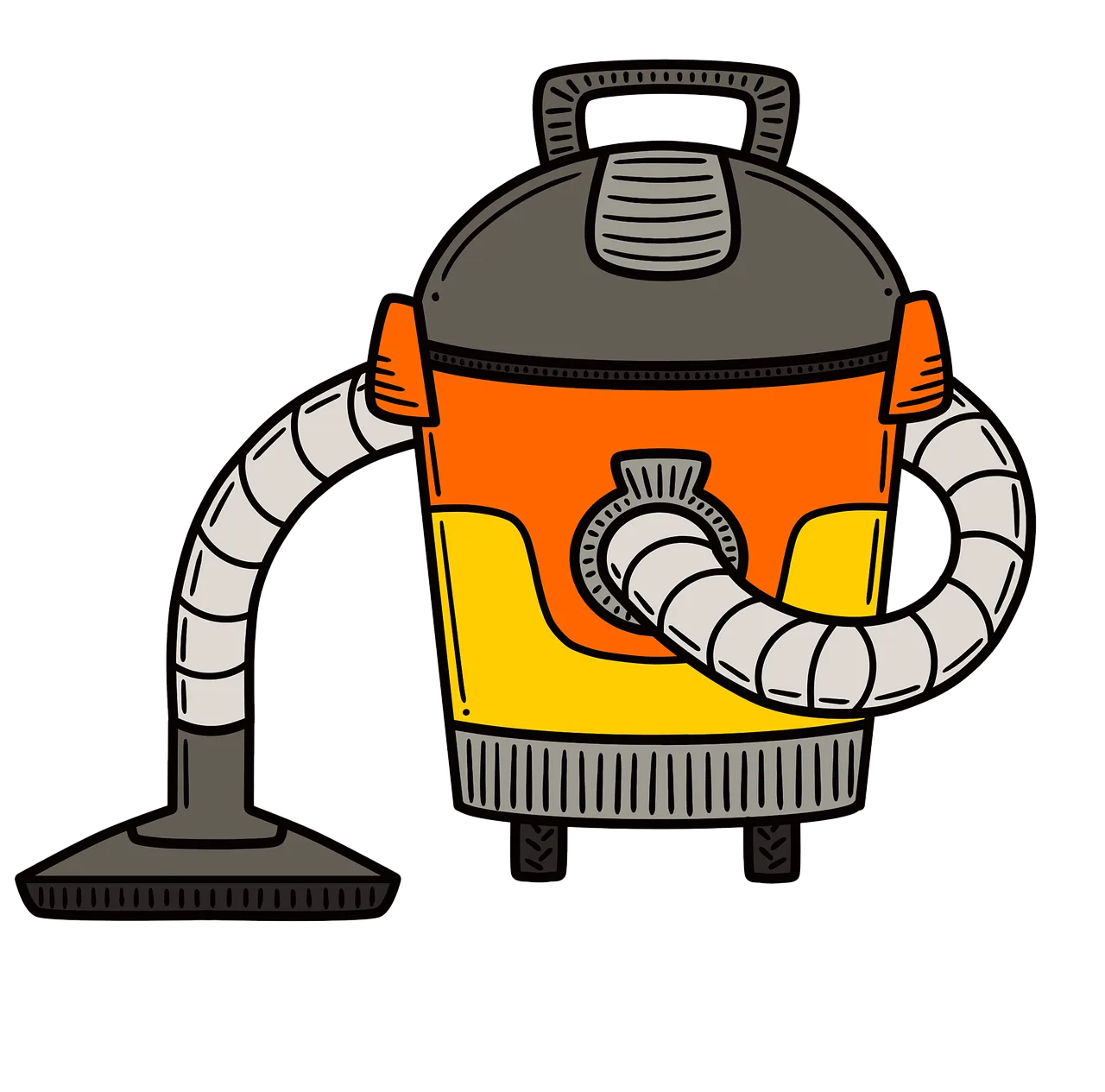
Start with the tools, not the motor. A shop vac fits short runs and small ports; a separator keeps chips out of the filter; a true blower-based collector works when one machine needs steady airflow through larger ducting.
Dust collector build matrix
| Build path | Airflow | Noise | Parts complexity | Hose length tolerance | Best-fit tools |
|---|---|---|---|---|---|
| Shop vac + separator | Best for small ports and cleanup | Often the loudest at the tool | Low | Short, usually one tool at a time | Miter saw, sanders, bench stations, small sanders |
| Small blower collector | Better for sustained single-tool collection | Can be quieter if the housing fits well | Medium to high | Short to moderate, with straighter runs | Table saw, jointer, planer, fixed collector point |
| Hybrid branch system | Best when one main machine and a few branches share suction | Usually moderate | Highest | Shortest at each branch, because losses add up fast | Table saw plus guard port, miter saw station, bench tools |
What you’ll need
- Shop vac or dust collector base sized for the tool you are serving
- Dust separator or cyclone placed before the vacuum
- Flexible hose, commonly 2 1/2-inch in small-shop setups
- Blast gates for each branch
- Y fitting for dual-pickup layouts
- Tool-triggered switch for fixed tools
- Port adapters that match your machine, hose, separator, and vacuum
- Hose clamps or cuffs that match the chosen hose brand
- Basic layout tools: tape measure, marker, and a straightedge
- Manometer or another simple suction check method
Build the system around the worst airflow demand in the shop, then keep the path short and simple. Put the separator before the vacuum, use the fewest turns possible, and reserve branch fittings for tools that truly need them. One machine at a time is easier to size and maintain.
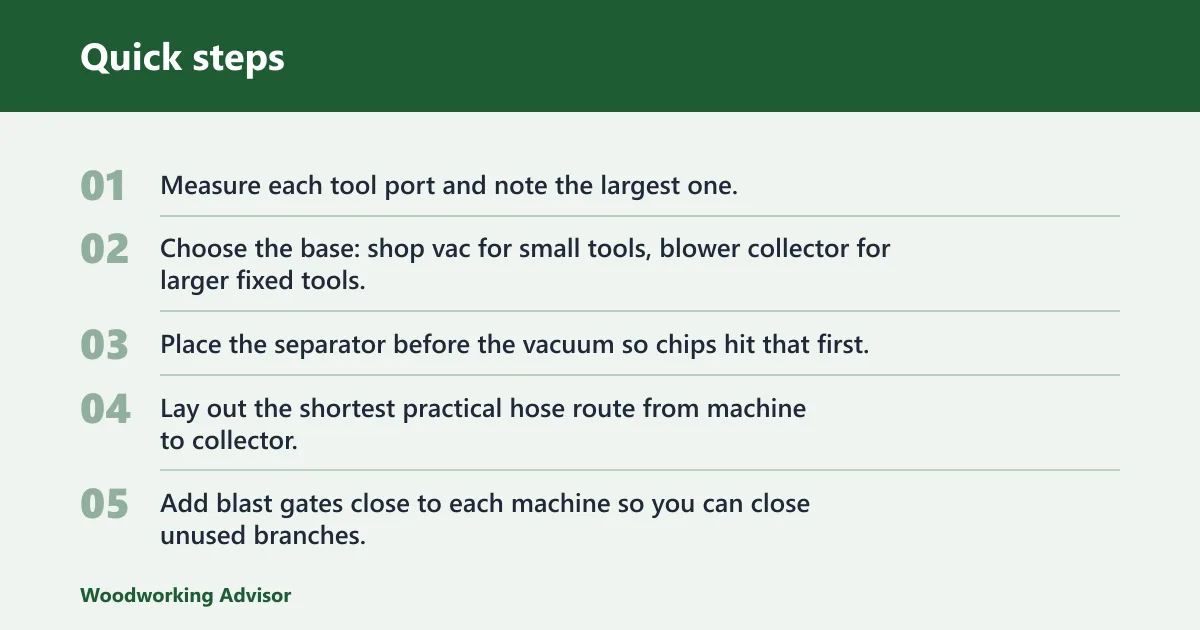
- Measure each tool port and note the largest one.
- Choose the base: shop vac for small tools, blower collector for larger fixed tools.
- Place the separator before the vacuum so chips hit that first.
- Lay out the shortest practical hose route from machine to collector.
- Add blast gates close to each machine so you can close unused branches.
- Install the tool-triggered switch on fixed tools so the vac starts with the tool and runs briefly after shutoff.
- Test suction at each port, then trim dead space and leaks.
Shop vac plus separator
This path works best for one machine with short hose runs. A shop vac typically develops about 150 cm of suction when blocked, but that blocked number does not mean the same performance at a real tool port. Keep the run short and use the separator before the vac bag or cartridge so chips do not load the filter quickly.
Small blower collector
A blower-based collector needs the inlet, impeller, housing, and duct or filter path arranged correctly. Air moves through the inlet, then the impeller, then the housing, then the duct or filter path. Do not route air through the motor. If the blower is homemade, motor and impeller sizing matter because overload shows up as heat, noise, and weak pickup.
Hybrid branch system
A hybrid layout uses one collector for a main tool and a few short branches for nearby stations. Use a Y fitting only where both branches and cuffs match the hose system, and keep blast gates close to the machine. This works for a table saw station with a main port and a guard port, or for a miter saw station plus a bench tool.
Which setup fits your tools?
Match the collector to the dust source. A miter saw throws chips in a wide spray, a table saw needs more than one pickup point, and sanders need strong airflow at a small opening. The right answer changes with the tool and the hose length, not just the budget.
Miter saw stations
A miter saw usually benefits from a shop vac, separator, and very short hose run. Put the pickup behind the saw and another close to the blade path if the station allows it. Long hose runs weaken capture fast, so this setup should stay compact.
Table saws and blade guards
A table saw often needs the main collection port plus the blade-guard port. Tie those into a branch system with a Y fitting only if the ports and hose sizes match the fittings you bought. Use two blast gates if the system serves other tools, and keep both gates close to the machine side of the run.
Sander and bench-tool setups
Hand sanders and bench tools usually suit a shop vac-based system because the hose can stay short and the port is small. Add a separator before the vacuum, then use the tool-triggered switch so the vac starts automatically. That helps with fixed bench stations where the tool turns on and off often.
How do you size the hose and fittings?
Size the hose to the tool port and verify every adapter before you cut anything permanent. Compatibility varies by brand, and a fitting that looks close can still leak or fall off under vibration. Keep the hose as short as the station allows, because every extra bend and foot steals suction.
Match hose diameter to port size
Check the outside diameter of the tool port and the inside diameter of the hose cuff or adapter. Small-shop systems commonly use 2 1/2-inch flexible hose, but that is not universal. If the tool port is smaller, use a reducer made for that brand or style rather than forcing a loose wrap of tape.
Use Y-fittings only where the branches fit
A Y fitting is useful when one machine needs two pickups, such as a table saw port and guard port, or a bench setup with two stations nearby. Use it only if the branch cuffs, hose diameter, and separator outlets are all compatible. If one side leaks, the branch nearest the leak will lose performance first.
Place blast gates close to each machine
Blast gates help direct suction to one tool at a time. Put them near the machine, not at the collector, so the closed section stays short. That reduces dead volume and helps the active branch keep more usable airflow.
How do you make a dust collector quieter?
Make it quieter by fixing leaks, fitting the housing correctly, and keeping the impeller and motor from working harder than they need to. Quieting a collector without checking those basics usually trades sound for weaker pickup. Good alignment matters more than blanket insulation or random padding.
Check housing fit and clearance
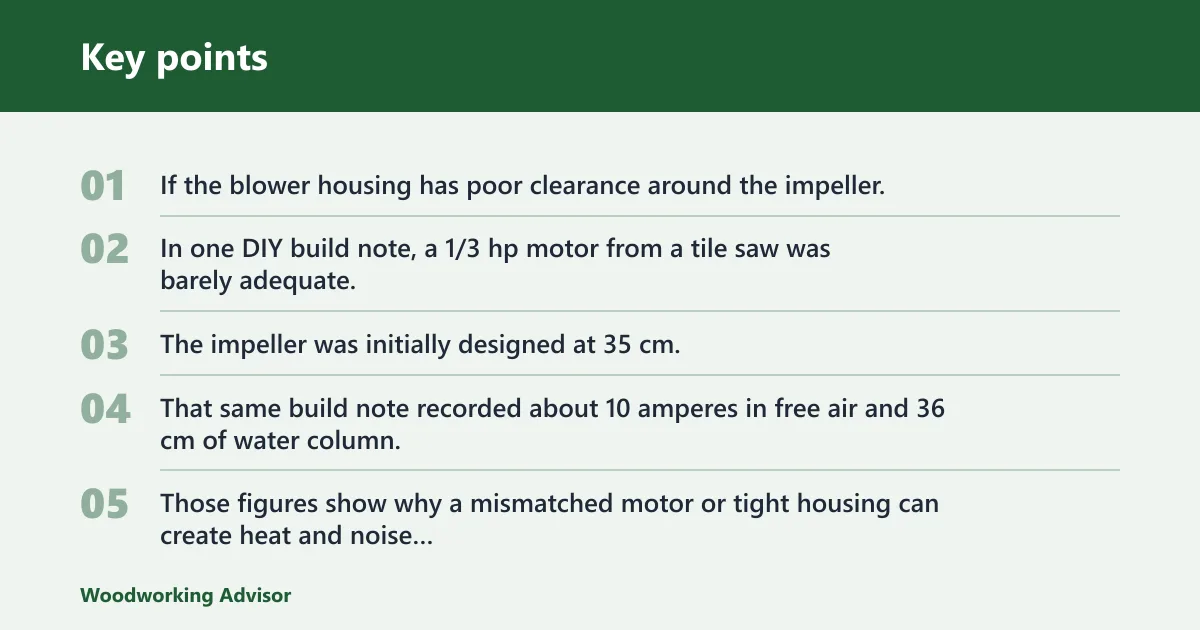
If the blower housing has poor clearance around the impeller, the unit can get louder and the motor can labor. In one DIY build note, a 1/3 hp motor from a tile saw was barely adequate, then the build later moved to a 2/3 hp motor from a cheap JobMate table saw. The impeller was initially designed at 35 cm, and a board length of 34 cm was tested on the motor.
That same build note recorded about 10 amperes in free air and 36 cm of water column, about 14 inches of water column. Those figures show why a mismatched motor or tight housing can create heat and noise instead of useful collection.
Reduce leaks before chasing noise
Seal the easy leaks first: hose cuffs, adapter joints, separator lid, and blast gate bodies. A leaky system often sounds harsher because air whistles through gaps while pickup falls off at the tool. Fixing leaks usually improves noise and performance together.
Verify impeller balance and motor load
Check that the impeller spins without rubbing the housing and that mounting hardware is tight and even. An imbalanced rotor can create vibration, which becomes noise and can shorten bearing life. If the motor sounds strained during startup or under load, stop and recheck fit before running it again.
Common mistakes
Most failures come from trying to make one collector do everything. The result is a long hose, too many bends, or a separator that fills before the tool is done.
- Using a shop vac on a long run: move the vac closer or shorten the hose.
- Skipping the separator: chips reach the filter faster and bag changes become constant.
- Mixing incompatible fittings: compare hose cuff size, port diameter, and brand-specific adapters before assembly.
- Placing blast gates far from the machine: that leaves too much dead hose in the active branch.
- Overloading the motor: if the blower labors, reduce restriction or choose a larger collector path.
- Ignoring imbalanced impellers: vibration and noise rise, and performance drops.
Say your table saw has a main 4-inch port plus a blade-guard port, and the guard hose keeps popping loose. The fix is usually not more tape; it is a correct adapter and a Y fitting that matches the actual hose and port sizes.
Suppose a miter saw station uses a 10-foot hose because the collector sits across the shop. The saw will still throw dust if you add a better filter later. Shorten the run first, then test again.
Frequently asked questions
How to build a dust collector for a miter saw
Use a shop vac, a separator, and the shortest hose you can route behind the saw. Add a second pickup point if the station allows it, and place the hose so it does not fight the saw’s travel. A tool-triggered switch helps on fixed stations.
How to set up a dust collector system
Start with the main machine, then place the separator before the vacuum and add one branch at a time. Use a blast gate at each branch, and test suction after every added fitting. If a branch is weak, shorten it before changing the collector.
How to make a dust collector for table saw
Use both the main port and the blade-guard port if the saw supports them, then connect them through fittings that actually match the hose. A Y fitting can work, but only when the branch sizes are compatible. Put blast gates near the saw.
How to make a dust collector for a shop vac
Use short hose runs, a separator before the vac, and an automatic switch if the vac serves a fixed tool. A shop vac works best when the hose stays short and the port is small. If the run gets long, move the vac closer to the machine.
Sponsored / affiliate links. As an Amazon Associate I earn from qualifying purchases. I may earn additional commission from eligible campaigns.