Your Guide to the Kobalt 7 1/4 Compound Miter Saw
The Kobalt 7-1/4″ compound miter saw is Lowe’s budget entry into the compact miter saw category – a corded, single-bevel saw built for trim, picture frames, and small DIY projects rather than framing lumber or crown molding. This guide covers what it can and can’t cut, how it compares to similarly-sized saws from other brands, setup and safety basics, and a few beginner projects it handles well.
What Is a Kobalt 7 1/4 Compound Miter Saw?
A Comparable Corded 7-1/4″ Saw
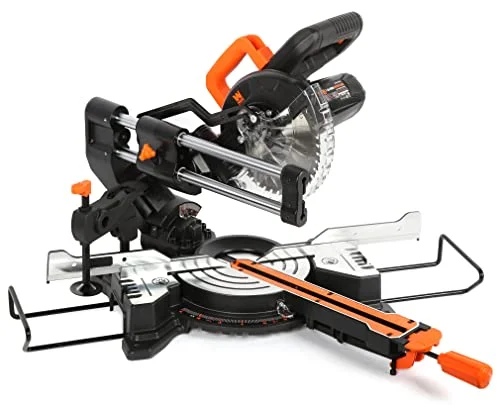 |
WEN 9.5-Amp 7.25″ Compact Sliding Compound Miter Saw A corded compact miter saw in the same size class as the Kobalt, with a sliding rail that extends its crosscut capacity past a fixed 7-1/4″ saw’s usual limit.
|
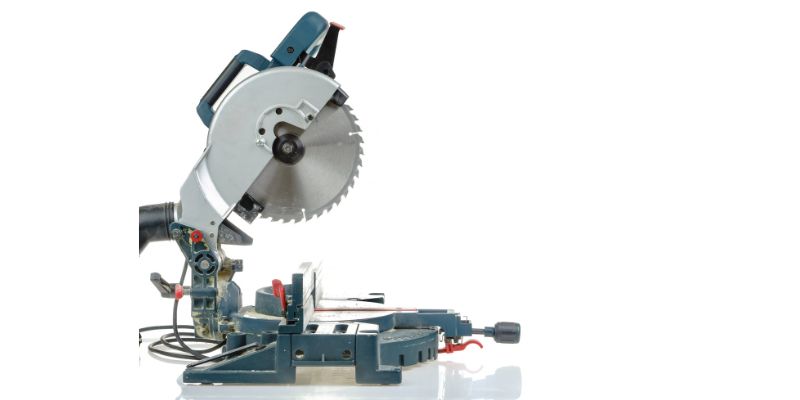
A compound miter saw tilts and pivots to cut angles in two directions at once – the miter angle (left-right, for corner joints) and the bevel angle (tilting the blade, for angled edges) – which is what “compound” means here. The Kobalt 7-1/4-inch model weighs around 23 pounds, light enough to carry between a garage and a job site, and runs a 10-amp motor at roughly 5,000 RPM. Because the blade is smaller than the 10- or 12-inch saws most framing carpenters use, it’s built for trim-scale work, not full dimensional lumber.
Its rated capacity is around 2×8 material at a square 90-degree cut and 2×6 at a 45-degree miter – enough for most picture frames, shelving, and trim work, but you’ll need to flip a 4×4 post to finish the cut in two passes since it can’t get through it in one. A built-in laser guide marks where the blade will land before you cut, which helps line up a cut without guessing, especially useful for a beginner still building confidence with a miter saw.
How It Compares to Other 7-1/4″ Saws
The Kobalt sits in the same compact-saw category as several other brands’ 7-1/4″ models, and the differences mostly come down to weight, motor spec, and whether a laser guide is included.
| Feature | Kobalt 7-1/4″ | Ryobi 7-1/4″ | DeWalt 7-1/4″ |
|---|---|---|---|
| Weight | 23 lbs | 25 lbs | 30 lbs |
| Motor | 10 Amp, 5,000 RPM | 10 Amp, 5,000 RPM | 9 Amp, 4,500 RPM |
| Max Cut (90°) | 2×8 inches | 2×8 inches | 2×6 inches |
| Laser Guide | Yes | No | Yes |
| Price (Approx.) | $100-$200 | $90-$150 | $150-$250 |
Comparing popular 7-1/4-inch miter saws for DIY-scale projects.
Pros and Cons
The Kobalt’s main advantages are its low price and light weight, which make it an easy first miter saw. Its limits show up on bigger material: a 4×4 post needs flipping to finish the cut, and the dust collection bag catches only a portion of the sawdust a cut produces, so most owners end up running a shop vac hose to the port for anything beyond occasional light use.
Because Kobalt is a Lowe’s house brand, it isn’t sold through Amazon or most other tool retailers, which limits your options if you need a replacement part, an extra blade, or a warranty exchange outside of Lowe’s own stores and site. That’s worth weighing against a brand like Ryobi or DeWalt with wider retail availability if parts and accessory access matters to you.
Setting Up the Saw
- Set it on a flat, sturdy surface – a wobbly table transfers straight into wobbly cuts.
- Plug into a nearby outlet so the cord isn’t stretched across a walkway.
- Check the blade is tight and spins true, with no visible wobble.
- Turn on the laser guide and confirm it lines up with an actual test cut on scrap wood, not just by eye.
- Clamp the workpiece down before cutting – never hold a board freehand against a spinning blade.
Safety Basics
- Wear safety glasses every time – a miter saw throws sawdust and chips upward and toward the operator.
- Keep hands well clear of the blade path, and use a push stick or clamp for anything narrow.
- Unplug the saw before changing the blade – never rely on the switch alone.
Beginner Projects This Saw Handles Well
Picture Frame
- Cut four pieces of 1×2 stock, each at a 45-degree angle.
- Measure carefully so opposite sides match in length.
- Glue and clamp the corners and let them dry fully before handling.
- Sand and finish with paint or stain once assembled.
Small Wall Shelf
- Cut two boards of 1×6 stock, 24 inches long, for the shelf itself.
- Cut two triangular supports at a 90-degree angle, about 6 inches on the short sides.
- Screw the supports underneath the shelf boards.
- Finish with paint or stain to match the room.
| Project | Materials Needed | Time | Difficulty |
|---|---|---|---|
| Picture Frame | 1×2 wood, glue, paint | 1 hour | Easy |
| Small Shelf | 1×6 wood, screws, stain | 2 hours | Medium |
Common Mistakes to Avoid
- Using the wrong blade. A cheap, coarse-tooth blade leaves rough, splintered edges – a fine-tooth blade gives a noticeably cleaner cut on trim and frame stock.
- Skipping the test cut. Always confirm an angle on scrap wood before cutting the actual workpiece.
- Ignoring dust collection. Connect a shop vac to the dust port for anything more than a few quick cuts.
Corded vs. Cordless Kobalt Models
The corded Kobalt is the cheaper, simpler option and the better fit for a home workshop near an outlet. Kobalt’s cordless 24-volt version runs closer to $269 as a bare tool (battery and charger sold separately), and it’s heavier at around 30 pounds because of the added battery mount and motor housing needed to run on battery power. The tradeoff is genuinely about location: an outlet-free job site or outdoor cutting station is where the cordless version earns its higher price, while a garage or shop with power already runs the corded saw just as well for less money.
Runtime is the other real factor with the cordless version: a compact miter saw draws enough current that a single battery charge is good for a limited number of cuts, not an all-day session, so plan on a second battery if you’re using it for anything beyond occasional trim work away from an outlet.
| Feature | Corded Kobalt | Cordless Kobalt |
|---|---|---|
| Power Source | Plug-in | 24V Battery |
| Weight | 23 lbs | 30 lbs |
| Price | $100-$200 | $269 (bare tool) |
| Best For | Home workshop | Job sites without power |
Frequently Asked Questions
What can the Kobalt 7 1/4 compound miter saw cut?
It’s rated for up to 2×8 material at a square 90-degree cut and 2×6 at a 45-degree miter, which covers most trim, picture frame, and shelving projects. For anything larger, like a 4×4 post, you’ll need to flip the board and finish the cut in a second pass.
Is the Kobalt saw good for beginners?
Yes. It’s light, straightforward to set up, and the built-in laser guide takes the guesswork out of lining up a cut. Start with simple, forgiving projects like a picture frame, practice angle cuts on scrap wood first, and always wear eye protection.
How do I maintain a compact miter saw like this?
Clear sawdust from the base and blade guard after each use, check the blade periodically for dullness or damage, and keep the mounting bolts snug to prevent developing wobble. Store it somewhere dry – rust on the table surface or blade will show up in your cuts.
Can I cut crown molding with this saw?
Only smaller crown molding, up to around 5 inches when laid flat with the bevel adjusted for the spring angle – the smaller blade limits how tall a piece of molding it can get through compared to a full-size 10- or 12-inch saw. For larger crown molding runs, a bigger saw is the more practical tool, since laying tall crown flat and compounding the miter and bevel angles gets error-prone fast on a smaller deck and fence.
Is the cordless version worth the extra cost?
Only if you regularly work somewhere without a nearby outlet. For a home workshop or garage with power already available, the corded version does the same cutting job for less money and without the added weight of a battery mount.
What causes a wobbly blade, and how do I fix it?
Wobble is usually a loose arbor nut or a blade that isn’t seated flush against its mounting flange – check and retighten first. If the wobble persists with a properly tightened, undamaged blade, the arbor itself may be bent or worn, which typically means a repair or replacement rather than a simple fix.
Conclusion
The Kobalt 7-1/4″ compound miter saw fills a specific niche well: light, affordable, and accurate enough for trim, frames, and small shelving projects, without pretending to be a full-size framing saw. If your projects stay in that trim-and-small-project range, it’s a reasonable first miter saw; if you’re regularly cutting dimensional lumber or wide crown molding, a 10- or 12-inch saw is the better long-term investment. Whichever size you land on, a sharp, correctly-toothed blade and a squared-up saw table matter more to cut quality than the brand name on the housing.
Sponsored / affiliate links. As an Amazon Associate I earn from qualifying purchases. I may earn additional commission from eligible campaigns.