Squeaky Wood Floor Lubricant: Does It Work on Solid Hardwood?
Wood floor lubricant — powdered graphite, talcum, or a silicone spray — quiets squeaks on engineered and laminate floating floors, but it rarely fixes solid nail-down hardwood, where the noise comes from a loose subfloor connection, not board friction. Using the wrong fix wastes an afternoon and the squeak often returns within days. This guide covers which lubricant works for which floor type, the exact application steps, and the screw-and-shim fix for solid hardwood when lubricant alone won’t do it.
What Causes Squeaky Wood Floors (and Which Fix Actually Works)
Best Solid-Hardwood Squeak Fix
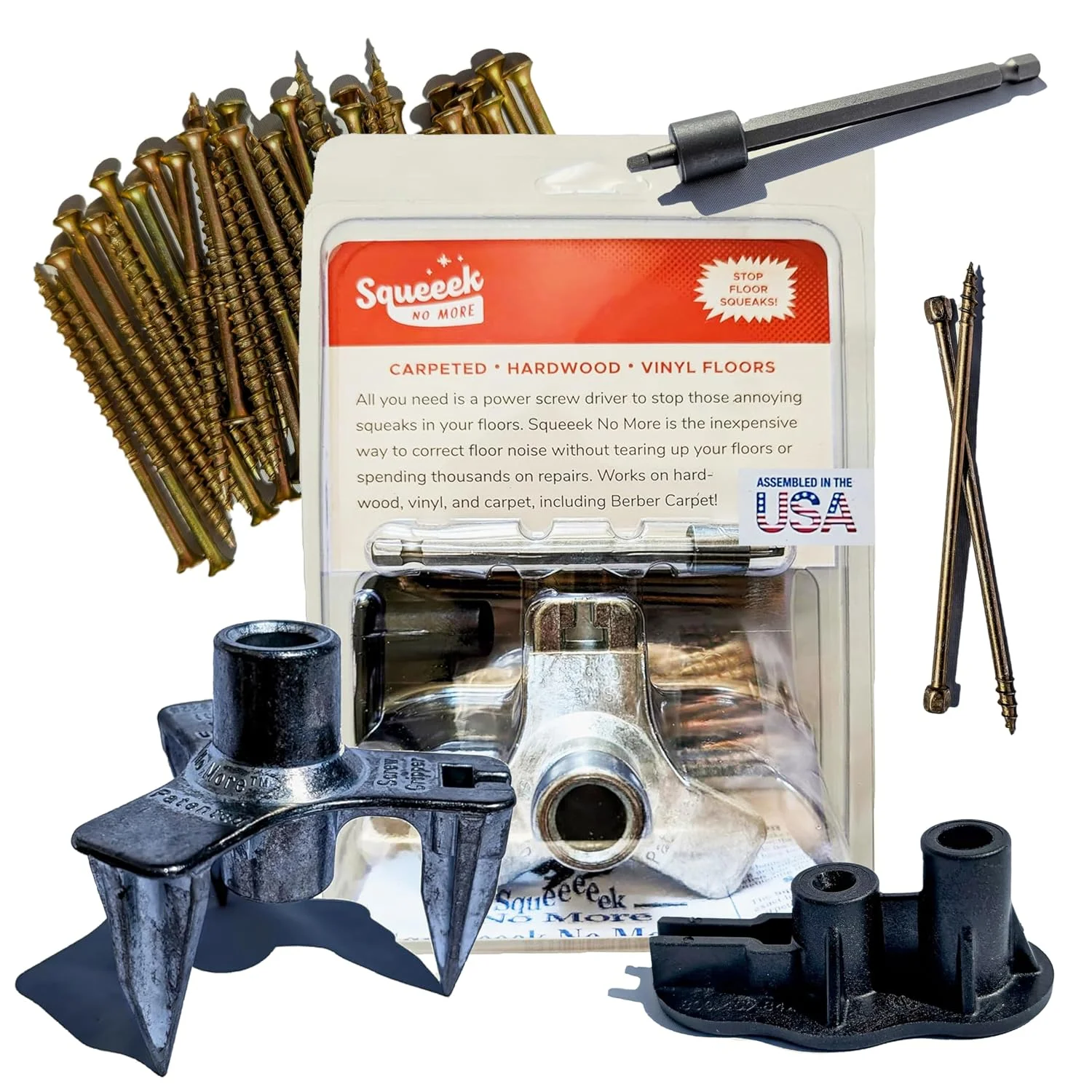 |
Squeeek No More Floor Repair Kit (Zinc Fixture 3233Z) – $25.55 Drives self-breaking screws through the hardwood into the joist below, the fix this guide recommends when lubricant alone can’t stop a structural squeak.
|
Squeaks come from two structurally different problems depending on how the floor was installed. A floating engineered or laminate floor isn’t attached to the subfloor at all — its planks lock together with tongue-and-groove joints, and as the floor flexes slightly underfoot, those joints rub and squeak. A solid nail-down or glue-down hardwood floor is fastened directly to a wood subfloor, so its squeak almost always means a nail has backed out or the subfloor itself has separated a fraction of an inch from the joist below.
Humidity makes both worse. Wood expands when relative humidity climbs and contracts when it drops, and the National Wood Flooring Association recommends keeping indoor relative humidity between 30% and 50% year-round to limit that seasonal movement. A floor that squeaks only in winter, when indoor air is driest, is usually telling you the wood has shrunk enough to open a gap that wasn’t there in summer.
Does Wood Floor Lubricant Actually Work on Solid Hardwood?
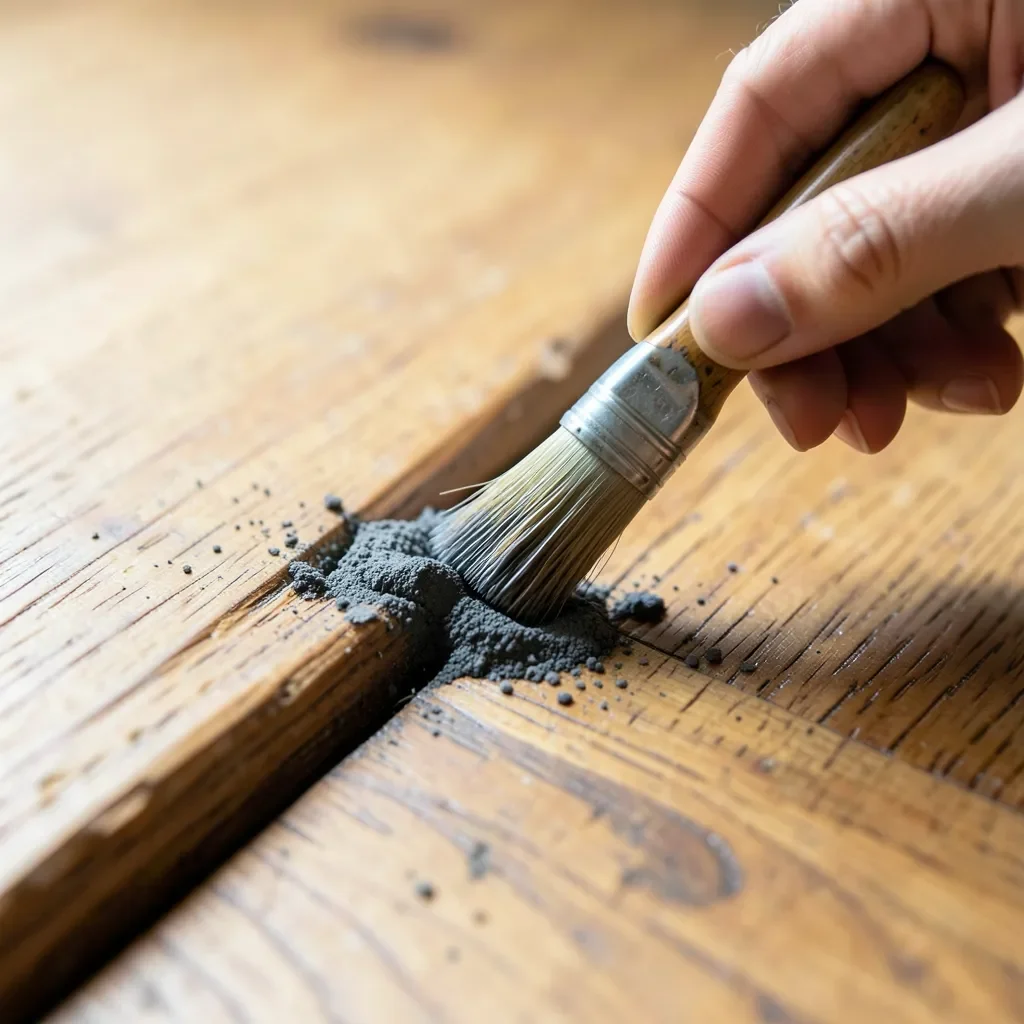
Wood floor lubricant is a dry or liquid product — usually powdered graphite, talcum, or a silicone-based spray — that reduces friction between two moving wood surfaces. It works well inside a floating floor’s tongue-and-groove seams, where the boards genuinely slide against each other. It does not work when the squeak comes from a fastener or subfloor gap, because lubricant has nothing solid to bridge — it just sits in a crack that keeps moving.
This is the mistake behind most “I tried lubricant and it didn’t work” complaints: the floor was solid hardwood, not a floating floor, so no amount of powder or spray could have fixed it. Home Depot even labels its own squeaky-floor lubricant product specifically “for Laminate, Engineered and V-Groove Wood Floors” — not for solid hardwood — which confirms the same limitation directly from the manufacturer.
Best Types of Floor Lubricant Compared
For floating floors, these are the options worth using, ranked by how long the fix actually lasts before needing to be reapplied.
| Lubricant Type | Best For | How Long It Lasts |
|---|---|---|
| Powdered graphite | Tight tongue-and-groove seams, dark floors (won’t show as residue) | 3–6 months |
| Talcum or baby powder | Light-colored floors, a quick no-cost test fix | 1–3 months, needs frequent reapplication |
| Powdered soapstone | Wider gaps between boards | 4–8 months |
| Silicone spray (floor-rated) | Engineered floors with a factory finish | 6–12 months |
| Manufacturer lubricant kit | Laminate and V-groove floors specifically | 6–12 months |
How to Apply Wood Floor Lubricant
- Clean the seam: Vacuum or wipe dust out of the crack between the boards so the lubricant doesn’t clump into a paste.
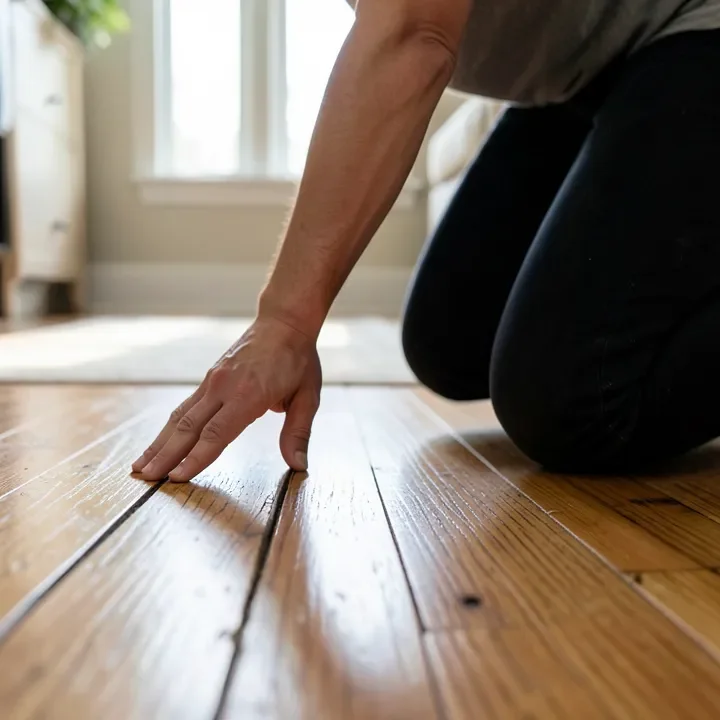
- Locate the exact board: Walk the area slowly and mark the specific seam that squeaks — lubricant applied to the wrong seam does nothing.
- Apply the lubricant: Sprinkle powdered graphite, talcum, or soapstone directly into the crack, or spray a floor-rated silicone product into the seam only, not across the finished surface.
- Work it in: Use a putty knife edge or a cloth-covered foot to press the powder down into the gap.
- Wipe and test: Remove excess powder so it doesn’t track onto socks, then walk the spot several times to confirm the squeak is gone.
📊 Indoor relative humidity between 30% and 50% limits the wood movement that causes seasonal squeaks. — Source: National Wood Flooring Association
When Lubricant Won’t Fix It: The Screw-and-Shim Fix for Solid Hardwood
If the squeak is on solid nail-down hardwood and it comes back within a day or two of applying lubricant, stop treating it as a friction problem. The board is moving against the subfloor because a fastener has backed out or the subfloor has a small gap from the joist. A self-breaking screw kit, like the one used in this guide, drives a screw at an angle through the floorboard into the joist below, then snaps off below the surface so there’s no exposed screw head — pulling the board and subfloor tight to the frame in a way no lubricant can.
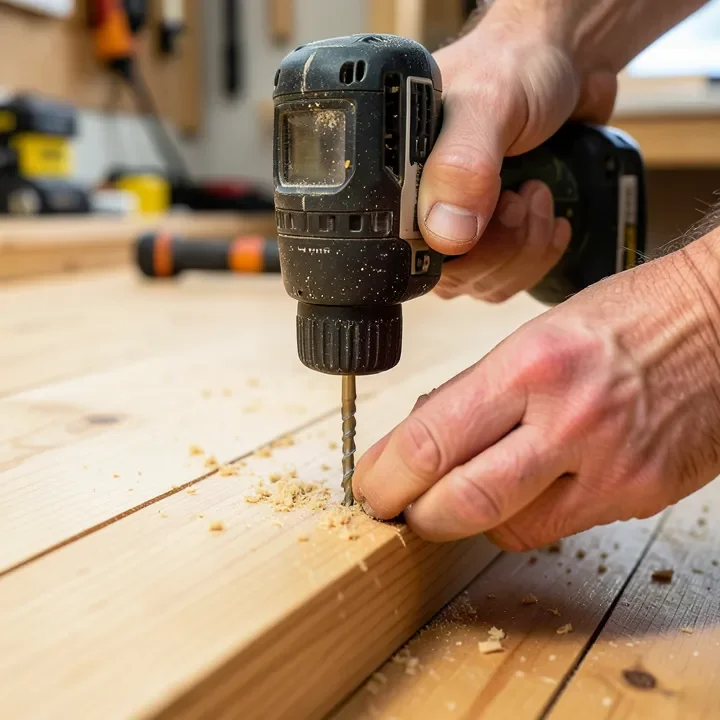
From a basement or crawlspace with access below the floor, a shim tapped gently into the gap between the joist and subfloor (never forced, which can lift the floor and crack the finish above) closes the gap without any fasteners going through the finished floor at all. This is the preferred fix when the space below is accessible, since it leaves zero marks on the walking surface.
Preventing Future Squeaks
Run a humidifier in winter and a dehumidifier in humid summer months to keep the floor’s moisture content stable — this single habit prevents more squeaks than any lubricant or screw fix. Use furniture pads under heavy pieces so shifting weight doesn’t work fasteners loose, and address a new squeak within the first few weeks, while it’s still a single loose board instead of a section that has worked itself free over months.
Frequently Asked Questions
What Causes Wood Floors to Squeak?
Wood floors squeak for two different structural reasons. On floating engineered or laminate floors, the tongue-and-groove joints rub together as the floor flexes underfoot. On solid nail-down hardwood, the noise usually comes from the subfloor separating slightly from a joist, or a nail that has backed out over years of humidity swings. Identifying which type of floor you have determines which fix actually works.
Does Wood Floor Lubricant Work on Solid Hardwood Floors?
Rarely. Lubricants such as powdered graphite or silicone spray are formulated to quiet friction inside a floating floor’s tongue-and-groove joints, not to close a gap between a hardwood board and the subfloor below it. If a solid hardwood floor still squeaks after lubricant is applied, the fix is almost always a screw driven through the board into the joist, not more lubricant.
How Do You Apply Floor Lubricant Correctly?
Clean the seam first so dust doesn’t clump into a paste. Sprinkle powdered graphite, talcum powder, or a manufacturer’s lubricant directly into the crack between the two boards, then work it in with a putty knife or by walking a cloth-covered area back and forth. Wipe away any excess so it doesn’t track onto socks or pet paws, then walk the spot to confirm the squeak is gone.
Is Silicone Spray Safe to Use on a Wood Floor?
Yes, when it’s applied only into the seam between boards and not across the finished surface, where it can make the floor slippery. Ventilate the room while spraying, wear gloves, and test a small hidden area first if the floor has an unusual finish, since some solvent-based silicone sprays can haze certain finishes.
A wood floor lubricant is the right call for a floating engineered or laminate floor, but a solid hardwood floor that keeps squeaking after lubricant needs a screw or shim driven into the structure, not another coat of powder. Match the fix to the floor type and most squeaks stay gone for good.
Sponsored / affiliate links. As an Amazon Associate I earn from qualifying purchases. I may earn additional commission from eligible campaigns.
 Floor Repair Kit for Squeaky Wood Floors Under Carpet, Squeak No More Wood Floor Repair Kit with 5 Tools and 50 Notch Screws for Hardwood Carpet FlooringFloor Repair Kit for Squeaky Wood Floors Under Carpet, Squeak No More Wood Floor Repair Kit with 5 Tools and 50 Notch Screws for Hardwood Carpet DIY Fix