How Much Does a Cedar Arbor Cost?
A cedar arbor typically costs about $1,430 to $4,075 installed. Cedar is a common wood arbor material and a popular lower-cost wood option, but the final bill still shifts with height, style, anchoring, and site prep.
For budgeting, think in three layers: the arbor itself, the labor to assemble and set it, and the site work needed to place it safely. A simple prefab kit can stay near the low end, while a taller custom freestanding build can move toward the upper end of the typical range.
Cedar arbor pricing breakdown

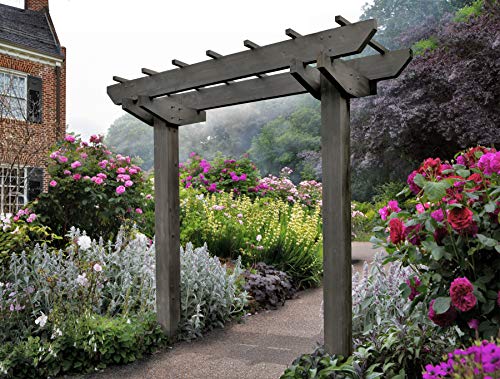

Arbor quotes also change when the project is treated as attached or freestanding. Attached arbors can cost less than freestanding units, though wall attachment and reinforcement can also add cost. Freestanding designs need stronger posts and a heavier base. That added structure shows up in labor and materials.
Where cedar fits among common wood arbor options
Wood arbors typically cost $330 to $1,425 before installation, and cedar is one of the popular cheaper wood types. It usually sits below teak and some higher-grade redwood options, while still offering better outdoor durability than lower-cost softwoods in many garden settings.
Cedar’s appeal is practical. It is widely used for climbing plants, and it takes finish well. The tradeoff is that unfinished cedar will weather, and stain or sealer maintenance affects long-term appearance and replacement timing.
What drives the budget most
The fastest price shifts usually come from size, style complexity, and installation conditions. Bigger spans need more material and stronger footings. More ornate shapes, such as grape, moon gate, gabled, and bench styles, add fabrication time and often more waste.
Local labor rates and delivery distance matter too. Rocky soil, slopes, hardscape cuts, and permit requirements can add site costs even when the arbor itself is modest.
How much does a cedar arbor cost installed?
Installed cedar arbor pricing usually tracks the broader arbor market, with prefab kits sitting lower, custom builds costing more, and freestanding projects usually landing above attached ones.
If you are comparing quotes, make sure each bid includes the same scope. One installer may quote only the structure, while another includes delivery, footing work, and final assembly. That difference can make a quote look cheaper than it really is.
Installed cost by project type
Prefab cedar kits are the easiest way to keep the total down. Custom-made arbors cost more because design time, joinery, and labor rise together. Attached projects often save money compared with freestanding projects, but the support details still need to be checked on site rather than assumed.
Prefab kit versus custom build
Prefabricated arbors are often the lower-cost option before installation, while custom-made arbors are generally the higher-cost option before installation. That gap is wide enough that a prefab cedar arbor is usually cheaper than a custom build, especially once labor is included.
Say your side yard only needs a simple 6-foot cedar entry arbor. A prefab kit may fit the space and the budget well. Suppose the opening is wider, the posts must be taller, and the homeowner wants a curved top with thicker stock. The custom quote will usually move up quickly.
Attached versus freestanding pricing
Attached arbors cost between $1,700 and $3,500, while freestanding arbors cost between $2,165 and $4,665. Freestanding builds cost more because they need a stronger base, sturdier posts, and more full-depth support from the ground up.
Attached does not mean the structure can be treated as a simple add-on. The quote still depends on how the arbor is anchored, what it attaches to, and whether the site can support the load. A solid footing is still the part that protects the project.
Cedar arbor cost breakdown table
| Scenario | Estimated material cost | Labor cost | Delivery/site prep allowance | Total installed price |
|---|---|---|---|---|
| Prefab kit cedar arbor | $650 | $625 | $150 | $1,425 |
| Mid-range custom build | $1,850 | $2,050 | $300 | $4,200 |
| Premium freestanding cedar arbor | $2,400 | $1,850 | $350 | $4,600 |
These examples stay within the broader cedar arbor ranges above and show how the total gets built. Material cost covers the cedar structure itself. Labor covers assembly and installation. Delivery and site prep cover access, footing work, and minor ground correction before the arbor goes in.
What affects cedar arbor pricing?
Height, style, finish, and site conditions are the main price drivers. A smaller, simpler arbor is easier to move and set. A taller or more decorative build needs more material, more time, and often more careful anchoring.
Arbor height
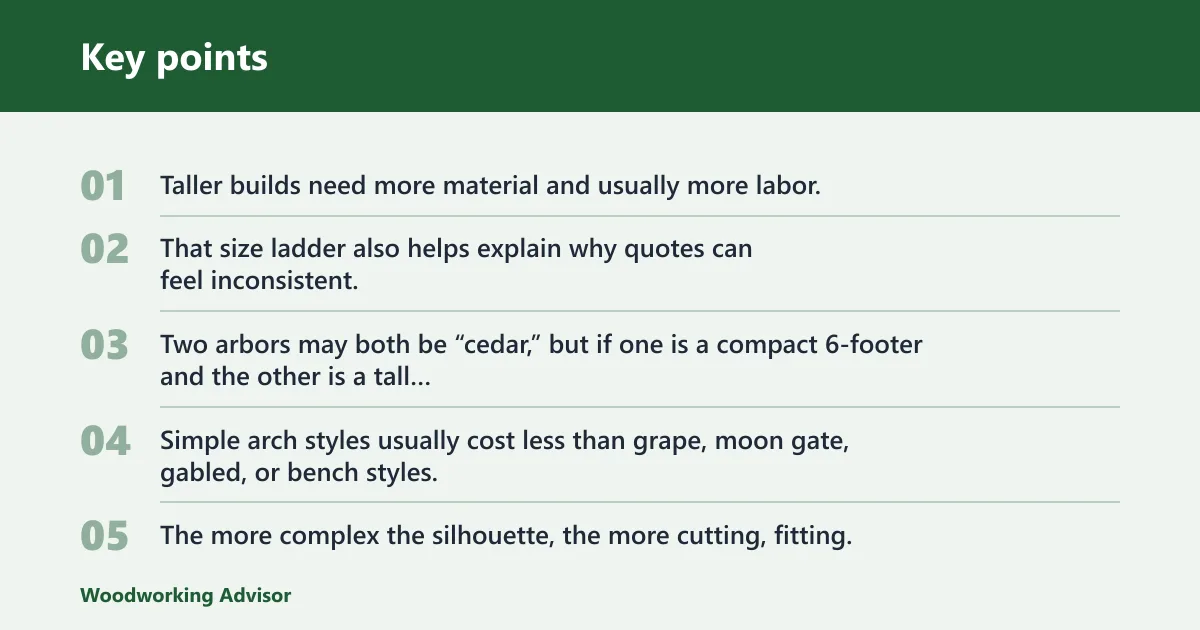
Size changes the bill quickly. Taller builds need more material and usually more labor.
That size ladder also helps explain why quotes can feel inconsistent. Two arbors may both be “cedar,” but if one is a compact 6-footer and the other is a tall entry piece, the totals will not belong in the same budget band.
Arbor style
Simple arch styles usually cost less than grape, moon gate, gabled, or bench styles. The more complex the silhouette, the more cutting, fitting, and finishing time the build needs. Decorative millwork also raises waste if the design is custom.
A plain arbor with straight members can stay close to prefab pricing. A moon gate shape or a bench-integrated design often moves the job into custom territory even before the cedar grade changes.
Material grade and finish
Cedar is often chosen because it can cost less than some other premium outdoor woods, but grade matters. Clearer boards, thicker stock, and better milling raise the material line. Stain, sealer, and hardware also add cost, especially for a build meant to resist weather longer.
Maintenance affects the real budget too. Cedar can perform well outdoors, but unfinished wood weathers faster. A homeowner who wants a cleaner look for longer may spend more upfront on finish work to slow that change.
Site prep and installation complexity
Uneven ground, compacted soil, roots, pavers, and narrow access can all add labor. A flat, open site is easier and cheaper. A project that needs excavation, post-hole work, or careful alignment near a walkway usually costs more.
Regional labor rates also matter. The same cedar arbor can price differently from one metro area to another, and delivery charges may rise when the supplier is far from the jobsite. Inflation and seasonal demand can move quotes as well.
How much does a cedar pergola cost?
A cedar pergola usually costs more than a cedar arbor because it is larger, heavier, and built to cover more area. If you are using a pergola quote to budget an arbor, do not treat the numbers as interchangeable. The structures serve different jobs and the labor profiles are not the same.
For a cedar arbor budget, a pergola quote can still be useful as a high-level material check, but only if you strip out the roof span, scale, and footing differences. Otherwise the pergola number will usually overshoot the arbor project.
Why pergola pricing differs from arbor pricing
A pergola generally has more posts, more overhead framing, and more structural material. A cedar arbor is usually a smaller climbing structure for vines, so the cost is driven more by entry width, height, and style than by a large overhead span.
That difference is why an arbor budget should stay separate. A pergola line item often includes framing that an arbor does not need, and that changes both materials and labor.
When a pergola quote should not be used for an arbor budget
If the pergola quote includes a broad shade structure, drainage details, or a larger footprint, it is not a good stand-in for an arbor. Use it only as a rough reference point. For a cedar arbor, the tighter comparison is attached versus freestanding, then height and finish.
Is a prefab cedar arbor cheaper than custom?
Yes. Prefabricated arbors cost between $105 and $1,120, while custom-made arbors cost between $2,825 and $4,850. Even before installation, the gap is large enough that a prefab cedar arbor is usually the cheaper path for a straightforward garden opening.
The better choice depends on space and expectations. Prefab works well for standard widths and simple shapes. Custom is worth the higher price when you need a specific height, a nonstandard span, or a style that fits an existing fence line, path, or planting bed.
Best fit for tight budgets
A prefab kit is usually the right starting point if the goal is to keep the spend predictable. It also reduces design time and can be easier to install than a custom build. That makes it useful for small entries and replacement work.
When custom is worth the higher price
Choose custom when the opening size is unusual, the site is sloped, or the design needs to match other outdoor features. Custom work also makes sense when a homeowner wants a specific look, such as a bench arbor or a taller gabled profile.
DIY versus pro installation cost
DIY can cut labor, but only if the site is simple and the installer can set the posts accurately. A cedar arbor still needs level placement, secure anchoring, and careful alignment. If the project is large, tall, or on poor ground, professional installation often reduces the risk of a redo.
- Measure the opening width and desired height before asking for bids.
- Ask whether the quote includes delivery, footings, hardware, and finish.
- Confirm whether the arbor is attached or freestanding.
- Compare the same wood grade and the same style across all bids.
- Check whether site prep, permit work, or removal of an old arbor is included.
Cedar versus other woods for arbors
Wood arbors usually cost $330 to $1,425 before installation, and cedar is one of the common lower-cost choices. It is often selected because it balances price, outdoor performance, and appearance better than many bargain woods.
Compared with some other woods, cedar can be easier to justify for a garden arbor because it holds up well outdoors when maintained. The exact winner on price depends on grade, thickness, and local supply, not just the species name.
Durability and maintenance tradeoffs
Cedar resists decay better than many basic softwoods, but it still needs care if you want longer service life. Sealing, staining, or periodic cleaning can slow weathering. Skipping those steps may lower the upfront spend, but it can raise replacement risk later.
A common first-timer mistake is choosing the cheapest cedar quote without asking about finish and anchoring. A bare, lightly built arbor can look fine on install day and still age faster than a better-anchored, better-finished one.
When another wood may cost less or more
Pine may cost less at purchase, but it usually needs more protection and can shorten the replacement cycle. Redwood and teak often cost more, especially when the build demands better grading or larger members. For many homeowners, cedar lands in the middle where value and outdoor use line up reasonably well.
Frequently asked questions
How much does a cedar arbor cost?
A cedar arbor typically costs about $1,430 to $4,075 installed. Smaller prefab kits can land near the low end, while taller custom or freestanding builds move toward the upper end. Height, style, and site prep change the total fastest.
How much does a cedar arbor cost by size?
Size shifts price in clear tiers. Taller builds need more material and more installation time.
How much does a freestanding cedar arbor cost?
Freestanding arbors cost between $2,165 and $4,665. They cost more than attached arbors because they need a stronger base and sturdier posts. If the site is uneven or the arbor is tall, the installation total can move toward the upper end quickly.
Is cedar a good wood for an arbor?
Yes. Cedar is a popular cheaper wood option for arbors because it balances cost and outdoor use well. It is common in garden settings and works well for climbing plants. The tradeoff is that maintenance matters, since finish and weather exposure affect how long it keeps a clean look.
Sponsored / affiliate links. As an Amazon Associate I earn from qualifying purchases. I may earn additional commission from eligible campaigns.