Thompson’s WaterSeal vs Behr Deck Stain: Which Lasts Longer?
Behr Deck Stain and Thompson’s WaterSeal are often compared on decks because both are used for water repellency and surface protection. The better choice depends on where the finish fails first, sun, moisture, or foot traffic. Pick the wrong finish for the deck’s condition, and you can end up with peeling, blotchy fading, or a full strip-and-recoat job sooner than expected.
| Decision factor | Thompson’s WaterSeal | Behr Deck Stain | Winner |
|---|---|---|---|
| Published deck-life claim | About 6 months on decks | Up to 6 months on decks | Tie |
| Coverage per gallon | About 200 sq. ft. per gallon | 300-400 sq. ft. per gallon | Behr Deck Stain |
| Formula traits | Penetrants with silicone additives; water-repellent barrier | Acrylic-oil emulsion; UV absorbers; added mildewcide | Depends on the deck |
| Cleanup | Soap and water | Soap and water | Tie |
| Best fit | Older boards that need simple water repellency or a lighter look | Decks that need more UV and mildew support on a recoating job | Depends on the deck |
What the labels claim versus how decks actually fail
What each label claims for deck use
BEHR Premium Transparent Weatherproofing Wood Finish is reported to use an acrylic-oil emulsion, UV absorbers, and added mildewcide. Thompson’s WaterSeal is commonly described as relying on penetrants with silicone additives and a water-repellent barrier. Both clean up with soap and water.
Why lifespan depends on failure mode
That deck-life number is not the whole story. A deck can still fail early by graying in sun, showing mildew in shade, or wearing through on walking paths before the water-beading effect disappears everywhere. On recoating jobs, the finish that fails more cleanly and is easier to renew often creates less work than the finish that breaks down unevenly.
Say your 12-by-16-foot deck faces south and gets direct sun from late morning to evening. In that case, the finish that slows UV damage and graying is usually the better maintenance choice, even if both labels publish similar deck-life claims.
Deck finish comparison table
| Factor | Thompson’s WaterSeal | Behr Deck Stain | Winner |
|---|---|---|---|
| Water repellency | Built around a water-repellent barrier | Weatherproofing finish with acrylic-oil emulsion | Tie |
| UV protection | General sun resistance, but no listed UV absorber claim here | UV absorbers are part of the formula | Behr Deck Stain |
| Mildew resistance | Water repellency helps, but no added mildewcide is listed here | Added mildewcide is listed | Behr Deck Stain |
| Coverage yield | About 200 sq. ft. per gallon | 300-400 sq. ft. per gallon | Behr Deck Stain |
| Cleanup | Soap and water | Soap and water | Tie |
| Published deck longevity | About 6 months on decks | Up to 6 months on decks | Tie |
Published deck-life claims side by side
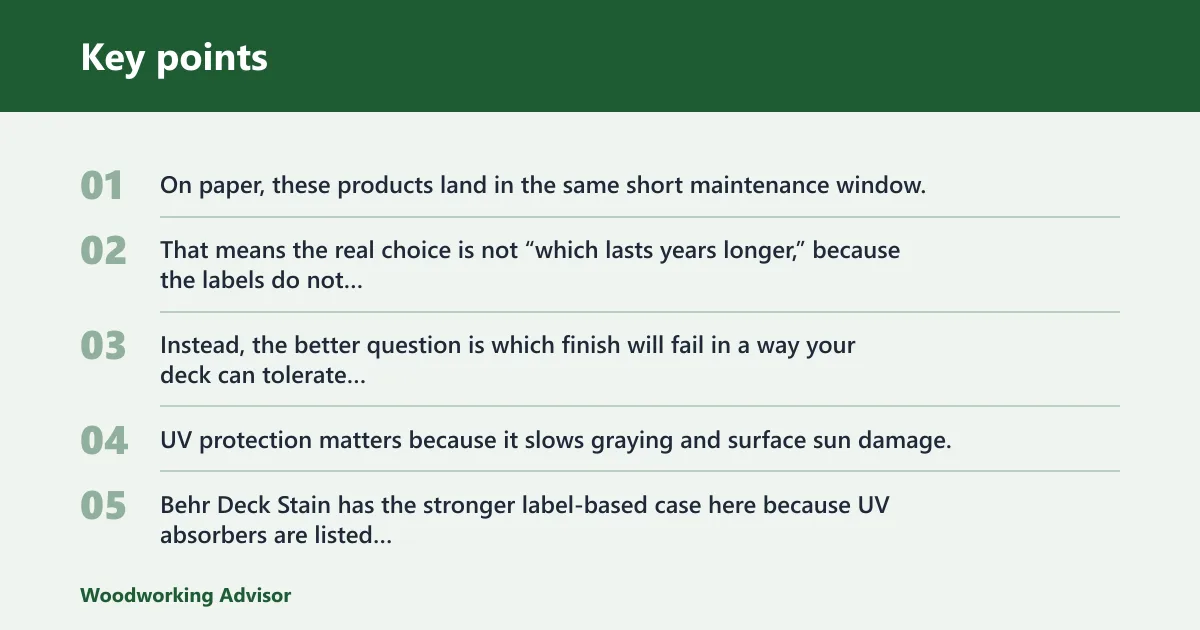
On paper, these products land in the same short maintenance window. That means the real choice is not “which lasts years longer,” because the labels do not support that claim for deck use. Instead, the better question is which finish will fail in a way your deck can tolerate with less work.
UV and mildew protection notes
UV protection matters because it slows graying and surface sun damage. Behr Deck Stain has the stronger label-based case here because UV absorbers are listed in the formula. For damp or shaded decks, the added mildewcide also matters because it helps with mildew resistance, and by extension can help limit mold, mildew, and algae pressure on the surface.
Coverage and cleanup notes
Coverage is not durability. Behr Deck Stain covers 300-400 sq. ft. per gallon, while Thompson’s WaterSeal covers about 200 sq. ft. per gallon, so Behr is the better spreader on paper. That does not mean it lasts longer; it only means you may use less finish per coat, which changes cost and labor, not wear.
Which lasts longer on your deck?
Neither product has a clear published win on deck lifespan. In practice, Behr Deck Stain is the better bet for decks that take more sun and need more mildew support, while Thompson’s WaterSeal is more about simple water repellency.
Full sun and UV exposure
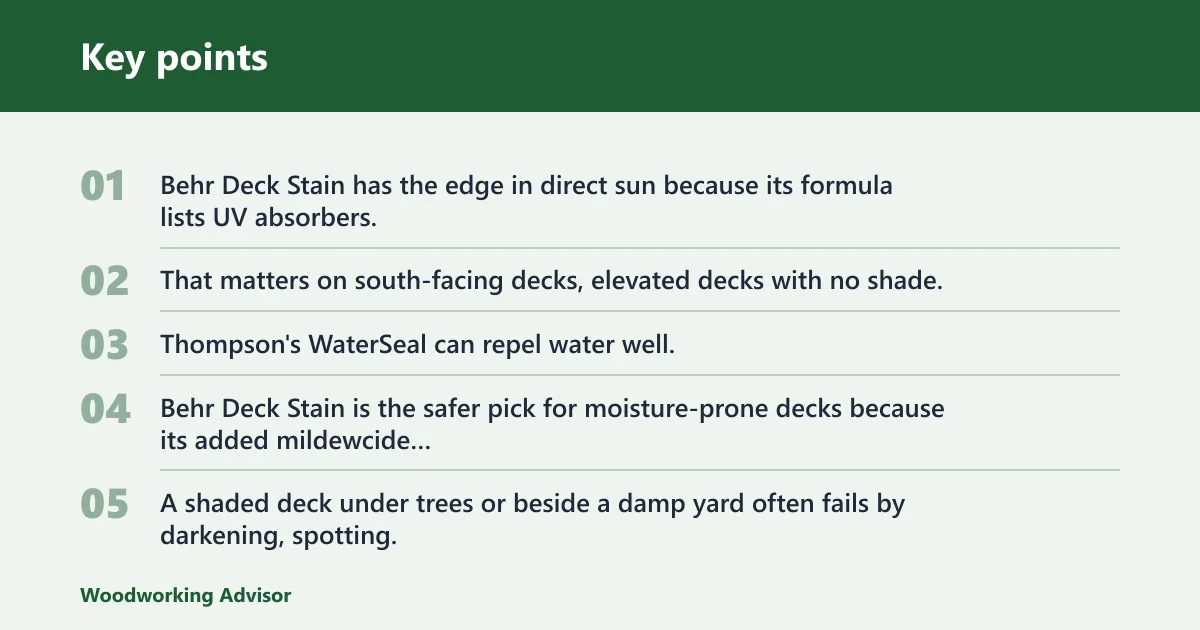
Behr Deck Stain has the edge in direct sun because its formula lists UV absorbers. That matters on south-facing decks, elevated decks with no shade, and open rail sections that fade faster than the rest of the floorboards. Thompson’s WaterSeal can repel water well, but water repellency alone does less to slow graying.
Shaded, damp, or mildew-prone decks
Behr Deck Stain is the safer pick for moisture-prone decks because its added mildewcide gives you more support against mildew pressure. A shaded deck under trees or beside a damp yard often fails by darkening, spotting, and looking dirty before it wears through mechanically. If your cleaning routine is already frequent, that extra mildew resistance usually pays off.
High-traffic walking surfaces
High-traffic wear often shows up as patchy fading or uneven water beading first. That makes inspection and spot recoating more important.
Older weathered boards and previously stained wood
Thompson’s WaterSeal can suit older, weathered boards when you want a lighter, more forgiving water-repellent finish and you are not trying to hide every color difference. Behr Deck Stain is the better fit when the wood already has some history of sun damage or mildew and you want more help from UV absorbers and mildewcide. For previously stained wood, the old finish condition matters as much as the new product.
Deck recoating decision guide
Inspection signs that mean recoat now
- Water soaks in instead of beading after a light splash test.
- Gray patches appear on the sunniest boards first.
- Walk paths look lighter, drier, or chalkier than the rest of the deck.
- Dark spotting shows up in shaded corners or near planters.
- The finish looks uneven between rails, posts, and horizontal boards.
A common first-timer mistake is waiting for the calendar instead of the surface. A 10-by-20-foot deck under trees can need attention sooner than a similarly sized deck in open air, even if both were coated the same season.
When calendar time matters less than wear
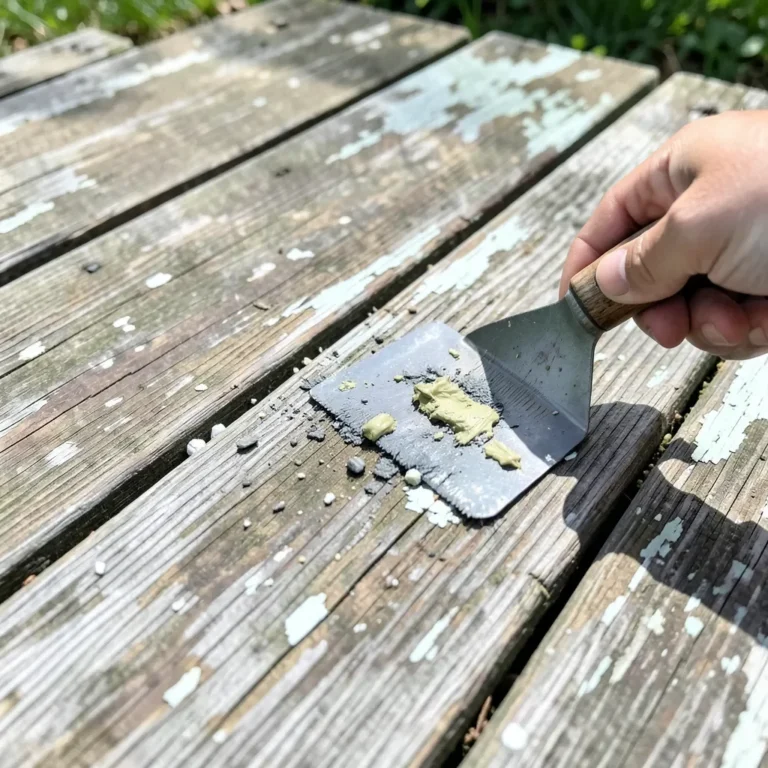
Actual recoating should follow condition, not the calendar alone. If the finish still beads water evenly and the color looks uniform, you may not need to touch it yet. If the deck has bare-looking lanes or fading at the edges, you should plan a recoat.
How deck conditions change recoating frequency
Sun, foot traffic, and wood condition move the schedule more than product branding does. A decorative side porch with light traffic can stay presentable longer than a main entertainment deck, even with the same stain. On older boards, the substrate may drink finish unevenly, which can force earlier maintenance and more careful prep.
Clear vs semi-transparent finish
Appearance differences
Thompson’s WaterSeal comes in clear and semi-transparent earth tones. Clear keeps the wood grain more visible, while semi-transparent color softens contrast and hides some variation. That difference matters on older decks because clear finishes usually show patchy aging faster than tinted finishes.
Best use cases for each finish type
Choose clear when the wood is already even in color and you want the most natural look with basic water repellency. Choose semi-transparent when the deck has sun-faded boards, mixed species, or prior stain marks that you want to tone down. On weathered wood, the semi-transparent route usually gives a more even result.
Pressure-treated wood and previous coatings
Yes, Thompson’s WaterSeal can be used on pressure-treated wood, provided the wood is dry enough and the surface is properly prepared. If the deck has an old coating, test adhesion and remove loose material first. A finish applied over failing stain will fail in the same places.
Choose thompson’s waterSeal or behr deck stain
Choose Thompson’s WaterSeal if you want…
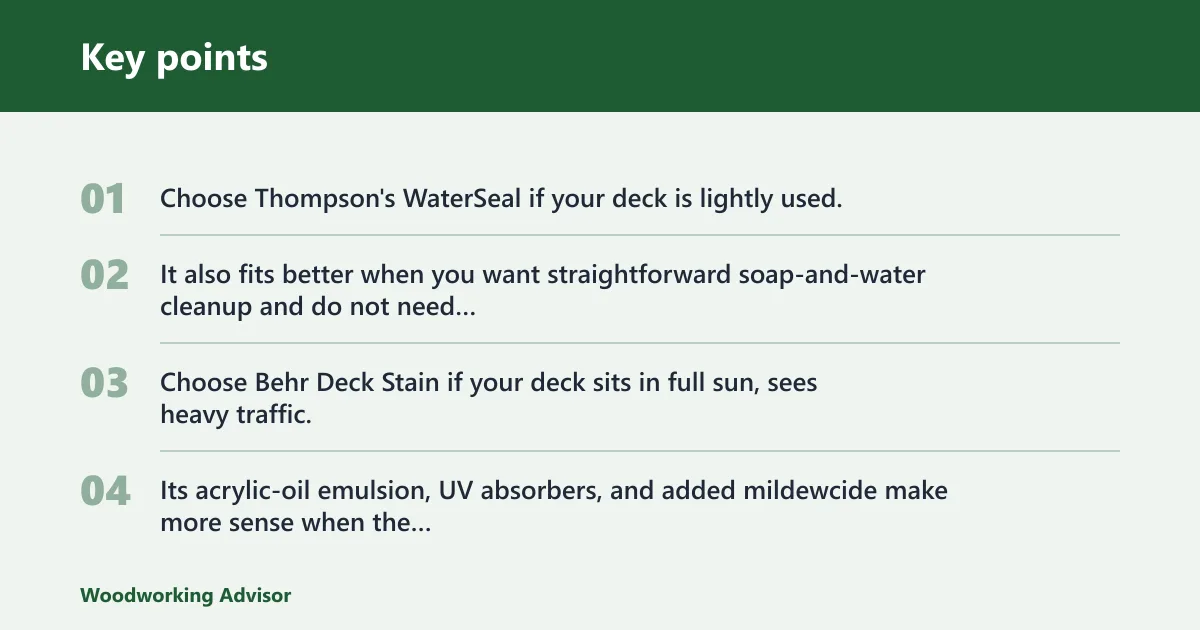
Choose Thompson’s WaterSeal if your deck is lightly used, you want a simple water-repellent finish, or you prefer a clear or semi-transparent earth-tone look on older boards. It also fits better when you want straightforward soap-and-water cleanup and do not need the extra UV and mildewcide package.
Choose Behr deck Stain if you want…
Choose Behr Deck Stain if your deck sits in full sun, sees heavy traffic, or has mildew-prone shade. Its acrylic-oil emulsion, UV absorbers, and added mildewcide make more sense when the main goal is to slow graying, limit biological staining, and keep recoating simpler on a harder-working deck.


Frequently asked questions
Which lasts longer, Thompson’s WaterSeal or Behr deck stain?
On published deck claims, neither has a clear length advantage because both are listed at about 6 months on decks. The more useful question is which one fits your deck’s failure pattern. Behr Deck Stain is the better bet for sun and mildew pressure; Thompson’s WaterSeal is more about simple water repellency.
How long does Thompson’s WaterSeal last on a deck?
In real use, that timing changes with sun, traffic, and moisture exposure, so inspection matters more than the calendar. If water stops beading or the finish turns patchy, it is time to recoat.
How long does Behr deck stain last on a deck?
BEHR Premium Transparent Weatherproofing Wood Finish is listed at up to 6 months on decks. Its acrylic-oil emulsion, UV absorbers, and added mildewcide make it the better choice for decks that need more sun and mildew support, but the published deck-life claim is still in the same short range.
Which deck stain is better for UV protection?
Behr Deck Stain has the stronger UV-protection case because UV absorbers are part of the listed formula. That matters most on open, sun-heavy decks where graying and surface sun damage start first. Thompson’s WaterSeal still repels water, but water repellency alone does less for UV wear.
Which product resists mildew better on outdoor wood?
Behr Deck Stain has the edge because it lists added mildewcide. That makes it the better fit for shaded, damp, or tree-covered decks where mildew, mold, and algae are more likely to appear. Thompson’s WaterSeal can still be useful, but it is not the stronger label-based choice for mildew pressure.
What is the difference between clear and semi-transparent deck stain?
Clear keeps the wood’s natural appearance more visible, while semi-transparent adds color and hides more variation. On weathered or previously stained wood, semi-transparent usually gives a more even look. On newer pressure-treated boards in decent shape, clear can be the simpler choice if you want minimal color change.
Sponsored / affiliate links. As an Amazon Associate I earn from qualifying purchases. I may earn additional commission from eligible campaigns.