How to Wash Fake Wood Floors: Step-by-Step (Without Damage or Streaks)
Wash fake wood floors (laminate, vinyl, or LVP) with a microfiber mop that’s only lightly damp, using a cleaner made specifically for laminate or vinyl flooring – standing water and vinegar-based solutions are the two most common causes of long-term damage.
“Fake wood” flooring covers three different products – laminate, luxury vinyl plank (LVP), and vinyl sheet – and while they look similar underfoot, they clean a little differently. Laminate has a wood-fiber core under its printed layer, so it’s the most sensitive to moisture. Vinyl and LVP are fully synthetic and more water-tolerant, but they can still dull or scratch if you use the wrong products or tools.
This guide covers the actual washing routine – not just “sweep and mop” generalities – including the one popular cleaning tip (vinegar and water) that flooring manufacturers specifically warn against, and how to get a streak-free shine without leaving a hazy film.
Cleaning fake wood furniture instead of flooring? The safe cleaners and technique are different (furniture is usually laminate/veneer over particleboard, not a floating floor) – see our guide to cleaning fake wood furniture for that routine.
What You Need to Wash Fake Wood Floors Without Damaging Them
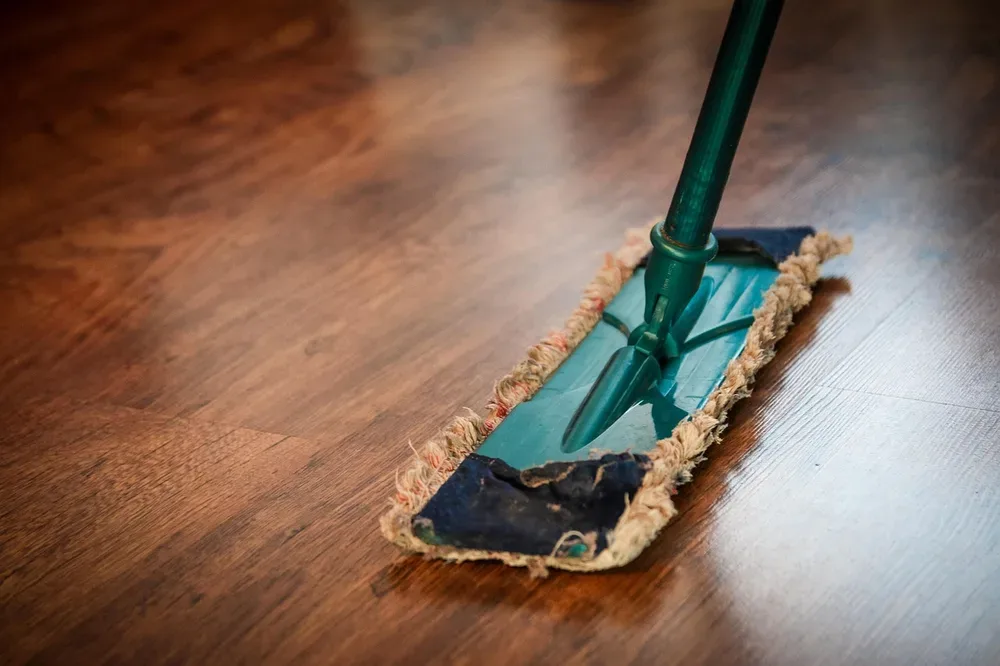
Before you start, get the right tools in hand. A flat microfiber mop head (not a string mop or sponge mop) is the single biggest factor in whether you get streaks or scratches. String and sponge mops hold too much water and can grind grit into the surface as you push them around.
BEST LAMINATE & VINYL FLOOR CLEANER
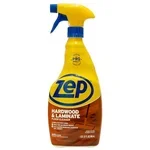 |
Zep Hardwood & Laminate Floor Cleaner (32 oz) – $5.98 Formulated specifically for laminate and hardwood wear layers – no vinegar, wax, or oil soap residue to worry about.
|
You’ll also want a soft-bristle broom or a vacuum with a hard-floor/bare-floor setting (never the beater-bar/rotating-brush setting – it can scratch both laminate and vinyl), plus a spray bottle if you’re diluting a concentrate cleaner rather than using a ready-to-use spray.
How to Wash Fake Wood Floors: Step-by-Step
Once you have the right tools, the actual washing process is quick:
- Dry sweep or vacuum first. This step matters more than people think – wiping a wet mop over loose grit is what actually scratches laminate and vinyl, not the water itself.
- Spray a laminate/vinyl-safe cleaner directly onto the mop pad, not the floor, so you’re not pooling liquid in the seams between planks.
- Mop in the direction of the plank seams, working in small sections so the liquid doesn’t have time to sit.
- Go over any damp-looking spots with a dry microfiber cloth immediately – this is what prevents the hazy, streaky look, since it’s usually leftover moisture evaporating unevenly, not the cleaner itself.
- Let the floor air-dry for a few minutes before walking on it in socks or bare feet, since residual dampness picks up dirt easily.
If you don’t have a dedicated laminate/vinyl cleaner on hand, a teaspoon of unscented, clear dish soap in a gallon of water works as a mild substitute – but skip anything with added moisturizers, dyes, or “shine boosters,” since those can leave a residue film over repeated use.
The Vinegar Myth: Why It’s Actually Bad for Laminate and Vinyl
Vinegar-and-water is one of the most repeated “natural cleaner” tips for wood-look floors online – and it’s one that most laminate and vinyl manufacturers specifically advise against. Vinegar is acidic, and repeated use gradually breaks down the protective wear layer (the clear top coating that gives laminate its shine and scratch resistance) and the finish coat on vinyl. The damage isn’t visible after one mopping; it shows up months later as a dull, cloudy patch across high-traffic areas that no amount of re-mopping will fix, because the wear layer itself has been etched.
The same goes for oil soaps, wax-based polishes, and steam mops – oil soaps and wax leave a buildup that attracts dirt and can make the floor slippery, and steam mops force moisture into the seams between planks, which is a direct route to swelling and warping, especially on laminate.
Getting a Streak-Free Shine
Streaks almost always come from one of three things: too much cleaner, a dirty mop pad being dragged back over the same area, or hard water minerals drying on the surface. Use less product than you think you need – a fine mist is enough for an 8×8-foot section – and swap to a clean mop pad section (or rinse it) every couple of rooms rather than mopping the whole house with one saturated pad.
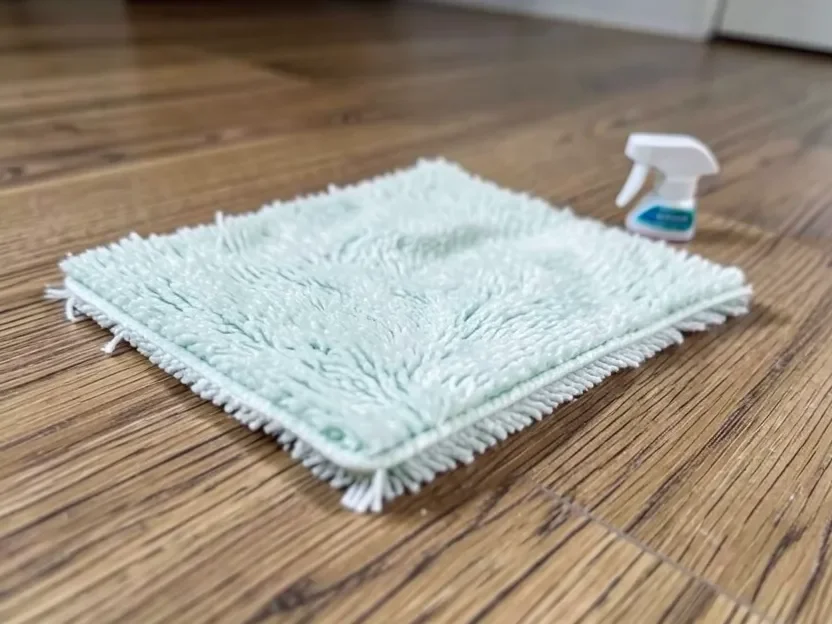
If your tap water is hard, a final pass with a barely-damp microfiber cloth (plain water, no cleaner) picks up mineral residue before it dries into a film. This is the same reason restaurants and showrooms buff floors dry after mopping – it’s not extra shine product, it’s just removing the last bit of moisture before it evaporates unevenly.
Spot Cleaning Stains and Sticky Spots
For most spots – food, drink spills, muddy footprints – a damp microfiber cloth with a drop of dish soap lifts it without needing to mop the whole floor. For sticky residue (juice, syrup, tape adhesive), let a damp cloth sit on the spot for a minute to soften it before wiping, rather than scrubbing dry, which can scuff the surface.
Never use a scouring pad, steel wool, or an abrasive scrub sponge on laminate or vinyl – even “non-scratch” scrub pads can dull the wear layer over repeated use. If a spot won’t budge with a damp cloth, isopropyl alcohol on a soft cloth handles most adhesive and crayon marks without harming the finish.
Laminate vs. Vinyl vs. LVP: Do They Clean the Same Way?
Mostly yes, with one key difference: laminate has a wood-fiber core, so standing water and steam are a real risk – wipe up spills within a few minutes. Vinyl and LVP are 100% synthetic all the way through, so they tolerate more moisture and can even be damp-mopped more liberally, but they’re softer than laminate and show scratches from grit or furniture more easily, so a felt-pad-and-vacuum-first routine matters more for those.
If your floors are engineered or real hardwood with a synthetic-look finish rather than laminate or vinyl, the cleaning products are different again – hardwood-specific cleaners are formulated for the polyurethane finish, not the wear layer used on laminate.
Common Mistakes That Damage Fake Wood Floors
- Soaking the floor or using a string/sponge mop that holds excess water
- Using vinegar, oil soap, or wax-based “shine” products
- Running a steam mop over laminate or vinyl seams
- Skipping the dry-sweep step before wet mopping
- Using a vacuum’s rotating brush-bar setting instead of the hard-floor setting
Washing handles day-to-day dirt, but scratches, dents, and moisture damage are mostly a prevention problem, not a cleaning one – furniture pads, doormats at entry points, and prompt spill cleanup do more for long-term appearance than any cleaner. Our laminate floor care and damage-prevention guide covers that side in more depth if scratches or dents are your bigger concern.
How Often Should You Wash Fake Wood Floors?
Dry sweep or vacuum every day to every few days depending on foot traffic and pets. Damp mop high-traffic areas (entryways, kitchens, hallways) about twice a month, and lower-traffic rooms once a month is usually enough. Washing more often than that doesn’t make the floor cleaner – it just increases how much moisture and product residue the floor is exposed to over time, which is the opposite of what you want for a laminate or vinyl wood-look floor.
Frequently Asked Questions
What is the best way to wash fake wood floors?
Dry sweep or vacuum first, then mop with a laminate/vinyl-safe cleaner (or a mild dish soap and water mix) applied to a lightly damp microfiber mop pad, not poured onto the floor. Wipe up any damp spots with a dry cloth right after to prevent streaking.
Can you use vinegar to clean fake wood floors?
It’s not recommended. Vinegar is acidic and repeated use gradually dulls and breaks down the protective wear layer on laminate and the finish coat on vinyl, leading to a cloudy, worn look over time even though it seems harmless after a single mopping.
What product makes fake wood floors shine without streaking?
A cleaner made specifically for laminate or vinyl floors, used sparingly and applied to the mop pad rather than the floor, gives the best shine without residue. Skip separate “polish” or wax products – on laminate and vinyl they build up and cause the streaky, hazy look they’re supposed to prevent.
How do you clean synthetic or fake hardwood floors?
If it’s laminate or vinyl (LVP), follow the same lightly-damp-mop routine above. If it’s real wood with a synthetic-look finish, use a hardwood-specific cleaner instead – the polyurethane finish on real wood needs a different formula than the wear layer on laminate.
Conclusion
Washing fake wood floors comes down to three things: keep the mop only lightly damp, skip vinegar and wax-based products, and dry up any leftover moisture right away. Get those three right and a laminate, vinyl, or LVP floor will hold its finish for years without the dull, streaky look that comes from the wrong products or too much water.
Sponsored / affiliate links. As an Amazon Associate I earn from qualifying purchases. I may earn additional commission from eligible campaigns.