Table Saw Reviews: What Consumer Reports Actually Tests
“Consumer Reports says” gets thrown around a lot in table saw shopping searches, but Consumer Reports’ actual table saw ratings sit behind a paid membership, and this page won’t pretend to reproduce scores it can’t verify. What it will do is show you what a publication like Consumer Reports actually tests for (power, accuracy, and safety systems), then walk through real specs, genuine owner feedback patterns, and a specific, currently in-stock table saw worth considering, so you can shop with the same criteria professional reviewers use even without a subscription.
What Consumer Reports Actually Tests in a Table Saw
Independent testing organizations like Consumer Reports generally evaluate table saws across a handful of core categories: raw cutting power and motor performance under load, cut accuracy (how true a rip stays over a long board), fence quality and repeatability, dust collection, and safety systems. On the safety side, Consumer Reports has publicly discussed flesh-detection technology testing methods for saws like SawStop, including using a simulated test medium in place of a finger to confirm the blade-stop mechanism actually triggers. That’s a real, documented testing approach, not a specific model ranking, and it’s a useful reminder that safety systems are something you can verify yourself before buying rather than take on faith.
Because we can’t access or reproduce Consumer Reports’ current paywalled scores, the rest of this guide focuses on the same measurable categories using specs you can verify yourself on any listing, plus a specific saw that holds up well against them.
Best Jobsite Table Saw for Fence Accuracy
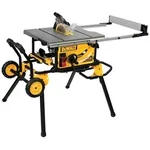 |
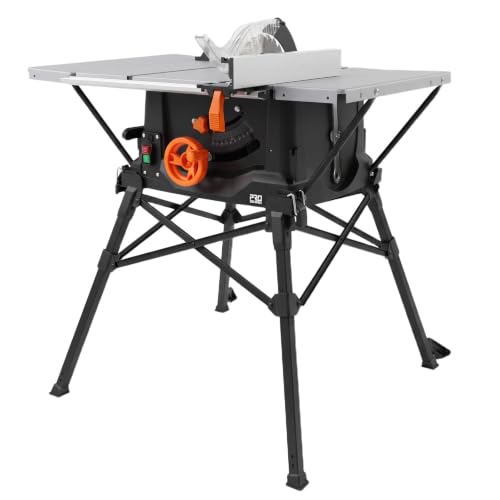
DEWALT DWE7491RS 10-Inch Jobsite Table Saw – $599 A 15-amp benchtop-class saw with a rack-and-pinion fence and 32.5-inch rip capacity, the widest of any portable saw in its class, which is exactly the fence-accuracy category reviewers weight heavily.
|
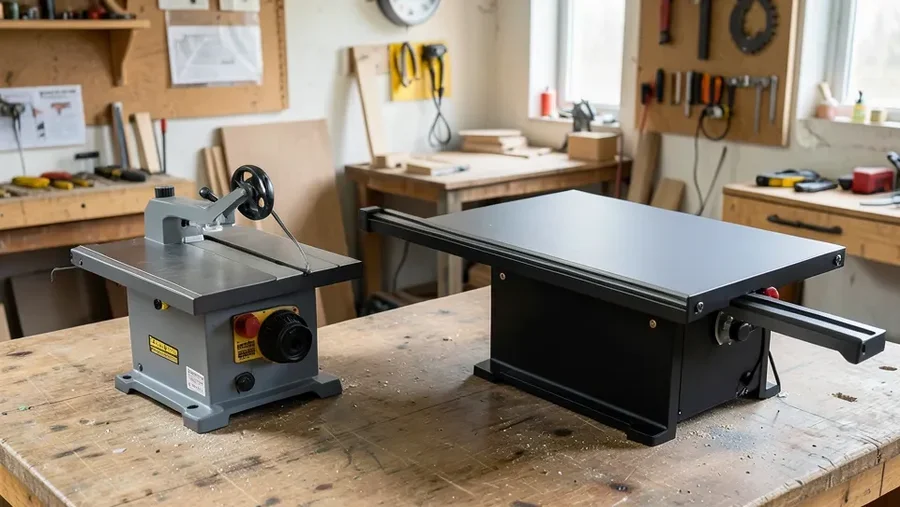
Types of Table Saws, and Which One Fits Your Shop
Table saws split into four practical categories, and matching the type to how much space and how often you cut hardwood matters more than chasing a single “best” model.
Benchtop Table Saws
These sit directly on a workbench or stand and typically run a direct-drive motor in the 10 to 15 amp range. They’re light enough to store in a closet, which makes them the right call for apartment shops and occasional projects, but the smaller table and shorter fence rails make long rips on full sheet goods awkward. Expect to feed material slowly through anything over 3/4-inch hardwood.
Jobsite Table Saws
Jobsite saws add a folding rolling stand and usually step up to a rack-and-pinion fence, the same mechanism the DEWALT above uses. This is the category that’s grown the most in the last few years because it closes most of the accuracy gap with stationary saws while still breaking down to fit in a truck bed. If you’re choosing one saw to cover both shop and site work, this is usually the right tier.
Contractor and Hybrid Table Saws
Contractor saws bolt to a fixed open-leg stand with the motor hanging off the back, while hybrid saws enclose the base like a cabinet saw but keep a lighter-duty motor and trunnion. Both are heavier, less portable, and better suited to a dedicated shop space. The payoff is a bigger cast-iron or cast-aluminum table that holds heat and vibration better during long rips.
Cabinet Table Saws
Cabinet saws fully enclose the motor and trunnion in a closed base, run 3 to 5 horsepower induction motors, and are built for daily production use. They’re the heaviest and most expensive category by a wide margin, and they’re overkill for most hobbyist shops, but they’re what most serious cabinet and furniture shops run because the mass and rigidity cut down on blade deflection in thick hardwood.
Key Specs That Actually Predict Real-World Performance
Marketing copy leans on horsepower and RPM, but a few less-hyped specs matter more day to day.
- Arbor size and blade compatibility: Nearly all 10-inch consumer saws use a 5/8-inch arbor, but confirm it before buying aftermarket blades, since a mismatch is a common return reason.
- Rip capacity: Measured from the blade to the far edge of the fence travel. Anything under 24 inches struggles to break down a half sheet of plywood in one pass.
- Fence parallelism and lock repeatability: A fence that drifts out of parallel by even 1/32 inch over a 4-foot rip will bind the blade and cause kickback risk, not just an inaccurate cut. Rack-and-pinion fences hold this better than stamped-steel clamp fences on budget saws.
- Dado capacity: If you plan to cut dado joints, confirm the saw’s arbor length actually accepts a stacked dado set; many benchtop saws physically can’t.
- Dust port size: A 2.5-inch port matches standard shop vacuum hose; anything smaller chokes airflow and leaves more dust in the air, which matters for long-term lung health, not just a clean shop.
Safety Features Worth Prioritizing Over Price
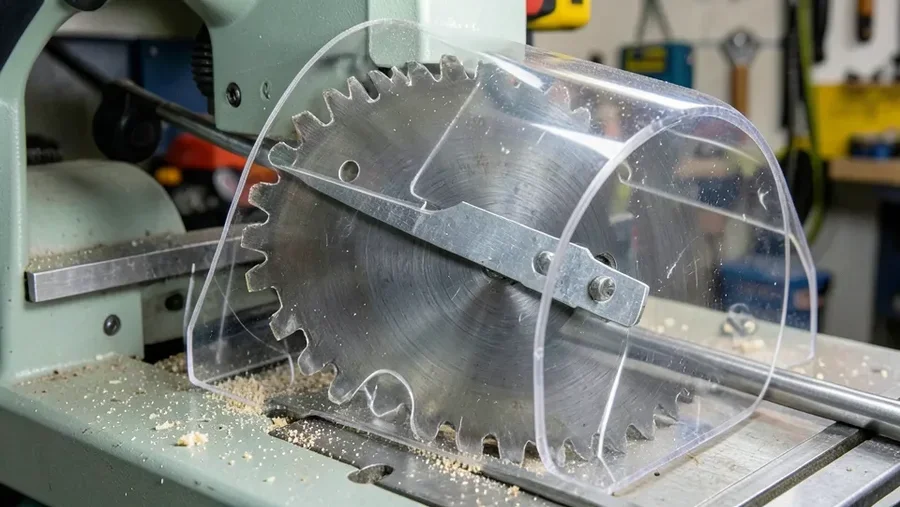
Every table saw sold new in the US ships with a blade guard, riving knife, and anti-kickback pawls, but not every saw makes them easy to actually use, which is why so many end up removed and left in a drawer. A riving knife that requires two tools and five minutes to reinstall after a non-through cut gets skipped on the next cut. Look at teardown videos or manuals before buying to see how fast the guard assembly goes on and off; that single detail predicts whether you’ll actually use it.
Flesh-detection systems like SawStop’s brake cartridge are the biggest jump in saw safety technology in the last two decades, and they’re worth the premium if the budget allows it. They are not retrofittable onto a saw that wasn’t built for them; if you already own a non-SawStop saw and are wondering whether one can be added, we’ve covered exactly what’s actually possible in a separate breakdown on retrofitting SawStop technology. For the accessories that make any table saw safer in the meantime, our table saw safety accessories guide covers push blocks, featherboards, and blade guard upgrades that work on almost any saw.
What Real Owner Feedback Tends to Agree On
Rather than quoting individual reviews as if they were lab data, it’s more useful to look at where owner feedback across thousands of purchases tends to converge, since patterns are more reliable than any single review. On jobsite-class saws like the DEWALT above, the fence system and rolling stand consistently come up as the two things buyers notice first, good or bad, because they’re used on every single cut. Complaints cluster around the same handful of points across the category: motor bogging on thick hardwood rips over 2 inches, a miter gauge that feels loose out of the box, and blade alignment needing a manual tune-up on arrival despite factory settings. None of these are dealbreakers on their own, but they’re worth checking in the first 30 minutes after unboxing, while a return window is still open.
Budget vs. Premium: Where the Extra Money Actually Goes
A $250 benchtop saw and a $2,500 cabinet saw both cut wood, but the price difference isn’t padding. It buys three things: motor mass (a heavier induction motor bogs down less under load and runs cooler over a full day), trunnion rigidity (less blade deflection means straighter cuts in thick stock), and fence engineering (rack-and-pinion and T-square style fences hold tolerance longer than stamped clamp fences). For most home shops, the jobsite tier in the $400 to $700 range captures most of that fence and rip-capacity benefit without the weight or cost of a full cabinet saw. Step up to a cabinet saw only if you’re running thick hardwood daily or building furniture for sale, where blade deflection actually shows up in glue-line quality.
Keeping a Table Saw Performing Like Its Original Rating
A saw’s factory accuracy fades if it isn’t maintained, and most of the maintenance is quick. Check blade-to-miter-slot parallelism every few months with a dial indicator or even a combination square; a drifted blade is the single biggest cause of burn marks and binding. Wax the table surface every month or two with paste wax (never spray lubricant, which attracts sawdust into a gummy residue) so stock slides freely instead of catching. Vacuum out the cabinet or base every few months, since packed sawdust around the trunnion gears is a common cause of a fence or bevel adjustment suddenly feeling gritty. Replace the blade when it’s dull rather than pushing harder through cuts, since a dull blade increases kickback risk more than almost any other single factor.
Frequently Asked Questions
Does Consumer Reports publish free table saw ratings?
Consumer Reports’ detailed table saw ratings and scores sit behind a paid membership. Their general testing focus (power, accuracy, fence quality, and safety systems) is publicly discussed, but specific current model rankings aren’t available without a subscription, which is why this guide focuses on verifiable specs and real owner feedback instead of reproducing scores we can’t access.
What is the best table saw for a beginner?
A jobsite-class saw in the $400 to $700 range, like the DEWALT DWE7491RS, is usually the best starting point. It has a fence accurate enough to learn on, a rip capacity wide enough for real projects, and a rolling stand so it doesn’t need a dedicated permanent space.
Are more expensive table saws actually worth it?
Only if you’re running thick hardwood daily or building furniture for sale, where a heavier motor and more rigid trunnion reduce blade deflection enough to matter in glue-line quality. For occasional and hobbyist use, a jobsite saw captures most of the practical benefit.
How important is flesh-detection (SawStop-style) technology?
It’s the single biggest safety advancement in table saws in the last two decades and worth the premium if the budget allows it, but it can’t be retrofitted onto a saw that wasn’t built for it. Every saw, with or without flesh detection, still needs its riving knife and blade guard actually installed and used.
How do I know if a table saw’s fence is accurate enough?
Rip a scrap board about 4 feet long, measure the width at both ends, and compare. A difference under 1/64 inch is excellent; anything over 1/32 inch across that length means the fence isn’t holding parallel and will cause binding and kickback risk on longer cuts.
Sponsored / affiliate links. As an Amazon Associate I earn from qualifying purchases. I may earn additional commission from eligible campaigns.