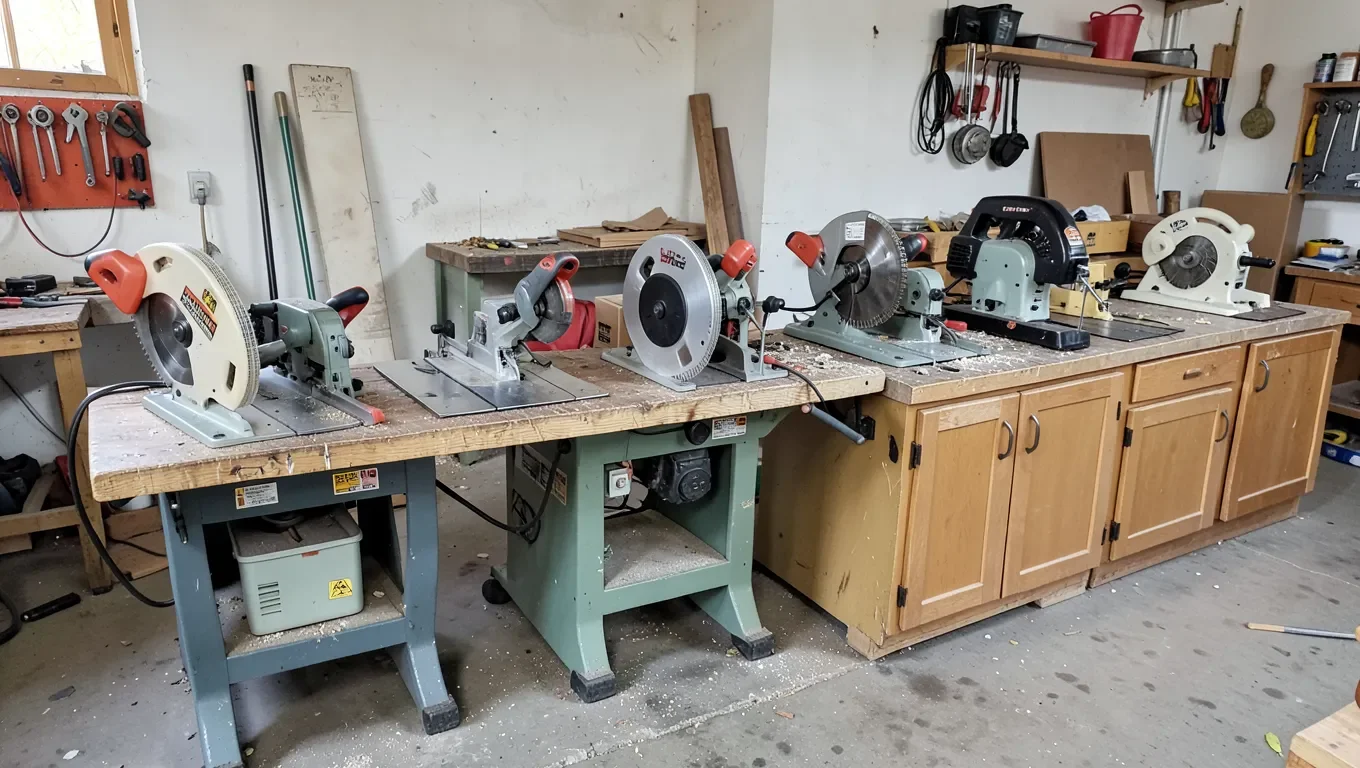
Types of Table Saws: Benchtop, Jobsite, Contractor, Cabinet, Hybrid
Table saws split into five real categories — benchtop, jobsite, contractor, cabinet, and hybrid — and the difference that actually matters between them is motor power, fence quality, and weight/portability, not just physical size. Picking the wrong category for your actual use (a benchtop saw for daily cabinet work, or a 500-lb cabinet saw for a garage you need to clear weekly) causes more frustration than any blade or fence upgrade can fix.
Benchtop and Jobsite Saws: Portability First
The Practical Choice for Most Home Shops
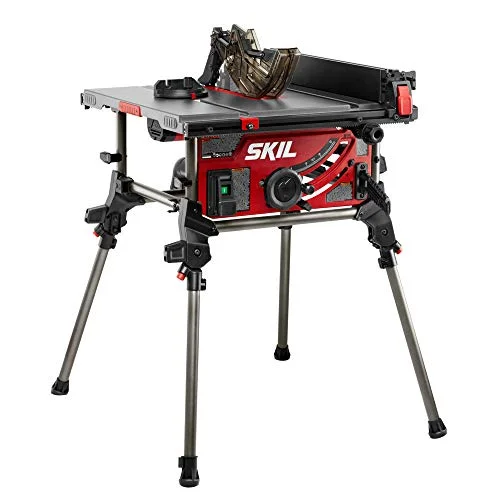 |
SKIL 15 Amp 10″ Jobsite Table Saw with Folding Stand – $302.68 A real jobsite saw with a folding stand — the category most home woodworkers and DIYers actually need, not a full cabinet saw.
|
Benchtop saws (typically under 50 lbs, sitting directly on a table or stand) and jobsite saws (usually 50-90 lbs with a folding stand built in) both prioritize portability over raw power, with motors commonly in the 13-15 amp range. The real distinction between them is the built-in stand and generally better fence systems on jobsite models — a benchtop saw is the more compact, budget option, while a jobsite saw is what most contractors and serious DIYers actually carry between locations. For a closer look at what actually matters when picking one of these for occasional home use, see our hobby table saw buying guide.
Contractor Saws: The Middle Ground
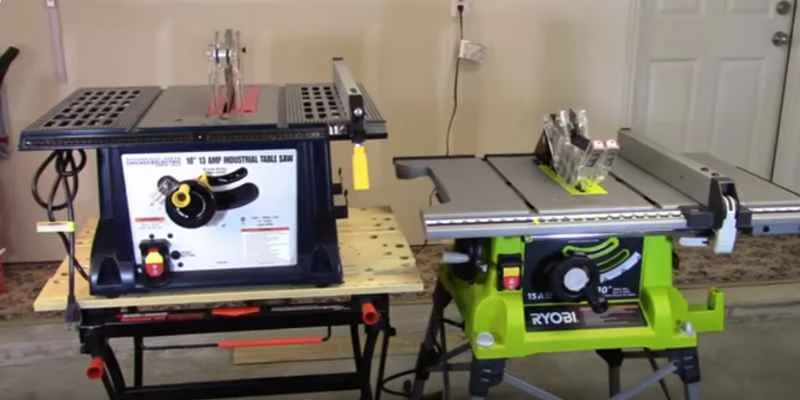
Contractor saws (typically 200-300 lbs, meant to stay in one shop location rather than travel to jobsites) step up to a more open base design with a belt-driven motor hanging off the back, usually 1.5-2 HP. They offer meaningfully better fence accuracy and cut capacity than a jobsite saw while still costing significantly less than a cabinet saw, making them a common choice for a dedicated home shop that doesn’t need cabinet-saw-level power.
Cabinet Saws: Maximum Power and Precision
Cabinet saws (400-600+ lbs, fully enclosed base, typically 3+ HP induction motors) are the professional-shop standard, built for accuracy and sustained heavy use rather than portability — the enclosed cabinet also captures dust more effectively than an open contractor saw base. The real trade-off is cost (often $1,500-$3,000+) and permanence — a cabinet saw is a fixture, not something moved around a shop or between locations regularly.
Hybrid Saws: A Real Middle Category, Not Marketing Fluff
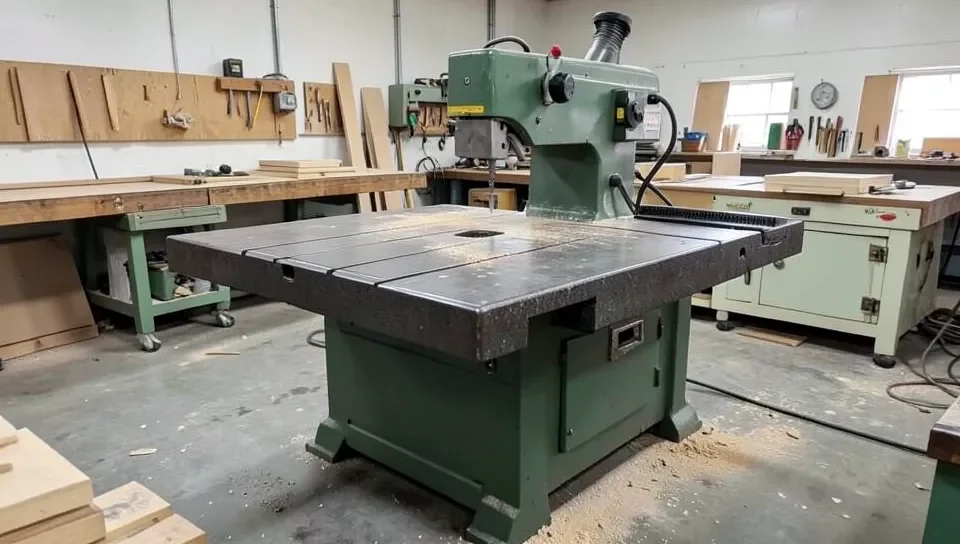
Hybrid saws borrow a cabinet saw’s enclosed base and better dust collection but use a lighter-duty motor and trunnion assembly closer to a contractor saw’s, landing in both weight (around 300-350 lbs) and price between the two categories. This is a genuine middle option for a home shop that wants cabinet-saw dust control and rigidity without the full cost and permanence of a true cabinet saw — not just a rebranded contractor saw.
How to Actually Choose
Match the category to how the saw will actually be used: portability needs (moving between jobsites or a shared/rented space) point to benchtop or jobsite; a dedicated home shop with moderate use fits contractor or hybrid; and daily heavy use in a permanent shop justifies a cabinet saw’s cost and weight. Buying more saw than your actual use case needs mostly adds cost and floor space, not real capability you’ll use.
Frequently Asked Questions
What’s the real difference between a jobsite and contractor table saw?
Jobsite saws prioritize portability with a built-in folding stand, while contractor saws are heavier, stay in one shop location, and offer better fence accuracy and cut capacity.
Is a hybrid table saw worth it over a contractor saw?
Yes, if better dust collection and rigidity matter to you. Hybrid saws use a cabinet saw’s enclosed base with a lighter-duty motor, landing between contractor and cabinet saws in both price and capability.
Do I need a cabinet saw for a home shop?
Usually not, unless you’re doing daily heavy use. A contractor or hybrid saw handles most home shop needs at a fraction of a cabinet saw’s cost and weight.
Conclusion
The five table saw categories exist for real reasons — portability, cost, power, and dust control trade off differently in each — and matching the category to actual use matters more than chasing the biggest or most powerful option available. Most home shops are well served by a jobsite, contractor, or hybrid saw; save the cabinet saw for daily heavy professional use.
Sponsored / affiliate links. As an Amazon Associate I earn from qualifying purchases. I may earn additional commission from eligible campaigns.
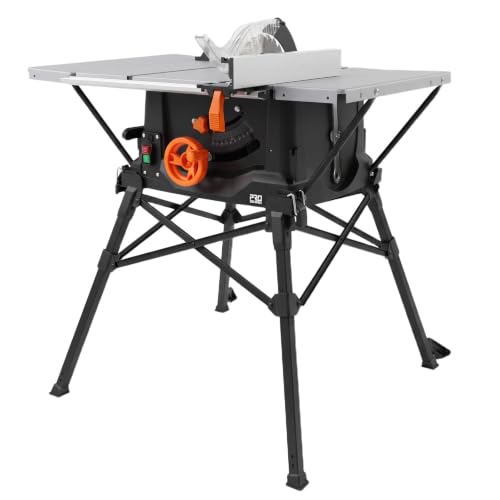 10-Inch Portable Table Saw with Folding Stand, 0-45° Bevel Cut, 15A 5000RPM, Adjustable Blade Height, Multifunctional Benchtop Wood Saw for DIY & Woodworking
 200W Mini Multi-Functional Table Saw, Mini Table Saws for Crafts, Multi-functional Mini Table Saw for Wood Cutting, Grinding, Adjustable Speed (4200-8500RPM), 0-90° Angle Cutting