Table Saw Wrench Sizes by Brand: Which One Fits Your Saw
A table saw wrench is the small pair of tools — an arbor wrench and a nut wrench — that come with most table saws to hold the blade shaft steady while you loosen or tighten the arbor nut. Lose that pair, or buy a used saw without them, and a five-minute blade swap turns into an afternoon of guessing sizes at the hardware store. Below is exactly which wrench fits which saw, the thread-direction mistake that trips up even experienced woodworkers, and a low-cost replacement set that covers the most common table saws sold in the U.S.
The Wrench Size That Actually Matches Your Saw
Best Replacement Wrench Set
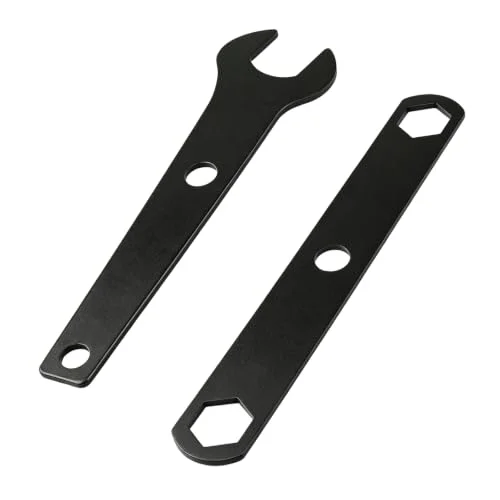 |
Treekey Table Saw Arbor & Blade Wrench Set – $9.29 A direct replacement for the OEM wrench pair (COMBO00139) that ships with 10-inch Ryobi table saws — the exact tool the sizing table below is built around.
|
There is no single “table saw wrench size.” Every manufacturer machines its own arbor and nut dimensions, so the wrench that came in the box with a Ryobi will not touch a DeWalt, and a Craftsman wrench won’t touch either one. Full-size 10-inch cabinet and contractor saws are usually built around a 5/8-inch arbor shaft, but the actual wrench flats you put a tool on vary by brand and even by model year:
| Saw / Model | Arbor-Holding Wrench | Blade Nut Wrench |
|---|---|---|
| Older Craftsman contractor saws (113/315 series) | 7/8″ | 1-1/16″ |
| DeWalt DWE7485 (compact jobsite) | Built-in arbor lock | 1″ socket or wrench |
| DeWalt DWE7491RS (flip-cart jobsite) | Built-in arbor lock | 13/16″ socket |
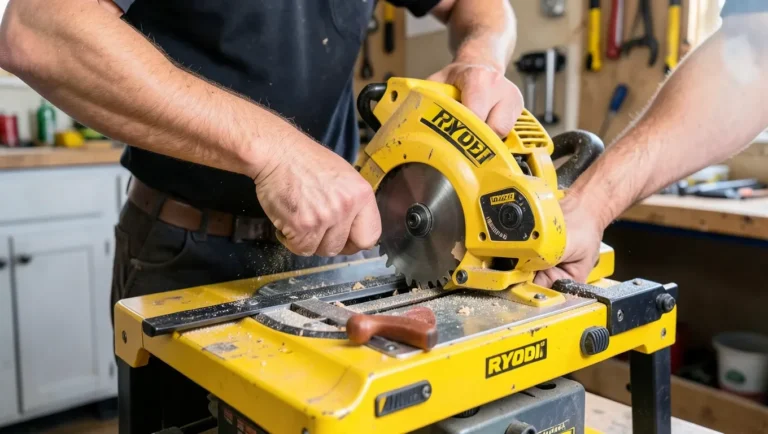
| Ryobi BTS10 / RTS10 / RTS21 family | Proprietary 2-piece set (COMBO00139) | Proprietary 2-piece set (COMBO00139) |
| Jet, Powermatic & most cabinet saws | 5/8″ on the arbor flats | Varies — check the manual, often 3/4″ – 1″ |
These numbers come from the saws’ own service manuals and forum reports from owners who measured their arbors directly — not a universal chart, because one doesn’t exist. If your saw isn’t listed, measure the flats on the old wrench (or the nut itself) with a caliper before buying a replacement; “close enough” strips the nut’s corners on the first turn.
The Thread-Direction Mistake That Ruins Arbor Nuts
Here’s the detail that trips up almost everyone the first time: on most table saws, the arbor nut is left-hand threaded. You turn it clockwise to loosen and counterclockwise to tighten — backwards from virtually every other nut and bolt in your shop. It isn’t a manufacturing accident. The blade spins in a direction that would otherwise unscrew a standard right-hand nut a little more with every cut; cutting the arbor threads left-handed means the blade’s own rotation snugs the nut tighter instead of walking it loose. Try to “loosen” a left-hand nut by turning it counterclockwise and you’ll just tighten it further and wonder why the wrench won’t move.
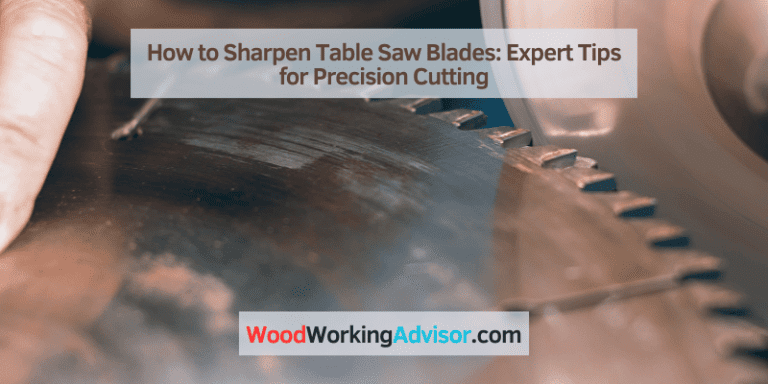
Two more things get over-applied here. First, more torque is not safer: the arbor nut only needs to be snug against the blade and outer flange, not gorilla-tight — over-tightening strips the threads or rounds off the flats without adding any real holding force. Second, always brace the blade before applying force: raise the blade to its highest setting, wedge a short scrap block against the front teeth to keep the blade from spinning, and use a wrench long enough that if it slips, your hand stops well short of the teeth.
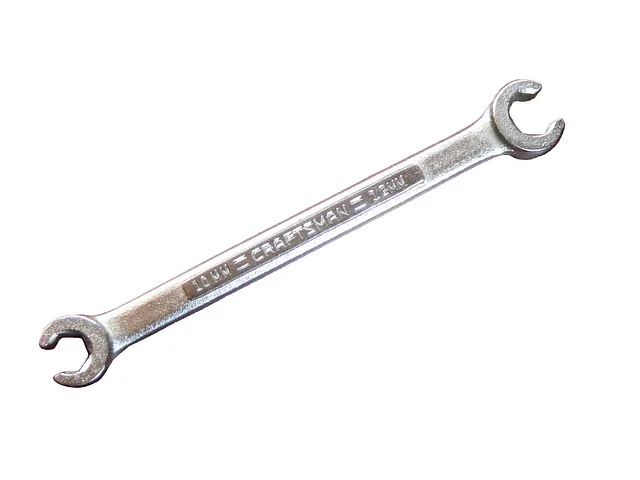
Types of Table Saw Wrenches
Most saws use one of three wrench styles, and knowing which one your saw takes saves a wasted trip to the store.
- Factory stamped pairs — a thin, brand-specific arbor wrench and nut wrench sold only as a matched set (like the Ryobi COMBO00139 pair above). Cheap to replace but only fit that one brand’s arbor pattern.
- Universal open-end or combination wrenches — standard SAE or metric wrenches that happen to match your saw’s flats (5/8″, 3/4″, 7/8″, 1″ are the most common). Work fine as long as the size is exact; a loose-fitting universal wrench is what rounds off nuts.
- Hex/Allen keys — some import benchtop saws bolt the blade down with a socket-head cap screw instead of a hex nut, so the “wrench” is really a hex key sized to the screw head, not a flat-sided nut at all.
Material matters more than most buying guides admit. Drop-forged steel and chrome-vanadium wrenches resist rounding under repeated torque; thin stamped sheet-metal wrenches (common in cheap aftermarket sets) flex and slip before the nut even breaks loose, which is exactly the failure mode that strips corners.
How to Change a Table Saw Blade With the Right Wrench
- Unplug the saw. Never rely on the power switch alone — a table saw motor can be jarred into contact accidentally while you’re working with both hands near the blade.
- Raise the blade to its maximum height. This gives the arbor wrench room to seat flat against the shaft flats instead of grinding against the throat plate.
- Wedge a scrap block of wood against the front of the blade to keep it from spinning while you work the nut.
- Seat the arbor wrench (or built-in arbor lock, on saws that have one) against the flats behind the blade to hold the shaft still.
- Turn the nut wrench clockwise to loosen on most saws (left-hand thread — see above), applying steady pressure rather than a sharp jerk.
- Remove the outer flange, swap the blade, and reinstall the flange and nut. Snug it by hand first, then use the wrench to bring it just past finger-tight — not maximum force.
- Spin the blade by hand before plugging the saw back in to confirm nothing is rubbing the throat plate or riving knife.
Wear safety glasses and keep hands clear of the teeth throughout — even an unplugged blade has sharp edges. If the nut won’t budge after steady pressure, stop and treat it as a stuck fastener (next section) rather than adding more force through a slipping wrench.
Maintenance and Storage
A table saw wrench does its job for years if you keep it clean and dry. Wipe it down after use, especially if you’ve been cutting pressure-treated or wet lumber, since the chemicals in treated wood accelerate corrosion on bare steel. A light coat of machine oil before long-term storage prevents rust from seizing the jaws.
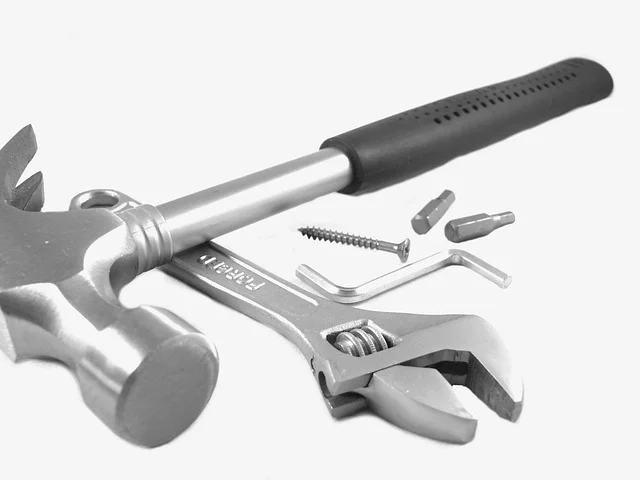
Most lost wrenches aren’t lost — they’re in a junk drawer mixed in with generic tools because there was nowhere dedicated to put them. A small magnetic tray mounted to the inside of your saw’s cabinet, or a labeled hook near the machine, solves this permanently. If you already store other shop tools on a dedicated storage rack, add a hook there specifically for the saw wrench so it’s never more than an arm’s reach from the machine it belongs to.
Troubleshooting: Stripped Nuts and Stuck Wrenches
A rounded-off arbor nut is almost always caused by an undersized or worn wrench slipping under load, not a defective nut. Once the flats are rounded, a fresh, properly sized wrench often re-seats and works fine — the problem was the tool, not the fastener. If the corners are too far gone, a nut-splitter or locking pliers with penetrating oil can break it free as a last resort; replace the nut afterward rather than reusing a damaged one.
A wrench that won’t budge a nut that isn’t actually over-tightened is usually corrosion, not thread damage. Apply penetrating oil, give it 10–15 minutes to work into the threads, then try again with steady (not sudden) pressure. Repeated freeze-ups on the same saw usually mean moisture is getting to the arbor — check for a dust collection leak or humid storage conditions rather than just fighting the nut every time.
Frequently Asked Questions
What size wrench does a table saw use?
It depends entirely on the brand and model — there is no universal table saw wrench size. Older Craftsman contractor saws typically use a 7/8-inch wrench on the arbor and a 1-1/16-inch wrench on the nut, DeWalt’s DWE7491RS uses a 13/16-inch socket, the DWE7485 uses a 1-inch socket, and Ryobi’s BTS10/RTS10/RTS21 family uses a proprietary 2-piece wrench set (COMBO00139) rather than standard sizes. Check your saw’s manual or measure the flats directly before buying a replacement.
Which way do you turn a table saw arbor nut to loosen it?
On most table saws you turn the arbor nut clockwise to loosen and counterclockwise to tighten, because the nut is left-hand threaded so the blade’s own rotation keeps it snug instead of unscrewing it during use. This is the opposite of nearly every other fastener in a typical shop, which is why it’s the most common mistake first-time blade-changers make. Always confirm the direction in your specific saw’s manual, since a few models differ.
Can I change a table saw blade without the original wrench?
Yes, as long as you use a wrench or socket that exactly matches your saw’s arbor and nut flats — a standard SAE or metric wrench works fine if the size is correct. Using a wrench that’s even slightly loose-fitting is the main cause of rounded-off nuts, so measure the flats with a caliper rather than guessing from a generic size chart.
Why does my table saw wrench keep getting lost?
Table saw wrenches are small, saw-specific, and rarely used, so they end up mixed into a general toolbox and forgotten. Mounting a small magnetic tray or hook directly on the saw’s cabinet keeps the wrench with the machine it belongs to instead of buried in a drawer, which is the single most effective fix reported by long-time owners.
Conclusion
The right table saw wrench comes down to two things: matching the exact size for your specific saw, and remembering that most arbor nuts loosen clockwise, not counterclockwise. Get those two details right, brace the blade before applying force, and a blade change takes minutes instead of turning into a stripped-nut repair job.
Sponsored / affiliate links. As an Amazon Associate I earn from qualifying purchases. I may earn additional commission from eligible campaigns.