What Does Termite Damage Look Like on Wood?
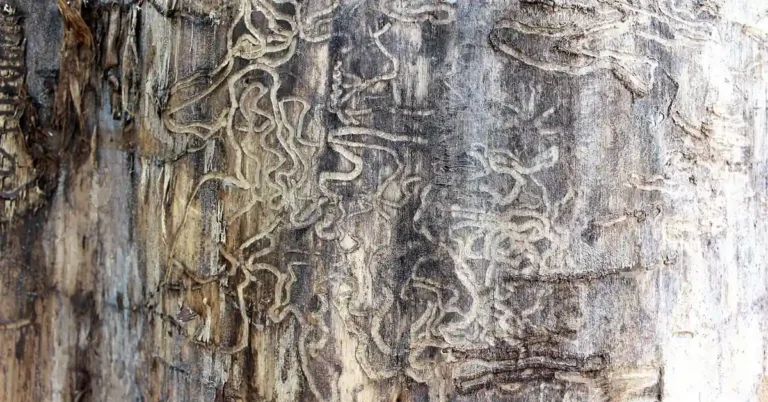
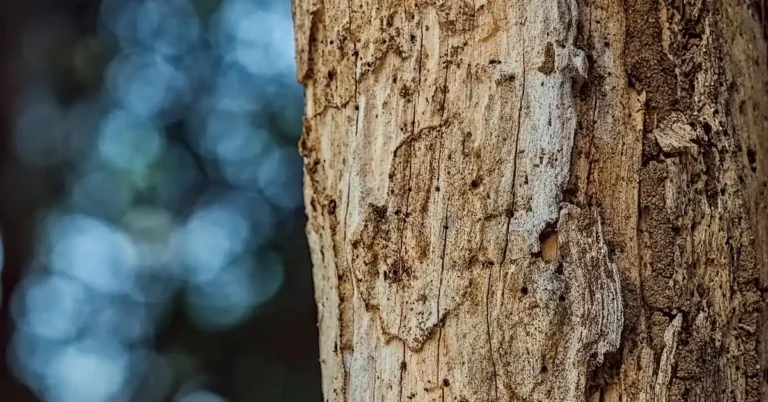
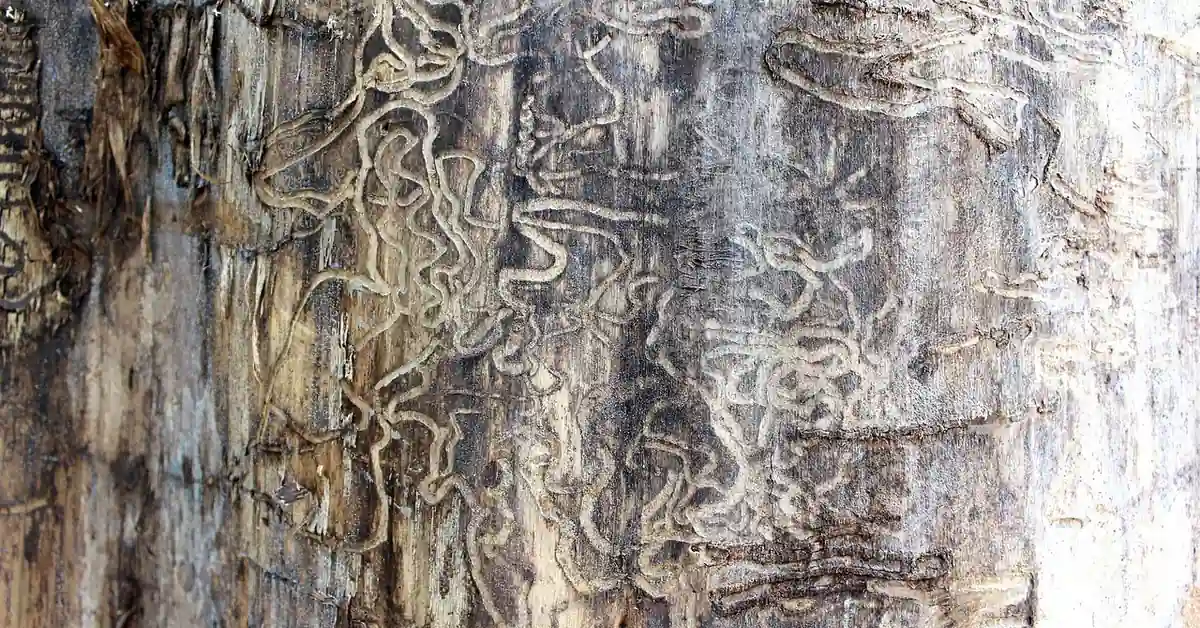
Termite-damaged wood looks hollow and honeycombed inside, often with mud tubes nearby and hard, six-sided pellets called frass — unless the wood is actually spongy or crumbling, which points to rot instead. Mistaking one for the other means treating the wrong problem, or building with lumber that’s already failing. This guide covers what real termite damage looks like, how it differs from carpenter ants and wood rot, and a quick field test for any board.
How to Spot Termite Damage on Wood
Best Wood Moisture Meter Pick
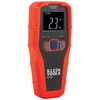
Klein Tools ET140 Pinless Moisture Meter
Scans wood or drywall without puncturing the surface — good for checking suspect boards before you cut, buy, or build with them.
- Best for: Quick, non-destructive moisture checks on framing or reclaimed lumber
- Why we picked it: Trusted trade brand, simple pinless scan matches the field-test steps above
- Main drawback: Pinless readings are a relative/comparative guide, not a lab-precise number
Compare more moisture meter options
 Option 1 General Tools MMD7NP
|
 Option 2 AEGTEST AWT-380
|
 Option 3 Budget Pinless Meter
|
As an Amazon Associate we earn from qualifying purchases.
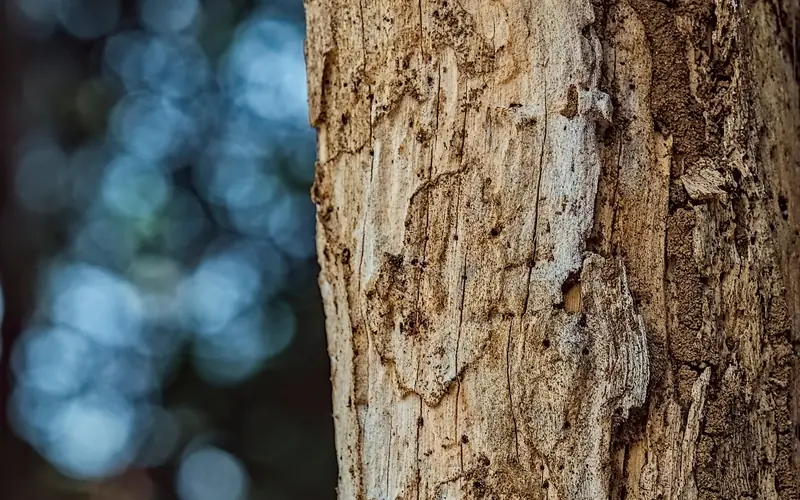
Termites eat wood from the inside out, so the surface can look almost normal while the interior is hollowed into a honeycomb of tunnels. The clearest signs show up once you know where to look and how to check — for a broader rundown of identification and prevention, see our termite prevention and control guide.
Hollow or Papery Wood
Tap the wood with a screwdriver handle or knuckle. Termite-damaged wood sounds hollow or dull instead of solid, because only a thin outer layer of wood is left covering a maze of tunnels. Push a screwdriver point into the surface at a suspect spot — sound wood resists, while termite-hollowed wood gives way easily and may crumble or splinter along the tunnel lines.
Mud Tubes and Frass
Subterranean termites build pencil-width mud tubes of soil, saliva, and wood particles to travel between the ground and the wood they’re eating, usually along foundations, joists, or crawl space walls. See our guide on identifying mud tubes on a wall for how to tell an active termite tube apart from a mud dauber wasp nest. Drywood termites leave no mud tubes at all — instead they push out frass, tiny six-sided pellets that look like coarse sand or ground coffee, piled beneath a small kick-out hole in the wood.
Bubbling or Cracked Paint
As termites tunnel just beneath a painted or finished surface, the wood underneath loses its even support and the paint film starts to bubble, ripple, or crack in a pattern that doesn’t match normal peeling from moisture or age. It’s often the first visible clue on trim, baseboards, and window frames, well before the wood sounds hollow.
Termite Damage vs. Carpenter Ants vs. Wood Rot
Termite damage is wood loss caused by insects eating cellulose, leaving hollow, honeycombed tunnels packed with mud or pellet frass. It’s easy to confuse with carpenter ant tunneling or fungal wood rot, but each leaves a distinct signature once you know what to check.
| Signal | Termites | Carpenter Ants | Wood Rot |
|---|---|---|---|
| Tunnel/gallery texture | Rough, mud-flecked, packed with debris | Smooth, almost sanded-looking | No tunnels — wood is uniformly soft or crumbly |
| Droppings/frass | Hard, uniform 6-sided pellets (drywood) or mud tubes (subterranean) | Coarse sawdust-like shavings mixed with insect parts, piled below the nest opening | None — discoloration and fungal growth instead |
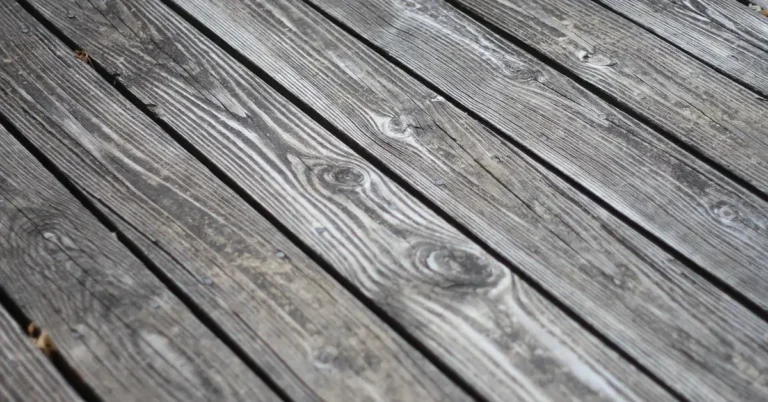
| Wood feel | Hollow, splinters along tunnel lines when probed | Hollow with clean, polished-feeling galleries | Spongy and wet (wet rot) or dry and crumbly, cracking into small cubes (dry rot) |
| Cause | Insects eating the wood for food | Insects tunneling to nest — they don’t eat the wood | Fungal decay from sustained moisture |
| Typical location | Sill plates, subfloor, framing near soil contact | Damp or previously water-damaged wood, porches, window sills | Anywhere wood stays wet: roof seams, deck posts, window and door frames |
📊 Termites don’t usually attack dry, well-ventilated wood. Pest control industry data (Terminix, Orkin field guides) consistently notes that termites favor wood already in contact with soil or holding excess moisture — if a board is bone-dry and still crumbling, wood rot or old insect damage is the more likely cause, not an active termite colony.
How to Field-Test Wood Before You Buy or Build With It
Whether you’re buying reclaimed lumber, inspecting a used workbench, or checking framing before a repair, a two-minute physical test tells you more than a visual scan alone. Run through these steps on any board you’re unsure about.
- Tap-test the surface: Knock along the board with a knuckle or screwdriver handle. A dull, hollow sound at spots that look solid means the interior has been eaten out.
- Probe with a screwdriver or awl: Press the tip into the wood at a few points, especially near any hole, stain, or soft-looking patch. Sound wood resists; termite-hollowed wood gives way and splinters along tunnel lines; rot-softened wood gives with a spongy, moist feel and no splintering at all.
- Check for frass or mud tubes: Look at the underside and any cracks for pellet piles or mud tubes. Their presence confirms active or recent termite activity even if the surface looks fine.
- Take a moisture reading: A pinless moisture meter reading above roughly 20% on framing lumber signals conditions termites and rot fungi both prefer. Readings in the 6–12% range point away from an active termite or rot problem and toward old, dormant damage instead.
- Note the wood’s history and location: Wood that was in ground contact, near a leak, or stored in a damp shed is far more likely to be a real problem than a similar-looking board that’s always been dry and elevated.
“When sourcing reclaimed lumber for shop projects, the screwdriver probe test is standard practice before it ever touches a saw: wood that splinters and cracks cleanly along tunnel lines usually means termites, while wood that gives with a spongy, moist feel and no splintering at all is rot — and either way, that board doesn’t go in the project pile.”
When Termite Damage Becomes a Structural Problem
Weakened Support Beams
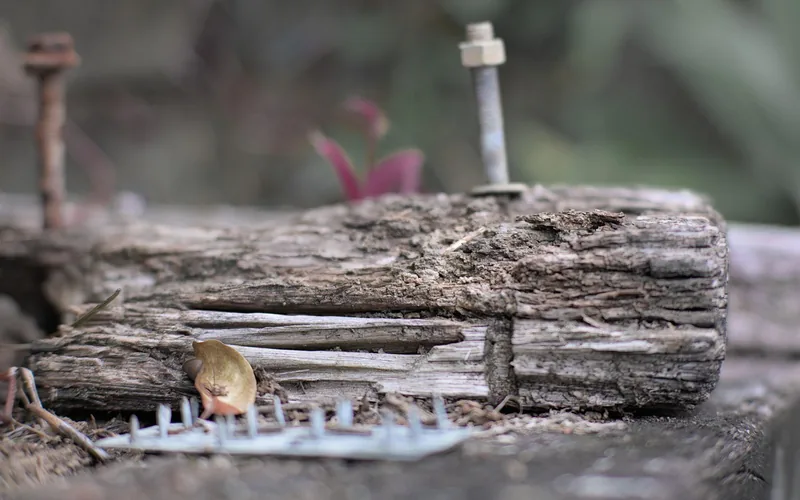
Sill plates, joists, and support posts are common targets because they sit closest to the ground, where subterranean termites nest. A beam that’s been hollowed can still look intact from the outside while carrying a fraction of its original load-bearing strength.
Sagging Floors and Ceilings
Once framing members are significantly hollowed, floors can develop a soft, springy feel or a visible dip, and ceilings or door frames may start to bind or sag. These are late-stage signs — by the time you notice them, the damage has usually been progressing for a year or more.
DIY Repair or Call a Professional?
A single small area of dormant, treated damage in non-structural trim is often fine to cut out and replace yourself. Active termites, mud tubes, structural framing, or damage you can’t fully see the extent of call for a licensed pest control inspection — termite treatment methods (soil treatment, baiting systems, direct injection) require equipment and licensing most homeowners don’t have, and a professional inspection confirms whether the colony is still active before any repair is worth doing. Once any active problem is resolved, our wood care and protection guide covers how to keep replacement lumber from ending up back in the same spot.
How do you know if wood has termite damage?
Tap the wood and listen for a hollow sound, probe it with a screwdriver to check if it gives way or splinters along tunnel lines, and look for mud tubes or pellet-like frass nearby. Surface clues like bubbling paint or small kick-out holes are often the first visible signs, even before the wood sounds hollow.
What’s the difference between carpenter ant damage and termite damage?
Carpenter ants tunnel to nest but don’t eat wood, so their galleries look smooth and clean, almost sanded. Termites eat the wood itself, leaving rougher tunnels packed with mud or debris, plus mud tubes or hard pellet frass that carpenter ants don’t produce.
Can you still use wood that had termite damage?
Wood with old, treated, and confirmed-inactive termite damage can sometimes be used in non-structural projects if it still passes a probe test and shows no fresh frass or mud tubes. For structural framing, or if you can’t confirm the infestation is dead, replace the wood instead — the strength loss isn’t always visible from the outside.
What does early termite damage look like?
Early damage is subtle: faint pinholes, slightly bubbled paint, a board that sounds a little duller than its neighbors when tapped, or a few pellet-sized frass grains on a windowsill or baseboard. There’s rarely visible hollowing yet, which is why the tap and probe tests catch problems sooner than a visual check alone.
Do termites and wood rot happen at the same time?
They can. Both are drawn to damp wood, so a board with long-term moisture exposure can develop rot and then attract termites afterward, or the reverse. A moisture meter reading and a look for mud tubes versus soft, spongy texture will usually tell you which problem (or both) you’re dealing with.
Conclusion
Termite damage on wood comes down to a few reliable tells: hollow or papery wood, mud tubes or hard pellet frass, and tunnels that follow the grain in a rough, debris-packed pattern — different from the clean galleries carpenter ants leave or the soft, crumbly texture of wood rot. If your tap and probe test raises questions, get a closer look at what termite-infested wood actually looks like up close, check the specific signs of termites in a floor if that’s where you’re seeing trouble, and see your options for how to kill termites already in wood before deciding on repair versus replacement.
Sponsored / affiliate links. As an Amazon Associate I earn from qualifying purchases. I may earn additional commission from eligible campaigns.
 NuGrain Wood Repair Kit, Professional Wood Floor Scratch Repair, Floor Cover Nicks and Scratches, Hides Minor Defects, Restore a Finish for Wood (2 Bottle)
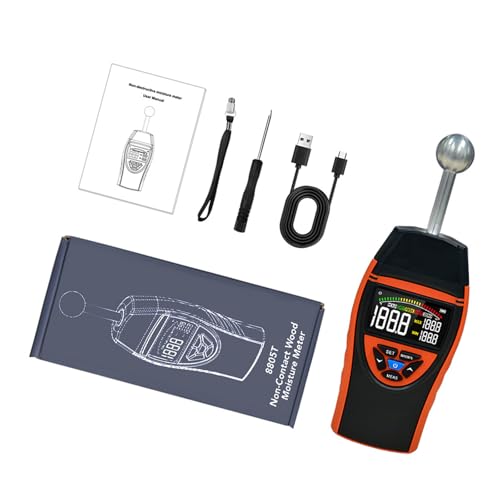 Digital Meter with Fast LCD Display for Wood Brick Wall and Building Materials High Accuracy Digital Meter for Wood Brick and Wall with Fast Readout LCD Display Portable Design