Tung Oil vs Mineral Oil: Best for Wood?
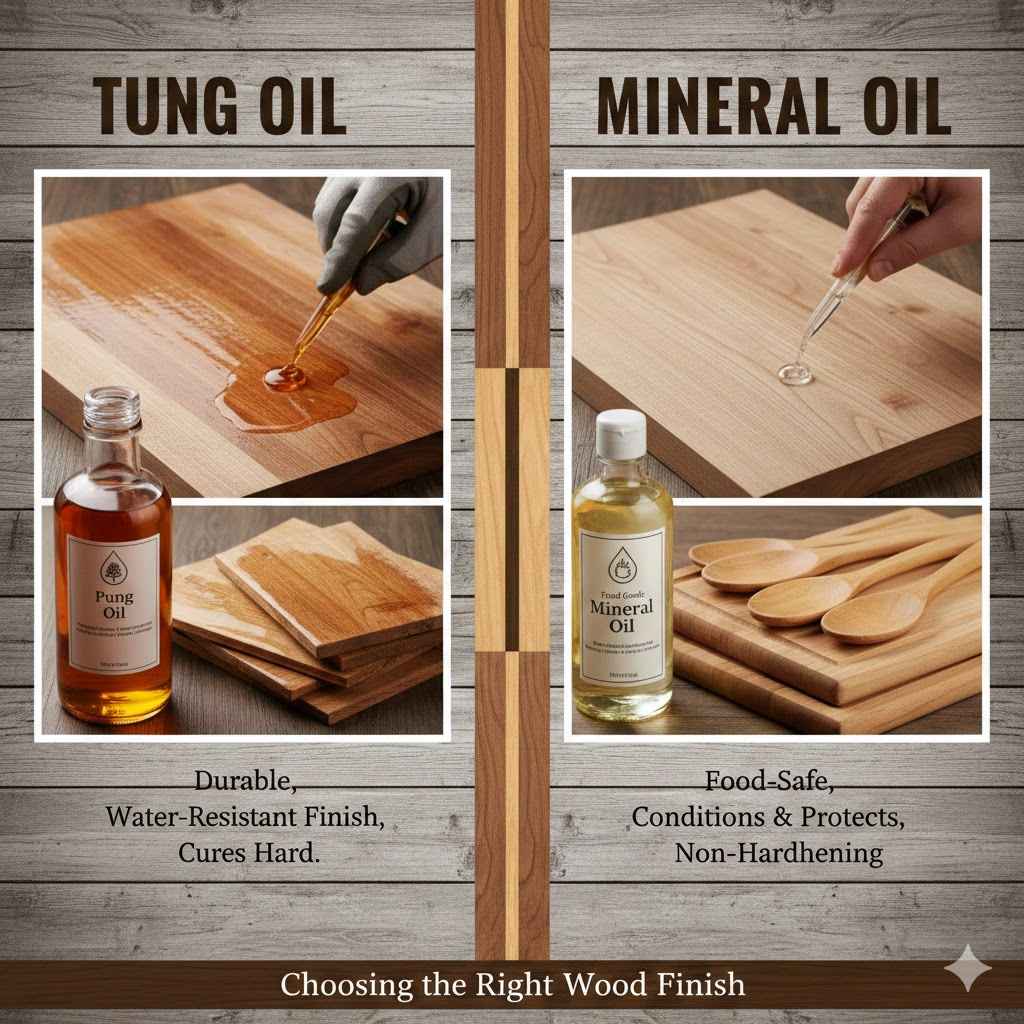
Choosing the right finish for your wood projects can feel a bit tricky. Many people wonder about Tung Oil vs Mineral Oil: Best for Wood? This common question pops up because both oils are popular choices, but they do different things. It can be confusing to know which one will give you the look and protection you want for your wood.
But don’t worry, we’ll break it down super simply. We’ll help you figure out which oil is best for your specific needs, step by step, so you can get beautiful, lasting results.
Understanding Wood Oil Finishes
Wood finishes protect your projects and make them look good. They can seal the wood, add color, and highlight its natural beauty. Think of it like giving your furniture or decorative items a protective coat that also makes them shine.
There are many types of wood finishes, but oils are a popular choice for their natural look and ease of application. Oils soak into the wood, enhancing the grain and providing a more organic feel compared to films like varnish. This section will explore why wood finishes are important and what makes oil finishes a great option for many woodworkers.
What Are Wood Oils?
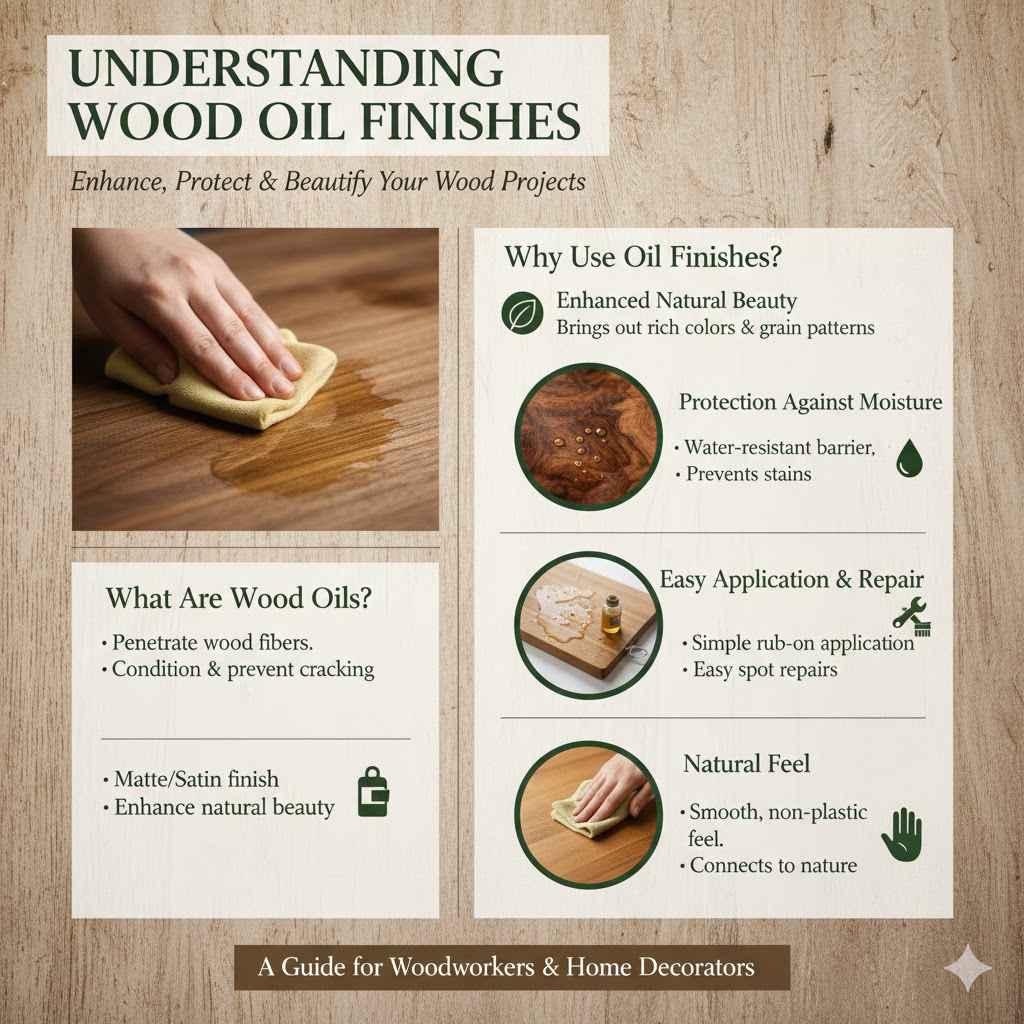
Wood oils are natural or synthetic liquids that penetrate the surface of wood. They help to condition the wood, preventing it from drying out, cracking, or becoming brittle. Unlike varnishes or lacquers that form a hard shell on top of the wood, oils become part of the wood itself.
This means they don’t chip or peel. They also typically provide a matte or satin finish that feels very smooth to the touch.
The main goal of using wood oils is to enhance the wood’s natural beauty. They often deepen the color of the wood and bring out the intricate grain patterns. This creates a rich, warm look that many people prefer for furniture, cutting boards, and other wooden items.
Why Use Oil Finishes?
Enhanced Natural Beauty. Wood oils soak into the wood fibers, bringing out the natural colors and grain patterns. This makes the wood look richer and more vibrant. It’s like giving the wood a drink that makes its best features stand out.
Protection Against Moisture. Oils create a barrier that helps protect the wood from water and stains. This is especially important for items like cutting boards or outdoor furniture that might get wet. The oil helps prevent water damage and makes cleaning easier.
Easy Application and Repair. Most oil finishes are simple to apply, often just needing a cloth to rub them in. If the finish gets scratched or damaged, it’s usually easy to sand down a small spot and reapply the oil without having to refinish the entire piece. This makes maintenance very straightforward.
Natural Feel. Oil finishes leave the wood feeling natural and smooth, not plastic-like. You can feel the texture of the wood through the finish, which many people find appealing. It makes the piece feel more authentic and connected to nature.
Tung Oil Explained
Tung oil is a popular choice for wood finishing, known for its durability and water-resistant properties. It comes from the nut of the Tung tree, which is native to China. When applied, Tung oil penetrates the wood and polymerizes, meaning it hardens and creates a tough, protective layer.
This makes it a great option for surfaces that see a lot of use or might get wet. This section will explore what Tung oil is, how it works on wood, and its advantages and disadvantages for different projects.
What Is Tung Oil?
Tung oil is a drying oil, which means it chemically changes when exposed to air. It undergoes a process called polymerization, where its molecules link together to form a hard, protective film. This is different from non-drying oils, which remain liquid or waxy.
The oil is pressed from the seeds of the Tung tree.
There are two main types of Tung oil: pure Tung oil and Tung oil finish. Pure Tung oil is 100% Tung oil, offering the best natural protection but often requires more coats and longer drying times. Tung oil finishes are usually Tung oil mixed with solvents and resins to make them easier to apply, speed up drying, and sometimes add UV protection or other properties.
How Tung Oil Works on Wood
When you apply Tung oil to wood, it soaks into the pores. Over time, it reacts with the oxygen in the air and hardens. This creates a cross-linked polymer structure within the wood.
This structure provides a barrier that resists moisture, heat, and wear. The result is a durable, flexible finish that doesn’t become brittle.
The curing process can take several days or even weeks for pure Tung oil, depending on humidity and temperature. This slow curing is what allows the oil to deeply penetrate and form a strong bond. The finished surface is often described as having a beautiful, satiny sheen.
Advantages of Tung Oil
Excellent Water Resistance. Tung oil is renowned for its ability to repel water. After it fully cures, it forms a dense, non-porous surface that water beads up on. This makes it ideal for kitchen countertops, tabletops, and even boat interiors where moisture is a concern.
Durable and Hard Wearing. The polymerization process creates a tough finish that can withstand everyday use. It is resistant to scratches and abrasions better than many other oil finishes. This means your wood will maintain its look for longer, even in high-traffic areas.
Beautiful Natural Appearance. Tung oil enhances the wood’s natural color and grain, giving it a warm, deep luster. It creates a satin or matte finish that looks very natural and doesn’t hide the wood’s texture. It often gives wood a slightly darker, richer tone.
Non-Toxic When Cured. Pure Tung oil is a natural product and becomes safe for food contact once fully cured. This makes it a great choice for cutting boards, salad bowls, and other kitchenware. Always check the product label to ensure it’s food-safe if this is important for your project.
Disadvantages of Tung Oil
Long Drying Times. Pure Tung oil can take a long time to cure, sometimes weeks between coats. This slow process requires patience and can mean your project takes longer to complete. Using a Tung oil finish with added driers can speed this up, but it may compromise some purity.
Can Be Expensive. High-quality pure Tung oil can be more costly than other wood finishing oils. The price reflects its natural origin and the quality of protection it offers. However, a little oil goes a long way, and its durability can make it cost-effective over time.
Requires Proper Application. Achieving the best results with Tung oil often involves multiple thin coats, sanding between coats, and ensuring good ventilation for drying. Improper application can lead to a sticky or uneven finish. Following manufacturer instructions is key to success.
Can Darken Some Woods Significantly. While darkening can be desirable, Tung oil can make lighter woods appear much darker. This can be an issue if you want to maintain the original light color of the wood. Always test the finish on a scrap piece first to see the color change.
Mineral Oil Explained
Mineral oil is another common option for wood finishing, particularly for items that come into contact with food. Unlike Tung oil, mineral oil does not harden or polymerize. It remains a liquid oil that soaks into the wood fibers to condition and protect them.
This makes it very easy to use and refresh. This section will detail what mineral oil is, how it functions on wood, and its primary benefits and drawbacks, especially in comparison to other wood treatments.
What Is Mineral Oil?
Mineral oil is a byproduct of the petroleum refining process. It is a clear, odorless, and tasteless liquid. For use on wood, it is typically refined to a high purity level, often labeled as “food-grade” or “USP grade.” This ensures it is safe for contact with food.
Because it’s a petroleum-based product, it doesn’t react with air or harden. It’s essentially a lubricant that penetrates wood to keep it from drying out. This is why it’s often used on wooden kitchen utensils and butcher blocks.
How Mineral Oil Works on Wood
When you apply mineral oil to wood, it penetrates the surface and fills the tiny spaces between wood fibers. It acts like a moisturizer for the wood, keeping it supple and preventing it from drying and cracking. It doesn’t form a protective film on the surface.
Instead, the wood absorbs the oil.
This means the protection is temporary and needs to be reapplied periodically. The wood will feel smooth and look richer after application, but the oil will eventually seep out or evaporate over time. Regular reapplication is key to maintaining the wood’s condition and appearance.
Advantages of Mineral Oil
Food Safe and Non-Toxic. Food-grade mineral oil is completely safe for contact with food. This makes it the go-to choice for cutting boards, charcuterie boards, and wooden spoons. There are no concerns about harmful chemicals leaching into food.
Extremely Easy to Apply. Applying mineral oil is as simple as wiping it onto the wood with a cloth. There’s no curing time, no sanding between coats, and no complex techniques required. Anyone can achieve a good result with mineral oil.
Inexpensive and Widely Available. Mineral oil is generally very affordable and can be found in most supermarkets, pharmacies, or online stores. This makes it an accessible option for any woodworker, regardless of budget or location.
Restores Dry or Faded Wood. It’s excellent for reviving old or dry wooden items. A simple application can bring back the color and smooth feel to neglected wooden pieces, making them look new again. It penetrates well into dry wood.
Disadvantages of Mineral Oil
Does Not Harden or Offer Long-Term Protection. Mineral oil does not polymerize or form a hard surface. It will eventually evaporate or be absorbed further into the wood, requiring frequent reapplication. It offers minimal protection against scratches or heavy moisture.
Limited Water and Stain Resistance. While it can temporarily repel some moisture, mineral oil does not create a waterproof barrier. Spills can still penetrate the wood and cause stains. It’s not suitable for applications where significant water exposure is expected.
Can Develop an Odor Over Time. In some cases, mineral oil can go rancid if it’s not pure or if the wood is exposed to heat and humidity for extended periods. This can lead to an unpleasant smell. Using a highly refined, food-grade oil minimizes this risk.
Can Make Wood Feel Greasy if Over-Applied. If too much oil is applied or if it isn’t wiped off excess, the surface can feel greasy. This can attract dust and dirt. Proper application involves applying just enough to soak in and wiping off any residue.
Tung Oil vs Mineral Oil Best For Wood Comparison
Deciding between Tung oil and Mineral oil for your wood projects depends entirely on what you want to achieve. They serve very different purposes. Tung oil offers a durable, water-resistant finish that hardens over time, making it ideal for furniture, tabletops, and items needing robust protection.
Mineral oil, on the other hand, is a simple conditioner that penetrates the wood without hardening, making it perfect for items that come into direct contact with food, like cutting boards and utensils, due to its food-safe nature and ease of reapplication.
Durability and Protection
When it comes to durability, Tung oil stands out significantly. Its ability to polymerize creates a hard, protective layer that resists wear, scratches, and moisture far better than mineral oil. This makes it suitable for surfaces that see a lot of action, like dining tables or wooden countertops.
Mineral oil, however, offers very little in terms of long-term durability or protection. It acts more as a moisturizer for the wood. While it can temporarily repel some liquids, it doesn’t create a barrier that prevents stains or damage from sustained contact with water.
Application and Maintenance
Application is where mineral oil truly shines for simplicity. You just wipe it on, and you’re done. Reapplication is also straightforward, requiring another simple wipe.
This makes it ideal for quick touch-ups and for users who prefer minimal fuss.
Tung oil application is more involved. It usually requires multiple thin coats, with sanding and drying time between each. This means it takes more patience and effort to achieve a good result.
Maintenance for Tung oil involves reapplying it when the finish starts to look dull or worn, which is less frequent than with mineral oil.
Appearance and Feel
Tung oil enhances the natural beauty of wood, giving it a rich, warm tone and a satiny sheen. It brings out the grain and provides a look that many woodworkers aspire to. The finish feels smooth but still allows the natural texture of the wood to be felt.
Mineral oil also brings out the wood’s color and grain, making it look richer and more vibrant. However, it doesn’t create a distinct finish layer. The wood feels naturally smooth and oiled.
The effect is less about a “finish” and more about conditioning the wood itself.
Food Safety
For any project involving food contact, mineral oil is the clear winner. Food-grade mineral oil is non-toxic and safe. It’s the industry standard for cutting boards and kitchen utensils.
Pure Tung oil is also food-safe once fully cured. However, some Tung oil finishes may contain additives that make them unsuitable for food contact. It’s crucial to check the product label for “food-safe” certifications if this is a priority.
Cost and Availability
Mineral oil is generally very inexpensive and readily available in most stores. This makes it an accessible choice for any project.
Pure Tung oil can be more expensive, especially high-quality versions. Tung oil finishes might be more affordable, but their cost can still be higher than mineral oil. Availability is good, but you might need to look in specialized hardware or woodworking stores for pure Tung oil.
When to Use Which Oil
| Project Type | Tung Oil Recommended | Mineral Oil Recommended |
|---|---|---|
| Furniture (tables, chairs, cabinets) | Yes, for durability and a rich finish | No, lacks durability and protection |
| Kitchen Countertops | Yes, for water and stain resistance | No, offers minimal protection |
| Cutting Boards | Yes, if pure and food-safe, but requires frequent reapplication. | Yes, ideal due to food safety and ease of care. |
| Wooden Utensils & Bowls | Yes, if pure and food-safe. | Yes, excellent choice for food safety and simple maintenance. |
| Outdoor Furniture | Yes, offers good water resistance. | No, will not withstand weather. |
| Decorative Wood Items | Yes, for a beautiful, protective finish. | Yes, for simple conditioning and a natural look. |
Practical Application Tips
Applying wood oils correctly is key to achieving the best results, whether you choose Tung oil or Mineral oil. The process involves more than just wiping the oil on. Understanding the preparation of the wood, the application technique, and the finishing touches will ensure your project looks great and is well-protected.
This section will guide you through the practical steps for applying both types of oil.
Preparing Your Wood
Before applying any oil, proper wood preparation is essential. The wood surface should be clean, dry, and smooth. Any dust, dirt, or old finishes must be removed.
Sanding is crucial to open up the wood pores so the oil can penetrate effectively.
Start with a coarser grit sandpaper (like 100 or 120 grit) to remove any imperfections, then move to finer grits (like 180, 220, or even 320 grit) for a smooth finish. Always sand in the direction of the wood grain. After sanding, wipe the wood down with a tack cloth or a lint-free cloth dampened with mineral spirits (or denatured alcohol for some finishes) to remove all dust particles.
Applying Tung Oil
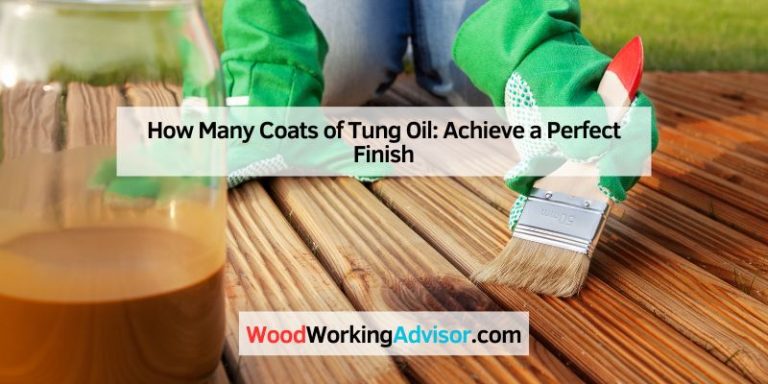
For Tung oil, the general principle is to apply multiple thin coats rather than a few thick ones. This allows for better penetration and a stronger, more even finish.
- Apply the first coat thinly using a lint-free cloth, brush, or foam applicator. Wipe it on evenly, ensuring full coverage.
- Let the oil penetrate for about 15-30 minutes.
- Wipe off any excess oil that hasn’t soaked in. This is a critical step to prevent a sticky or gummy surface.
- Allow the coat to dry. Pure Tung oil can take 24-48 hours or more per coat. Tung oil finishes with driers might dry in 6-12 hours.
- Lightly sand the surface with very fine-grit sandpaper (e.g., 400 grit) after each coat is dry. This smooths out any raised grain and helps subsequent coats adhere better. Wipe away dust.
- Repeat steps 1-5 for several more coats, usually 3-5 coats for good protection.
- For a final, protective coat, some users apply a thin layer of Tung oil and then buff it out once it has partially dried but is still slightly tacky.
Ensure good ventilation during application and drying, as the oils release fumes.
Applying Mineral Oil
Mineral oil is much simpler to apply, making it a favorite for quick projects or food-related items.
- Ensure the wood is clean and dry.
- Pour a generous amount of food-grade mineral oil onto a lint-free cloth or directly onto the wood.
- Rub the oil into the wood, covering all surfaces. Work it into the grain.
- Let the oil soak in for at least 15-30 minutes, or even longer (overnight is great if possible).
- Wipe off any excess oil that has not been absorbed by the wood. This step is important to avoid a greasy feel.
- Your project is ready to use. Reapply mineral oil whenever the wood looks dry or feels thirsty, which might be every few weeks or months depending on use.
No sanding is typically needed between coats of mineral oil. It’s a very forgiving and easy process.
Common Application Mistakes to Avoid
Not preparing the wood properly. Any grease, dirt, or rough spots will prevent the oil from penetrating correctly, leading to an uneven finish. Always start with smooth, clean wood.
Applying thick coats of Tung oil. Thick coats lead to slow drying, tackiness, and potential pooling. Thin, even coats are always better for Tung oil to allow it to cure properly within the wood.
Not wiping off excess Tung oil. This is the most common cause of a sticky Tung oil finish. The oil must be wiped off once it has stopped penetrating to allow it to cure.
Using non-food-grade mineral oil for kitchen items. Always ensure your mineral oil is food-grade for any application that will touch food. Non-food-grade oils can be harmful.
Expecting mineral oil to provide lasting protection. It’s a conditioner, not a sealant. Understand its limitations and reapply as needed for ongoing care.
When is Tung Oil vs Mineral Oil the Best for Wood?
The choice between Tung oil and Mineral oil hinges on your project’s purpose and desired outcome. For projects requiring a hard, durable, and water-resistant finish, like furniture or countertops, Tung oil is the superior choice. Its ability to polymerize creates a lasting barrier against daily wear and moisture.
On the other hand, for items that need to be food-safe and easy to maintain, such as cutting boards and utensils, mineral oil is the ideal option. Its non-toxic nature and simple application process make it perfect for these uses. Understanding these core differences will guide you to the correct oil for your specific woodworking needs.
Projects Benefiting from Tung Oil
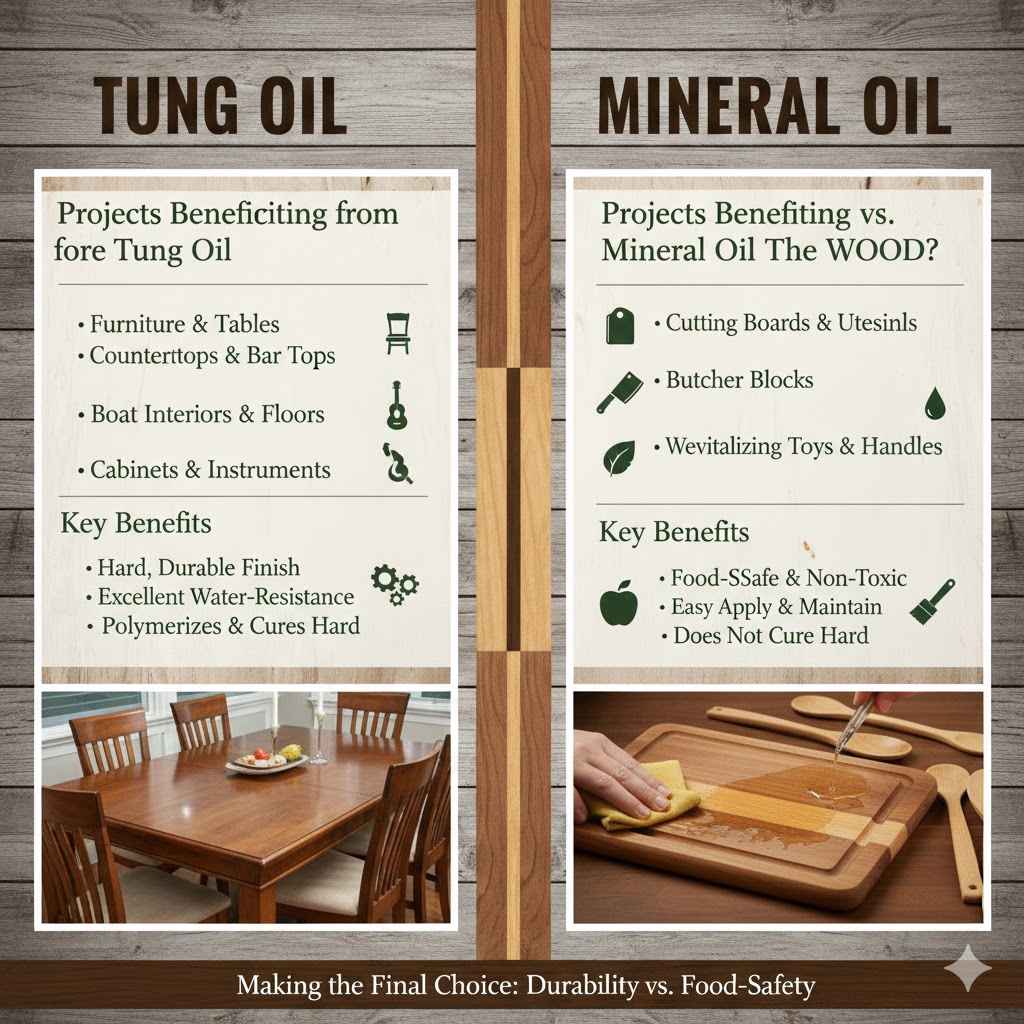
Tung oil is excellent for projects that demand robust protection and a beautiful, natural look that lasts. This includes furniture that sees a lot of use, such as dining tables, coffee tables, and chairs. Kitchen countertops also benefit greatly from Tung oil’s resistance to water, heat, and stains, provided they are properly maintained.
Boat interiors and other items exposed to moisture can also benefit from Tung oil’s excellent water-repelling qualities. For wooden floors, cabinets, and even musical instruments, Tung oil provides a durable, attractive finish that enhances the wood’s natural character while offering protection.
Projects Benefiting from Mineral Oil
Mineral oil is perfect for anything that will come into direct contact with food. This includes cutting boards, butcher blocks, and wooden kitchen utensils like spoons, spatulas, and bowls. Its food-grade purity means it poses no health risks.
It’s also great for revitalizing dry or dull wooden items. Wooden tool handles, wooden toys, or even wooden furniture that just needs a refresh can be brought back to life with a simple application of mineral oil. Its ease of use makes it ideal for quick fixes and ongoing maintenance.
Understanding Your Wood’s Needs
Consider the environment and use of the wooden item. Is it exposed to water, heat, or frequent handling? If so, a more durable finish like Tung oil might be necessary.
If the item is primarily decorative or used for food, ease of use and safety are paramount.
Also, think about the type of wood you are using. Some woods are naturally more prone to drying out or cracking, and oils can help prevent this. The final appearance you desire also plays a role.
Do you want a deep, glossy finish or a natural, matte look?
Making the Final Choice
Ultimately, the decision comes down to balancing protection, appearance, safety, and ease of application.
- For a durable, water-resistant finish on furniture and high-use surfaces, choose Tung oil.
- For food-safe, easy-to-apply conditioning, especially for kitchenware, choose Mineral oil.
Always test any finish on a scrap piece of the same wood to see how it looks and performs before applying it to your main project.
Frequently Asked Questions
Question: Can I use mineral oil on my butcher block after applying Tung oil?
Answer: It is generally not recommended to use mineral oil over a cured Tung oil finish. Tung oil creates a hardened finish layer. Mineral oil is a penetrating oil and would not bond well with the Tung oil.
If your butcher block is finished with Tung oil, you would typically reapply Tung oil or a compatible finish when maintenance is needed.
Question: How often do I need to reapply Tung oil?
Answer: Reapplication frequency for Tung oil depends on usage and environment. For heavily used items like tabletops or cutting boards, you might need to reapply every 6-12 months. For less exposed items, it could be every few years.
Look for signs of wear, dullness, or reduced water resistance.
Question: Is pure Tung oil safe for indoor furniture?
Answer: Yes, pure Tung oil is very safe for indoor furniture. It penetrates the wood and creates a durable, natural-looking finish that is resistant to moisture and wear. It’s also non-toxic once cured, making it a great choice for furniture where children or pets might be present.
Question: Can I mix Tung oil and Mineral oil together?
Answer: It is not advisable to mix Tung oil and Mineral oil. They have different properties and drying mechanisms. Tung oil needs to polymerize (harden) to provide protection, while mineral oil remains liquid.
Mixing them would likely result in a finish that does not cure properly and offers neither the durability of Tung oil nor the specific benefits of mineral oil.
Question: Will mineral oil protect my wood cutting board from stains?
Answer: Mineral oil will help repel some liquids temporarily, which can aid in preventing stains. However, it does not create a completely waterproof or stain-proof barrier like a cured Tung oil finish or a film finish would. For best stain resistance on a cutting board, it’s important to wipe up spills quickly, even when the board is treated with mineral oil.
Final Thoughts
Choosing between Tung oil and Mineral oil for your wood is about matching the oil to the job. Tung oil gives a hard, lasting, water-resistant finish for furniture and surfaces. Mineral oil offers safe, simple conditioning for kitchenware.
Both enhance wood’s beauty, but in different ways. Select wisely based on your project’s use and your desired outcome.