Hobby Table Saws: A Realistic Buying Guide for Home Woodworkers
Every table saw sold to home woodworkers gets called a “hobby” saw sooner or later, but the label doesn’t tell you much by itself. A $150 benchtop saw from a home center and a $650 portable jobsite saw with a rack-and-pinion fence are both marketed to hobbyists, yet they solve different problems. This guide skips the padded “top picks” format and focuses on what actually changes between a saw built for occasional use in a home garage and one built for a contractor’s truck or a cabinet shop floor – footprint, motor power under real load, and which safety features are standard versus optional.
What a Hobby Table Saw Actually Needs to Do
Best Benchtop Pick With Full Safety Hardware
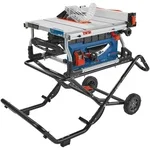 |
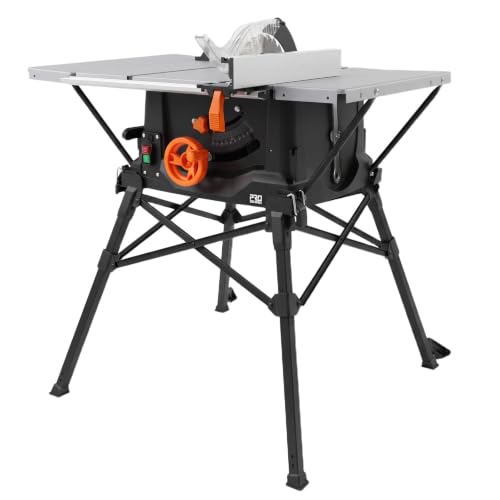
Bosch GTS15-10 10-Inch Portable Jobsite Table Saw – $649 A portable 10-inch saw built with a full riving knife, blade guard, and anti-kickback pawl system standard – the exact safety hardware this guide says to check for before buying.
|
The Bosch GTS15-10 above is a good reference point because it’s built as a portable jobsite saw rather than a stripped-down “craft” saw, which matters once you look past the price tag: it carries a full-size 10-inch blade, a rack-and-pinion fence that stays parallel to the blade instead of drifting, and Bosch’s Smart Guard system – a riving knife, anti-kickback pawls, and a blade guard bundled together rather than sold as an accessory. For a home shop, that combination covers the two things that actually separate a usable hobby saw from a frustrating one: a fence you can trust for repeat cuts, and safety hardware that doesn’t have to be bolted on separately.
Most people shopping for a “hobby” saw aren’t cutting sheet goods eight hours a day. They’re building a bookshelf on a Saturday, ripping trim for a weekend project, or cutting plywood for a shop cabinet a few times a month. That usage pattern changes what actually matters – you can tolerate a smaller table and a motor that needs a breather between cuts, but you can’t tolerate a fence that won’t hold a setting or a blade that isn’t guarded.
Hobby Saw vs. Pro Saw: What Actually Changes
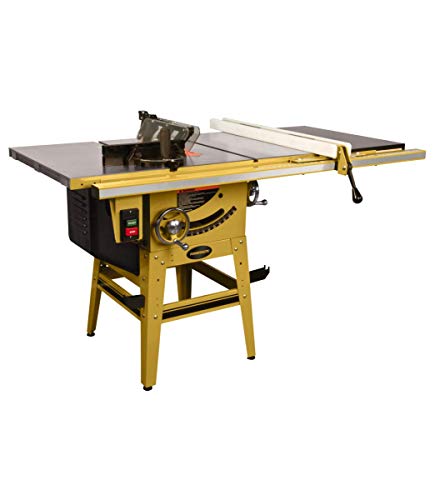
The difference between a “hobby” saw and a contractor or cabinet-shop saw isn’t really about quality – it’s about duty cycle and scale. A cabinet saw runs a 3 to 5 horsepower induction motor that shrugs off ripping 8/4 hard maple all day, has a cast-iron table heavy enough that it doesn’t need to be bolted down, and typically has a rip capacity of 30 to 52 inches to handle full sheets of plywood without repositioning. A benchtop or portable jobsite saw, by contrast, runs on a standard 15-amp household circuit, weighs 45 to 90 pounds instead of 300-plus, and is designed to be moved, folded, and stored – not left running for hours at a stretch.
Neither is “better” in the abstract. A cabinet saw in a one-car garage with no dedicated shop space is a liability – it can’t be moved out of the way, and its extra power is wasted on plywood and 2x stock. A benchtop saw in a production cabinet shop would burn out its universal motor within months. The mismatch that actually costs people money is buying pro-grade capacity they’ll never use, or buying a saw so underpowered it bogs down on the first piece of 4/4 oak they try to rip.
Footprint and Portability for a Home Shop
Space is usually the real constraint in a home shop, not budget. Benchtop saws sit directly on a workbench or a set of sawhorses and typically weigh 45 to 65 pounds – light enough for one person to move, but light enough that the saw itself can shift under an aggressive rip cut unless it’s clamped down. Portable jobsite saws like the Bosch above add a folding or gravity-rise stand, which pushes the weight closer to 90 to 100 pounds but means the saw stands on its own, rolls to a corner when you’re done, and doesn’t need a dedicated bench.
If storage space is the deciding factor, check the folded footprint and not just the working footprint – some gravity-rise stands fold to roughly the size of a hand truck, while others still take up several feet of wall space. It’s a detail that rarely shows up in a spec sheet’s headline numbers but matters every time you put the saw away.
Motor Power and What It Means for Hardwood
Almost every benchtop and portable table saw sold for home use tops out at 15 amps – that’s the practical ceiling for a standard 120-volt household circuit, so the number itself doesn’t separate one saw from another. What differs is how the motor is built and how it handles sustained load. A universal motor (common on lighter benchtop saws) spins faster and feels punchy on thin stock, but it heats up and loses torque during long, slow rip cuts in dense hardwood. Portable jobsite saws with induction-style or heavier-duty universal motors, larger drive belts, and bigger arbors handle repeated hardwood ripping with less bogging, though they’re still not a substitute for a true induction motor on a cabinet saw.
In practice: plywood, MDF, pine, and most softwoods are easy for any saw in this class. Ripping 4/4 maple, oak, or hard hickory repeatedly is where a light 10-amp mini saw starts to struggle, stall, or need the cut fed slower than feels safe. If hardwood furniture work is the actual goal rather than the occasional cutting board, it’s worth prioritizing a saw with a full-size motor over one built primarily for portability.
Safety Features Vary by Model – Check Before You Buy
It’s easy to assume every modern table saw ships with the same baseline safety hardware. It doesn’t. A riving knife – a curved metal plate that follows the blade’s height and angle to keep the wood from pinching shut behind it – became standard on most mid-range and higher benchtop and jobsite saws over the last decade, but some of the cheapest mini and “craft” saws in the sub-$150 range still ship with only a fixed splitter, a blade guard sold as a separate accessory, or no guard hardware included in the box at all. That’s the kind of detail a glance at the listing photos won’t tell you; it takes actually reading the spec sheet or the included-accessories list.
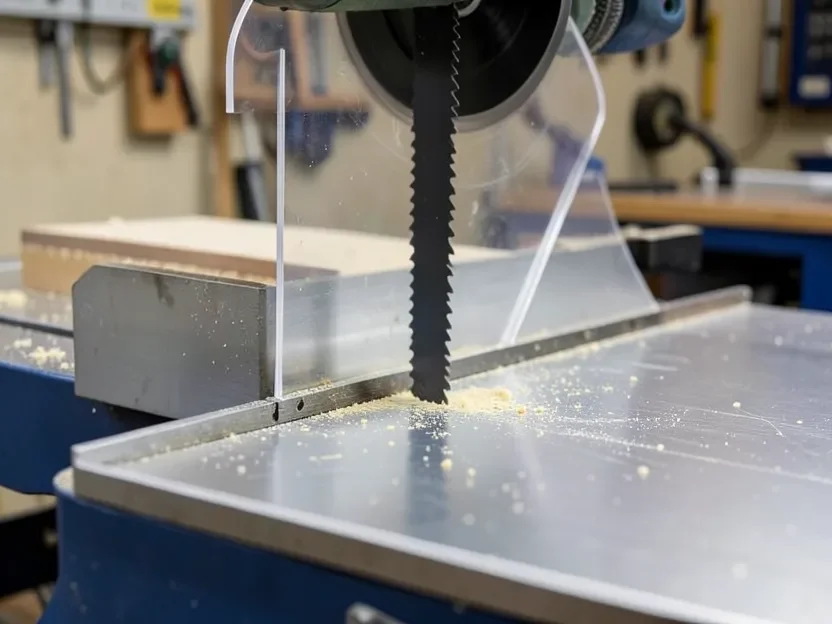
Anti-kickback pawls (small spring-loaded teeth that dig into the wood if it tries to move backward) and a blade guard that doesn’t have to be removed for normal cuts are the other two features worth confirming before buying, not after. None of these are exotic or expensive to include – they’re standard on the Bosch GTS15-10 featured above – but they’re also the first things manufacturers cut on the lowest-priced saws to hit a price point. If a listing doesn’t mention a riving knife by name, assume it doesn’t have one until you confirm otherwise.
What a Hobbyist Actually Needs vs. What a Pro Needs
Laid side by side, the practical differences are narrower than the marketing suggests:
| Home / Hobby Shop | Pro Jobsite or Cabinet Shop | |
|---|---|---|
| Typical use | Weekend and evening projects | Daily use, back-to-back jobs |
| Blade size | 8-1/4″ to 10″ | 10″, occasionally larger |
| Rip capacity | 24″–30″ is usually enough | 30″+ for repeated full sheets |
| Motor | 13–15A benchtop motor | 2–5 HP induction motor |
| Portability | Matters – fold up, roll away, store | Usually stays in one spot |
| Typical price | $150–$650 | $650–$3,000+ |
| Safety hardware | Varies widely – always check | Usually standard across the line |
Setting Up and Maintaining a Benchtop Table Saw at Home
A new saw’s factory alignment is a starting point, not a guarantee. Before the first real cut, check that the blade is parallel to the miter slot, that the rip fence locks parallel to the blade at both the front and back, and that the riving knife lines up directly behind the blade rather than off to one side. A few minutes with a combination square catches most of the issues that would otherwise show up later as burn marks or inconsistent cuts.
- Clear sawdust from under the table and around the blade-height mechanism regularly – buildup there is a common cause of a fence or blade height that won’t hold its setting.
- Check blade sharpness before assuming a saw is underpowered; a dull blade forces the motor to work harder and can look identical to a motor problem.
- Unplug the saw before changing blades or clearing a jam – it’s a habit, not an inconvenience, and it’s the single most common thing people skip.
- Store push sticks and push blocks where they’re actually within reach of the saw, not in a drawer across the shop – the tools that require an extra trip are the ones that get skipped.
Frequently Asked Questions
What’s the difference between a hobby table saw and a regular table saw?
There’s no formal category split – “hobby” is a marketing label, not an engineering standard. In practice it usually refers to a benchtop or portable jobsite saw built for occasional, lighter-duty use rather than a cabinet saw built for daily production work.
Do I need a riving knife on a table saw for home use?
Yes. A riving knife is one of the most effective anti-kickback features available and should be considered non-negotiable, even on an occasional-use home saw. Not every budget saw includes one standard, so it’s worth confirming before buying rather than after.
Is a benchtop table saw powerful enough for hardwood?
For occasional cuts, yes. For repeated ripping in dense hardwood like maple or oak, a light benchtop saw with a small universal motor will bog down faster than a portable jobsite saw with a larger motor and drive belt. If hardwood furniture work is the main goal, prioritize motor size over portability.
How much rip capacity does a home hobbyist actually need?
24 to 30 inches covers most home projects, including ripping a sheet of plywood down the middle. Full 30-inch-plus capacity mainly matters if you’re regularly breaking down full 4×8 sheets without a track saw or panel-cutting jig to pre-cut them first.
Conclusion
A “hobby” table saw doesn’t need cabinet-saw power or a 30-inch rip capacity most home woodworkers will rarely use to its limit. It does need a fence that holds its setting, a motor that won’t stall on the materials you actually cut, and safety hardware – a riving knife, a blade guard, anti-kickback pawls – that shouldn’t be treated as optional at any price point. Match the saw to how often it’s actually going to run and what you’re realistically cutting, and the “hobby vs. pro” question mostly answers itself.
Sponsored / affiliate links. As an Amazon Associate I earn from qualifying purchases. I may earn additional commission from eligible campaigns.