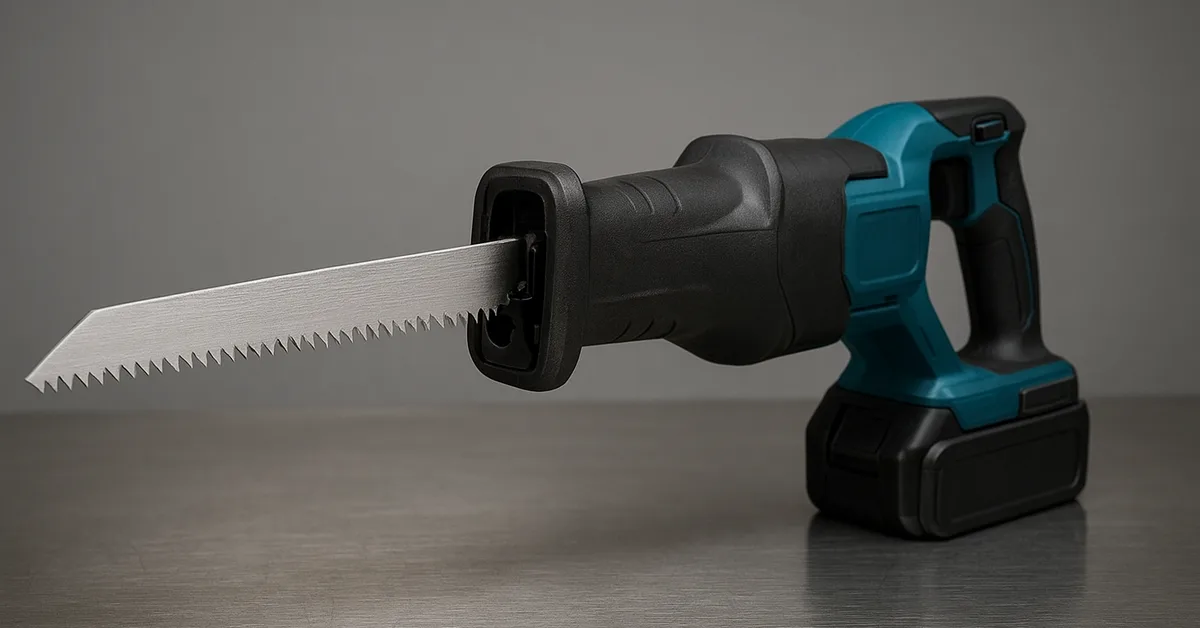
7 Reciprocating Saw Blades for Deer Bone Cutting Compared (2026)
The best reciprocating saw blade for deer bone cutting is the FOXBC 12-Inch 3 TPI blade – a 10-pack of unpainted stainless blades whose 3-teeth-per-inch pitch matches the low-TPI standard for splitting bone, at $2.80 per blade, the lowest cost-per-blade of any dedicated food-grade pick we compared below.
We compared 7 reciprocating saw blades sold specifically (or genuinely usable) for cutting deer and other big-game bone by tooth count (TPI), blade material, length, and real cost-per-blade, using live pricing and manufacturer spec data pulled the same day this page was published. Three of the seven don’t have a published TPI at all – we say so instead of guessing. None of these are the same category as an offset reciprocating saw blade or a blade sold for cutting branches – see our guide to reciprocating saw blades for trees if wood, not bone, is the actual job.
Reciprocating Saw Blades for Deer Bone Cutting: TPI, Material, Length & Price Compared
Every cell below comes from the blade’s own current Amazon listing (title, feature bullets, and product-info fields), pulled live via the Amazon Product Catalog API. Cost-per-blade is a computed figure: current pack price divided by the unit count the listing itself states. Where a manufacturer hasn’t published a spec – most often TPI – the cell says so rather than carrying a guessed number.
| # | Blade & Pack | TPI | Material | Length | Price (Cost/Blade) | Food-Grade | Verdict |
|---|---|---|---|---|---|---|---|
| 1 | FOXBC 10-Pack | 3 | Unpainted stainless steel | 12 in | $27.99 ($2.80/blade) | Yes | #1 Best Overall |
| 2 | A-KARCK 6-Pack | 5 (9-in blades) / 3 (12-in blades) | Unpainted stainless steel | 9 + 12 (mixed) | $16.99 ($2.83/blade) | Yes | Best for Mixed Bone Sizes (Two Lengths in One Pack) |
| 3 | MRCGTCE 5-Pack | 8 | Unpainted stainless steel | 12 in | $15.88 ($3.18/blade) | Yes | Best for Wood + Bone Dual-Use |
| 4 | Caliastro 5-Pack | Not published | Stainless steel | 12 in | $12.49 ($2.50/blade) | No | Best Value Deer Bone Saw Blade |
| 5 | Caliastro 5-Pack | Not published | Stainless steel | 12 in | $14.99 ($3.00/blade) | Yes | Best for Occasional / Light-Duty Processing |
| 6 | DEWALT 10-Pack | Assorted (not disclosed per-blade) | Bi-metal (HSS teeth + flexible steel body) | 6-9 (assorted) | $16.97 ($1.70/blade) | No | Best Bi-Metal Blade for Deer Camp & Backup Tasks |
| 7 | Bates 8-Pack | Assorted, not disclosed per-blade | Standard steel (not stated as stainless) | 6 (title) – listing self-contradicts, see note | $6.99 ($0.87/blade) | No | Best Budget Backup Blade Set |
Reading the table: lower TPI (3-5) is the bone-splitting end of the range; higher TPI (8+) trades raw bone speed for a cleaner, less-ragged cut better suited to joints and thinner sections. “Not published” means we checked the listing’s title, feature bullets, and the Amazon catalog API’s classification and product-info fields directly and none of them state a tooth count – it is not an oversight on our part.
Best Reciprocating Saw Blades for Deer Bone Cutting
1. FOXBC 12-Inch Stainless Steel Frozen Meat Bone Saw Blades, 3 TPI, 10-Pack — #1 Best Overall
Check current price on Amazon – $27.99 ($2.80/blade)
Specs:
- 3 TPI (teeth per inch)
- 12-inch length
- Unpainted stainless steel
- 10 blades per pack – $2.80/blade
- Universal shank, fits major reciprocating saw brands
FOXBC’s 12-inch blade is the only pick in this comparison whose own manufacturer copy explicitly lists deer and venison among the animals it’s designed to cut, alongside beef, sheep, pork, and turkey. The 3 TPI tooth count sits squarely at the low end of the range buying guides recommend for bone – fewer, more aggressive teeth that bite into dense material instead of skating across it.
The blade is unpainted stainless steel, which matters for two separate reasons: stainless resists the rust that a frozen-then-thawed carcass session invites, and unpainted means no paint flakes ending up in meat you’re planning to eat. At $2.80 per blade across a 10-pack, it’s also the cheapest per-unit cost of any blade in this table that’s actually marketed as food-safe.
Main drawback: every blade in the 10-pack is the same 12-inch, 3 TPI spec. If you also want a shorter blade for cleaner joint work, or a higher-TPI option for finishing cuts, you’ll need a second product – see the A-KARCK or MRCGTCE picks below.
Pros:
- Lowest cost-per-blade of any dedicated food-grade pick in this comparison
- 3 TPI matches the low-tooth-count consensus for splitting bone rather than binding in it
- Manufacturer feature copy names deer/venison specifically among the species it’s built for
- Largest pack (10) means fewer mid-season reorders
Cons:
- At $27.99 it’s the highest sticker price in the field, even though the per-blade math wins
- 10 identical 12-inch/3TPI blades give you no size flexibility if you also need a shorter blade for tight joint cuts
2. A-KARCK Food Reciprocating Saw Blades, 9″ + 12″, 6-Pack — Best for Mixed Bone Sizes (Two Lengths in One Pack)
Check current price on Amazon – $16.99 ($2.83/blade)
Specs:
- 3 TPI (12-inch blades) / 5 TPI (9-inch blades)
- Two lengths in one 6-pack
- Unpainted stainless steel
- Not rated for metal (per listing)
- $2.83/blade
Most blades in a deer-processing kit end up doing one job – either splitting a leg bone or trimming around a joint – but they’re rarely the same cut. A-KARCK’s 6-pack is the only product in this comparison built around that distinction on purpose: three 12-inch, 3 TPI blades for the aggressive bone-splitting work, and three 9-inch, 5 TPI blades sized for tighter joint and rib cuts where a foot of blade is more than you need.
Both lengths are unpainted stainless steel, and the listing is direct about scope: it’s built for frozen food, meat, and bone, and explicitly not rated for metal. That’s an honest boundary worth taking at face value rather than testing against a fence staple mid-quarter.
Main drawback: because the pack splits six blades across two sizes, you get three of each rather than six of one – if you know you’ll only ever need the 12-inch length, the FOXBC 10-pack above gives you more total blade for a similar per-unit price.
Pros:
- Only pick in this field that pairs two different lengths and TPI counts in a single purchase
- 9-inch/5TPI blades suit joints and rib work; 12-inch/3TPI blades suit thick leg bone
- Unpainted stainless, explicitly food-grade per the listing
- Reusable plastic storage case included
Cons:
- Listing explicitly states it’s not for metal – don’t reach for this one if you hit a staple or fencing wire
- Six blades total split across two sizes means only three of each length, less depth than a single-size 10-pack
3. MRCGTCE 12-Inch Stainless Steel Reciprocating Saw Blades, 8 TPI, 5-Pack — Best for Wood + Bone Dual-Use
Check current price on Amazon – $15.88 ($3.18/blade)
Specs:
- 8 TPI
- 12-inch length
- Unpainted stainless steel
- Listed secondary use: wood pruning
- 5 blades per pack – $3.18/blade
MRCGTCE’s blade sits at the opposite end of the tooth-count spectrum from the FOXBC and A-KARCK picks above. At 8 TPI, it’s built for control and a cleaner cut rather than raw speed through dense bone – the kind of blade you reach for on a rib section or a joint where you don’t want a ragged edge, not the femur.
The listing itself calls out wood pruning as a secondary use, which lines up with the moderate-to-high TPI range: it’s genuinely dual-purpose in a way the lower-TPI, bone-dedicated blades above aren’t.
Main drawback: that same 8 TPI pitch makes it the slowest of the food-grade blades here for splitting a thick leg bone, and at $3.18 per blade it’s also the most expensive per-unit pick in the table. Treat it as a finishing/dual-use blade, not your primary bone-splitter.
Pros:
- Highest TPI of the food-grade picks – finer teeth leave a cleaner-edged cut
- Manufacturer lists wood pruning as a genuine secondary use, useful for clearing a gambrel branch or antler snag
- Unpainted stainless, food-grade per listing
Cons:
- Highest cost-per-blade in the entire comparison at $3.18
- 8 TPI is a slower cut through thick bone than the lower-TPI picks above – it’s a finishing blade, not a splitting blade
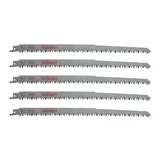
4. Caliastro 12-Inch Wood Pruning Saw Blades for Reciprocating/Sawzall Saws, 5-Pack — Best Value Deer Bone Saw Blade
Check current price on Amazon – $12.49 ($2.50/blade)
Specs:
- TPI not published
- 12-inch length
- Stainless steel
- Marketed for wood pruning, not food cutting
- 5 blades per pack – $2.50/blade
This is Caliastro’s wood-pruning variant of the same 12-inch stainless body as their meat-and-bone blade below, and it’s the cheapest stainless blade in the entire comparison at $2.50 per unit. The catch is honest disclosure: the manufacturer sells this one for wood, not food, so it isn’t the blade you want touching meat you plan to eat.
Where it earns a spot on this list is the non-meat side of deer processing – clearing a gambrel branch, trimming brush around a hang site, or cutting through antler on a European mount project, tasks a lot of hunters end up doing with whatever blade is already in the saw.
Main drawback: no published TPI, and it’s not positioned as food-safe. If cost-per-blade is your deciding factor and you only need something for wood/antler/brush work adjacent to the actual butchering, this is the value pick. If you need a genuinely food-safe blade, use the FOXBC or Caliastro’s own meat/bone version below instead.
Pros:
- Cheapest per-blade cost of any stainless blade in this comparison
- Stainless construction still resists rust in wet field conditions
- Genuinely useful for the wood/antler/brush side of field dressing, not just bone
Cons:
- Not marketed or sold as a food-safe blade – the manufacturer’s own listing frames it for wood, not meat
- TPI is not published anywhere in the listing, so you can’t confirm the tooth count before buying
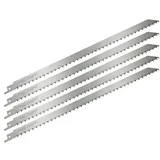
5. Caliastro 12-Inch Stainless Steel Frozen Meat Bone Cutting Saw Blades, 5-Pack — Best for Occasional / Light-Duty Processing
Check current price on Amazon – $14.99 ($3.00/blade)
Specs:
- TPI not published
- 12-inch length
- Stainless steel
- 5 blades per pack – $3.00/blade
- Manufacturer copy names deer/venison
This 12-inch Caliastro blade has been this page’s top recommendation for several years, and its manufacturer copy explicitly names deer and venison among the animals it’s built to cut – the same claim the FOXBC pick above makes, and plausibly the same OEM design sold under a different label, though that can’t be confirmed from listing text alone.
It remains a reasonable choice for someone processing one or two deer a season rather than running a full-time processing operation: five blades, stainless, food-grade, from a brand with an established presence in this exact category on Amazon.
Main drawback: unlike five of the other six picks in this comparison, its TPI is nowhere in the listing – not the title, not the feature bullets, not the Amazon catalog API’s classification data. We’re not guessing at a number to fill the table, but it does mean you’re buying without knowing the exact tooth count you’re getting.
Pros:
- This site’s long-standing top recommendation, with a multi-year track record
- Manufacturer feature copy explicitly lists deer/venison among target species
- Stainless, food-grade per listing
Cons:
- TPI is not disclosed anywhere in the listing or the Amazon catalog API’s product-info fields – we checked and it simply isn’t published
- At $3.00/blade it’s not the cheapest food-grade option once you compare it against the FOXBC or Caliastro wood-pruning picks
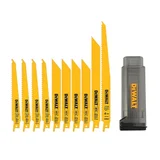
6. DEWALT Reciprocating Saw Blades, 10-Piece Bi-Metal Combination Set (DW4898) — Best Bi-Metal Blade for Deer Camp & Backup Tasks
Check current price on Amazon – $16.97 ($1.70/blade)
Specs:
- Assorted TPI, not disclosed per-blade
- 6-9 inch assorted lengths
- Bi-metal: HSS teeth + flexible steel body
- 10 pieces with case – $1.70/blade
- Not marketed as food-grade
DEWALT’s DW4898 is the only bi-metal blade in this comparison, and that construction is a genuinely different build from every stainless pick above it: a flexible spring-steel body carries hardened high-speed-steel teeth, which is why bi-metal blades have a reputation for surviving an accidental hit on a nail, staple, or bone-adjacent branch that would chip or snap a straight-stainless blade. If you’re weighing this set against other DEWALT cordless reciprocating saw options, the blade compatibility carries across the brand’s whole cordless lineup.
That durability is the honest reason to own one of these for a deer-processing kit – not as the blade doing the actual bone-splitting, but as the backup in the bag for whatever isn’t clean meat and bone. At $1.70 per blade across the 10-piece set, it’s also the cheapest per-unit price of any pick here.
Main drawback: it isn’t stainless and DEWALT doesn’t market it as food-safe, so this is not the blade for cutting the animal itself. Keep it as the camp/backup blade for wood, brush, or the occasional non-food surprise, and let one of the stainless picks above handle the carcass.
Pros:
- Cheapest per-blade cost among the two major-brand/bi-metal options in this comparison
- Bi-metal construction flexes instead of snapping on an unexpected nail, staple, or hard knot
- Comes with a case, fits in a tool kit box
Cons:
- Not stainless and not marketed as food-safe – keep it out of the actual meat/bone work
- Assorted sizes/TPI aren’t broken out per-blade, so you can’t pick a specific tooth count for a specific cut
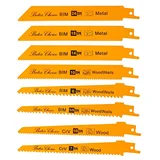
7. Bates Reciprocating Saw Blades, 8-Pack, Wood & Metal Cutting — Best Budget Backup Blade Set
Check current price on Amazon – $6.99 ($0.87/blade)
Specs:
- Assorted TPI, not disclosed per-blade
- 6-inch per title (listing self-contradicts – see note)
- Standard steel, not stated as stainless
- 8 blades per pack – $0.87/blade
- Not marketed as food-grade
At $0.87 per blade, the Bates 8-pack is the cheapest item in this entire comparison, and it’s honest to say why it’s ranked last rather than first: it isn’t a food-grade or stainless blade, and its own product listing contradicts itself on length – the title states 6-inch while the feature bullets describe “various sizes and tooth configurations” without resolving which is correct. We’re flagging that discrepancy rather than picking one number to make the table look tidy.
Where it’s genuinely useful is as a cheap, disposable backup for the non-carcass work around a deer camp – cutting a stubborn tent stake, trimming a board, general wood-and-metal shop tasks – not for anything that touches meat.
Main drawback: not food-grade, not confirmed-length, and not the blade to reach for on the animal. Buy it for camp utility work, not bone cutting.
Pros:
- Cheapest per-blade cost in the entire comparison by a wide margin
- Genuine wood/metal/drywall versatility for general camp and shop tasks
- Low enough cost to treat as fully disposable
Cons:
- Not food-grade, not stainless – not a blade for actual meat or bone contact
- The listing itself is inconsistent: the title says 6-inch, the feature bullets say “various sizes and tooth configurations,” and we couldn’t confirm which is accurate
How We Picked These
We have not physically tested these blades on a deer carcass, and we’re not going to claim otherwise. This comparison is built from live product data, not hands-on use, and here’s exactly what that means:
- Specs – TPI, material, length, and pack size were pulled from each listing’s title, feature bullets, and product-info fields via the Amazon Product Catalog API on the day this page was published. Where a spec wasn’t published anywhere in that data, the table says “not published” instead of a guessed number.
- Pricing – every price is a live buy-box price pulled the same day, not a number carried over from a previous version of this page.
- Customer ratings – we checked. The Amazon catalog API’s review data returned empty for every single ASIN in this comparison, and Amazon’s own review pages block automated access. Rather than inventing a star rating or copying one from a competitor’s article, we’re leaving ratings out entirely.
- TPI-for-bone guidance – the low-TPI-for-bone, higher-TPI-for-meat/finish-work framing in the buying guide below reflects the consensus across reciprocating-saw manufacturer guidance and existing bone-cutting buyer’s guides, not a claim specific to any one blade tested in isolation.
If you own several of these blades and have real before/after results – cuts per blade before dulling, how a bi-metal blade held up against an accidental bone-adjacent obstruction, anything checkable – we’d genuinely like to hear about it and update this page with first-hand results instead of spec-sheet comparisons.
What to Consider When Buying a Reciprocating Saw Blade for Deer Processing
TPI: Bone-Splitting vs. Meat and Finish Cuts
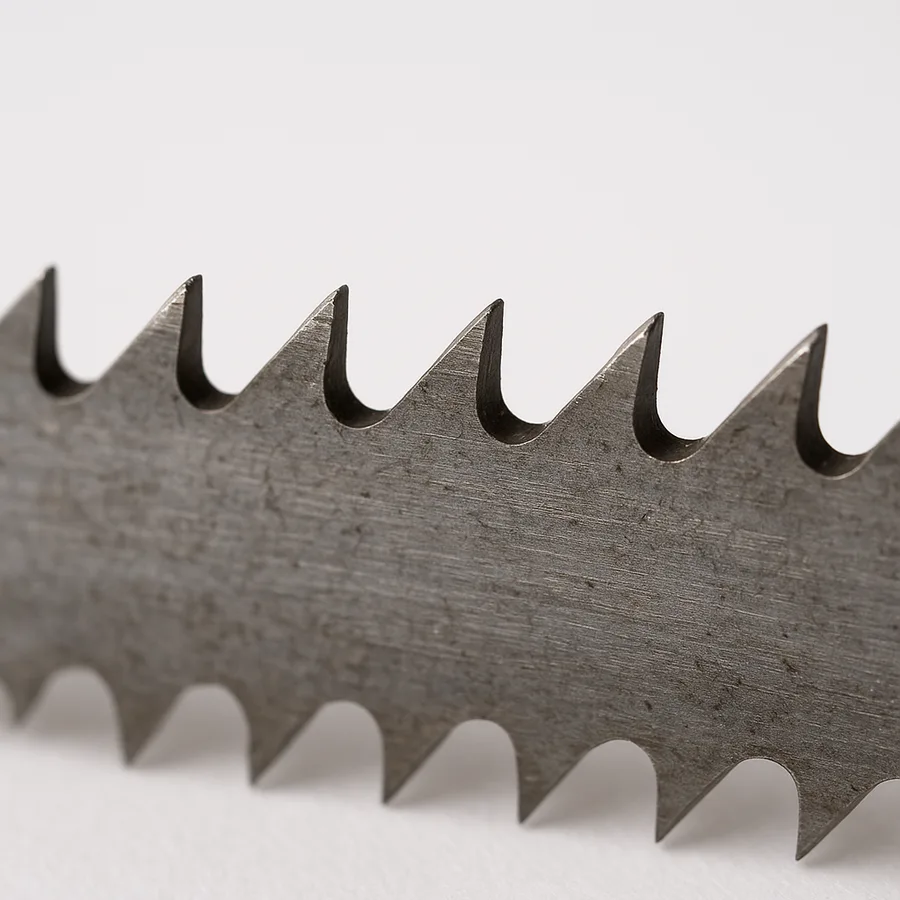
TPI (teeth per inch) is the single biggest factor separating a blade built for bone from one built for anything else. Fewer, larger teeth (3-5 TPI) bite aggressively into dense material and clear the cut fast – the profile every genuinely bone-rated blade in this comparison uses at its low end. More, smaller teeth (8+ TPI) cut slower through thick bone but leave a cleaner edge, which is why the higher-TPI picks in the table above are positioned as finish or dual-use blades rather than primary bone-splitters.
Blade Material: Stainless vs. Bi-Metal
Every dedicated meat/bone blade in this comparison is stainless steel, and that’s not a coincidence: stainless resists the rust that a wet, blood-contact, freeze-thaw work session invites, and an unpainted stainless blade won’t shed paint flakes into meat. Bi-metal blades – flexible spring-steel body, hardened high-speed-steel teeth welded on – aren’t stainless and aren’t marketed as food-safe, but they’re the toughest blades in the field against an unexpected hit on a nail, staple, or wood surprise, the same durability edge bi-metal blades bring when you cut through metal with a sawzall. That’s why the one bi-metal pick in this comparison is positioned as a backup blade, not a bone blade.
Blade Length: Reaching Through the Carcass
Length determines how much material you can get through in a single stroke. 12-inch blades dominate this category because they clear a deer’s largest bones – femur, pelvis, spine – in one pass. Shorter 6- to 9-inch blades trade reach for control on joints, ribs, and tighter cuts where a foot of exposed blade is unnecessary and harder to steer precisely.
Food-Grade and Unpainted Construction
“Food-grade” and “unpainted” show up together in almost every genuinely bone-rated listing for a reason: unpainted stainless has no coating that can flake into meat, and it’s the easiest surface to actually clean between cuts. Blades marketed for wood, metal, or general demolition – like two of the picks in this comparison – skip that language entirely, which is the clearest signal a blade isn’t meant to touch the carcass.
Fresh vs. Frozen Carcass Cutting
A frozen or partially frozen carcass is harder on a blade than fresh bone – several manufacturers in this comparison specifically call out “frozen meat” cutting in their listing copy, which tracks with the low-TPI, stainless profile those blades share. If you’re processing while the animal is still fresh rather than after a freezer stint, you have more flexibility to reach for a mid-TPI blade without fighting the material.
Cutting Through the Skull Plate for a European Mount
Skull plate and antler work for a European mount is denser and more irregular than a long bone, and it’s a different job than quartering. A low-TPI, 12-inch blade can get through it, but expect faster dulling than on a clean leg-bone cut – this is a place where having a cheap backup blade (like the Bates or DEWALT picks above) on hand instead of your primary bone blade makes sense.
Cost Per Blade, Not Just Sticker Price
Sticker price is misleading in this category because pack sizes range from 5 to 10 blades. The FOXBC 10-pack costs more up front ($27.99) than the Caliastro 5-pack ($14.99), but works out cheaper per blade ($2.80 vs. $3.00) because you’re buying twice the blades. Always divide price by pack count before comparing two listings – the table above already does this math for you.
A Real Cost-to-Start Total for a Deer-Processing Blade Kit
Budget route ($19.48): the Caliastro 12-inch Wood Pruning 5-pack ($12.49) for field-dressing and antler/brush work, plus the Bates 8-pack ($6.99) as a disposable camp backup. This route skips a dedicated food-grade blade entirely, so it only makes sense if you’re already covered on the actual meat/bone cutting and just need utility blades for everything around it.
No-compromise route ($44.96): the FOXBC 12-Inch 3 TPI 10-pack ($27.99) as the primary bone blade, plus the DEWALT bi-metal 10-piece combo set ($16.97) as a backup for anything that isn’t clean meat and bone – 20 total blades across two genuinely different builds, for less than two dinners out. Both totals are today’s live buy-box prices added directly; neither figure is a manufacturer’s list price or a rounded estimate.
Saw Compatibility (Universal Shank)
Every blade in this comparison uses the standard universal reciprocating-saw shank and lists compatibility with the major brands – DeWalt, Milwaukee, Makita, Ridgid, Bosch, Ryobi, and others – the same universal-fit shank standard most sawzall blades share. This is a genuinely commoditized part of the category: shank fit is not a meaningful differentiator between these picks, unlike TPI, material, and length. If you’re still deciding between saw types entirely, it’s worth reading how a reciprocating saw compares to an oscillating tool before buying blades for either.
Blade Care and Storage Between Uses
Bone dulls a blade faster than wood or drywall, and a rinsed-but-still-damp blade left in a toolbox is how a stainless blade ends up pitted anyway. Wipe blades down after each session, let them air dry completely before storing, and keep them separated – either in the manufacturer’s storage box (several picks above include one) or wrapped individually – so the teeth aren’t grinding against each other in a drawer. A blade that’s properly dried and stored will hold its edge across more than one processing session; one left wet in a damp garage won’t.
When to Replace a Dulled Blade
A dulling blade doesn’t announce itself cleanly – it shows up as more resistance, more heat, and a rougher cut than the same blade gave you an hour earlier. At $0.87 to $3.18 per blade depending on which pick you choose, none of these are expensive enough to justify fighting a dull one through a second femur. Swap blades the moment a cut starts feeling like work instead of trying to finish the job on a blade that’s already lost its edge – it’s cheaper on the blade budget and faster overall than forcing a dull one through the rest of the carcass.
How to Use a Reciprocating Saw for Deer Processing
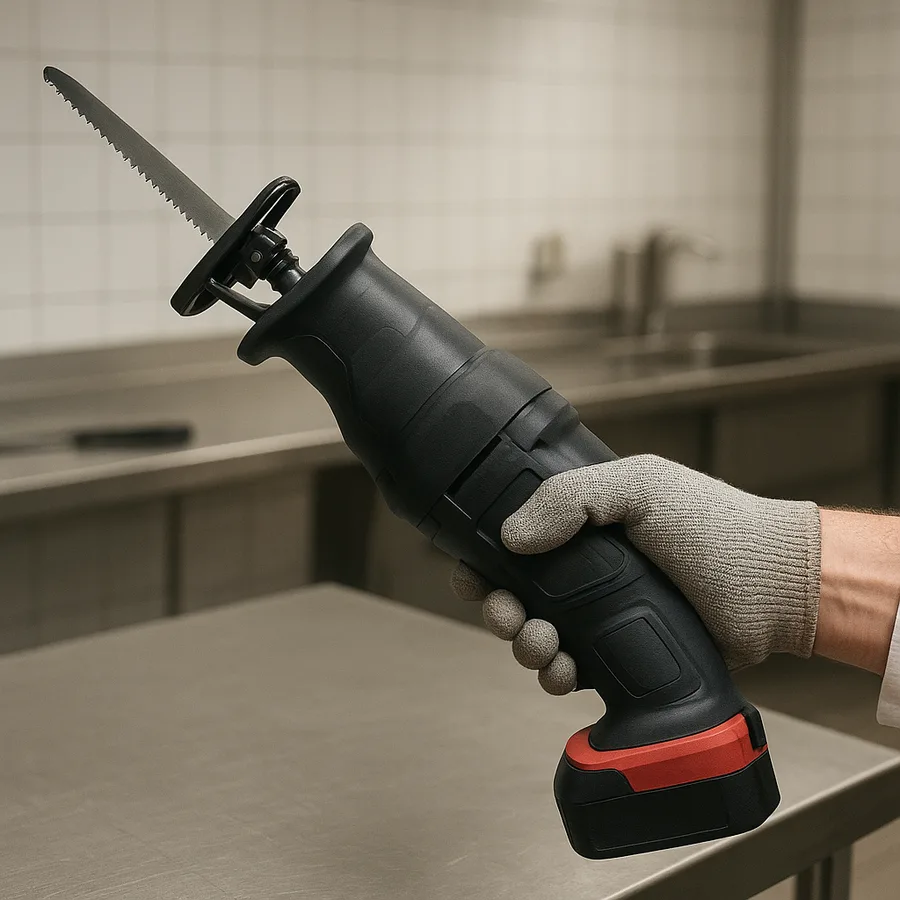
The blade matters more than the saw for this job, but if you’re shopping for the tool itself alongside the blades, our cordless reciprocating saw reviews cover the saw side of the equation. Once you’ve got a saw and the right blade loaded:
- Match the blade to the cut. Load a low-TPI (3-5) blade for splitting leg bones, pelvis, or spine; switch to a higher-TPI blade for joint and rib work.
- Secure the carcass. A hanging carcass or a stable gambrel setup keeps the material from shifting mid-cut, which is where most blade binding happens.
- Check blade orientation before you pull the trigger. Reciprocating blades install tooth-up or tooth-down depending on the cut angle you need – a backwards blade will skate instead of bite.
- Let the saw’s stroke do the cutting. Forcing the blade through bone faster than its stroke rate can handle is the fastest way to snap a tooth or bind the blade, not speed the cut up.
- Manage heat. A blade that’s smoking or discoloring is overheating – ease off, let it cool, and consider swapping to a fresh blade rather than pushing a dulling one through the rest of the job.
- Clean and dry the blade after use. Even stainless blades benefit from a rinse and dry before storage; it’s the difference between a blade lasting one season or several.
Frequently Asked Questions
What TPI is best for cutting deer bone with a reciprocating saw?
3 to 5 TPI is the low-tooth-count range built for splitting dense bone. Higher TPI (8+) cuts more slowly through bone but leaves a cleaner edge, which is why it’s better suited to joints and finish work than the femur or pelvis.
Do I need a food-grade or stainless blade for deer processing?
For any cut that touches meat you plan to eat, yes. Unpainted stainless blades resist rust from blood and moisture and won’t shed a coating into the meat. General-purpose bi-metal or standard-steel blades – like two of the picks in this comparison – aren’t marketed as food-safe and are better kept for camp or backup tasks.
Can I use the same reciprocating saw blade for meat and bone?
You can, but a blade optimized for one isn’t optimal for the other. Low-TPI blades built for bone will cut meat, but they leave a rougher edge; higher-TPI blades built for cleaner cuts will get through meat easily but work slower and dull faster on dense bone.
Is a bi-metal blade better than stainless for deer processing?
It depends what you’re using it for. Bi-metal blades are tougher against an unexpected hit on a nail, staple, or hard obstruction – similar to what you’d want for a reciprocating saw blade built for cutting metal – but they aren’t stainless and aren’t marketed as food-safe. Stainless blades are the right choice for the actual meat and bone work; a bi-metal blade is a reasonable backup for everything else.
What length reciprocating saw blade do I need to quarter a deer?
12 inches is the standard length for the largest bones – femur, pelvis, spine – because it clears them in one pass. A shorter 6- to 9-inch blade gives more control for joint and rib cuts where you don’t need that much exposed length.
Can these blades cut through a skull plate for a European mount?
A low-TPI, 12-inch blade can get through skull and antler material, but expect it to dull faster than on a clean leg-bone cut since that material is denser and more irregular. Keeping a cheap backup blade on hand for this specific job is a reasonable way to protect your primary bone blade.
Do reciprocating saw blades work on frozen deer carcasses?
Yes – several blades in this comparison specifically list frozen meat and bone cutting in their manufacturer copy, and the low-TPI, stainless profile those blades share is built with that harder material in mind. Expect faster dulling on frozen bone than on fresh.
Final Thoughts
For most deer processing, the FOXBC 12-Inch 3 TPI blade is the pick worth starting with: a low-TPI profile built for bone, at the lowest cost-per-blade of any dedicated food-grade option in this comparison. Keep one of the bi-metal or budget backups in the bag for anything that isn’t clean meat and bone – a nail, a staple, a skull plate – so your primary blade lasts the whole season instead of one carcass.
For more on the saws and blades these picks fit, browse our full reciprocating saw coverage.
Sponsored / affiliate links. As an Amazon Associate I earn from qualifying purchases. I may earn additional commission from eligible campaigns.
 MORETOPGOOD 9 Inch 10/14 TPI Bi-Metal Reciprocating Saw Blades with Arc Edge, Japanese Teeth Saw Blades for Nail-Embedded Wood Cutting, Pallet Cutting, Garden Trimming, 3 Pack
 MORETOPGOOD 6 Inch 10/14 TPI Bi-Metal Reciprocating Saw Blades with Arc Edge, Japanese Teeth Saw Blades for Nail-Embedded Wood Cutting, Pallet Cutting, Garden Trimming, 3 Pack