Waterlox vs Tung Oil Best Finish for Wood
Choosing the right finish for your wood projects can feel tricky. Many people wonder about Waterlox vs Tung Oil: Best Finish for Wood? It’s a common question because both are great options but work differently. This can leave beginners feeling a bit lost.
Don’t worry! We’ll break it down simply. We will look at each one so you can pick the best fit for your wood.
Waterlox vs Tung Oil Best Finish for Wood Comparison
When you finish wood, you want it to look good and last. Waterlox and Tung Oil are popular choices. They both protect wood and make it shine.
But they are made differently and give different results. This section will help you see how they stack up against each other. It will cover what they are, how they work, and what makes them special.
What is Waterlox?
Waterlox is a brand that makes oil finishes for wood. Their most famous products are based on tung oil. They are known for being easy to use and offering good protection.
Waterlox finishes are often a blend of tung oil, resins, and solvents. This mix makes them more user-friendly than pure tung oil. They dry faster and offer a tougher surface.
Many woodworkers like Waterlox because it builds up nicely. It can create a beautiful, durable finish that resists water and wear.
The company has been making these finishes for a long time. They have different products for different needs. Some are for countertops, others for floors, and some for general furniture.
The core idea behind Waterlox is to take the great qualities of tung oil and make them easier for everyone to apply. This means less mess, less waiting, and a more predictable outcome.
What is Tung Oil?
Pure Tung Oil comes from the nut of the tung tree. It’s a natural oil that soaks into the wood. When it dries, it hardens and protects the wood from the inside out.
This gives wood a natural look and feel. It doesn’t form a thick plastic-like layer on top. Instead, it enhances the wood’s natural beauty.
Pure tung oil is known for being very water-resistant. It’s also quite durable once fully cured.
However, pure tung oil can be tricky to work with. It takes a long time to dry. You often need many thin coats.
It can also be hard to get an even finish, especially for beginners. Sometimes it can feel a bit waxy. Because it soaks into the wood, it’s harder to repair or refinish compared to a film finish.
Key Differences and Similarities
The main difference is in their composition and application. Waterlox is a finished product, often a blend. Pure Tung Oil is a natural, raw oil.
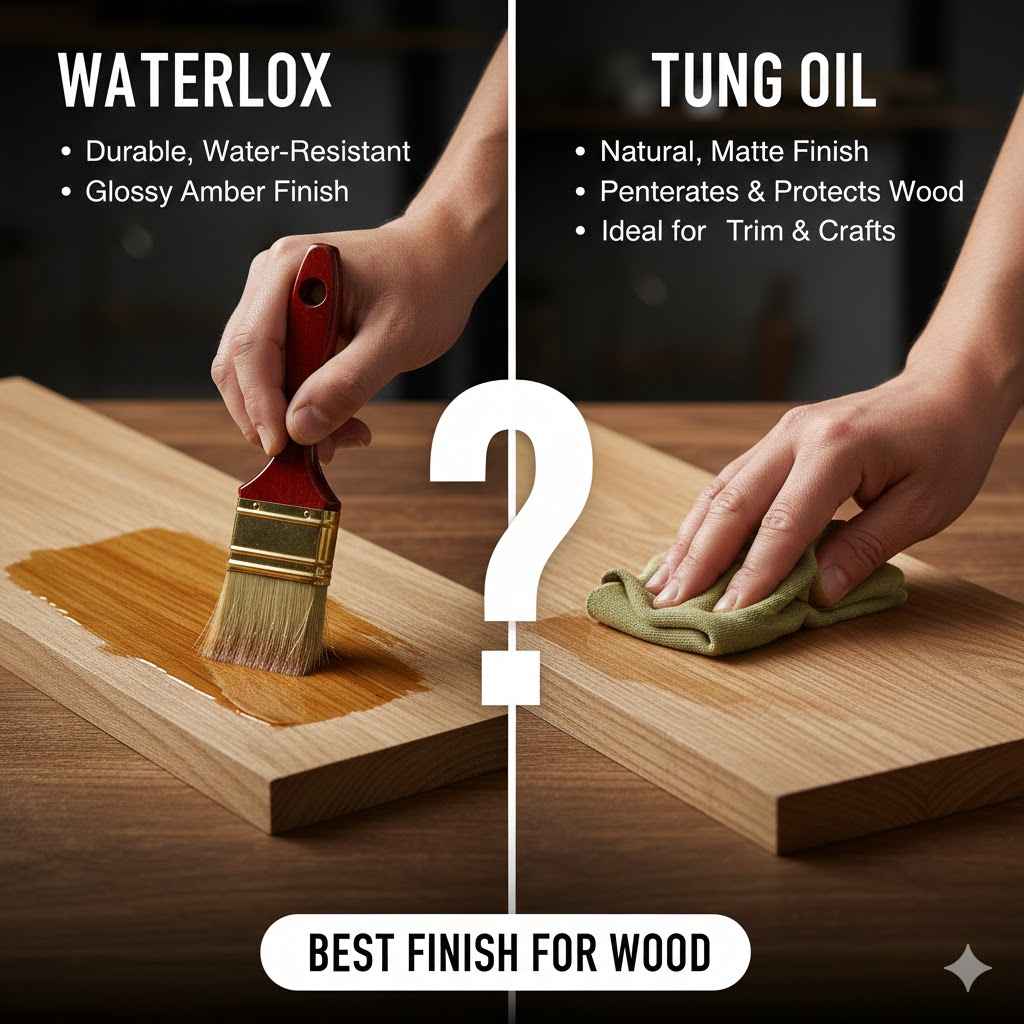
Waterlox typically dries faster and builds a slightly thicker protective layer. Pure Tung Oil penetrates deeper for a more natural look and feel. Both offer good water resistance and durability when applied correctly.
Both finishes enhance the wood’s natural grain. They make the wood look richer and deeper. They are also both considered good for food surfaces when fully cured, though always check the specific product’s safety ratings.
The choice between them often comes down to the look you want, how much effort you want to put in, and how quickly you need the project finished.

Waterlox Finish Properties and Application
Waterlox offers a range of finishes, but they generally share some key characteristics. They are known for their ease of use and excellent protection. This makes them a favorite for many woodworkers, from hobbyists to pros.
We will explore how Waterlox works on wood and how to apply it effectively.
How Waterlox Protects Wood
Waterlox finishes are typically oil-based. They contain tung oil as a primary ingredient. However, they also include other components like resins and solvents.
These additions help the finish cure more predictably and faster than pure tung oil. When you apply Waterlox, it penetrates the wood surface to some extent. Then, it cures to form a protective film on top.
This film acts as a barrier against moisture, stains, and everyday wear and tear.
The resins in Waterlox help to create a harder surface. This makes it more resistant to scratches and dents. The solvents help to thin the finish, allowing for easy application and good leveling.
Unlike some other finishes, Waterlox tends to cure by polymerization, meaning the oil molecules link together and harden. This process results in a durable and beautiful finish.
Waterlox Application Steps
Applying Waterlox is generally straightforward. The process involves preparing the wood, applying thin coats, and allowing proper drying time between coats. Surface preparation is key for any finish.
Ensure your wood is smooth, clean, and free of dust. You can achieve this by sanding the wood progressively through finer grits of sandpaper. The final sanding grit is typically around 220.
1. Prepare the wood surface by sanding it smooth and removing all dust. 2.
Apply the first coat of Waterlox thinly using a brush, rag, or roller. Wipe off any excess that doesn’t soak in after about 15-20 minutes. 3.
Let the first coat dry completely. This can take 12-24 hours, depending on humidity and temperature. 4.
Lightly sand the dried surface with very fine sandpaper (320 grit or higher) to knock down any dust nibs and create a smooth surface for the next coat. Clean off all dust. 5.
Apply subsequent coats, following the same thinning, application, and drying procedures. You can build up layers for greater protection and sheen. 6.
Allow the final coat to cure fully, which can take several days to a week, before putting the wood into heavy use.
One of the benefits of Waterlox is its forgiveness. If you get a run or a drip, you can often fix it relatively easily. The ability to recoat without heavy sanding between coats also makes it appealing.
Many users find that using a tack cloth after sanding helps ensure a dust-free surface for the next application.
Waterlox Finish Types
Waterlox offers several product lines, each designed for specific applications and looks. The most popular is their Original Sealer/Finish. This is a tung oil-based product that provides a satin sheen and excellent protection.
It’s versatile and can be used on furniture, cabinets, and even butcher blocks.
Another option is the Waterlox Urethane series. These finishes add a tougher, more durable urethane layer on top of the tung oil base. This can offer even greater scratch resistance and is often chosen for high-traffic surfaces like tabletops or bar tops.
There are also specific products for marine applications and certain flooring types.
The key takeaway is that Waterlox provides options. You can choose a finish that matches your project’s needs. Whether you want a low-sheen natural look or a more robust protective layer, Waterlox has something to offer.
Real-Life Example: A Kitchen Table Makeover
Sarah decided to refinish her old pine kitchen table. It had seen better days with water rings and scratches. She chose Waterlox Original Sealer/Finish because she wanted something durable and food-safe, but also easy to apply herself.
She sanded the table smooth and then applied four thin coats of Waterlox, letting each coat dry thoroughly. She lightly sanded between coats with 320-grit sandpaper and wiped away the dust with a tack cloth. The table now has a beautiful, warm glow and is protected from spills.
Sarah was thrilled with how much easier it was to apply than she expected, and the finish looks professional.
Tung Oil Finish Properties and Application
Pure Tung Oil offers a distinct approach to wood finishing. It’s a natural product with a long history of use. Its appeal lies in its ability to enhance wood’s natural beauty.
This section will explore the characteristics of pure tung oil and how to best apply it for stunning results.
How Tung Oil Protects Wood
Pure Tung Oil penetrates deep into the wood fibers. As it dries, it polymerizes, hardening within the wood. This creates an incredibly durable and water-repellent finish.
Because it soaks in, it doesn’t sit on the surface like a paint or varnish might. This gives the wood a very natural look and feel. You can often still feel the grain of the wood, even after multiple coats.
The protection comes from the oil itself creating a solid matrix within the wood. This matrix repels water and resists staining. It also helps to prevent the wood from drying out and cracking over time.
This makes it an excellent choice for items that might be exposed to moisture, like cutting boards or outdoor furniture, although specific formulations might be better for extreme conditions.
Tung Oil Application Steps
Applying pure tung oil requires patience and attention. It’s a process that rewards careful work. The key is to apply many thin coats and allow ample drying time between each one.
This method ensures deep penetration and a strong, lasting finish. Preparation is similar to any finishing job: ensure the wood is clean and smooth.
1. Prepare the wood by sanding it to your desired smoothness, typically up to 220 grit. Clean all dust thoroughly.
2. Apply a thin coat of pure tung oil with a lint-free cloth. Work the oil into the wood.
3. Let the oil soak into the wood for about 20-30 minutes. 4.
Wipe off all excess oil that hasn’t soaked in. This step is critical to prevent a sticky, gummy finish. 5.
Allow the coat to dry completely. This is the longest part, often taking 24-72 hours or even longer in humid conditions. 6.
Once dry, you can lightly sand with very fine grit sandpaper (400 grit or higher) if needed to smooth out any roughness. Clean off the dust. 7.
Repeat steps 2 through 6 for multiple coats. Anywhere from 3 to 10 coats can be applied, depending on the desired level of protection and sheen.
Because pure tung oil takes so long to dry, it’s a finish best suited for projects where you have time. The slow drying also means you can often come back and touch up small areas without much hassle. However, if you don’t wipe off the excess thoroughly, you can end up with a very unpleasant, sticky surface that’s hard to fix.
Tung Oil Benefits and Drawbacks
The benefits of pure tung oil are its natural beauty, excellent water resistance, and durable, in-the-wood protection. It gives a matte or satin finish that many people prefer for its authentic look. It’s also non-toxic when fully cured, making it a safe choice for kitchen items.
The main drawbacks are its long drying times and the potential for a sticky finish if not applied correctly. It requires more coats than many other finishes to achieve a good level of protection. Also, it can be more expensive than some synthetic finishes.
Some people might find the finish a bit too “raw” if they are used to a high-gloss, film-forming finish.
Sample Scenario: Finishing a Wooden Bowl
Mark wanted to finish a hand-carved wooden bowl. He wanted it to look and feel completely natural, as if it had no finish at all. He chose pure tung oil.
He sanded the bowl to a very smooth finish. Then, he applied a thin coat of tung oil with a soft cloth. He let it soak in for 30 minutes and then meticulously wiped off every bit of excess oil.
He let the bowl cure for two full days before applying the next coat. After six coats and a week of final curing, the bowl had a beautiful, subtle sheen that felt wonderful to touch. It was also very resistant to water.
Mark felt the effort was worth the natural, elegant result.
Comparing Waterlox vs Tung Oil For Your Project
Deciding between Waterlox and Tung Oil depends heavily on your project, your skills, and the final look you want. Both offer great protection, but they get there differently. Let’s break down how to choose the best option for you.
This comparison will highlight the key factors to consider.
Durability and Protection
Both Waterlox and Tung Oil offer excellent durability and protection against water and stains. Pure Tung Oil, when applied in many thin coats, cures deep within the wood, creating a hard, water-repellent barrier. It is known for its excellent resistance to moisture and chemicals.
Waterlox, being a blend that often includes resins, cures to form a slightly more robust film on the surface. This can offer superior resistance to scratches and abrasion compared to pure tung oil. For high-traffic areas or surfaces that see a lot of wear, like tabletops or bar tops, Waterlox might offer an edge in terms of surface toughness.
However, the ultimate durability of both finishes is highly dependent on the number of coats applied and proper curing. A well-applied, multi-coat tung oil finish can be incredibly durable. Similarly, even a basic Waterlox finish will offer substantial protection.
Ease of Application and Drying Time
This is often where the biggest difference lies for many users. Pure Tung Oil is notoriously slow to dry. Each coat can take 24-72 hours or even longer to cure to the point where you can recoat.
This means a project can take weeks to complete. It also requires very careful wiping off of excess oil to prevent a sticky, gummy surface.
Waterlox finishes, on the other hand, are designed for easier application. They typically dry much faster, often within 12-24 hours between coats. While still requiring proper curing, the shorter drying times make projects much more manageable.
Waterlox also tends to be more forgiving if you miss a small amount of excess, as it’s more likely to cure properly.
If you are a beginner or have limited time, Waterlox is usually the simpler choice. If you have the patience and enjoy the process of building up a finish slowly, pure tung oil is a rewarding option.
Aesthetics and Sheen
The visual appeal of each finish is quite different. Pure Tung Oil penetrates the wood, enhancing its natural color and grain without creating a significant surface sheen. It typically results in a matte or satin finish that feels very natural to the touch.
It often makes wood look richer and deeper but maintains its inherent texture.
Waterlox finishes can offer a range of sheens, from matte to satin and even gloss, depending on the specific product and the number of coats applied. They tend to build up on the surface more than pure tung oil, creating a finish that can be slightly more reflective. Some Waterlox products can give a beautiful, classic oiled look while still providing good surface protection.
For projects where you want the wood to look as untouched as possible, with just a bit more depth and protection, pure tung oil might be preferred. If you want a slightly more defined sheen and a finish that feels more substantial on the surface, Waterlox might be a better fit.
Cost and Availability
The cost can vary. Pure Tung Oil can sometimes be more expensive per unit, especially high-quality, pure versions. However, since it’s a natural oil, a little can go a long way, and it might require fewer products overall than a multi-step Waterlox system.
Waterlox is a branded product. While generally not prohibitively expensive, it can add up, especially if you need multiple products from their line. It is widely available through woodworking supply stores and online retailers.
Availability is generally good for both. You can find pure tung oil at most hardware stores or woodworking specialty shops. Waterlox products are also readily accessible.
The decision here often comes down to personal preference and brand loyalty more than significant cost differences.
Table Comparison
| Feature | Waterlox | Pure Tung Oil |
|---|---|---|
| Base Ingredient | Tung oil, resins, solvents | Pure tung oil from tung tree nuts |
| Application Difficulty | Easier, more forgiving | More difficult, requires patience and precision |
| Drying Time Between Coats | 12-24 hours | 24-72 hours or longer |
| Final Sheen | Matte to gloss, depending on product | Matte to satin, natural wood look |
| Surface Feel | Smoother, more finished | Natural wood grain feel |
| Scratch Resistance | Generally very good | Good, but can be softer than Waterlox films |
| Water Resistance | Excellent | Excellent |
| Best For | Beginners, faster projects, high-traffic surfaces, desired sheen | Natural wood look, deep penetration, patient woodworkers, food-safe items |
Real-Life Example: A Custom Desk Project
David was building a custom desk and wanted a durable, beautiful finish that didn’t look like plastic. He considered pure tung oil but was concerned about the drying time and potential for a sticky finish. He chose Waterlox Original Sealer/Finish because he heard it was easier to use and still provided excellent protection.
He applied three thin coats, sanding lightly between each. The desk turned out beautifully with a subtle sheen and a very smooth, durable surface. David was able to complete the project in about a week, which was much faster than he anticipated with pure tung oil.
Choosing the Right Finish for Your Wood Project
Selecting the best finish for your wood project is like picking the right outfit for an event. You want it to look good and do its job. Both Waterlox and Tung Oil are great choices, but they suit different situations.
Let’s think about what matters most for your specific wood piece.
Consider Your Project Type
The type of project you are working on is a big clue. For example, if you’re making a cutting board or a bowl that will come into contact with food, pure tung oil is often a preferred choice. This is because it’s natural and becomes food-safe once fully cured.
It also gives a lovely, natural feel to these items.
For furniture that needs to withstand daily use, like a dining table, coffee table, or desk, Waterlox might be a better option. Its ability to build a more robust film on the surface offers enhanced protection against spills, scratches, and wear. Likewise, for wooden floors or countertops, the added durability of Waterlox can be a significant advantage.
Outdoor furniture can also benefit from both, but pure tung oil, with its deep penetration, can offer good protection against the elements. However, some specialized exterior finishes might be even better suited for harsh outdoor conditions.
Think About Your Skill Level and Patience
If you are new to woodworking or finishing, Waterlox is generally the more beginner-friendly option. Its faster drying times and forgiving nature make it easier to achieve a good result without extensive experience. You are less likely to end up with a sticky mess.
Pure Tung Oil requires a higher level of patience. The long drying times mean projects take longer. It also demands careful application and thorough wiping of excess oil.
If you are someone who enjoys a slower, more deliberate process and has the time to dedicate to it, pure tung oil can be very rewarding. The satisfaction of building up that natural finish layer by layer can be immense.
Desired Look and Feel
What kind of final appearance do you want? If you love the look of natural, unfinished wood but want it protected, pure tung oil is the way to go. It enhances the wood’s grain and color while maintaining a matte, tactile feel.
It feels like wood, only better.
If you prefer a finish that offers a bit more sheen or a slightly more “finished” look, Waterlox can provide that. You can achieve various levels of gloss depending on the specific Waterlox product and how many coats you apply. Waterlox can give a beautiful, warm glow that some woodworkers prefer for furniture pieces.
Maintenance and Repair
Both finishes are relatively easy to maintain. For everyday cleaning, a damp cloth is usually sufficient. If the finish gets damaged, repairs differ slightly.
With pure tung oil, you can often simply reapply oil to the affected area. It blends in well.
Waterlox finishes are also repairable. You can often lightly sand the damaged area and reapply a coat or two of the finish. Because Waterlox builds a surface film, major damage might require more extensive sanding and refinishing than a pure tung oil finish, but it’s still manageable.
For many, the ease of repair for minor scratches or scuffs with Waterlox is a significant advantage. It means your project can continue to look great for years to come without major overhaul.
A Case Study: Restoring an Antique Chair
A client brought in an antique wooden chair that needed restoration. The original finish was worn and dull. The goal was to restore its beauty and protect it for years without making it look like a modern piece.
After careful consideration, the choice was made to use pure tung oil. The reason was to maintain the chair’s antique character and achieve a deep, natural look that wouldn’t obscure the wood’s history. The slow, patient application of multiple thin coats allowed the oil to penetrate and enrich the aged wood.
The final result was a chair that looked beautifully preserved, with a subtle, natural sheen that honored its antique status.

Frequently Asked Questions
Question: Is Waterlox or Tung Oil better for outdoor furniture?
Answer: Both can work well outdoors. Pure Tung Oil penetrates deeply and offers good water resistance. However, Waterlox, especially their more robust formulations, can provide a harder surface that might better resist the elements and wear from outdoor use.
Always check the specific product for outdoor suitability.
Question: Can I use Waterlox on butcher block countertops?
Answer: Yes, many people use Waterlox Original Sealer/Finish on butcher block countertops. It provides good water resistance and is food-safe once fully cured. Ensure you apply multiple thin coats and allow adequate curing time.
Question: How many coats of Tung Oil do I really need?
Answer: The number of coats for pure tung oil can vary greatly, from 3-4 for a basic finish to 10 or more for maximum protection and sheen. It depends on the wood type and the desired outcome. Patience is key; more thin coats are better than fewer thick ones.
Question: Does Tung Oil make wood look shiny?
Answer: Pure Tung Oil typically does not create a high-gloss shine. It enhances the wood’s natural color and grain, resulting in a matte or satin sheen. If you desire a high gloss, other finishes or specific tung oil blends might be needed.
Question: Can I mix Waterlox and Tung Oil?
Answer: While Waterlox is tung oil-based, mixing pure tung oil with Waterlox is generally not recommended. Waterlox contains other additives that change its drying and curing properties. Sticking to one product line ensures predictable results and proper adhesion.
Summary
Waterlox and Tung Oil both offer excellent wood protection and enhance natural beauty. Waterlox provides easier application and faster drying times, making it great for beginners and quick projects. Pure Tung Oil offers a more natural look and feel with deep penetration, requiring more patience.
Your choice depends on your project’s needs, desired look, and how much time you have.