What Does “Compound” Mean on a Miter Saw? A Plain-English Answer
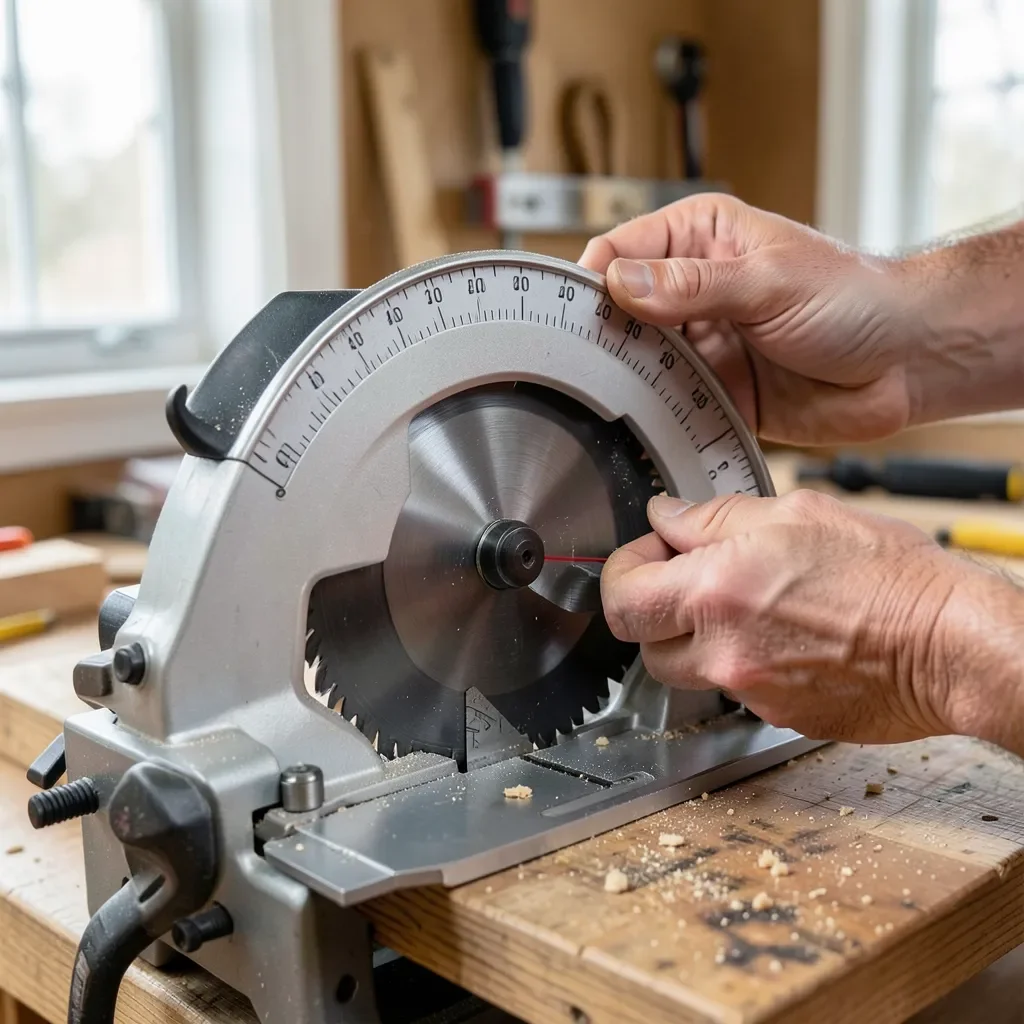
“Compound” means the saw’s blade can tilt sideways (bevel) in addition to rotating left and right (miter), so it can make both cuts at once. A standard miter saw only rotates; it cannot bevel at all.
That one added axis of motion is the entire difference, but it’s also where a lot of confusion creeps in – between “miter saw” and “chop saw,” and between “single bevel” and “dual bevel,” terms that get used loosely on store shelves and in reviews. Getting them straight matters because it changes which saw you actually need to buy.
The Real Difference: Miter Saw, Compound Miter Saw, and “Chop Saw”
Best Single-Bevel Compound Miter Saw
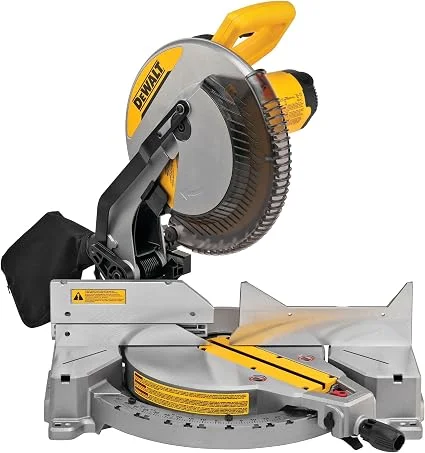 |
DEWALT DWS715 12-Inch Compound Miter Saw – $369.00 A straightforward example of what “compound” actually buys you: a 15-amp motor plus a blade that tilts 0 to 48 degrees left for bevels, on top of the normal miter rotation.
|
A basic miter saw pivots the blade left and right across a fixed table to cut an angle into the face of a board – that’s a miter cut. The word “compound” gets added once the saw head can also lean over sideways, cutting a bevel (an angle through the thickness of the board) at the same time as that rotation. Doing both at once, tilted and rotated, is the compound cut the tool is named for.
“Chop saw” gets used as a casual stand-in for any of these, but it’s technically a different tool: a chop saw is built to cut straight down at a fixed 90 degrees, usually for metal or masonry, with no miter or bevel adjustment at all. If a saw can tilt or swivel, it isn’t a chop saw by the strict definition, no matter what the box calls it. Worth knowing: the compound miter saw itself isn’t a recent invention – it dates back to 1964, when it was developed by an engineer at Rockwell International’s power tool division specifically to combine those two motions in one head.
Single Bevel vs. Dual Bevel: Why the Price Gap Matters
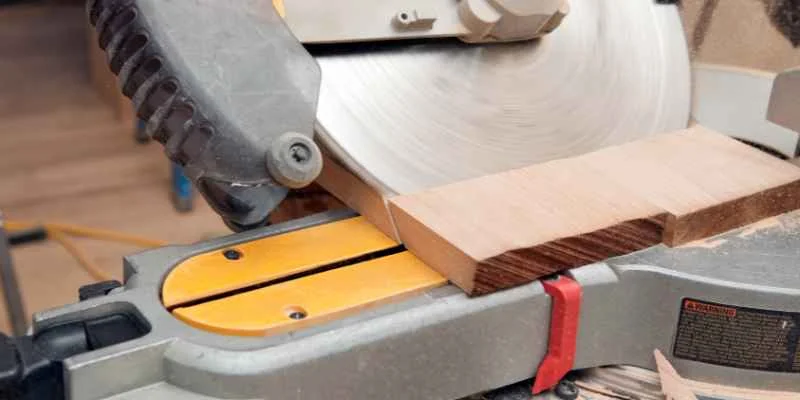
Every compound miter saw is either single bevel or dual bevel, and the difference shows up the first time you cut crown molding or trim that needs a mirror-image angle on the opposite end. A single-bevel saw only tilts one direction – to cut the matching angle on the other side, you have to unclamp the board, flip it face-down or end-for-end, and reset your fence position. A dual-bevel model skips that flip entirely, since it can lean either way on command. That convenience is usually worth $50 to $100 more on the sticker price. If you mostly cut symmetrical trim runs solo, dual bevel saves real time; if you’re an occasional user or working with a helper who can flip boards, single bevel does the same job for less money.
What “Sliding” Adds to a Compound Miter Saw
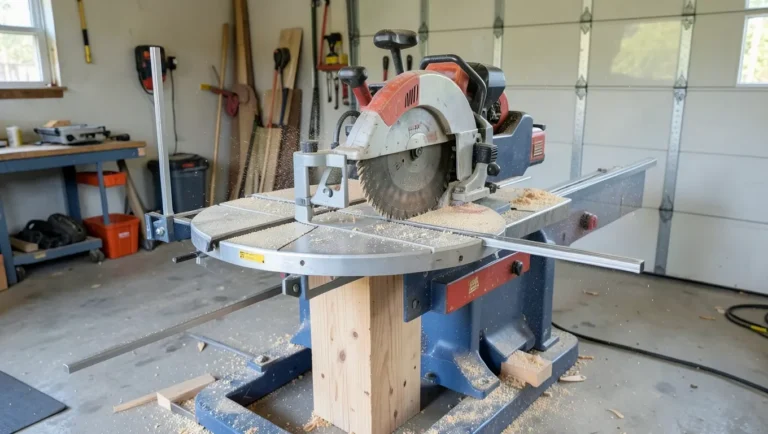
“Sliding” refers to a separate rail system that lets the entire saw head travel forward and backward over the workpiece, instead of just dropping straight down. On a standard (non-sliding) 12-inch compound miter saw, crosscut capacity tops out around 6 inches of flat stock. Add the sliding rails, and that same 12-inch blade can crosscut 12 inches or more, because the blade is sweeping through the cut rather than just chopping down through it. That extra reach matters for wide baseboards, stair treads, and shelving – anything wider than standard door and window trim.
Blade Size and What It Actually Limits
Compound miter saws are most commonly sold with 180mm (7-1/4″), 250mm (10″), or 300mm (12″) blades. The number isn’t just a spec to compare – it sets a hard ceiling on how thick or wide a board you can cut in one pass, especially at an angle. A 7-1/4″ saw is light and portable but limited to thin trim; a 10″ saw covers most standard 2x lumber and molding; a 12″ saw gives you the most capacity for thick stock or wide crown molding cut standing up against the fence (check a miter saw angle chart once you have settled on a size, so you are not guessing at common trim angles). Going bigger than you need mostly costs you portability and money, not accuracy.

When You Actually Need a Compound Miter Saw
If every cut you make is a straight 90-degree crosscut, a basic non-tilting miter saw or even a circular saw with a guide does the job for less money (our saw types guide compares all the common shop saws side by side if you are still deciding which one to buy first). Reach for a compound miter saw specifically when a project needs an angled cut through the thickness of the material, not just across its face: crown molding meeting a ceiling at an angle, baseboard corners that aren’t a clean 90 degrees, picture frames, or angled table and chair legs. For flat-on-the-wall trim and most framing, the bevel function often goes unused – which is a sign a non-compound miter saw would have covered the job just as well for less money.
Safety Basics When Making Compound Cuts
A compound cut moves the blade through the material at an angle on two axes at once, which makes a securely clamped workpiece even more important than on a straight crosscut – a board that shifts mid-cut on a bevel is more likely to bind or kick back than on a flat cut. Keep hands well clear of the blade’s path on both sides of the fence, wear eye and hearing protection, and let the blade come to a complete stop before lifting it out of the cut. Double-check your bevel and miter angle settings against a test piece of scrap before cutting your actual material – a compound cut wastes two settings’ worth of material if either angle is off, not just one.
Frequently Asked Questions
What is the difference between a compound miter saw and a regular miter saw?
A standard miter saw only rotates left and right to change the cut angle across the face of the board. A compound miter saw adds a second axis: the blade also tilts, so it can cut a bevel and a miter in a single pass. That combined cut, tilted and rotated at the same time, is the compound part.
Is a compound miter saw the same thing as a chop saw?
No, even though people use the names interchangeably. A chop saw is a fixed-angle tool, generally used flat at 90 degrees for cutting metal, with no built-in miter or bevel adjustment. A compound miter saw is specifically designed to pivot and tilt. If a saw can bevel, it is not a chop saw by the strict definition, whatever the box calls it.
What is the difference between single bevel and dual bevel?
A single-bevel saw tilts in one direction only, so cutting a mirror-image bevel means unclamping the board and flipping it over. A dual-bevel saw tilts both left and right, so you can cut both angles on crown molding or trim without ever moving the workpiece. Dual bevel typically costs 50 to 100 dollars more for that convenience.
Do I need a sliding compound miter saw or is a standard one enough?
It depends on the width of stock you cut most often. A standard compound miter saw with a 12-inch blade crosscuts roughly 6 inches of flat stock. A sliding compound miter saw adds a rail system that lets the blade travel forward and back, extending that same saw’s crosscut capacity to 12 inches or more, which matters for wide baseboards, stair treads, and shelving.
Sponsored / affiliate links. As an Amazon Associate I earn from qualifying purchases. I may earn additional commission from eligible campaigns.