What Is a Panel Saw? Types, Uses & Who Needs One
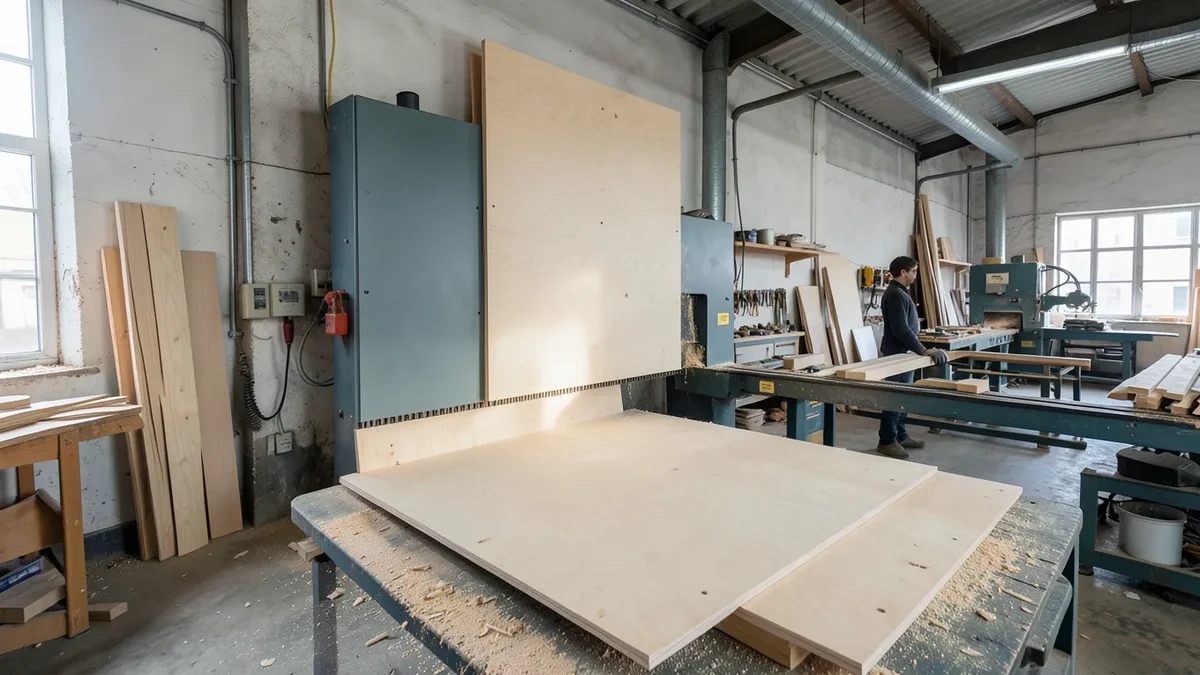
A panel saw is a stationary shop machine built to break a full 4×8 sheet of plywood, MDF, or particleboard into usable pieces with a single operator, no helper required. Instead of you moving a saw across the material like a circular saw or track saw, the panel saw holds the sheet itself, either clamped upright against a vertical frame or laid flat on a horizontal table, while a motorized carriage rides a fixed rail to make the cut. That’s the core difference that separates a true panel saw from every other way of breaking down sheet goods, and it’s also the reason a panel saw isn’t automatically the right buy for every shop.
What Is a Panel Saw, Exactly?
A panel saw is a dedicated cutting machine designed around one job: turning a full sheet of plywood, MDF, particleboard, or laminate into smaller, accurately sized pieces. Vertical panel saws mount the sheet upright against a wall-style frame and run a small circular saw carriage down (or across) a track. Horizontal panel saws, sometimes called beam saws, lay the sheet flat on a table while a saw beam travels over it. Either way, the sheet stays put and the blade does the moving, which is the opposite of how you’d use a handheld saw.
Better panel saws also carry a second, smaller scoring blade that runs just ahead of the main blade. It scores the bottom face of the sheet first so the main blade doesn’t tear out the veneer or laminate as it exits the cut, which matters a lot on melamine and finished plywood faces.
Best Home-Shop Alternative to a Panel Saw
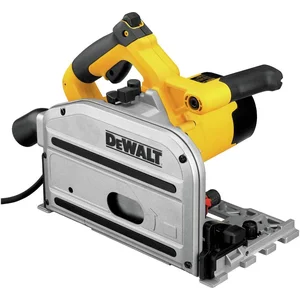 |
DEWALT DWS520K 6-1/2" TrackSaw Kit ($506.77) If your shop doesn’t cut enough sheets to justify a panel saw’s cost and wall space, this is the tool that gets you the closest to panel-saw-quality cuts on a bench or sawhorses.
|
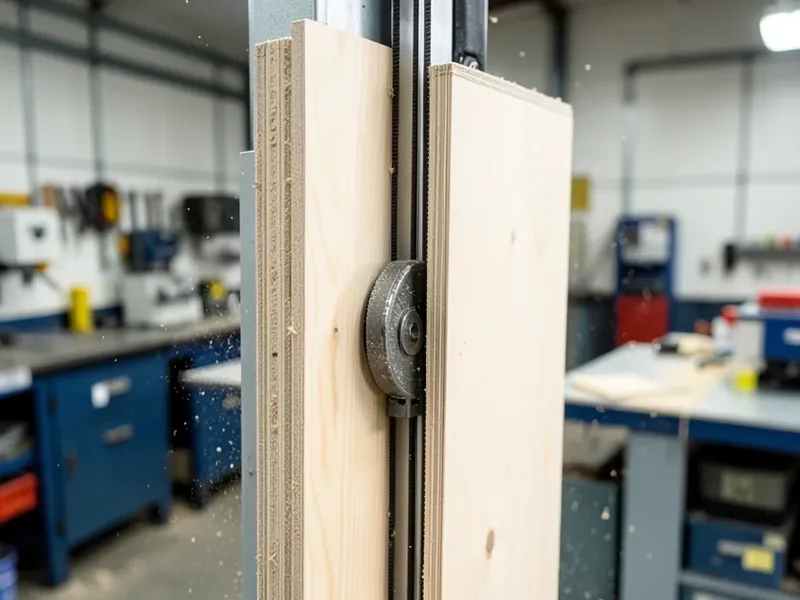
The carriage on most vertical panel saws rides on ball-bearing rollers along a steel or aluminum rail, and a locking fence lets you set a width once and repeat that exact cut on sheet after sheet, which is the other big reason cabinet shops rely on them for repetitive work.
Panel Saw vs. Track Saw: Which One Does Your Shop Actually Need?
This is the question most “what is a panel saw” pages skip, and it’s the one that actually matters if you’re deciding what to buy. A basic vertical panel saw typically starts around $1,500 to $2,500, with beam saws and digital-fence models running well into five figures. On top of the machine cost, a vertical panel saw needs roughly 9 to 10 feet of clear wall height to swing an 8-foot sheet through a full cut, plus floor space in front of it. That’s a real commitment for a garage or one-car-bay shop.
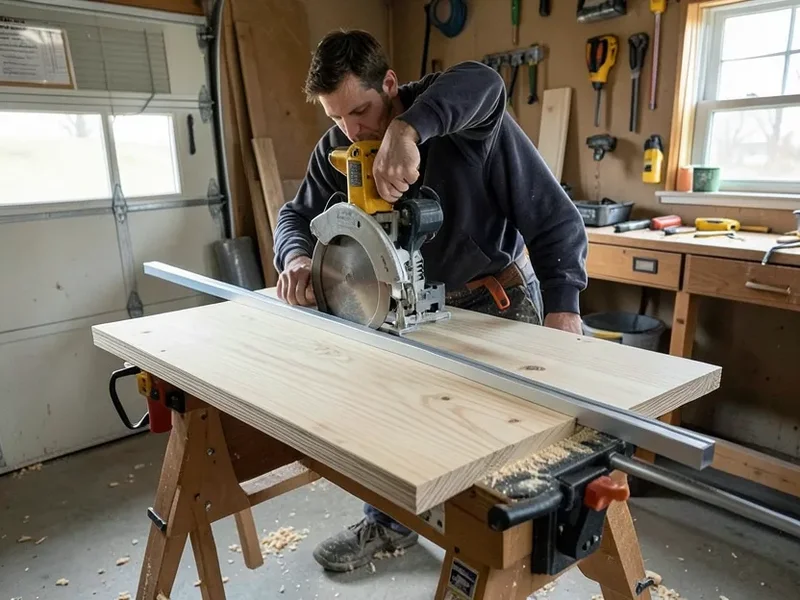
A track saw, by contrast, typically runs $150 to $700, stores on a shelf, and rides directly on the sheet with a clamped or self-adhesive guide rail. The trade-off is that the sheet has to be supported on something, usually sawhorses with rigid foam insulation board underneath, and a long crosscut on a full sheet goes more smoothly with a second person steadying the offcut so it doesn’t rock and bind the blade partway through.
The dividing line comes down to volume, not skill level. A shop that breaks down many full sheets every week, a cabinet shop cutting cases to the same repeat dimensions all day, gets real payback from a panel saw: it holds the sheet by itself, cuts to a locked stop for identical parts, and one person can run it all day without fighting the material. A shop that cuts a handful of sheets a month is almost always better off with a track saw, because it costs a fraction as much, needs no dedicated wall, and still delivers a straight, splinter-free edge when you’re using a sharp blade and a straight rail.
If you’re trying to figure out how many sheets a specific project actually needs before deciding whether that investment makes sense, our breakdown of how many sheets of plywood a kitchen cabinet run takes walks through the math. And if the honest answer is “not many,” it’s often cheaper overall to have the sheets cut to size at the store instead of buying either machine.
Types of Panel Saws
Vertical panel saws mount against a wall-style frame and let the sheet lean upright while the carriage travels down a rail. They’re the space-saving option, since the machine’s footprint is mostly vertical rather than eating up floor area, which is why they’re common in shops that are tight on room.
Horizontal panel saws (beam saws) lay the sheet flat on a table and move a saw beam across it. They take up more floor space but generally cut faster and handle heavier sheets more easily, which is why larger cabinet and millwork shops lean toward them.
Within both categories, you’ll find manual models, where the operator pushes the carriage by hand, and digital-fence or programmable models, where a display sets the exact cut width and the fence moves to it automatically. Manual saws cost less and suit smaller shops; programmable fences pay for themselves in shops cutting hundreds of identical parts.
The Main Parts of a Panel Saw
A few components show up on nearly every panel saw, regardless of brand or orientation:
- Carriage and motor: houses the main blade and rides the rail to make the cut.
- Guide rail or track: the fixed path the carriage follows, which is what keeps the cut straight.
- Scoring blade: a small secondary blade on higher-end saws that pre-scores the exit face to prevent chip-out on laminate or veneer.
- Sheet supports or clamps: hold the material in place, whether that’s a vertical frame with rollers or a horizontal table with hold-downs.
- Fence and stops: let you lock in a width once and repeat it across many identical cuts.
- Dust port: panel saws generate a lot of fine dust fast, so most connect directly to a shop vac or dust collector.
Panel Saw Safety Basics
Wear eye and hearing protection every time; panel saws run loud and throw dust and small chips. Keep hands clear of the blade path and let the guards do their job instead of removing them for “easier” access. Confirm the sheet is fully clamped or supported before starting the cut, since a sheet that shifts mid-cut is the most common way these machines cause injuries or ruin material. Unplug the machine before changing blades, and replace a dull or damaged blade right away rather than forcing a worn one through thicker material.
Frequently Asked Questions
What is a panel saw used for?
A panel saw is used to break full sheets of plywood, MDF, particleboard, and laminate down into smaller, accurately sized pieces. It’s the standard tool for this job in cabinet shops and millwork operations because it holds the sheet itself and lets one person make repeatable, straight cuts without a helper.
How does a panel saw work?
The sheet is loaded onto the machine, either clamped upright on a vertical frame or laid flat on a horizontal table. A motorized carriage carrying the saw blade then rides a fixed rail across or down the sheet to make the cut, guided by a fence that’s been set to the desired width. Higher-end models score the exit face first with a small secondary blade to prevent chip-out.
What does a panel saw look like?
A vertical panel saw looks like a large rectangular frame mounted against a wall, roughly the height and width of the sheet it’s built to cut, with a small saw carriage riding a track down the middle. A horizontal panel saw looks more like a long, low table with an overhead beam that travels across it. Neither resembles a table saw or a handheld circular saw, since the sheet stays still and the blade assembly moves instead.
Do you need a panel saw, or will a track saw work?
If your shop only breaks down a handful of sheets a month, a track saw on sawhorses will get you a straight, splinter-free cut for a fraction of a panel saw’s cost and without dedicating wall space to it. A panel saw earns its cost and footprint once you’re cutting many sheets on a regular schedule and need one person to do it quickly, accurately, and without a helper holding the material.
Bottom Line
A panel saw is a stationary machine that holds a full sheet of plywood, MDF, or particleboard in place while a motorized carriage rides a fixed rail to make the cut, either vertically against a wall frame or horizontally on a table. It’s genuinely worth its cost and space for a shop that regularly breaks down many sheets and needs fast, repeatable, one-person cuts. For occasional sheet breakdown, a track saw on sawhorses gets you most of the same cut quality for a fraction of the price and no dedicated footprint.
Sponsored / affiliate links. As an Amazon Associate I earn from qualifying purchases. I may earn additional commission from eligible campaigns.