Which Way Do Saw Blades Go? Direction for Every Saw Type
Saw blade direction is not one universal rule — it depends on the saw. Every blade has teeth that must point the same way the blade rotates, and nearly every blade has a small directional arrow stamped or etched near the arbor hole to prove it. But what that direction actually looks like, and where the teeth need to point, changes depending on whether you’re looking at a table saw, a handheld circular saw, a band saw, or a jigsaw.
The One Rule Behind Every Blade
Before getting into the differences between saw types, there’s one check that applies to all of them: match the arrow. Almost every circular blade (table saw, circular saw, miter saw) has a small arrow cast, stamped, or laser-etched into the plate near the arbor hole, showing which way the blade is meant to spin. The saw itself usually has a matching arrow printed on the blade guard, housing, or trunnion. If those two arrows point the same way when the blade is mounted, the blade is installed correctly — full stop. It’s a five-second check that catches the mistake before it ever reaches the wood.
Best Table Saw Blade With a Clear Rotation Marking
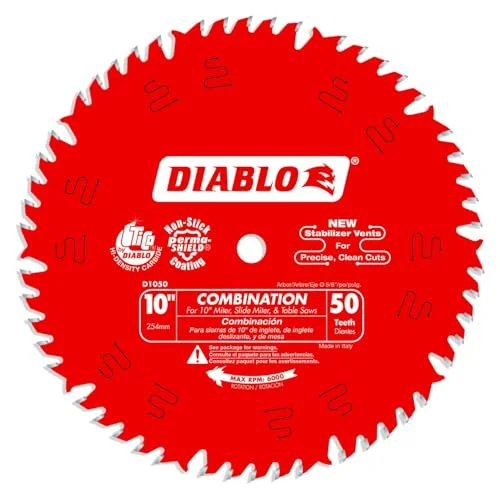 |
Diablo D1050X 10″ 50-Tooth Combination Blade – $42.97 A general-purpose table/miter saw blade with the rotation direction printed right on the plate next to the arbor, so there is no guesswork the first time you mount it.
|
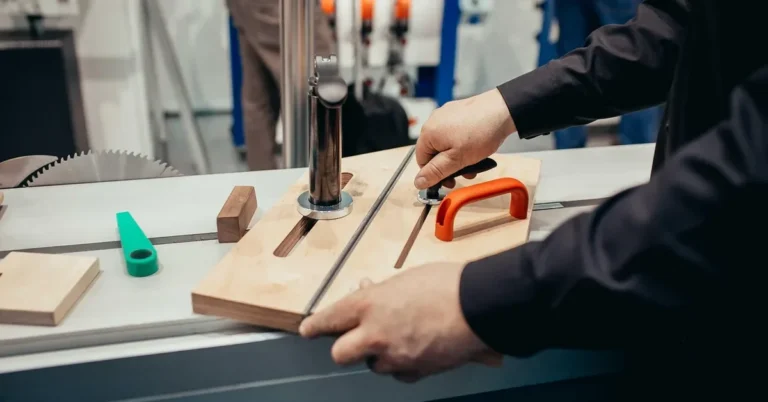
Which Way a Table Saw Blade Should Go
On a table saw, the blade sits mostly hidden under the table and only the top arc protrudes up through the insert plate. That exposed portion is what does the visible cutting, and its teeth need to point down and toward the front of the saw, toward the operator. As the blade spins, the teeth at the top move downward and forward, which drives the workpiece down against the table rather than lifting it into the blade. That’s not a minor detail — it’s the mechanism that keeps a table saw from throwing the workpiece back at the operator.
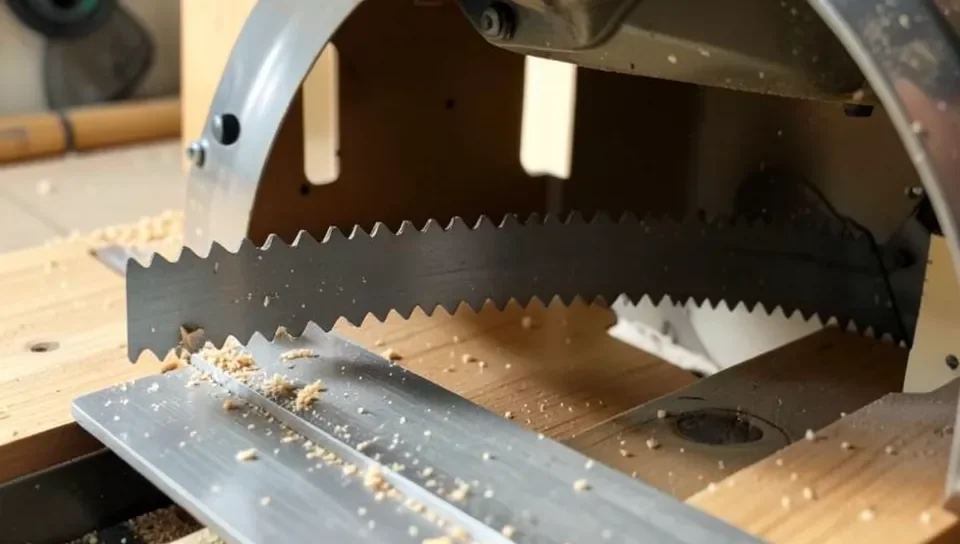
To check it on your own saw: look for the stamped arrow near the arbor hole (the center bore), and compare it to the small arrow printed on the blade guard assembly or the trunnion casting just below the throat plate. Most modern blades also make this obvious visually — the front edge of each tooth (the side that actually does the cutting) will be facing down toward the table when the blade is mounted correctly.
Which Way a Circular Saw Blade Should Go
A handheld circular saw works differently from a table saw because the motor and blade sit on top of the material, and only the bottom arc of the blade is actually cutting, hidden inside the kerf as the saw moves forward. At that contact point, the teeth need to point upward and forward, so they exit through the top face of the board as they cut. That upward bite is also what pulls the saw’s base plate down flat against the stock — a correctly installed blade tends to sit flat and track straight, while a backward one tends to chatter, walk sideways, and push away from the cut instead of into it.
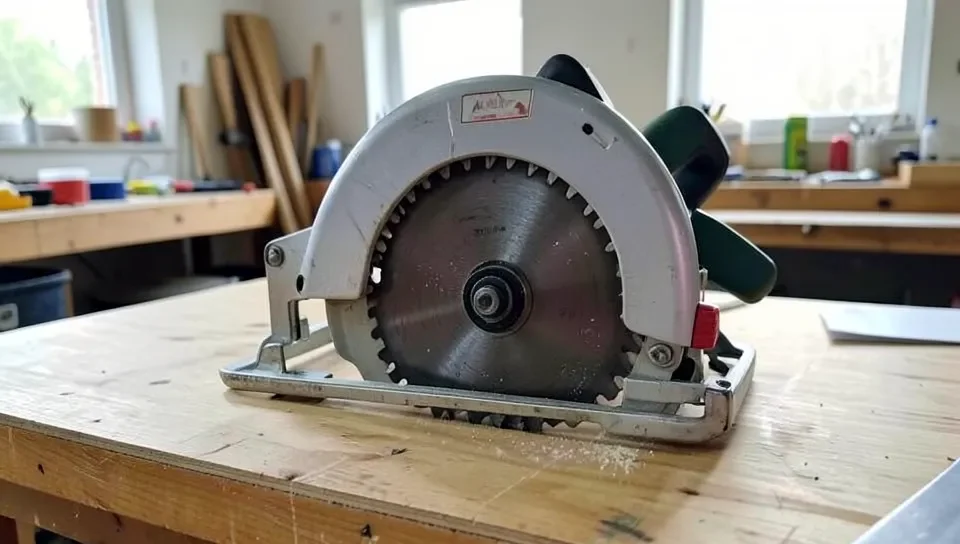
One thing worth correcting here: whether that rotation “looks” clockwise or counterclockwise from above actually depends on which side of the saw the blade is mounted on. A sidewinder saw with the blade on the right side of the motor and a worm-drive or blade-left saw spin opposite ways when you’re standing in the same spot looking down at them — but the physical result at the cutting edge is identical either way. That’s exactly why matching the two stamped arrows is a more reliable check than trying to remember “clockwise” or “counterclockwise” as an absolute rule. For a deeper breakdown of circular saw blade direction specifically, including which replacement blades keep that arrow easy to read, see our circular saw blade direction guide. If you are doing this on a Craftsman saw specifically, our guide to changing the blade on a Craftsman circular saw covers the exact spindle-lock and arbor-nut steps for that saw.
Miter Saws, Band Saws, and Jigsaws: Same Arrow Rule, Different Machines
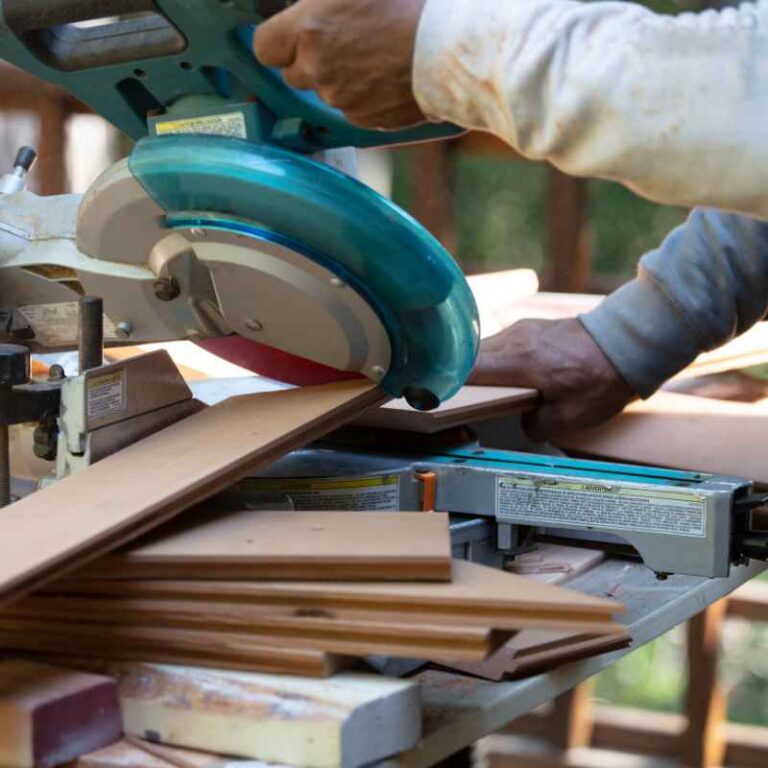
Miter saws follow the same logic as a table saw — the blade is above the stock and the teeth at the bottom-front should point down and forward, in the direction the spinning head travels as it lowers into the cut. The arrow-to-arrow check works exactly the same way here too.
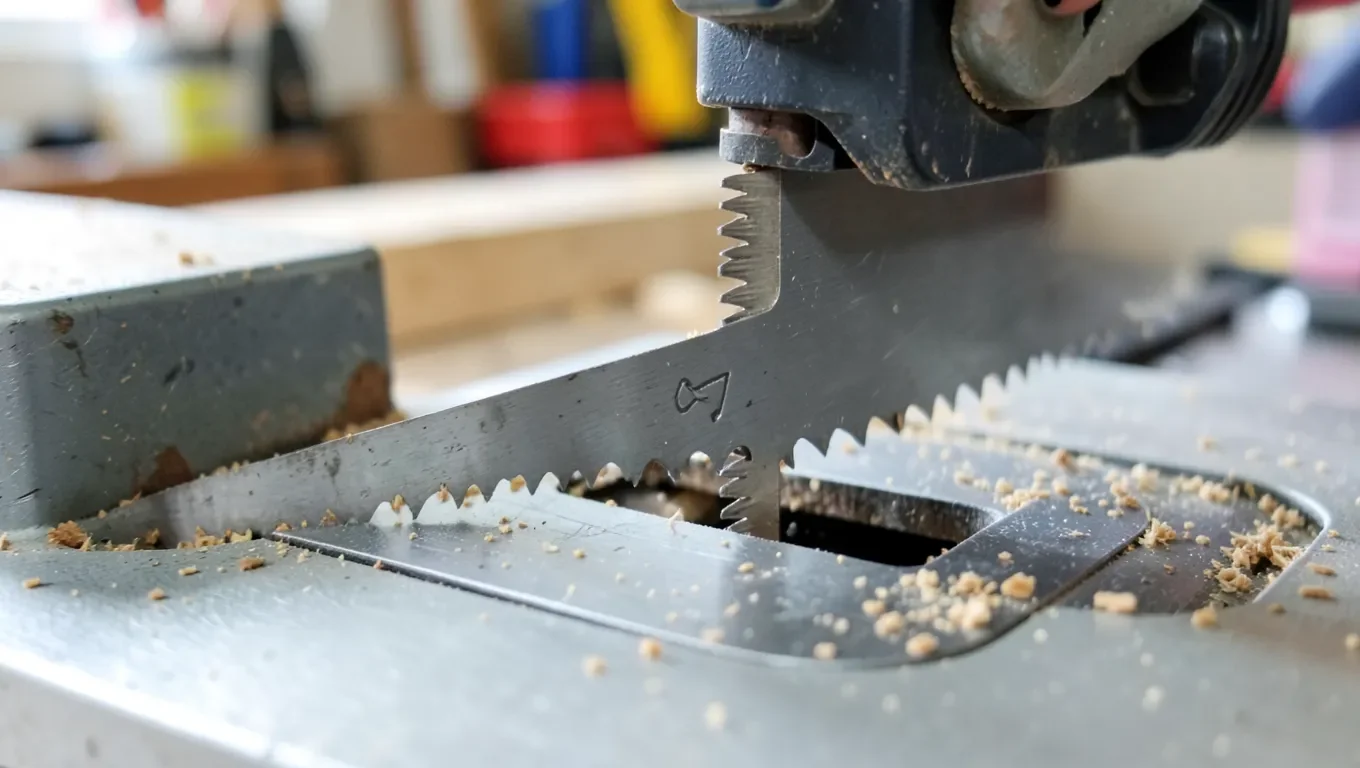
Band saws are the one case where “backward” is easy to catch immediately: the blade is a continuous loop, so the section running down through the table has to have its teeth (and gullets) facing down, toward the table and the workpiece. Because the blade only mounts onto the wheels one physical way to get that orientation right, a backward band saw blade is obvious the moment you try to cut — it will barely mark the wood no matter how hard you feed it, since the gullets are facing the wrong direction to clear chips.
Jigsaws don’t spin at all — the blade moves in a straight up-and-down line. Standard wood-cutting jigsaw blades are “up-cut” blades, meaning the teeth point up toward the shoe, so the blade cuts on the upstroke. That’s also why jigsaw cuts tend to splinter slightly on the top face while staying cleaner underneath. Down-cut blades exist specifically to reverse that, for veneered plywood or laminate where the good face has to stay up — but that’s a blade choice, not an installation mistake, since jigsaw blades only fit their T-shank or U-shank clamp one physical way.
Why Reciprocating Saw Blades Are a Completely Different Case
It’s worth separating this out because it’s a common point of confusion: reciprocating saw blades don’t rotate at all, and the “which way do the teeth go” logic above doesn’t transfer over. A reciprocating saw blade is straight, and it moves back and forth in a horizontal line rather than spinning. For standard cutting, the teeth point away from the tool body so the blade cuts on the push stroke — but most reciprocating saws let the blade be mounted in up to four different orientations in the shoe, specifically so it can be flipped for plunge cuts, flush cuts against a wall or floor, or pulling instead of pushing in a tight space. There is no single “correct” direction the way there is for a circular blade; it depends entirely on the cut you’re making. See our guide on reciprocating saw blade compatibility for more on how these blades and their shanks work.
What Happens If You Install a Blade Backward
A backward blade doesn’t just cut a little worse — it actively fights the cut. The most common symptoms are heavy burning or scorch marks along the cut line, rough torn edges instead of a clean line, a motor that bogs down or stalls under load that shouldn’t be a problem, and on a table saw or miter saw specifically, a sharply higher risk of kickback, because the teeth are now pushing the workpiece up and back toward the operator instead of holding it down and forward. None of this requires guesswork to prevent: checking the stamped arrow against the saw’s own arrow before the first cut takes about five seconds.
Frequently Asked Questions
Which way should a table saw blade face?
The teeth on the exposed, upper portion of a table saw blade should point down and toward the front of the saw, toward the operator. As the blade spins, that motion pulls the workpiece down against the table instead of lifting it, which is what keeps the cut safe and clean. A small arrow stamped near the arbor hole on the blade should match the arrow on the saw’s blade guard or trunnion.
Which way should a circular saw blade face?
At the bottom of a handheld circular saw blade, where it actually meets the wood, the teeth should point upward and forward so they exit through the top face of the board. That upward bite pulls the saw’s base plate down flat against the material. Whether that looks clockwise or counterclockwise from above depends on which side of the saw the blade is mounted, so match the arrow on the blade to the arrow on the fixed guard rather than memorizing a rotation direction.
What happens if you install a saw blade backward?
A backward blade fights the cut instead of helping it. Expect heavy burning and scorch marks, rough torn edges instead of a clean line, a saw that bogs down or stalls, and a sharply higher risk of kickback because the teeth are pushing the workpiece up and back instead of holding it down and forward. Checking the directional arrow before the first cut takes about five seconds and prevents all of it.
Conclusion
There’s no single “which way” answer that covers every saw — a table saw, a circular saw, a band saw, and a jigsaw all move differently, so the teeth point differently on each one. What stays constant is the check: find the directional arrow near the blade’s arbor hole, match it to the arrow on the saw, and the blade is right. Skip that check and the saw will tell you anyway, just the hard way — through burning, tear-out, or a kickback you’d rather avoid.
Sponsored / affiliate links. As an Amazon Associate I earn from qualifying purchases. I may earn additional commission from eligible campaigns.